 Русский






The Supreme Eurasian Economic Council (SEEC) meeting in St. Petersburg on December 21, 2025 was not an ordinary summit. It was a defining moment in the economic evolution of the Eurasian Economic Union (EAEU), one that affirmed its central role in shaping economic stability, trade connectivity, investment flows, and macroeconomic governance amid global turbulence.
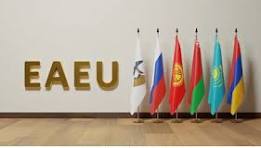
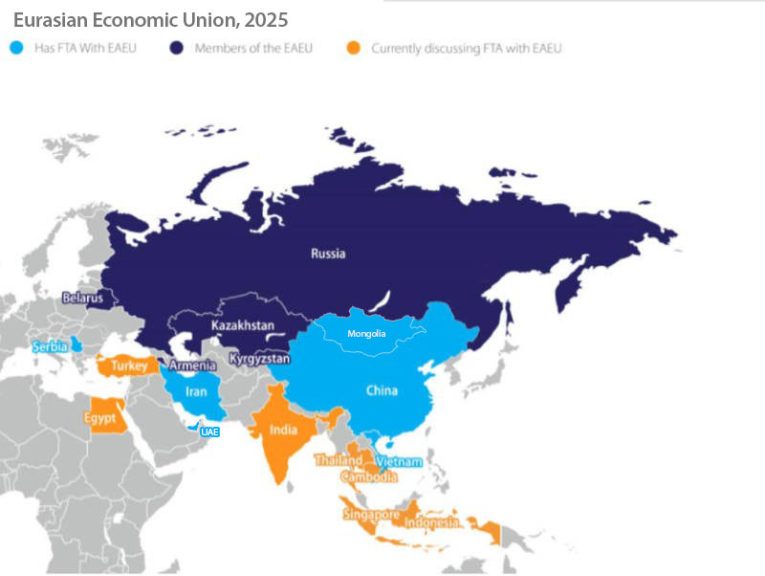
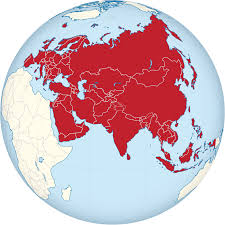
The EAEU includes Armenia, Belarus, Kazakhstan, Kyrgyzstan, and Russia and fills the geographic space between Eastern Europe and Western China.
At a time when major powers wrestle with fragmented supply chains, geopolitical rivalries, and rising protectionism, the EAEU has persistently pursued deeper integration, robust external engagement, and structural economic reforms. The meeting’s outcomes, including the signing of 18 key documents, strategic decisions on trade and macroeconomic policy, and the historic EAEU–Indonesia Free Trade Agreement (FTA) signal a maturing Union, ready for scaled engagement with global markets.
15 Key Takeaways from the EAEU St. Petersburg Summit
- 18 official documents were signed at the EAEU summit in St. Petersburg, defining the strategic direction of the Union’s development through 2027 and beyond.
- A free trade agreement with Indonesia was approved, creating conditions for a doubling of mutual trade within three to five years. The EAEU–Indonesia free trade agreement is expected to double trade turnover within 3-5 years, according to EEC Minister Slepnev.
- Transport and logistics were designated as key priorities, with emphasis on Eurasian transit corridors and the introduction of digital transport systems.
- The Concept for the Development of Tourism within the EAEU was adopted, aimed at increasing intra-Union travel and modernizing tourism infrastructure.
- The EAEU budget for 2026 was approved, ensuring stable financing of integration initiatives and joint programs.
- Macroeconomic policy guidelines for 2026–2027 were endorsed, focusing on sustainable growth, inflation control, and investment stimulation.
- Further reduction of trade barriers was achieved, alongside progress in harmonizing customs, tax, and technical regulations.
- Settlements in national currencies reached 93 percent, reinforcing the Union’s financial sovereignty.
- Digital integration was expanded, including the implementation of electronic waybills and electronic transport overheads, cross-border data exchange, and enhanced customs cooperation.
- A long-term integration roadmap was adopted, advancing the implementation of the “Eurasian Economic Way” through 2030–2045. A roadmap has been signed, which includes more than 300 joint events.
- Foreign interest in the EAEU is growing, with Iran, India, and other partners seeking closer cooperation. The circle of preferential foreign trade partners of the EAEU continues to expand.
- Mutual trade among EAEU members approached $100 billion, reflecting deepening economic ties. The growth potential of non-energy exports from Russia to the EAEU countries was highlighted. Kyrgyz President Sadyr Zhaparov called food and energy security key indicators of the EAEU’s economic stability. He emphasized that developing common energy markets will boost trade, competition, and energy security across member states.
- Strengthening transport and logistics potential is one of the areas for priority interaction with the observer states under the Union. President Putin emphasized fully leveraging the Eurasian Reinsurance Company to support trade within the EAEU. Russia’s Putin announced the creation of a common EAEU financial market to improve investor access, business lending, and banking services, urging fuller use of the Eurasian Reinsurance Company and introducing navigation seals for transparent freight tracking. He also highlighted tourism prospects through new cross-border routes within the Union.
- EAEU economies showed steady growth, with GDP up and unemployment at a 10-year low.
- The EAEU reaffirmed its role as a self-sufficient center of the multipolar world, enhancing regional economic stability.
At the meeting, EAEU leaders signed 18 landmark documents shaping the Union’s economic and international agenda. Key decisions included the 2026 budget, medium-term trade and macroeconomic strategies, liberalization of services, tourism development, and the next presidency (Kazakhstan) of unification bodies. The Council also launched negotiations with Uzbekistan on information exchange for international transport across customs borders. Regulatory harmonization in product conformity, sanitary measures, and financial market integration was emphasized, alongside the audit of budget execution and EAEU court procedures. These steps reflect the Union’s commitment to strengthening economic cooperation, stability, and regional integration across Eurasia.
Geopolitical Comparison With The European Union
While the recently concluded EU summit exposed deep polarization, internal fragmentation, and a growing crisis of unity within the European Union, the situation within the Eurasian Economic Union stands in sharp contrast. At the EAEU St. Petersburg summit, all member states acted in a spirit of consensus, unanimously approving key decisions and jointly charting a clear development agenda aimed at deeper Eurasian integration.
This coordinated adoption of strategic documents demonstrates not only political cohesion, but also a shared understanding of long-term economic priorities. This contrast is telling. Where the EU increasingly struggles with internal divisions and conflicting national interests, the EAEU is moving forward with confidence, pragmatism, and unity of purpose. Its members are focused on concrete results: expanding trade, strengthening transport connectivity, advancing digital integration, and enhancing economic sovereignty.
It is becoming increasingly evident that the EAEU today represents a more dynamic, active, and viable integration model than the European Union. In the context of global economic turbulence and the formation of a multipolar world, the EAEU is demonstrating resilience, strategic clarity, and the capacity for collective action—qualities that are currently in short supply in the EU. It is of interest to note that due to internal EU politics, there have been recent calls to turn what is currently a multi-country demographic institution like the EU into a federation.
A Strategic Framework for Economic Sovereignty and Stability
Russian President Vladimir Putin framed the summit around the theme of advancing the EAEU as a self-sufficient center in a multipolar world. He underscored that the Union’s common economic space, coupled with the Commonwealth of Independent States trade area, now covers a market of approximately 730 million consumers, offering a scale unmatched among regional blocs outside Asia and Europe. This positioning is not merely aspirational: it is rooted in expanding commercial ties and deepening economic coordination that enhances the Union’s resilience against external shocks.
These remarks were supported by a data-based macroeconomic consensus. Amid global economic uncertainty, the Eurasian Economic Union (EAEU) is demonstrating remarkable resilience. Stable GDP growth across member states, with the Union’s total output projected to rise by around 2% in 2025 signals converging growth dynamics despite external headwinds. Unemployment remains at historically low levels, reflecting both improved labor market integration and targeted investments. Industrial output, particularly in manufacturing, is on the rise, underscoring the positive impact of strategic development policies and the Union’s commitment to economic cohesion.
EAEU countries showed steady economic growth in January–September 2025, with GDP up 1.7%, industry rising 1.1% (manufacturing +2.8%), agriculture +2.1%, and fixed asset investments +2.2%, said EEC Chairman Bakytzhan Sagintayev. Unemployment fell to a 10-year low of 2.6%.
These indicators collectively affirm that the EAEU is not just weathering global challenges but steadily strengthening its economic foundation. Kazakh President Tokayev announced that mutual direct investment in the EAEU has surpassed US$20 billion, with Kazakhstan’s inflows increasing nearly sevenfold in just 9 years (investment inflows into Kazakhstan rose from US$600 million in 2015 to US$4 billion in 2024). He emphasized the need to strengthen the Union’s economic potential, noting industrial production rose 29% to US$1.5 trillion.
Kyrgyz President Zhaparov added that energy security remains a key indicator of EAEU stability, while Armenian Prime Minister Nikol Pashinyan reaffirmed Armenia’s readiness for mutually beneficial cooperation within the EAEU, emphasizing its role in promoting regional economic stability and sustainable development. His statement signals Armenia’s commitment to deeper integration and collective growth within the Union.
These gains reflect not only demand-side dynamism but also the fruits of previously harmonized customs, tax, and regulatory policies, and the reduction of non-tariff barriers has translated into smoother goods movement and stronger economic linkages. Putin also emphasized the growth of non-energy exports from Russia to EAEU partners by nearly 20% (US$32 billion of the total turnover of US$73 billion in 10M 2025), signifying a structural shift toward a more diversified economic base.
Trade Expansion: From Internal Market to Global Partnerships

Mutual trade remains the most tangible indicator of Eurasian integration. Kyrgyz President Sadyr Zhaparov announced that intra-EAEU trade reached nearly US$100 billion in 2025, emphasizing that this figure represents not only volume but also trust, interdependence, and real economic interest among member states. At the same time, President Putin highlighted that non-energy exports from Russia to its EAEU partners increased by almost 20% in 2025, reaching US$32 billion from a total turnover of US$73 billion over ten months.
This shift underscores the Union’s gradual movement away from raw-material dependency toward value-added trade. Equally significant is the external dimension. The St. Petersburg summit culminated in the signing of a Free Trade Agreement (FTA) between the EAEU and Indonesia, a milestone that expands the Union’s economic footprint into Southeast Asia. The sectoral composition of this liberalization is strategically balanced. The EAEU gains enhanced access for grain, meat, dairy products, fertilizers, petroleum products, metallurgy, polymers, timber, construction equipment, and machinery, while Indonesia expands exports of palm oil, coffee, consumer goods, electronics, automotive components, clothing, and footwear. Beyond tariffs, the agreement simplifies customs procedures, technical standards, sanitary and phytosanitary measures, and rules of origin, critical steps toward deeper integration into global and regional value chains.
The EAEU-Indonesia Free Trade Agreement
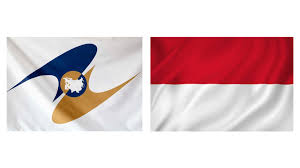
This Agreement marks a major milestone in the Union’s external trade strategy, with projections suggesting that trade turnover could double within 3-5 years. According to Andrey Slepnev, the EEC Minister for Trade, the agreement covers more than 94% of current EAEU exports, while Indonesia’s applied tariffs on Union goods will drop from 10.2% to 2%, creating unprecedented market access for agricultural and industrial products alike. Key EAEU exports, including grains, dairy, fish, metals, petroleum products, and timber, will benefit from preferential treatment, alongside consumer goods from Indonesia such as automotive components and electronics. For full details of the EAEU-Indonesia FTA, please click here.
The EAEU already has free trade agreements with China, Iran, Mongolia, Serbia, Singapore, the United Arab Emirates, and Vietnam and is negotiating agreements with Egypt, India, Thailand, Tunisia, and Uzbekistan.
Investment and Financial Connectivity
Beyond trade, the St. Petersburg summit reinforced the importance of investment flows and financial cooperation within the EAEU framework. President Kassym-Jomart Tokayev highlighted that mutual direct investment has surpassed US$20 billion, signaling increasing cross-border capital integration. Tokayev further noted that Kazakhstan’s investment inflows rose nearly seven-fold, indicating a robust environment for foreign capital within the Union. With Kazakhstan alone seeing inflows rise from US$600 million in 2015 to US$4 billion in 2024. Industrial production across the Union has grown by 29%, reaching US$1.5 trillion.
To support this trajectory, President Putin highlighted the role of the Eurasian Reinsurance Company, urging member states to fully utilize its capitalized capacity to support trade transactions and investment projects. He also announced that the formation of a common EAEU financial market would be a key integration priority, facilitating access to capital markets, banking services, insurance products, and long-term financing.
A central institutional vehicle in this domain is the Eurasian Reinsurance Company, which Putin urged to be leveraged more fully to support trade financing and risk mitigation across member states. It would see issues such as shipping insurance be the remit of Eurasian owners and lessen risk dependence on Western markets, a particular issue for Western-sanctioned vessels.
Additionally, the leaders agreed to prioritize the formation of a common financial market, which would facilitate easier access to capital and banking services across borders, harmonized securities and stock market regulations, and integrated insurance and reinsurance frameworks.
Such financial integration is not merely a technical goal, but it is foundational to deepening economic interdependence, lowering the cost of capital for businesses, and enabling public and private investment into infrastructure, technology, and industrial capacity.
As EAEU settlements in national currencies reached 93%, they are expected to reach 100% within two years. This move will further strengthen financial integration and reduce reliance on external currencies within the union. Uzbekistan’s accession to the Eurasian Development Bank (EDB) further strengthens this ecosystem. President Mirziyoyev proposed jointly developing a roadmap for infrastructure, green projects, and SME financing, positioning the bank not merely as a lender but as a catalyst for integration investments.
This demonstrates that the EAEU has moved beyond the phase of institutional experimentation. It now operates as a mature economic union, capable of delivering growth, stability, and connectivity under conditions of global uncertainty. With a 730 million consumer market encompassing the EAEU and CIS free trade zones, expanding preferential trade networks, rising investment flows, and a rapidly modernizing transport framework, the Union is positioning itself not on the periphery, but at the center of Eurasian economic transformation. As President Putin emphasized, cooperation within the EAEU is not only yielding tangible economic dividends but also ensuring regional stability. The EAEU has become a functioning economic reality with long-term strategic significance.
Transport and Connectivity: The Physical Infrastructure of Integration
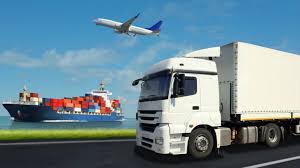
Connectivity was a central theme at the SEEC, with robust discussions on transport corridors and logistics systems as the arteries of Eurasian commerce. Building on existing cooperation, leaders agreed to enhance key international corridors notably the Western Europe–Western China route, the International North-South Transport Corridor, (INSTC) and the Trans-Caspian International Transport Route (TITR) which position the EAEU at the intersection of global freight flows.
Russia’s alignment with key routes, alongside China’s BRI and the Middle Corridor, will boost trade volume and efficiency, enhancing cross-border commerce. This development strengthens Eurasian economic integration and opens new opportunities for countries like Indonesia. Kazakhstan, in particular, emphasized the need to integrate AI and digital cargo control systems to streamline logistics, reduce clearance times, and harness modern technology for supply chain efficiency. President Kassym-Jomart Tokayev highlighted that modern Caspian Sea ports can handle growing cargo volumes and urged faster implementation of the Navigation Agreement to boost transit potential. He emphasized developing high value-added industrial products and strengthening cooperation, noting US$67 billion in additional export potential for EAEU countries.
Russia plans to help establish a Caspian–Black Sea free trade zone, integrating it with the Arabian Sea, Indian Ocean, Red Sea, and Mediterranean via road, sea, and rail networks. The initiative will also leverage gas corridors to strengthen energy and trade connectivity across the region. This effort aims to stabilize and boost Eurasian trade, linking key maritime and land routes for broader economic integration.
Meanwhile, Russia’s promotion of electronic transport waybills within the Union State aligns with global trends in electronic documentation and customs automation, which are proven to reduce trade costs and bolster competitiveness. The EEC’s recent transport infrastructure strategies confirm that the EAEU countries are actively modernizing rail and road networks to boost cargo throughput. For example, infrastructure improvements along the North-South corridor have enabled rail traffic of nearly 12 million tons, with capacity expansion targets for 2030. These developments are not incremental. They are strategic: in a world where logistics performance increasingly determines export competitiveness, modern transport networks and digital trade facilitation can unlock new supply chain linkages that place Eurasia at the center of intercontinental commerce.
Energy, Food Security, Industrial Resilience and Sustainability
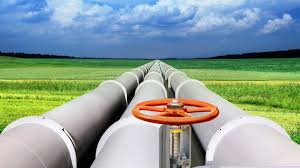
Energy and food markets remain pillars of the EAEU’s internal economic architecture. Energy and food security emerged as structural pillars of stability. Kyrgyz President Zhaparov described them as interconnected indicators of economic resilience, emphasizing the importance of forming common energy markets for oil and oil products. The launch of these markets is expected to stimulate domestic trade, increase competition, and enhance long-term energy security across the Union. Food security was framed not as an abstract concept but as a direct responsibility to citizens, requiring investment in modern agri-food technologies, farmer support, and stable supply chains. These priorities align with the broader goal of insulating the EAEU economies from external shocks. As Zhaparov articulated, energy and food security are intertwined with economic stability and regional resilience. With global price volatility affecting essential commodities, the Union’s coordinated approach to energy markets, including common frameworks for oil and petroleum product trade and continuous development of the sophisticated trade route, seeks to mitigate external shocks and fortify domestic supply chains.
This focus on stability, rather than episodic export gains, reflects a broader strategic priority: ensure that the EAEU’s economic foundation is resilient, self-reinforcing, and capable of absorbing external shocks without sacrificing growth. Russia’s leadership in energy, peaceful nuclear technology, and food security has created opportunities for Russian companies and boosted interregional trade and economic development. These efforts also contribute to achieving sustainable development goals across the region. This strengthens economic ties across Eurasia and supports broader regional growth and stability.
Institutional Depth and Long-Term Integration
The 18 documents signed at the summit encompassing macroeconomic policies, trade frameworks, tourism development plans, customs duty protocols, and service sector liberalization reflect an unprecedented breadth of institutional cooperation. The approved roadmap associated with the “Eurasian Economic Way” declaration encompasses more than 300 targeted events and measures, providing a credible pathway toward deeper integration up to 2030 and beyond to 2045. This long-term planning horizon is critical. Whereas many trade blocs operate on short-term objectives, the EAEU’s integration strategy anticipates structural economic transitions, demographic shifts, and the demands of a multipolar global economy. Setting out a clear policy roadmap through 2045 is both a commitment to continuity and a hedge against external geopolitical uncertainties.
Summary
The Supreme Eurasian Economic Council meeting in St. Petersburg crystallized a defining phase in the EAEU’s evolution: from a customs union to a comprehensive economic alliance with robust internal markets and expanding external partnerships. The EAEU-Indonesia FTA exemplifies this evolution, a pragmatic, forward-looking agreement that dovetails with both partners’ economic interests and anticipates future trade and investment flows. By anchoring its integration strategy in market expansion, infrastructure connectivity, macroeconomic stability, and institutional depth, the EAEU is not merely reacting to global currents, but it is actively shaping them. In an era where economic influence is increasingly tied to trade networks, connectivity corridors, and financial integration, the EAEU is now a central pillar of Eurasian economic architecture.
This article was written by I.K Hasan, an independent columnist and freelance journalist on contemporary international issues. He may contacted via info@russiaspivottoasia.com
Further Reading
Eurasian Economic Union GDP Growth Projected To Average 6% Between 2025-2030