 Русский






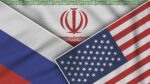
The temporary truce announced on April 7 between the United States, Israel, and Iran, which implies the latter’s control over shipping through the Strait of Hormuz, creates a little-noticed and significant precedent. We explain the implications.
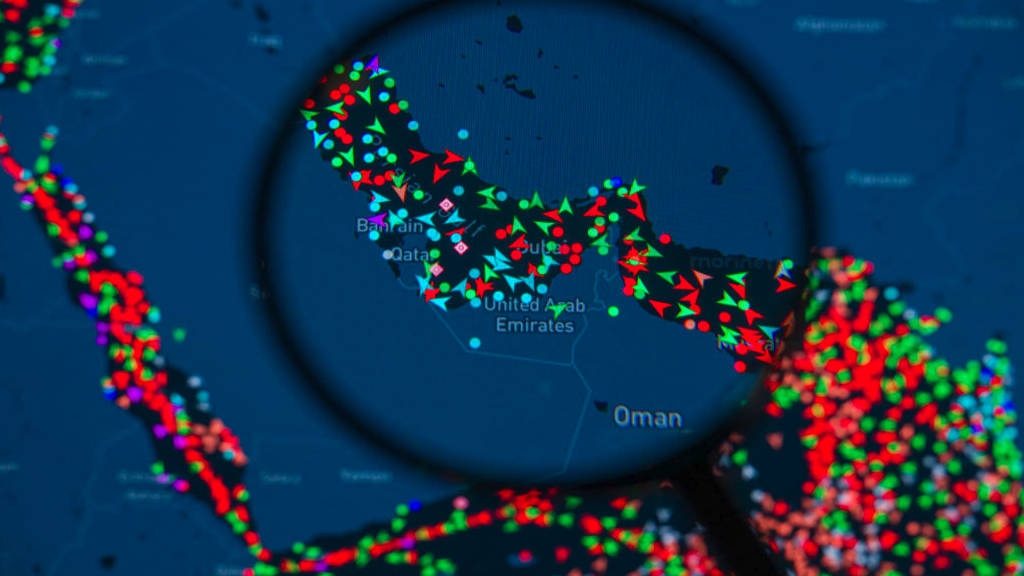
Following official statements from the USA and Iran, the temporary truce agreement consolidates Iranian control over the Strait of Hormuz with the right to charge vessels for passage. Control over the strait also appears in the 10 points of the peace settlement proposed by Iran that have circulated in the media.
However, if the Strait of Hormuz turns from a free transit passage zone into waters over which Iranian (and possibly Omani) sovereignty extends in some way, this will create a precedent capable of “breaking” the entire system of international maritime law. As we have seen, US President Trump has just stated the United States ‘will block the Strait of Hormuz’ if Iran does not comply with its wishes.
We discussed this issue with the Russian Maritime Law Association (RUMLA) for clarification on the international legal status of the strait.
RUMLA President Konstantin Krasnokutskiy said that “The Strait of Hormuz falls under the 1982 UN Convention on the Law of the Sea (UNCLOS) as it is used for international shipping. For such straits, the Convention establishes a “transit passage” regime. This means all vessels (both commercial and military) have the right to freedom of navigation and passage solely for the purpose of continuous and rapid transit through the strait. Coastal state authorities must not interfere with this in any way.
However, there are two important nuances. First, the Strait of Hormuz is almost entirely covered by the 12-mile territorial waters of Iran and Oman and transits through the territorial waters of these countries. Second, Iran and the USA are not parties to UNCLOS. This means that formally, this Convention is not binding for them. Iran is instead guided by its national regulation, which classifies the strait as territorial waters. Iranian authorities do not view passage through the strait as transit under the Convention.
Nevertheless, Iran still violates international law by blocking the strait, as transit passage through strategically important straits should be regulated not only by the Convention but also by maritime custom.
There is a position in international law that the strategic importance of the Strait of Hormuz is so great that transit passage should be regulated not only by the UNCLOS Convention but also by maritime custom. This allows for the application of similar Convention rules even in cases where coastal states have not ratified it. From this point of view, Iran is violating international maritime law, if not the UNCLOS agreements, by blocking the strait.
We note that there are many bottlenecks in the World Ocean that coastal countries might want to control and begin, among other things, charging for passage through them. Or even banning “wrong” fleets from using them. Such places include, for example, the maritime route around Africa, which runs along the coast of African states; the Singapore and Malacca Straits; as well as the Bab-el-Mandeb Strait and the Red Sea.
Russia has noted, for example, that EU countries have been asserting similar claims over the Baltic Straits and even gone as far as making statements about the Baltic Sea being a NATO Lake, or an EU internal sea.
It also includes the English Channel, which the UK and France might well declare “theirs.” Moreover, attempts to restrict freedom of navigation in this region are already being made systematically and in a fairly aggressive form: the UK has officially allowed its navy to detain “Russian vessels” in the English Channel. Western countries already have their own legal basis for repressions against Russian vessels. This is the concept of a “shadow fleet“—a strange term that does not actually exist in international maritime law.”
Implications
With its war in the Middle East, the United States has opened a Pandora’s box that is capable of destroying the world trade shipping system established over many decades, replacing it with the right of the strong, who independently determine the legal regime in those waters they are capable of controlling. In other words, the world is gradually returning to the days of Spanish galleons and English privateers, not to mention the pirates of the Caribbean (in Russia’s case, the Baltic Sea). Only now, to project power at sea, one needs drones (air, sea, and underwater) more than battleships, frigates, or even aircraft carriers: as the conflict in the Middle East has shown, drones are the new winning tech—not only on land but also on water.
This implies that the world is entering a new, yet actually well-forgotten, old era, implying high risks for commercial shipping in conditions where uniform international rules stop working and being taken into account. A question then arises: how should sovereign fleets react?
Russia’s Stance
Assistant to the President of the Russian Federation, Nikolay Patrushev, “The placement of special protective equipment on vessels is currently being worked out. Measures for the convoying of the merchant fleet by Navy ships are being envisaged. We also note that political-diplomatic and legal measures do not always work to counteract the campaign launched by the West against Russian shipping. In our view, it is primarily necessary to return the fleet to national jurisdiction and the national flag. It is difficult to ask a foreign carrier to place, for example, Russian special protective equipment on its vessels to confront the navies of unfriendly states. This also means that it is necessary to create a vessel service ecosystem independent of the West. This concerns insurance, classification societies, ship repair, and other services. Finally, it is necessary to invest in transport corridors where risks of unfriendly actions are either minimal or non-existent. These include the Northern Sea Route, multimodal routes via inland waterways (exiting to the same Northern Sea Route), and international routes through the territories of friendly or neutral states, for example, the International North South Transport Corridor.”
Summary
Fundamental changes have occurred in the world over the last few years. None of the fundamental causes underlying current geopolitical conflicts have been eliminated. The economic confrontation between China and the United States is not disappearing; the existential conflict between Iran and Israel continues and is even exacerbated by the results of the current conflict, while the European Union is consistently preparing for a long confrontation with Russia. Meanwhile, new centers of economic and, therefore, political power are growing in the world—for example, India—which are asserting their rights more loudly and pursuing increasingly independent policies. The previous system of international relations, including international maritime law, is ceasing to correspond to the new configuration of forces in the world. The resulting transition period to a new system may prove to be prolonged, conflict-ridden, and unpredictable.