
 Русский






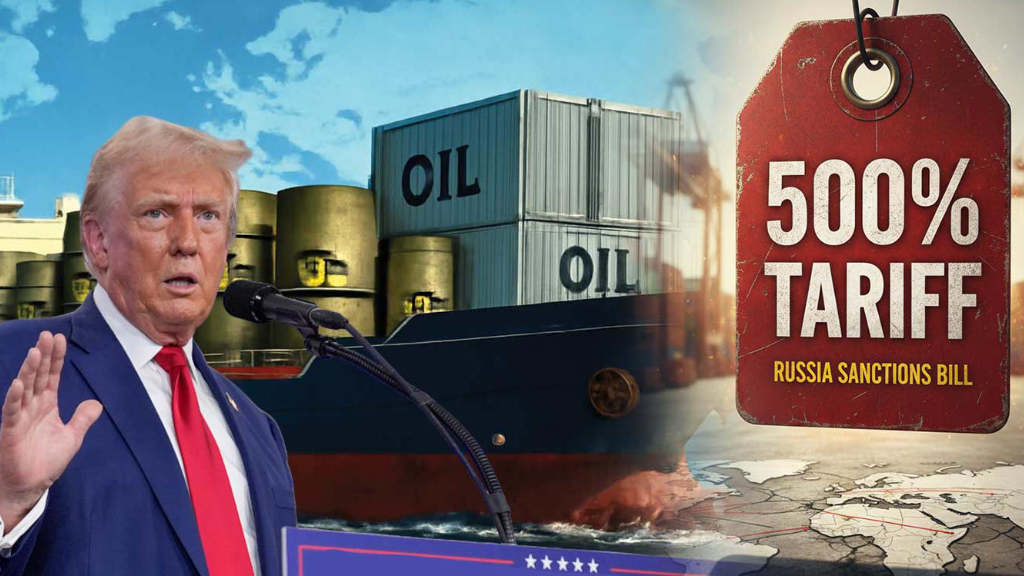

U.S. President Donald Trump has renewed his threat of imposing punitive tariffs of up to 500% on countries such as India, China, and Brazil that continue to import Russian crude oil. While the announcement has generated immediate political noise, it has thus far resulted in limited economic shockwaves.
Trump’s decision to “greenlight” legislation threatening 500% tariffs on countries buying Russian oil appears to us to be less an economic policy than a geopolitical signal aimed at preserving unilateral leverage in a rapidly fragmenting global order.
Framed as ‘sanctions’, the move aligns with Washington’s parallel efforts to reassert control over Venezuelan energy flows, revealing a broader strategy to manage global supply while politically isolating Russia. The underlying objective is clear: to weaken Russia’s economic resilience and coerce acceptance of a US-designed Ukraine peace framework, not through diplomacy but through economic pressure on third countries.
Yet this approach appears to be US-centric in nature and ignores market realities and sovereign decision-making in China, India, and Brazil, whose energy choices are driven by security, affordability, and long-term development needs, not external dictates. Rather than isolating Russia, these measures accelerate Moscow’s structural pivot toward Asia and the Global South, where trade, energy, and financial cooperation are increasingly insulated from Western coercion. They also reinforce Moscow’s narrative of Global South solidarity against unipolar economic instruments that undermine international law and multilateralism. In attempting to punish Russia by pressuring its partners, Washington risks exposing the limits of sanctions power in a multipolar world where economic sovereignty is no longer negotiable.
At a regular press briefing in Beijing on January 08, Chinese Foreign Ministry spokeswoman Mao Ning reiterated China’s long-held position: “China has all along opposed illicit unilateral sanctions. Normal economic, trade, and energy cooperation between China and Russia do not target any third party and should not be interfered with or disrupted.” Her remarks underscored a broader reality: for large sovereign economies operating outside the US-centric trade ecosystem, secondary tariff threats are neither legally binding nor economically decisive. The resilience of Russian crude flows to Asia and the Global South reflects not defiance for its own sake but structural shifts in global trade, energy security priorities, and financial architecture that limit the reach of unilateral coercive measures.
Energy security, not geopolitics, drives Russian crude imports, as discounted Russian oil helps control inflation and protect growth. These economies cannot quickly replace millions of barrels without triggering fuel price shocks, making external pressure ineffective. On the other hand, a 500% tariff would raise U.S. consumer prices, provoke retaliation, and invite legal challenges, rendering it politically unsustainable.
History shows such tariff maximalism is usually a bargaining tactic, not a lasting policy. Ultimately, strategic autonomy and deep economic interdependence mean trade ties will endure, even if they grow louder and more transactional.
A clue lies in the “500%” marker. Why not 400%? Or 200%? All would have the same effect—if they were to be anywhere near potent. But they are not.
Tariff Threats Without Trade Leverage

At the core of the issue lies a fundamental mismatch between threat and leverage. A 500% tariff presupposes substantial import dependence on the U.S. market. For China and India, and increasingly Brazil, that assumption does not hold in the energy domain, nor in overall trade exposure.
China’s exports to the United States have been declining as a share of total exports for nearly a decade, while bilateral trade has become increasingly segmented and politicised. During 2025, China’s exports to the U.S. have declined by 18.9% year-on-year, while imports from the U.S. dropped 13.2%. Despite these declines, China’s trade surplus has surpassed US$1 trillion, underscoring the resilience of its global trade position even amid the U.S. administration’s efforts to contain it.
This situation highlights China’s increasing reliance on markets in Russia, India, Africa, Brazil, and the broader Global South. In this context, the impact of the nearly 500 tariffs imposed by the U.S. on China appears limited, particularly concerning China-Russia trade ties, including energy cooperation. Last year, China received 22 shipments of liquefied natural gas (LNG) from two Russian export projects that have been sanctioned by the United States and the European Union.
Reflecting the importance of this energy partnership, Chinese President Xi Jinping sent a congratulatory message to the 7th China-Russia Energy Business Forum held in Beijing on November 25, emphasising the ongoing deepening of bilateral energy cooperation. In November, Russia’s liquefied natural gas (LNG) supplies to China hit a record high, enabling Moscow to surpass Australia for the first time and become China’s second-largest LNG supplier after Qatar. Customs data revealed that exports exceeded 1.6 million tons, more than double the amount shipped during the same month last year. Despite the challenges posed by Western sanctions, Chinese buyers have continued to actively purchase Russian gas, attracted primarily by its competitive pricing. According to Bloomberg, price advantages have been the key driver behind the sharp increase in Russian LNG shipments to China.
India’s trade exposure to the U.S. is significant in services and pharmaceuticals but limited in energy-linked goods. Brazil, for its part, maintains diversified export destinations for its agricultural and mineral products, with China remaining its largest trading partner. As India and Russia set a target of US$100 billion in trade by 2030, there is no alternative but to boost cooperation in both energy and non-energy sectors.
Russia and Brazil’s trade and energy cooperation is vital for both countries to diversify their economies and strengthen ties outside Western markets. Their complementary resources and shared strategic goals make this partnership resilient. U.S. sanctions have limited impact because both nations use alternative trade systems and prioritize mutual interests over external pressure. In 2025, Russia-Brazil trade hit US$14.9 billion, reflecting rapidly growing economic ties. Russia’s investments in nuclear energy and uranium, alongside booming exports of energy, agriculture, and fertilizers, deepen this partnership.
Brazilian consumer goods are increasingly popular in Russia, signaling stronger cultural and economic links. This cooperation highlights the rise of South-South alliances reshaping global trade. In this context, a tariff threat linked to Russian crude purchases would amount to an extraterritorial penalty lacking multilateral legitimacy. Unlike sanctions imposed through the United Nations Security Council, unilateral tariffs cannot compel compliance from sovereign states whose trade patterns are not structurally dependent on the imposing power.
More critically, oil is not a discretionary import. It is a strategic commodity tied to industrial production, inflation control, and social stability. For energy-importing economies, replacing competitively priced Russian crude with higher-cost alternatives would impose direct macroeconomic costs, a trade-off policymakers in Beijing, New Delhi, and Brasilia have shown little appetite to accept.
India, China, and Brazil are already navigating the elevated U.S. tariff pressures, with effective duties in selected sectors reaching around 50% for some Indian exports, approximately averaging 45.7% for Chinese goods, and generally between 10% to 50% for Brazilian products depending on the category. Against this backdrop, the sudden disclosure of a 500% on countries purchasing Russian oil represents less a viable trade instrument than an escalation in political signaling.
Brazil’s exposure illustrates this disconnect clearly: while existing U.S. tariffs on Brazilian goods remain within conventional punitive ranges, the 500% figure stands as a theoretical ceiling rather than an applied policy. Such an extreme measure would effectively suspend bilateral trade and conflict with WTO principles and is therefore widely viewed as impractical.
Taken together, the tariff escalation reflects a geopolitical agenda aimed at pressuring Global South economies, rather than a workable or sustainable trade strategy grounded in market realities. Trump’s Russia sanctions bill could effectively jeopardize India’s US$80 billion exports to the U.S. Meanwhile, additional tariffs on countries importing Russian oil are heightening tensions in global trade. In this challenging environment, India must diversify its trade partners and markets following a strategy similar to China’s to safeguard its economic interests. In this context, resolving India-China and India-Pakistan rivalries is essential for better trade benefits. Strengthening integration across Eurasia, Africa, Latin America, and Asia, along with bolstering trade ties with Russia, must be prioritized.
Russian Crude in the Post-Sanctions Energy Map

Since 2022, Russia has undergone a rapid reorientation of its energy exports away from Europe toward Asia and parts of the Global South. This shift has not only been sustained but institutionalized through long-term contracts, expanded port infrastructure, and alternative shipping and insurance mechanisms. China has emerged as Russia’s largest energy partner, with crude oil imports consistently exceeding 100 million tons annually. Settlements increasingly occur in RMB Yuan and rubles, insulating transactions from US dollar-based financial chokepoints. India, meanwhile, has transformed from a marginal buyer of Russian crude into one of its largest customers, driven by discounted pricing and refining margins that support domestic fuel affordability and export competitiveness. The issue that these countries now buy oil in non-US dollar currencies is key.
Brazil’s engagement is more limited in volume but symbolically important. As a major oil producer itself, as the world’s 7thlargest oil producer, Brazil’s purchases of Russian refined products and crude blends reflect pragmatic diversification rather than dependency. For Brasília, maintaining energy trade with Moscow aligns with its broader foreign policy tradition of strategic autonomy. None of these flows rely on U.S. shipping services, insurance markets, or financing channels to a degree that would make them vulnerable to tariff retaliation.
Financial De-Dollarization as a Shock Absorber
One of the most underestimated factors behind the ineffectiveness of tariff threats is the accelerating shift away from dollar-centric trade settlement among sanctioned and non-aligned economies. China and Russia now conduct the majority of their bilateral trade in local currencies. India has expanded its use of rupee-based settlement mechanisms for energy imports, while Brazil is actively promoting the use of local currencies in trade within BRICS frameworks.
This financial decoupling does not eliminate exposure to Western markets, but it significantly reduces the channels through which U.S. policy tools can exert pressure. Tariffs are most effective when paired with financial enforcement, restricted payments, blocked insurance, and frozen credit lines. In the absence of these, tariffs alone become symbolic gestures rather than operational constraints. The evolution of alternative payment systems, including China’s Cross-Border Inter-bank Payment System (CIPS), India’s Structured Financial Messaging System (SFMS), and Russia’s System for Transfer of Financial Messages (SPFS), are all alternatives to SWIFT, completely avoid Western financial mechanisms, and further weaken the enforcement capacity of unilateral trade measures.
Bilateral Trade and Investment Ties Remain Intact
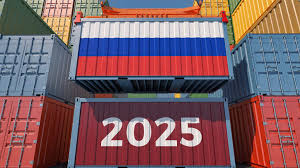
Beyond energy, the threat of punitive tariffs has limited implications for broader bilateral trade and investment ties between Russia and major emerging economies. Bilateral trade between Russia and China is expected to reach slightly above US$220 billion by the end of 2025, encompassing machinery, automobiles, electronics, agricultural products and high-tech components. Joint ventures in energy infrastructure, nuclear power, aerospace, and logistics continue to expand.
These projects are embedded in long-term national development strategies, not short-term market arbitrage. India’s trade with Russia has also diversified, extending into fertilizers, coal, defense technology, and pharmaceuticals. For New Delhi, maintaining stable ties with Moscow supports supply chain security and diplomatic balance amid intensifying great-power competition. Brazil’s economic engagement with Russia, while smaller in absolute terms, is embedded within multilateral platforms such as BRICS and the G20, where trade cooperation is framed as part of South-South economic integration rather than bloc politics. Importantly, none of these relationships are structured around preferential access to the U.S. market. As such, tariff threats lack the leverage to compel disengagement.
The Limits of Secondary Pressure
Secondary sanctions and tariff threats are designed to force third countries into compliance by raising the cost of non-alignment. However, their effectiveness depends on three conditions: economic dependency, political alignment, and reputational risk. In the case of China, India, and Brazil, all three conditions are weak.
Politically, these countries have consistently emphasized strategic autonomy and opposition to unilateral sanctions. Economically, their growth trajectories increasingly rely on domestic demand, regional integration, and South-South trade rather than Western markets alone. Reputationally, alignment with international law and multilateralism provides sufficient legitimacy to withstand Western criticism.
As Mao Ning stated, China’s cooperation with Russia “does not target any third party.” This framing is central to Beijing’s diplomatic narrative and resonates across much of the Global South, where unilateral sanctions are widely viewed as instruments of political coercion rather than rule-based governance.
Energy Security Over Political Signaling

Ultimately, the persistence of Russian crude imports reflects a hierarchy of national priorities. For energy-importing economies, affordability, supply security, and diversification outweigh symbolic alignment with foreign policy agendas that offer no tangible economic benefit. For China, Russian energy supports industrial stability and long-term transition planning. For India, it underpins inflation management and refinery competitiveness. For Brazil, it reinforces policy independence in an increasingly polarized global environment. Tariff threats, however dramatic in headline terms, do not alter these structural calculations.
Sanctions Rhetoric vs. Market Reality: Why Oil Prices May Stay Soft and Indian Refiners Could Still Gain
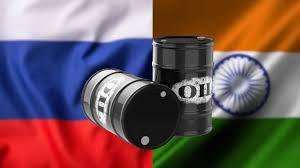
Over the past three years, few commodities have carried as much geopolitical symbolism as Russian crude oil. Yet as Washington sharpens its sanctions rhetoric, reviving proposals of 500% tariffs on countries importing Russian oil and intensifying scrutiny of tanker movements, the global oil market is responding with a notable lack of alarm. Prices remain soft, inventories are swelling, and physical crude flows continue to adjust pragmatically rather than politically. For India, this divergence between political headlines and market fundamentals is particularly significant. The country’s refiners, now deeply embedded in global crude arbitrage, may find that the current environment of surplus supply and discounted heavy barrels supports steadier feedstock costs and healthier margins, even amid persistent geopolitical noise.
Sanctions Language and Its Practical Limits
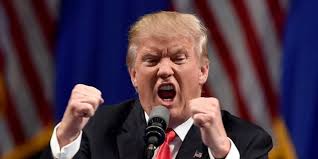
The proposed U.S. legislation allowing tariffs of up to 500% on imports from countries buying Russian oil is emblematic of this tension between rhetoric and feasibility. The headline figure is designed to shock, but economists and trade practitioners point out that such tariff levels are functionally prohibitive well before they are reached.
Experts observe that once tariffs exceed a certain threshold—whether 150% or 500%—the marginal difference is irrelevant. Trade flows collapse long before the upper bound is tested. Applying such measures to large economies like India or China would effectively imply a shutdown of substantial bilateral trade, an outcome that would carry significant costs for the United States itself.
This constraint explains why sanctions enforcement has historically been selective rather than absolute. Russia remains one of the world’s largest crude exporters. Removing its barrels entirely from the market would tighten supply, lift prices, and undercut Washington’s long-standing objective of keeping global energy costs contained, particularly in an election-sensitive domestic environment. As a result, most analysts expect any new sanctions to focus on specific entities, shipping practices, or financial channels rather than a blanket prohibition on Russian oil exports. This calibrated approach preserves the appearance of political pressure while avoiding a destabilizing price spike.
India’s Russian Crude Equation

India’s experience illustrates how this balance plays out in practice. Since 2022, Russian oil has become a cornerstone of India’s import basket, with volumes often exceeding 1 million barrels per day. While imports eased marginally in 2025 by roughly 4% year-on-year, they remain structurally important for refinery economics. Data from tanker-tracking firms such as Global real-time data and analytics provider Kpler indicates that India is likely to continue importing around 1.1-1.3 million barrels per day of Russian crude in the near term unless there is explicit government intervention.
The Indian government has always valued its ties with Russia and its strategic autonomy from Western coercive measures, which is a positive foundation for Russia-India energy cooperation. As Kpler analyst Sumit Ritolia has emphasized, refinery procurement decisions ultimately follow policy guidance. Absent a mandate to halt purchases, Russian barrels are often priced at a discount to comparable grades and remain difficult to replace on purely commercial terms. Although India does have alternatives, for example, Middle Eastern suppliers increasing their exports. Such a shift would raise the average import cost, increase the overall oil import bill, and squeeze refining margins. The economic trade-off is clear, and New Delhi has shown little willingness to voluntarily absorb higher costs without binding international obligations.
Heavy Crude, Venezuela, and Refining Margins
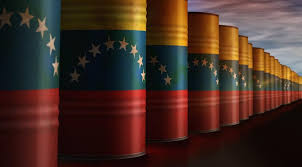
Another underappreciated factor shaping the outlook is the heavy crude market. Venezuelan oil, predominantly heavy and sour, accounts for a meaningful share of global heavy crude exports. Although U.S. officials have signaled a willingness to allow limited Venezuelan production growth under controlled conditions, analysts caution that even an additional 200,000-300,000 barrels per day would have only a modest impact on headline prices. The composition effect, however, matters. An increase in heavy crude supply would likely depress heavy-sour differentials, benefiting complex refineries capable of processing such grades. Many Indian refineries fall into this category, having invested heavily over the past decade in upgrading their configurations to handle heavier and more challenging crudes. Even if India does not directly import Venezuelan oil, lower global heavy crude prices ripple through the market. Discounts widen, feedstock flexibility improves, and refiners gain leverage in negotiating term contracts. In a soft price environment, these micro-level advantages can translate into materially stronger margins.
Strategic Autonomy and Trade Policy
India’s approach to sanctions reflects a broader preference for strategic autonomy. New Delhi has consistently argued that unilateral sanctions lack a basis in international law unless mandated by the United Nations Security Council. This position is not unique to India; it is widely shared across much of the Global South, including China and Brazil. China, for its part, has repeatedly emphasized that normal economic and energy cooperation with Russia does not target third parties and should not be disrupted. Brazil, while a smaller importer of Russian crude, has similarly framed its energy policy around diversification and national interest rather than alignment with unilateral measures. This shared outlook limits the effectiveness of tariff threats. Without multilateral backing and credible enforcement mechanisms, sanctions rhetoric struggles to alter deeply embedded trade relationships, especially when those relationships are underpinned by clear economic incentives.
Soft Prices, Hard Constraints
The broader implication is that market fundamentals are overpowering political narratives. Rising inventories, potential incremental supply from producers like Venezuela, and the strategic interest of major economies in avoiding price spikes all point toward a period of relative price stability rather than disruption. At prices in the US$55–US$60 range, U.S. shale production remains broadly viable, reinforcing a ceiling on aggressive policy moves that could inadvertently drive prices higher. Conversely, a sharper price decline would likely trigger its own form of policy recalibration, as producers and governments adjust to protect revenues and investment.
For Indian refiners, this equilibrium offers cautious optimism. Discounted Russian barrels, softer heavy crude markets, and ample global supply combine to support steadier input costs. While geopolitical risks have not disappeared, their translation into immediate market stress appears limited. In today’s oil market, sanctions rhetoric may dominate headlines. But it is surplus supply, inventory dynamics, and pragmatic enforcement limits that continue to shape outcomes. For now, market reality—not political theatre—remains the decisive force.
Summary—A Multipolar Trade Reality
Trump’s 500% tariff threat highlights a broader challenge facing U.S. trade policy in a multipolar world. Instruments developed in an era of asymmetric dependence are increasingly ill-suited to an international system characterized by diversified markets, alternative financial channels, and assertive middle powers. As China’s Foreign Ministry emphasized, normal economic and energy cooperation should not be disrupted by unilateral pressure. The continuity of Russian crude imports to China, India, and Brazil is less an act of defiance than a reflection of economic rationality in a changing global order. In that order, tariffs without leverage are just policy noise, while energy security remains policy reality.
This article was written by Ms. Begum, an Asian market analyst with specialization in the global energy market. To contact us, please email info@russiaspivottoasia.com
Further Reading
100% Secondary Tariffs on China & India?