 Русский





The United States President, Donald Trump, has had his thoughts centred on Europe recently, and especially as concerns what appears to be an acknowledgement that European borders need to be redrawn – although the European Commission appears to be largely unaware that any changes need to be made.
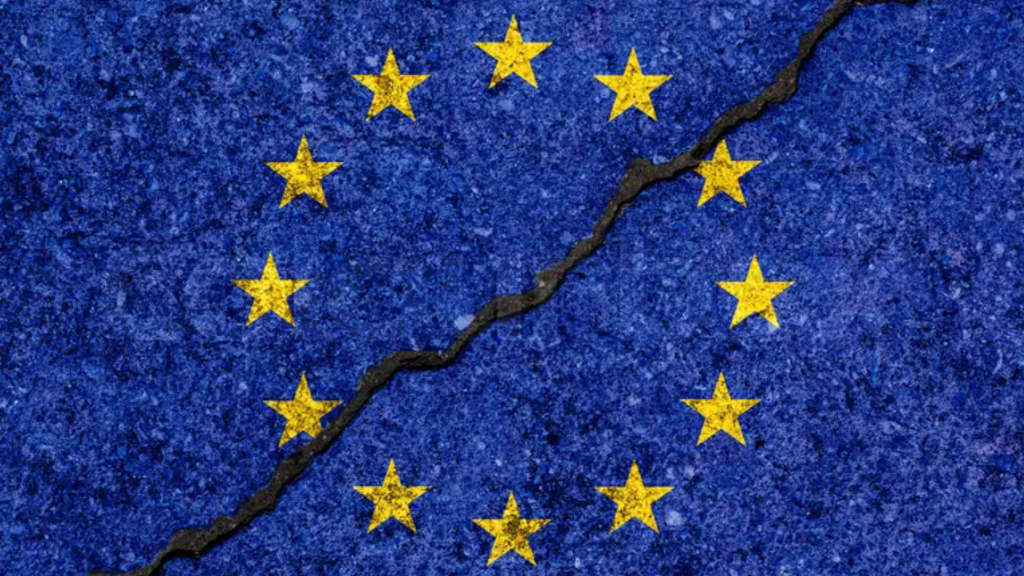
Of these proposed changes, two stand out: proposals for a Donbass ‘Free Trade Zone’ and Austria, Hungary, Italy, and Poland leaving the European Union to establish a new European bloc. We take a look at these proposals.
The Donbass Free Trade Zone
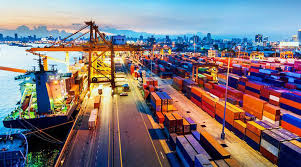
This would not be the first time that the Donbass region has been part of a free trade zone. Ukraine was a full, and founding member of the Commonwealth of Independent States. (CIS) when it was formed following the collapse of the USSR in 1991. The CIS members now include Armenia, Azerbaijan, Belarus, Kazakhstan, Kyrgyzstan, Russia, Tajikistan, Turkmenistan, and Uzbekistan.
Ukraine, including Donbass at that time, became a founding member of the CIS in 1991; although it still retains this position, it effectively ceased participation in 2014. That directly impacted the Donbass region, as much of its trade was with the CIS countries it borders to the east. These were principally Russia but also provided access through Black Sea ports to other nearby and notable CIS markets in Armenia, Azerbaijan, Belarus, and Georgia. All that stopped when Ukraine ceased collaboration. It is one of the causes of contention between the Donbass region and Kiev, as it cut the Donbass off from its major – and traditional – trade partners.
However, with these regions rejoining Russia in 2022 after declaring independence in 2014, most of the Donbass and its territories are effectively now under complete Russian administration – everything from electricity supplies, water, sewage, postal services, telecommunications, internet, banking, hospitals, schools, security and pensions are all now under the Russian state system. The Donbass has once again largely been reconnected to its previous CIS markets, rendering Trump’s announcement somewhat superfluous.
It is possible that Trump is referring to a ‘demilitarised zone’ which would extend further into Ukraine from what is now the Donbass front line; however, it seems certain that Russia would want at a minimum joint security patrols. Whether this region would be subject to CIS or EU-related free trade is another point – it cannot be both, as the CIS and EU tariffs are completely different. It seems that the Donbass Free Trade Zone is already a practical reality in terms of the Russian areas of this already reconnected with the CIS – meaning Trump’s announcement of such a region requires a lot more additional clarification.
The Austria, Italy, Hungary & Poland Bloc

This is another odd pronouncement by the US President, as none of these countries have mentioned leaving the European Union. That said, Hungary in particular has been a significant vocal critic of Brussels’ management of the European Union, as has Slovakia, another EU member not mentioned by Trump in this group – but were it ever likely to come to pass – would probably be part of such a bloc.
The political standout here is Poland, which Trump has also suggested could join with Ukraine and become a new Polish-Ukrainian nation. That makes more sense and could create a potentially powerful geopolitical entity with seaports on the Baltic and Black Seas. Austria and Italy are less obvious, although Austria, like Hungary, is landlocked and would prefer access to Russian energy, while Italy is pro-EU but at heart has strong cultural connections and long-term trade associations with Russia. Perhaps the most notable aspect of Trump’s pronouncement in this regard is that it signals the effective end of the Ukrainian state.
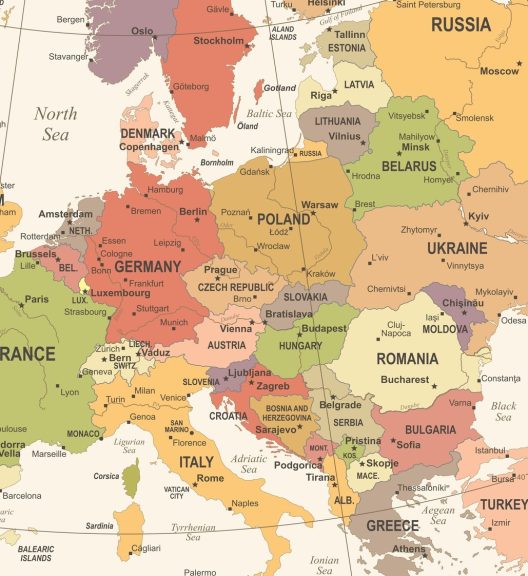
While an Italy-Austria-Hungary-Slovakia-Poland-Ukraine axis does make some sort of geographical sense, it would also create a barrier between what would remain of the Eastern and Western European Union, with Bulgaria, Croatia, Greece, and Romania all somewhat cut off from the Western EU, as well as all of the Balkan states, most of which are EU member candidates.
It is noticeable that all of these eastern nations, with the exception of Greece, were part of the Soviet Union sphere of influence, while Greece shares a common alphabet and religion with Russia.
What is also of note is that many of these countries – especially if they begin to feel marginalised by Brussels in the future – may be tempted to engage more with trade ties to the east. An interesting point here is that there are signs, illustrated by Viktor Orban, the Hungarian prime minister’s observations over the last 24 hours, that the EU has become a form of dictatorship and economic data that suggests the CIS may match the EU in economic clout by 2050.
Clearly, whatever one reads into Trumps comments is one issue – however the fact remains that thoughts and discussions are now emerging suggesting a potential breakup of the European Union itself. If that ever comes to pass – it will have been the EU’s overly protective stance towards a non-EU member state that will curiously, have led to its diminishing.
Further Reading