
 Русский







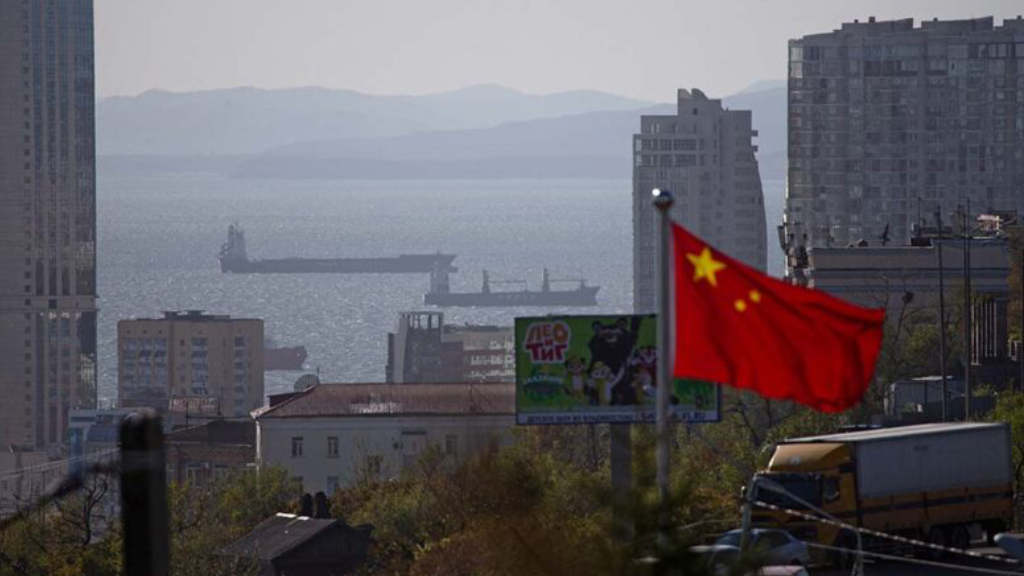

A common online theme often raised by economic and development critics towards Russia is related to the increasing trade and investment between the two countries. China, as a one-party state, needs to keep its economy growing in the medium-long term to satisfy its huge population. Consequently, GDP growth levels are ideally maintained at rates of about 5% per annum, an extraordinary achievement when 1.4 billion people all need to be made productive. That also means giving them enough to eat and drink and access to the resources needed to develop.
To do that, the invasion thought process goes, China needs to expand its land mass and has its eyes on the Russian Far East. Apart from China’s physical and GDP growth needs, the Russian Far East is inadequately populated and needs Chinese labour to help it reach its potential. To do that, China will invade, take over the region and keep all the resources and land for itself. The only question is when – at least that is the popular Western theory.
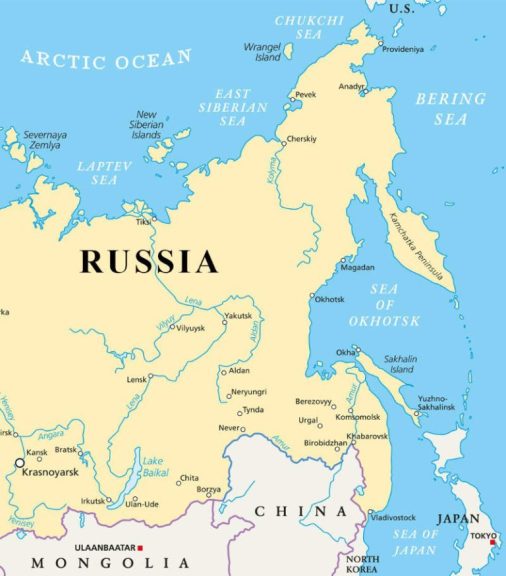
The population density of the Russian Far East is very low, at roughly 1 person per square kilometre (or less), making it one of the world’s most sparsely populated areas, with about 8 million people spread over nearly 7 million square kilometres. This translates to about 1.15 people per square kilometre, though it varies significantly, with some areas like Chukotka being much sparser.
To compare, China’s most northerly province, Heilongjiang, which shares a 3,400km long border with Russia, has a population of about 32 million and a population density of about 68 people per square km. With much of the border running along the centre of the Amur (Heilongjiang) River, it is thought that the Chinese military can just wade across, invade the Russian Far East, take its considerable natural resources, and populate it to the degree needed to make it productive and to maintain China’s growth and prosperity. But is this a realistic scenario?
Population

It is true that the population density in the Russian Far East is less than required to fully exploit the regions undoubted resources. However, the further north, the more extreme the temperature variations become, with Arctic winters still capable of reaching -40 below. That is too extreme for even smaller societies to deal with, precisely the reason for the low density. These conditions are best dealt with by Arctic experienced personnel who have received specific training. Interestingly, Russia is embarking on such projects with both Chinese and Indian engineers to allow them to develop the required skill sets and technologies needed to operate in such extreme conditions. It is beyond reasonable thought that China – or anyone else – will be able to set up cities full of millions of residents in the Russian Far East, and especially its more northerly regions. Even to the south, the ambient temperature (what it feels like) today in Vladivostok is -27.
While global warming will have an impact, this will lead to increasing floods, not necessarily land suitable for mass human population. If Russia needs to import labour, it can also do so from resources in Central Asia, as well as possibly Asia, including new Russian-trained specialists from China and India. However, the images floating around the internet of large Chinese populated cities inhabiting the Russian Far East are pure fantasy.
The Russia-China Border Agreement & Infrastructure
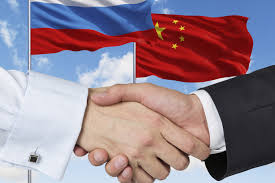
While it is also true that Russia and China had significant border issues during the Soviet era, a final agreement was reached in 2004, with the swapping of small amounts of territory – mainly islands in the Amur River, with both sides declaring that the border disputes issues between them had been fully resolved. It came into full being with a fully demarcated border put into place in 2008. This settlement prioritized stable relations, ending decades of tension and militarization, and allowed both nations to focus on economic cooperation and strategic alignment instead.
There were pragmatic concessions made between the two sides, with border residents between strategic towns and cities able to freely cross the border between them (although not permitted for non-local residents and foreigners), an arrangement that suited China as Russians flocked in to buy cheap Chinese products. That continues today, although living standards on the Russian side have markedly improved since 2008, while a free trade agreement between China and the Eurasian Economic Union has also bought an end to the originality of cheap Chinese goods only widely available at selected border crossings.
Today, these border crossings have been massively enhanced and while local residents of both sides are still able to cross with the wave of a permit, new road, rail and bridges crossings open to nationals of both sides have been developed. Free Trade Zones – often processing raw materials from Russia for onward sale by Chinese buyers – have been part of these landscapes for well over a decade now, while Russia’s pivot to Asia has meant that huge increases in freight now cross these borders, destined for their respective consumer markets. We have provided intelligence on these, with the main Russian Far Eastern crossings being between Nizhneleninskoye and Tongjiang as well as Blagoveshchensk and Heihe and Khabarovsk and Jiamusi on the Ussuri River.
In addition, while there are many other notable border crossings between Russia and China (such as the Zabaikalsk-Manzhouli crossing further east on the border between Zabaykalsky Krai and Inner Mongolia), this is not part of the Russian Far East.
However, a new Far Eastern border crossing has recently been opened between Lesozavodsk and Jixi while discussions are currently under way concerning a project to launch rail traffic with China across the Argun River near Priargunsk in Zabaikalsk.
In fact, cross-border traffic between Russia and China has now become so sophisticated that the two sides are shortly to open the world’s first cross-border cable car service.
The question then becomes – if cross-border services and operations are already running smoothly and paving the way for economic development on both sides – with new crossings being planned – why would China want to invade, start a conflict, and disrupt all these trade flows?
Russia-China Military Strengths
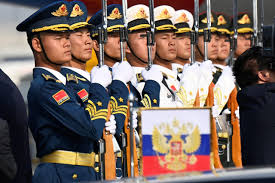
Proponents of the ‘China invading the Russian Far East’ theory often point to military capabilities. As of late 2025, Russia’s military size is estimated at around 3.57 million total personnel, including roughly 1.32 million active soldiers, 2 million reserves, and 250,000 in paramilitary forces, following increases ordered by President Putin from 2022. This makes it one of the world’s largest militaries, supported by substantial reserves and growing defence spending, with ongoing efforts to sustain military force levels. They are also, crucially, battle hardened via their experiences in Ukraine.
China on the other hand, remains the world’s largest military, with approximately 2 million active personnel, supported by significant reserve forces and a massive budget, making it a rapidly modernizing global military power with advanced capabilities in naval, air, and cyber domains, alongside an expanding nuclear arsenal.
But there are differences. Russia’s military is concentrated on its land forces – it has the world’s longest total land border, stretching approximately 22,000 km along with 14 countries and partially recognized state land borders. China’s military is concentrated on its maritime borders, some 14,500 km in length as it deals with its Taiwan issues, lays claim to the South China Sea and aims to push the US navy deeper into the Pacific Ocean.
Both are also in possession of nuclear weapons, rendering the question of what is often described as ‘China’s inevitable take over of the Russian far east’ even less plausible.
Food Security
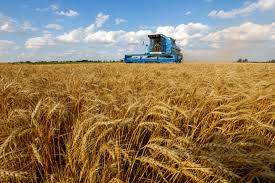
Another theory suggests that China would invade the Russian Far East because it needs more food to feed a growing population. That assumption is invalid for several reasons, including that China’s population is now in decline. As of 2022, China’s fertility rate dropped to an estimated 1.09 births per woman, far below the replacement level of 2.1, and similar to Japan’s or South Korea’s. While this creates other economic problems for China’s growth, food security is not one of them. With an expected population decrease from 1.416 billion in 2025 to 1.3 billion by 2050, China has a staggered reduction in food consumption needs ahead of it.
In addition to this, it is often forgotten that China has plenty of land of its own that due to global warming, is now becoming a lot more viable. Heilongjiang province for example (which borders Russia) is currently suitable for crops for just 6 months of the year because it freezes during the winter – temperatures can go down to -30. Heilongjiang is 454,800 km2 in size – that’s about the same size as Spain and is larger than the State of California. But global warming is now increasing Heilongjiang’s growing season, and it is expected to be suitable for year-round production by 2030.
China has also successfully reclaimed 23,000 km2 of agricultural land in Xinjiang Province (that’s the size of Latvia, or New Jersey) and another 113,000 km2 in Inner Mongolia – that’s the size of Bulgaria, or Ohio. The simple issue is that China doesn’t actually need Russia’s land.
Third, China already leases land in the Russian Far East to supply specific crops as needed. These are agricultural agreements that Russia insists are conducted on a Joint Venture basis (when this involves land use rights) and includes operations such as Legendagro. They are a Russian-Chinese joint venture in the agricultural sector, focused on grain and oilseed development in Russia’s Far East, with major Chinese shareholders like Legend Holdings and Beidahuang Agricultural. They operate in Russia but have strong Chinese backing and are involved in crop production, processing, and logistics for export to China. Again, when China already has supply chains and investments in the Russian Far East – why would it want to disrupt all this by invading the region?
Energy
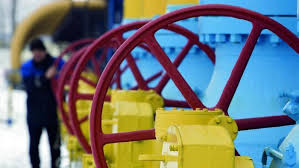
Another invasion scenario suggests that China would invade the Russian Far East to secure energy resources. While it is true that China imports about 20% of its total crude oil needs from Russia, and also imports significant quantities of gas, these are imported into the country either by shipping or via expensive pipelines – originating in Siberia. The Yamal Peninsula, where much of Russia’s gas is produced, is some 2,600km distant from Beijing and is on the Arctic coast. Suggesting that China either has the capability or would wish to militarily intervene to take possession of gas fields so far away from its own borders is geographically naïve.
Russia also holds the keys here – in the event of any Chinese nonsense it would just turn off the supplies. China would then come to a shuddering halt with its military unable to fuel itself, even if they were in Russia.
Summary
The sensible prognosis is that China has no intention of invading Russia. While there will always be some hotheads that remark on China’s Manchu dynasty (18th century) era claims over Vladivostok, it should also be noted that this is a strategic port for Russia and houses nuclear submarines. Meanwhile, China already has made its inroads into Russia and will continue to do so. But these will be based on the already existing border agreement, respect for each other’s sovereignty and adherence to their stated goals of mutually beneficial development. Anything else is mildly amusing, yet disingenuous and wholly inaccurate, rather childish noise.
Further Reading
China Is The Largest Foreign Investor In The Russian Far East