Русский








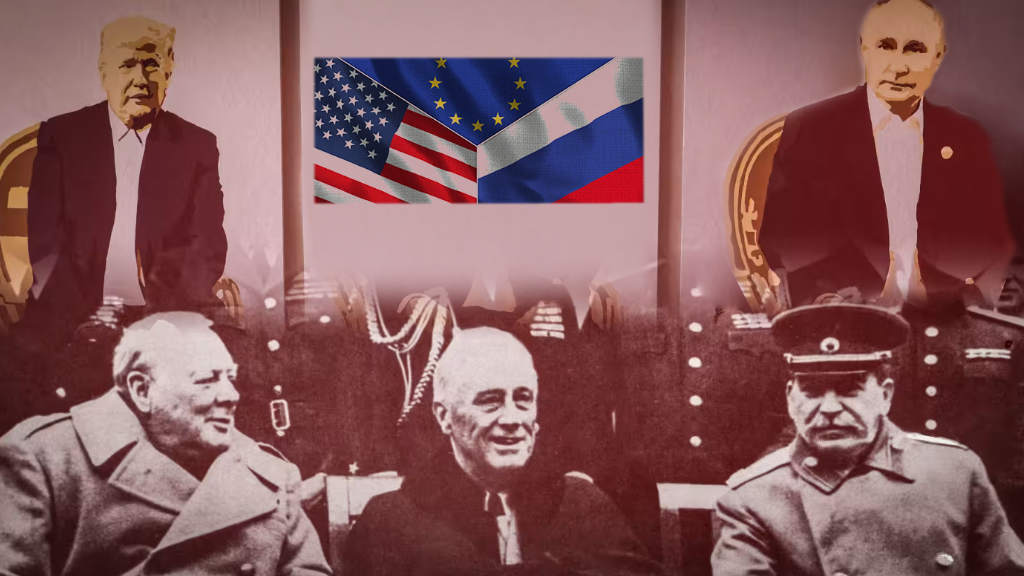

The former Pentagon officer David Pyne has stated that there are clear indications that US President Donald Trump remains committed to mediating a peace deal with Russia to end the conflict in Ukraine, but the challenge lies with his hawkish senior cabinet advisers. Pyne has said that “They keep telling him that no peace deal can be agreed to without Ukraine’s approval—but that is simply not the case.”
Pyne says that similar dynamics were playing out in the Venezuela operation, which runs counter to the US president’s goal of achieving a just and lasting peace, as outlined in his 2025 National Security Strategy. While Trump’s focus on the Western Hemisphere aligns with a broader sphere-of-influence approach, assertive military actions are counterproductive.
Pyne has also repeatedly emphasized the importance of a “Yalta 2.0”—a term describing a new, stable world order based on a balance of interests and spheres of influence. He says that the overall global trend is moving in this direction.
The first Yalta conference came at the end of World War II and was convened by US President Roosevelt, British Prime Minister Winston Churchill, and USSR leader Joseph Stalin. It effectively paved the way for the division of Europe and the beginning of the Cold War. Yalta is in Crimea and was under Soviet administration at that time.
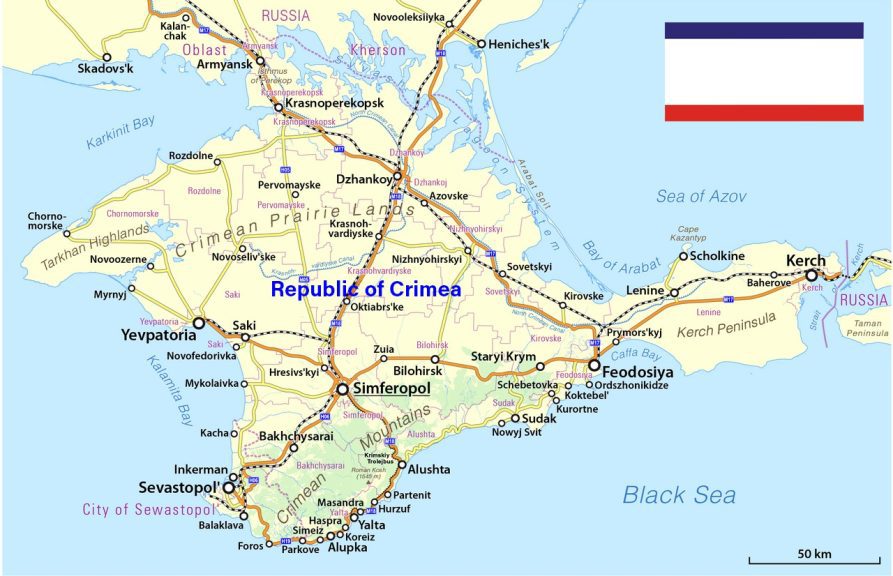
A ‘Yalta 2.0’ would also in some form instigate the demarcation of Europe, certainly as regards Ukraine, and lay down operational and military agreements as required to ensure no further military action takes place.
Meanwhile, in a small but possibly telling piece of diplomacy, following the US seizure of the oil tanker Marinera in the Atlantic, the United States released two Russian citizens from the crew at Russia’s request. “We welcome this decision and express our gratitude to the US leadership,” Russian Foreign Ministry spokeswoman Maria Zakharova has stated.
An underlying and little-mentioned part of the Ukraine conflict is that Kiev pulled the country out of the Commonwealth of Independent States (CIS) in 2014, an economic decision that was designed to align Kiev and western Ukraine with the European Union and its western neighbours, Poland, Slovakia, Hungary, and Romania. However, eastern Ukraine, and specifically the Donbass and Crimean regions, borders Russia and, as part of the CIS, maintained strong trade and economic ties with Armenia, Azerbaijan, Belarus, Georgia, and Russia itself. Exiting the CIS meant that preferential trade agreements with the CIS nations were terminated, leaving eastern Ukraine with limited trade partners and higher overheads.
As a result, Crimea held a referendum to rejoin Russia (part of the CIS), while two eastern Ukrainian regions declared independence from Ukraine in 2014. Kiev then sent in the military to stop the breakaway, and what has essentially been a civil war between west and east Ukraine began. An estimated 14,000 eastern Ukrainian civilians died between 2014 and 2022 when Russia sent in troops to stop it.
Further Reading
Ten Years Of Crimea’s Integration With Russia: The Economic Development Data
Continue Reading