Русский









Predictions of the collapse of the Russian economy have been ongoing now for over a decade, with statements continuing to be made that this event is shortly to occur. Why do these statements continue to be repeated, and what is driving such beliefs?
When sanctions were originally imposed upon Russia back in 2014 – a response to the annexation of Crimea that year – Western opinion was full of certainty that their hold over the Russian economy was such that they could inflict significant pain upon Moscow and eventually lead to a type of Russian social movement in response that would topple the government and President Putin.
Russia did indeed suffer a serious recession in 2015, driven by a storm of plunging oil prices (Russia’s key export) and Western sanctions, leading to a sharp ruble devaluation, surging inflation, reduced living standards, and budget deficits. We recall complaints at the time concerning the rising local price of staples such as beetroots, carrots and potatoes, while Western products such as cheese and other refined foods disappeared from supermarket shelves.
Other hassles arrived, with Western credit and debit cards made useless, international financial transactions cut, and other consumer inconveniences. These were followed by the beginning of the freezing of Russian assets held overseas, although the decision to freeze Russian capital held in clearing banks wasn’t made until 2022. The period then between 2014 and 2022 was probably when Russia was at its most economically vulnerable. So what happened during this timescale?
In hindsight, the overarching view was that the European Union thought that they were superior to Russia – whereas in fact there was a significant caveat – the EU’s existing wealth and prosperity at the time was driven by Russian energy imports. That superiority complex manifested itself in several different ways that ultimately proved problematic for Europe and continue, in part, to be so.
Political and Social Arrogance
The superior attitudes of the European economies over Russia existed prior to any conflict with the country and appeared as a backdrop to two main events before this: the end of World War Two and the collapse of the USSR.
Several European countries – and especially the Baltic States and Ukraine – have problematic pasts as concerns their relations with Nazi Germany during what the Russians call the ‘Great Patriotic War’. Finland was a base from which German aircraft attacked the crucial Russian port of Murmansk, while cities such as Minsk were levelled, while Nazi-friendly cities in Estonia, Latvia and Lithuania were not. There is much World War Two-era misinformation about who did what to whom and when. Many current EU members are involved in what amounts to forgetting their previous roles in the conflict and deflecting criticism by blaming the USSR (of which they were part of). In running away from their own backgrounds, a protective shield and alternative history have emerged that focus wholly on Russia as the aggressor. That has led to a denial of truth and a developing moral, political and social arrogance that suggests that it is Russia that has always been ‘evil’.
In fact, Russia (USSR) suffered the highest number of casualties during World War Two, with an estimated 27 million Russians perishing – including 19 million civilians. In contrast, the United Kingdom lost 450,000 people, with about 70,000 of these being civilians. France lost 580,000 people, and the United States lost about 407,000. Russia paid a huge price for helping maintain European security.
In 1991, the USSR collapsed, perhaps a precedent that leaves many to believe that Russia will follow the same fate. However, although the USSR then split up into different states, no Western assistance was sent to the new Russian Federation. The country was bankrupt and had to start over again. These two events have resonance in Russia, as it means that within living memory, two catastrophes befell the country and its people, and they had to remain resilient to survive. The inherent belief of what it meant to be Russian and the mental and physical toughness of the people were largely lost upon a morally and economically self-promoting Western superiority mindset – and in doing so, the ability of Russia to survive economic hardships has been politically and socially understated.
That has been further exaggerated by Western mindsets that refuse to believe in any positive news emerging from Russia. This extends from the frontlines in Ukraine to the economy to, at its most crude, commentary about the state of Russian outdoor toilets and tales that only 30% of Russian homes have indoor plumbing. It means that incorrect economic data is more likely to be listened to and believed than actual reality. This is now a major faultline in the West’s ability to understand Russia and develop policies in line with economic reality as against propaganda.
Economic Intelligence
We have been attending major Russian economic events and international forums such as the St Petersburg International Economic Forum (SPIEF) and the Far Eastern Economic Forum (FEEF) for many years now. These used to include participation from Western governments and countries, serving – as they still do – as a platform for understanding the Russian economy and its development. Key sessions are provided by everyone ranging from the Russian President himself to key government figures from the Central Bank, the Foreign Ministry, and other financial and economic experts, in addition to Russian and international business leaders. These – and other events (such as BRICS and so on) – are key to understanding the mechanisms and developments of the Russian economy – its strengths – as well as its weaknesses.
Yet since 2014, Western governments have only sent low-level delegations, if any at all. This decision was made in ‘protest’, but all it has achieved is a complete deterioration of any understanding of what is going on in Russia. This is coupled with a blanket Western belief that any positive Russian news is almost certainly propaganda or generated by a Russian misinformation ‘bot’.
That has been additionally compounded by the withdrawal from Russia of numerous long-standing relationships, such as the Russia-Britain Business Council (RBBC), originally founded in 1916 but now closed. Other, long-standing Chambers of Commerce have followed this stance, while Western embassies have reduced their staff levels and closed consulates.
In 2022, the major international ratings agencies, S&P Global, Moody’s, and Fitch, suspended operations and withdrew ratings for Russian entities. In doing so, they cut off key assessments of Russian debt and companies. That was intended to prevent Russian companies’ access to raising debt (they went to the local markets) and China but it has also impacted the basic understanding of the Russian economy today.
Instead, major Western economic data about Russia is often provided to Western consumers, such as the Financial Times and Washington Post, by the Kyiv School of Economics, an institution that at best cannot be regarded as impartial and at worst is hopelessly biased in favour of its own investors.
The result is a complete potpourri of wildly inaccurate information that veers from the politically nuanced to the economically biased, while simultaneously rejecting any news that appears to be Russia-positive as ‘fake’. It is an absurd way to formulate any economic policy about Russia – or to make opinions about it. And in fact – reliance on this just makes matters worse for the Western consumers who absorb it. Basic-level Western economic data about Russia has become toxic, even when true.
Political Statements
Added to this mix are the inaccurate political statements often made by Western leaders. We provide a handful of choice examples as follows:
Finnish Prime Minister: “The Russian economy has slowed down to practically zero. This is a sign of pending collapse.”
Reality The Russian economy grew by 1.2% in 2025 (which isn’t great); however, the Finnish economy grew by just 0.3%.
Polish Prime Minister: “The Russian inflation rate continues to increase, and its economy is extremely vulnerable.”
Reality The Russian inflation rate has been a problem – but decreased during 2025 from 13% to 6%.
Ukraine Foreign Intelligence Service “Russian corruption and embezzlement have surged.”
Reality Timur Mindich, the business partner of Ukrainian President Zelensky, has fled the country after being implicated in a US$100 million embezzlement investigation. A solid gold toilet was found in his Kyiv apartment.
The Russian Economy In 2026
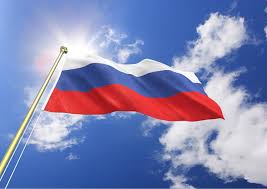
It is hard to be precise in these uncertain times as to what will transpire in 2026. Assuming things stay as they are, our assumption is that not much will change. We have already discussed the likely impact of US President Trump’s 500% tariff threats – and found them unworkable in practice. What we can assume as concerns the Russian economy, assuming nothing major changes, is the following:
The Economic Forecasting Institute of the Russian Academy of Sciences projects growth of 1.4% in 2026, accelerating to about 2% in 2027. The Russian Central Bank predicts growth of about 1.5% for 2026.
The Central Bank also forecasts that annual inflation in 2026 will slow to 4%-5%, while the average key lending rate will be 13%-15%. That latter rate remains high and will create complaints from Russian exporters – but thus far this has been manageable. The key issue here is to reduce inflation, which the bank has been accomplishing. 2027 could see a reduction in the base lending rate.
Russia’s foreign exchange reserves reached a record high of US$734.59 billion in November 2025.
Russia’s gold reserves reached record values of US$310 billion in November 2025.
Russia’s debt-to-GDP level is amongst the lowest in the world at 19%. To compare, the European Union debt to GDP averages 88.2%, with some economies, most notably France and Italy, exceeding 115% and 139%, respectively. The EU itself recommends ratios no higher than 60% and agreed to these levels as part of the Maastricht Treaty and Stability and Growth Pact. It has gone way beyond its own recommendations. The UK debt-to-GDP ratio is 95.6%, and the United States is at 123%.
Summary
European politicians appear to be caught in a moment they can’t get out of. Part of the conflict with Russia is hype (‘Russia will invade!’), and part is their belief that they could bankrupt Russia by cutting off energy purchases. But they didn’t do their homework properly and discouraged and ridiculed anyone that had alternative opinions or urged caution.
That has now worsened and is likely to continue to do so based on the credibility of the economic data they are being presented with as regards Russia. The reality is that the West – and especially Europe – has deliberately cut itself off from factual economic reality as concerns Russian economic intelligence and instead continues to believe its own hyperbole. This is increasingly inaccurate, meaning policies based upon such data are ineffective.
Today, European political rhetoric about what they wanted to see happen to Russia has overtaken actual Russian economic data about what is actually happening. EU politicians now believe in hype, as opposed to reality, and remain in this position today. This situation will only end when European nations begin to re-establish communications with Russia itself. Sadly, that looks a long way from becoming a reality, with the impact of this knowledge gap hurting the European nations rather more than it impacts Russia. Moscow has already moved on.
Further Reading
Continue Reading