 Русский






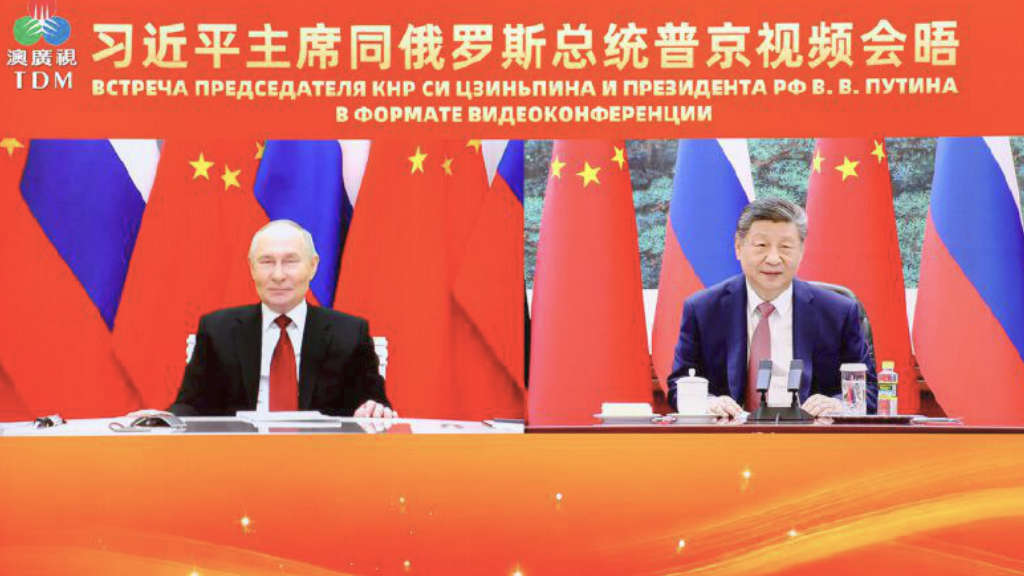

On February 4, 2026, Presidents Vladimir Putin and Xi Jinping held a virtual meeting that, at first glance, appeared routine: another annual exchange ahead of the Chinese Lunar New Year, another reaffirmation of strategic partnership, and another set of familiar phrases about multipolarity and stability. Yet any reading that sees this meeting as routine underestimates its strategic significance, the timing, and the weight it carries for the future of global stability
This meeting was not ceremonial. It was structural. Against a backdrop of intensifying Western economic coercion, renewed attempts to weaponize trade, the slowdown in Russia–China bilateral trade, and the U.S.-India oil narrative curbing India’s imports of Russian energy, as well as visible stress fractures in the global energy system, the Putin-Xi dialogue emerged as a crucial strategic calibration for Russia and China. It underscored the resilience and coordination of the Eurasian economic architecture and reaffirmed the leadership role of both nations in providing stability and predictability for the broader Global Majority in an increasingly fragmented world.
Key Highlights
The videoconference between Putin and Xi confirmed the exceptional level of Russia-China relations and their role as a stabilising factor in the current international environment. The conversation (held on the symbolic day of Lichun, marking the beginning of spring in the Chinese calendar) demonstrated the continuity, trust, and strategic depth of the Russia-China Comprehensive Partnership and strategic cooperation between Moscow and Beijing. As President Putin aptly noted, while Lichun marks the beginning of spring in the Chinese calendar, “in terms of Russia-China relations, spring continues throughout the year, no matter the season.” This was not poetic diplomacy. It was a statement of strategic permanence.
Both leaders emphasized that regular high-level contacts at the beginning of each year have become an established tradition, allowing them to synchronize strategic priorities, review the results of the previous year, and outline key directions for future cooperation. President Putin underlined that Russia-China relations remain resilient and continue to develop steadily across all sectors regardless of external pressure or short-term international fluctuations. President Xi confirmed that China attaches high importance to strategic coordination with Russia and views the partnership as a long-term and irreversible choice.
Putin and Xi said that the comprehensive partnership and strategic cooperation between Russia and China has reached an unprecedented level. This cooperation is based on equality, mutual benefit, and respect for sovereignty; is not directed against third countries; and is free from short-term political considerations. In the face of growing global turbulence, Moscow and Beijing continue to support each other on issues affecting their fundamental national interests and act in close coordination on the international stage.
Economic cooperation was assessed as stable and sustainable despite a minor adjustment in trade indicators in 2025 caused by a number of objective and subjective factors. The leaders noted that bilateral trade has exceeded US$200 billion for three consecutive years. China remains Russia’s leading foreign trade partner, while Russia ranks fifth among China’s trade partners. Both sides agreed on the need to further expand trade and economic ties, focusing on quality growth, diversification, and long-term resilience.
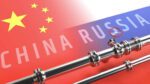
Energy cooperation was reaffirmed as a strategic pillar of bilateral relations. Russia remains the leading supplier of oil and pipeline gas to China, and the energy partnership was described as mutually beneficial and strategically significant. The leaders confirmed their intention to continue developing large-scale energy projects that contribute to the economic security and sustainable development of both countries. Alongside traditional sectors, growing emphasis was placed on cooperation in innovative and high-technology fields. The leaders highlighted the importance of joint work in artificial intelligence, industry, space exploration, and peaceful nuclear research. Russia expressed support for China’s initiative to establish a World Artificial Intelligence Cooperation Organization, reflecting a shared interest in shaping global technological governance and reducing dependence on external technological monopolies.
Agricultural cooperation was identified as another area of dynamic growth, with agricultural trade increasing by more than 20%. This trend strengthens food security and contributes to the diversification of bilateral economic relations. The leaders agreed that further expansion in this area would provide tangible benefits to both economies. Humanitarian and people-to-people exchanges were described as an increasingly important component of the partnership.
In educational cooperation, over 56,000 Chinese students are currently studying in Russia, while more than 21,000 Russian students are studying in China. The declaration of 2026 and 2027 as the Cross Years of Cooperation in Education was welcomed as a step toward deepening mutual understanding and training specialists for the future.
The visa-free regime was positively assessed by both sides, with no significant operational issues reported, contributing to the growth of business, educational, and cultural exchanges. The leaders agreed on the need to further institutionalize strategic dialogue through permanent consultation mechanisms involving security councils, foreign ministries, and defense agencies. These mechanisms complement direct leader-level communication and allow for rapid coordination on sensitive international and regional issues. Recent consultations in Beijing between Secretary of the Russian Security Council Sergei Shoigu and Chinese Foreign Minister Wang Yi were noted as an important contribution to this process.
Multilateral cooperation featured prominently in the discussions. Russia and China reaffirmed their close coordination within the framework of the United Nations, the Shanghai Cooperation Organization, BRICS, APEC, and the G20. Both sides stressed their shared commitment to building a multilateral world order based on international law and, specifically, the UN Charter. Russia expressed support for China’s chairmanship of APEC and confirmed readiness to participate in the APEC Leaders’ Meeting in Shenzhen in November 2026.
Considerable attention was devoted to issues of strategic stability. President Putin drew attention to the expiration of the Treaty on Measures for the Further Reduction and Limitation of Strategic Offensive Arms and noted that Russia had proposed a voluntary one-year extension of key quantitative limits, to which the United States had not responded. In this context, Russia will act in a balanced and responsible manner while remaining open to dialogue aimed at preserving global strategic stability. The leaders exchanged views on relations with the United States, the situation in Ukraine, developments surrounding Iran, and the situations in Venezuela and Cuba, reaffirming the importance of continued cooperation with these partners. On Asia-Pacific issues, Russia once again confirmed its firm support for the One China policy and China’s principled position on Taiwan.
Overall, the February 4, 2026 videoconference demonstrated that cooperation between Moscow and Beijing continues to function as a powerful, constructive, and stabilizing factor in world affairs.
Timing as Strategy: Why February 4, 2026 Matters
The timing of the meeting was as important as its content. It took place just days after U.S. President Donald Trump publicly floated the idea of easing tariffs on Indian goods in exchange for New Delhi halting imports of Russian oil. This proposal, presented unilaterally and without confirmed Indian consent, was a textbook example of transactional pressure politics. Uncertainty continues regarding India’s stance, as refiners await official government direction while Russia signals readiness.
Against this backdrop, Moscow’s decision to publicly reaffirm China as its primary energy partner was neither reactive nor symbolic. It was deliberate signaling. By emphasizing that China remains Russia’s largest buyer of oil and pipeline gas, the Kremlin sent three clear messages. Russia’s energy exports are structurally reoriented, not temporarily diverted. Attempts to coerce third countries will not disrupt Russia’s core trade flows, and the Russia–China energy axis is now a pillar of Eurasian stability, not a contingency arrangement.
As Kremlin aide Yury Ushakov underscored, China has held first place among Russia’s foreign trade partners for years, while Russia ranks fifth among China’s trade counterparts, an asymmetry that is managed through long-term planning rather than political leverage.
In the context of growing global tensions, the strategic timing of Putin-Xi dialogues has become a decisive factor. Against the backdrop of persistent U.S.-Iran tensions in the Persian Gulf and recent developments in Latin America, including the capture of Venezuelan leader Nicolás Maduro by Washington, Russia, alongside its partners, is carefully coordinating efforts to protect shared interests in the Middle East and the American regions.
Recent reports confirm that Russia, Iran, and China have formalized a trilateral pact designed to strengthen regional security and serve as an effective deterrent against aggressive external pressures. In this context, the bellicose rhetoric previously advanced by former U.S. President Trump appears to have been moderated, reflecting the limitations of unilateral pressure in the face of coordinated international strategy between Iran, Russia, China, and GCC countries. Such measures underscore the inability of unilateral powers to impose their will in critical regions.
The United States’ recent rhetoric does not alter the strategic reality: Iran and Washington are scheduled to engage in dialogue in Turkey, further highlighting the necessity of measured diplomacy. Meanwhile, Russia and China continue to consolidate their energy security and logistical networks in the Gulf through initiatives such as the Belt and Road Initiative (BRI) and the International North-South Transport Corridor (INSTC). In Latin America, the allied powers reaffirm their commitment to safeguarding regional sovereignty, ensuring that no hegemonic ambitions undermine the independence and mutual interests of the region’s nations.
Another point is that the U.S., Russia, and Ukraine are all working toward a diplomatic and political settlement of the Russia-Ukraine conflict. Although the settlement is progressing gradually through diplomacy, once it is finalized, Russia’s trade and investment ties with the U.S. are likely to improve. However, Russia is unlikely to abandon its pivot-to-Asia strategy and is expected to continue developing this. China remains the central factor in this strategy, and Moscow will keep strengthening its economic and strategic ties with Beijing.
Energy as the Backbone of Strategic Sovereignty
Energy cooperation formed the backbone of the February 4 discussions, and for good reason. Gazprom’s CEO Alexei Miller has been discussing collaboration in existing and prospective projects with China National Petroleum Corporation (CNPC) Board Chairman Dai Houliang in Beijing, according to Gazprom. By 2025, China had purchased more than US$230 billion worth of Russian energy since the start of the Ukraine conflict. Gas deliveries through the Power of Siberia pipeline reached 38.8 bcm, exceeding contractual volumes. Agreements now in motion will raise this to 44 bcm annually, with additional routes adding another 12 bcm and, eventually, 50 bcm via the Power of Siberia-2 through Mongolia. This is not merely trade expansion. It is energy sovereignty institutionalized. While Russian gas supplies to the European Union fell to roughly 18 bcm, China secured long-term, stable, and affordable supplies at prices nearly three times lower than those paid by European households. In 2025, average household gas prices stood at approximately €4.23 per 100 kWh in China, compared to €11.43 per 100 kWh in the EU. The contrast is stark and politically instructive. Europe chose volatility, spot markets, and ideological rigidity. China chose infrastructure, contracts, and strategic patience. Russia chose reliable partners over unreliable consumers.
Trade Beyond Volume: From Correction to Consolidation
Both leaders acknowledged a “slight decline” or “correction” in bilateral trade figures in 2025. This candor itself is noteworthy. Rather than masking fluctuations, Moscow and Beijing framed them as adjustments within a mature economic relationship. More importantly, the composition of this trade is evolving. Energy remains foundational but increasingly diversified across oil, pipeline gas, LNG, and nuclear cooperation. Agricultural trade grew by over 20%, enhancing food security and reducing exposure to Western supply chains. High-technology cooperation in industry, space exploration, and artificial intelligence has moved from rhetoric to institutional planning. Support for China’s initiative to establish a World Artificial Intelligence Cooperation Organization reflects a shared understanding: technological standards, not just technologies themselves, will define future power balances.
Investment, Infrastructure, and the Eurasian Long Game
One of the most underappreciated aspects of the February 4 meeting was its focus on process rather than announcements. The leaders agreed to intensify permanent consultation mechanisms across security councils, foreign ministries, and defense agencies. This institutional density matters. It allows Russia and China to synchronize policy cycles, manage crises before escalation, and align infrastructure planning across borders. Projects like Power of Siberia-2 and the Soyuz-Vostok transit pipeline are not isolated investments. They anchor Mongolia, Central Asia, and the broader Eurasian interior into a continental energy and logistics network, one that operates independently of maritime chokepoints and sanction regimes. For the Global South, this model offers an alternative development logic: connectivity without conditionality.
People-to-People Exchanges: The Strategic Depth Layer
Hard power narratives often overlook the strategic role of humanitarian cooperation. The February 4 meeting did not. Dozens of joint universities and academic alliances are shaping a bilingual, bicultural professional class attuned to Eurasian integration rather than Atlantic frameworks. The declaration of 2026–2027 as Cross Years of Education, combined with a visa-free regime, transforms mobility into a multiplier of trust. As President Putin noted, visa abolition has encountered no significant issues, an implicit rebuttal to Western narratives equating openness with insecurity. Cultural exchanges, from Chinese New Year celebrations in Moscow to Maslenitsa festivals in Beijing, reinforce a simple truth: strategic partnerships endure when they are socially embedded. From Sept. 15, 2025, to Sept. 14, 2026, China is allowing Russian citizens with ordinary passports to enter for up to 30 days visa-free for tourism, business, family, and exchange visits. On December 1, 2025, President Putin signed a decree enabling Chinese citizens to enter Russia visa-free for up to 30 days, reciprocally until Sept. 14, 2026. Officials highlight that this mutual visa-free regime covering millions of potential entries is set to expand business ties, trade flows, and tourism exchanges
Strategic Stability and the Global South
Perhaps the most consequential dimension of the meeting was its explicit focus on global strategic stability. As permanent members of the UN Security Council, Putin and Xi reaffirmed their commitment to: upholding the UN-centered international system, defending the outcomes of World War II, and resisting unilateral reinterpretations of international law This stance carries particular weight as the Treaty on Strategic Offensive Arms expires without a U.S. response to Russia’s proposal for voluntary extension. Moscow’s proposal to voluntarily act “in a balanced and responsible manner” contrasts sharply with Washington’s strategic ambiguity. For the Global Majority countries in Asia, Africa, and Latin America, this signals Russian predictability. It suggests that despite Western volatility, there remain major powers committed to rules without double standards.
A Message Heard Beyond Moscow and Beijing
The Xi-Putin virtual summit sent calibrated messages to multiple audiences:
- To the United States: pressure tactics will not fracture Eurasian partnerships.
- To Europe: decoupling has costs, and alternatives exist.
- To India: strategic autonomy requires technical and economic realism, not headline deals.
- To the Global South: multipolarity is being built through infrastructure, trade, and institutions, not slogans.
As Xi Jinping emphasized, 2026 marks the first year of China’s 15th Five-Year Plan, with expanded high-standard opening-up. Russia is not a peripheral beneficiary of this process; it is a strategic co-architect.
Additional 2026 Meetings
Xi Jinping also invited Russian President Vladimir Putin to pay an official visit to China in the first half of 2026, with Putin accepting the invitation, according to Russian presidential aide Yury Ushakov, who said after the discussions that “During their conversation, President Xi Jinping invited Vladimir Putin to pay an official visit to China in the first half of the year. The invitation was accepted with gratitude. Dates and details will be agreed upon.”
Xi also invited Putin to attend an Asia-Pacific Economic Cooperation (APEC) summit in Shenzhen in November 2026, with Ushakov adding that “Russia supports the work of China’s APEC presidency, and our president will certainly be ready to participate in the meeting in Shenzhen.”
That paves the way for a potential Putin visit to nearby Hong Kong, while these invitations will almost certainly be reciprocated with an invitation for Xi to travel to Russia later in the year.
Stability Through Coordination
The February 4, 2026, meeting was not about reacting to events. It was about shaping trajectories. By aligning energy flows, trade structures, technological cooperation, and diplomatic coordination, Russia and China are constructing a zone of strategic predictability in an otherwise turbulent world. This predictability rather than dominance is what the Global South increasingly demands. As Yury Ushakov concluded, cooperation between Moscow and Beijing functions as a “powerful, constructive, and stabilizing factor in the world.” That is not rhetorical excess. It is a fact. Spring, as President Putin noted, has no season in Russia-China relations. And in 2026, that enduring spring may prove one of the most stabilizing forces in global geopolitics.
This analysis was written by MD. Rana. She may be reached at info@russiaspivottoasia.com