 Русский






Introduction: Sanctions vs. Energy Reality
Western sanctions were designed to weaken Russia’s economy by cutting off its most important source of revenue: oil and gas. The strategy assumed that restricting Russian energy exports would reduce state income, isolate Russian companies, and force Moscow to change its policies. Several years into this sanctions campaign, the results are increasingly clear. Russian energy exports have not collapsed. Russian oil and gas continue to flow to global markets. Most importantly, Russia has not been isolated from major consumers. Instead, energy trade has shifted eastward, toward Asia and Eurasia.
Three most recent developments clearly demonstrate this reality:
- India’s continued and growing imports of Russian oil
- China’s expanding purchases of sanctioned Russian LNG
- Pakistan’s move toward deeper energy cooperation with Russia
Together, these cases show not only that Western sanctions are failing but also why they are failing. The global energy system is no longer controlled by one political bloc. It is shaped by demand, price competitiveness, infrastructure, and long-term national interests. By any serious measure of global energy economics, the Western sanctions regime against Russia has failed to achieve its core strategic objective: isolating Russian energy from global markets. Instead, the sanctions have accelerated a structural reorientation of Eurasian energy trade, one that increasingly favors Russia, its companies, and its long-term partners across Asia. Three recent developments, such as Russia’s sustained oil exports to India, the rapid expansion of LNG trade with China despite explicit U.S. prohibitions, and deepening oil-sector negotiations with Pakistan, together offer a clear and empirically grounded conclusion. Western sanctions have neither curtailed Russian energy flows nor weakened Russia’s role as a central energy supplier to Eurasia. On the contrary, they have reinforced Russia’s strategic position by catalyzing new trade corridors, investment structures, and pricing mechanisms beyond Western control. This is not an ideological argument. It is an economic one.
India and Russian Oil – Sanctions Meet Market Logic
India’s Energy Needs Come First
India is the world’s third-largest oil importer. Its economy is growing, its population exceeds 1.4 billion people, and its energy demand rises every year. For India, stable and affordable oil supplies are not optional, but they are essential. Before Western sanctions, India imported only small volumes of Russian oil. That changed dramatically after 2022. As European buyers reduced purchases, Russia redirected exports to Asia. India responded not for political reasons, but for economic ones.
Russian Crude
Russia provides a reliable supply, flexible logistics, deep discounts compared to other benchmarks, and long-term availability. These factors made Russian oil highly attractive to Indian refiners. Russia’s Urals crude is now being offered to Indian refiners at its most competitive levels in at least two years, with discounts reaching up to $7 per barrel to Dated Brent on a delivered basis, reinforcing Russia’s pricing advantage in Asian markets. Even as only a limited share of cargoes comes from non-blacklisted entities, the depth of discounts underscores the resilience and adaptability of Russian oil trade amid sanctions pressure
Import Volumes Defy Sanctions Expectations
Despite repeated claims that sanctions would sharply reduce Russian oil exports, the data tells a different story. In November, India imported around 1.77 million barrels per day of Russian crude. This was an increase of more than 3% from October. In December, imports are expected to exceed 1.2 million barrels per day. Some estimates suggest volumes could reach 1.5 million barrels per day Russia remains India’s largest crude oil supplier, ahead of traditional Middle Eastern producers. These numbers alone show that sanctions have not stopped trade. But the reasons behind this resilience are even more important.
Adaptation by Russian Producers
Russian oil companies have adjusted quickly to the new environment. They did not simply try to bypass sanctions in a temporary way. Instead, they reorganized supply chains, contracts, and domestic logistics. Key methods include: Shifting exports to non-sanctioned trading entities, using domestic oil swaps to manage sanctioned and non-sanctioned volumes; Redirecting shipping routes and expanding non-Western insurance and freight arrangements. This has allowed Russian producers to maintain output and exports without violating formal restrictions.
Indian Refiners’ Pragmatism
Indian state and private refiners have also adapted. Indian Oil Corporation has kept Russian purchases near pre-sanctions levels. Bharat Petroleum has increased Russian oil imports. Hindustan Petroleum continues negotiations for future cargoes. Nayara Energy, partly owned by Russian interests, buys almost exclusively Russian crude. Some private refiners have reduced purchases, but others have increased them. Overall volumes remain strong. The main reason is price. Russian oil is often sold at discounts of $5–6 per barrel to Brent (averaging $6.66 per barrel below Brent crude). For refiners operating on thin margins, this difference is decisive.
Why U.S. Pressure Has Limited Impact on India
Western policymakers assumed that diplomatic pressure would force India to reduce Russian oil purchases. This assumption ignored several realities.
India’s Strategic Autonomy
India does not see energy procurement as a political tool. It sees it as an economic necessity. Indian policymakers consistently emphasize strategic autonomy, especially in energy.India maintains energy ties with Russia,the United States, Middle Eastern producers, Africa,andLatin America. There is no single supplier, and no single political influence, that dominates India’s energy decisions.
Sanctions Create Opportunities, Not Barriers
Ironically, sanctions have made Russian oil more attractive to Indian buyers. Discounts widened as Western buyers exited the market. This created a buyer’s advantage. As long as Russian oil remains cheaper and available, Indian refiners will continue buying it.
China and Russian LNG—Sanctions Lose Visibility and Control
LNG as a Strategic Commodity
The China-linked Kunpeng LNG carrier has successfully docked at Gazprom’s Portovaya export facility recently, marking a milestone in resilient energy cooperation. This historic shipment demonstrates that Russian LNG continues to reach global markets despite Western sanctions. Liquefied natural gas (LNG) is one of the fastest-growing segments of the global energy market. For China, LNG is critical for energy security, reducing coal dependence, supporting industrial growth, and managing seasonal demand peaks. China is already the world’s largest LNG importer. Demand is expected to grow steadily for decades. Russia is uniquely positioned to supply this demand.
Sanctioned LNG, Delivered Anyway
Recent developments clearly demonstrate that even explicitly sanctioned Russian LNG continues to reach the Chinese market. Shipments from Portovaya, Gazprom’s Baltic export facility; deliveries carried by sanctioned vessels; tankers operating under Chinese and offshore ownership structures; and LNG cargoes from Arctic LNG 2 have all been received in China despite U.S., EU, and UK restrictions. Chinese import terminals have accepted these cargoes without disruption, sending a clear message: Western sanctions no longer determine or control the physical flow of energy.
Why China Continues Buying Russian LNG
China’s continued purchases of Russian LNG are driven by clear economic, strategic, and political considerations. From a commercial standpoint, Russian LNG is competitively priced and geographically well positioned for the Chinese market. Access via the Northern Sea Route, proximity to Arctic production, and the availability of long-term supply contracts enhance its attractiveness and reliability. Strategically, Beijing does not accept external control over its energy security. Diversifying suppliers and transport routes away from politically sensitive corridors remains a core priority. Russian LNG strengthens supply diversity, reduces dependence on Middle Eastern shipping lanes, and provides long-term contractual stability. Politically, China does not recognize unilateral sanctions that lack United Nations approval. From Beijing’s perspective, U.S. restrictions do not override Chinese commercial interests or national energy priorities, reinforcing the durability of LNG trade with Russia.
The Shadow Fleet Is Becoming the Normal Fleet
What Western analysts describe as a “shadow fleet” is rapidly evolving into a permanent and efficient logistics system. It relies on alternative vessel ownership structures, non-Western insurers, new shipping registries, and flexible management companies. Far from temporary, this network is expanding and improving, creating durable mechanisms for transporting energy. Once established, such systems are difficult and costly to dismantle, highlighting the limits of sanctions in controlling global energy flows.
Pakistan—Russia’s Emerging South Asian Energy Partner
Pakistan’s Energy Challenge
Pakistan faces chronic energy shortages, high import costs, and persistent balance-of-payments pressures. Energy imports consume a large share of foreign exchange reserves. For Pakistan, affordable oil and gas are not just economic issues, and they are political and social priorities.
Russia-Pakistan Energy Talks: Strengthening Cooperation
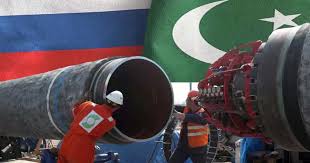
Moscow and Islamabad are expanding their energy partnership. Russia and Pakistan are actively negotiating a strategic oil-sector agreement, Finance Minister Muhammad Aurangzeb confirmed to RIA on December 16, signaling deepening bilateral energy cooperation. Talks focus on long-term oil supply agreements, joint exploration and production, refinery upgrades with Russian involvement, investment in energy infrastructure, and possible cooperation in steel and heavy industry. Pakistan has already begun importing Russian crude since 2023, marking a significant shift in its energy policy.
Why Russia Is an Ideal Partner
Russia offers competitive pricing, technical expertise, flexible payment terms, and direct investment in infrastructure. Unlike Western suppliers, Russian energy cooperation comes without political conditions, making it a reliable partner for Pakistan.
Strategic Significance for Russia
Pakistan provides access to a growing energy market, entry into South Asia beyond India, and connectivity through ports and transit routes. The partnership also aligns with China-backed regional projects, offering Russian companies long-term opportunities in energy and industry.
The Structural Reasons Why Western Sanctions Are Failing

Energy Demand Is Shifting East
The global center of energy demand has moved from Europe and North America to Asia. Countries like India, China, Southeast Asia, and South Asia prioritize growth, affordable supply, and energy security over political alignment, creating new opportunities for Russian exports. For example, the collective population and GDP growth in these countries is about 3.78 billion, averaging 4.75% annual growth. The United States, the European Union, and the United Kingdom have a combined population of 864.5 million with an average GDP growth of just 1.5%. The simple demographic differences between Western sanctions capabilities and Asian demand are completely unbalanced and very much in Russia’s favor.
Sanctions Redirect, Not Remove, Supply
Oil and gas do not vanish under sanctions—but they are redirected. As European imports fell, Asian demand absorbed Russian energy. Infrastructure, shipping, and pricing adjustments ensured that supply continued flowing.
Multipolar Finance Reduces Pressure
Russian energy trade increasingly operates using national currencies, non-Western banks, and alternative payment systems. This reduces the effectiveness of dollar-based sanctions.
Infrastructure Creates Durable Trade
Once pipelines, refineries, LNG terminals, and shipping routes are built, trade becomes long-lasting. Russia’s investments in Eurasian infrastructure guarantee stable access to regional markets.
Opportunities for Russian Energy Companies

Western sanctions have pushed Russian companies to expand beyond traditional markets, uncovering significant new opportunities:
Long-Term Contracts
Asian buyers prefer stability, driving demand for multi-decade supply agreements.
Downstream Investment
Refineries, petrochemical plants, and LNG terminals offer higher margins and closer market integration.
Technology and Services
Russian expertise in Arctic operations, refining, pipeline construction, and energy engineering remains highly sought after.
Infrastructure and Connectivity
Ports, rail links, pipelines, and LNG logistics are central to Eurasian energy integration.
Financial Innovation
Trade settlements in national currencies and alternative clearing systems reduce exposure to Western financial pressure.
Eurasia as the New Energy Core
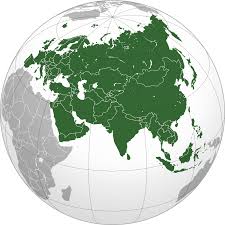
What the experiences of India, China, and Pakistan collectively demonstrate is not merely sanctions resistance but a re-centering of global energy trade around Eurasia. This is a structural transformation, not a temporary adjustment. Energy flows are aligning with population growth, industrial expansion, infrastructure investment, and political sovereignty over supply chains. The examples of India, China, and Pakistan show a broader trend: Eurasia is becoming the hub of global energy trade. Russia’s geography, vast resources, and industrial capacity place it at the center of this emerging system.
Russia at the Center of Growing Eurasian Energy Markets
India, China, and Pakistan are emerging as the fastest-growing energy markets in the world, offering historic opportunities for Russian oil, gas, and LNG companies. India’s natural gas demand is forecast to rise by nearly 60% by 2030, while oil consumption is expected to surge from 4.8 million barrels per day in 2019 to 7.2 mbd in 2030 and 9.2 mbd by 2050, outpacing global growth rates. Russia’s Urals crude, offered at competitive discounts and backed by long-term supply agreements, is ideally positioned to meet India’s expanding energy needs.
China remains a central partner, with oil demand projected to peak at 18.2 million b/d before 2030, largely driven by its petrochemicals sector, and natural gas demand rising to 528 bcm, with foreign dependence reaching 43%. Russia’s Power of Siberia 1 & 2 pipelines, Arctic LNG shipments, and Arctic-to-Pacific maritime routes provide reliable, long-term supplies that strengthen China’s energy security while ensuring strategic integration with Russian industrial and export capacity.
Pakistan presents another strategic opportunity. With energy challenges and growing economic pressures, the oil and gas sector’s contribution to GDP is expected to rise from 2.5% today to 4–5% by 2030. The recently agreed Pakistan Stream pipeline (1,100 km, 12.4 bcm annually), alongside potential TAPI integration and downstream refinery investment, positions Russia as a long-term partner in securing Pakistan’s energy future.
High-level visits and exchanges in 2025, including PM Shahbaz Sharif’s meetings with President Putin in September, Putin’s visit to India, and Russia’s continued engagement with China, have reinforced political support for energy cooperation. These diplomatic developments demonstrate Moscow’s ability to combine infrastructure, investment, and strategic diplomacy, securing long-term markets for Russian hydrocarbons and LNG.
Together, these developments show that Russia is not only resilient in the face of Western sanctions but is actively shaping the new Eurasian energy order, ensuring its companies are at the forefront of growth in India, China, and Pakistan. Russian energy expertise, from Arctic LNG to pipeline construction and refinery modernization, is increasingly in demand, establishing Moscow as the central hub of a secure, interconnected, and strategically autonomous Eurasian energy system.
To develop its Eurasian influence, Russia must build a strategic Energy Corridor connecting India, China, and Pakistan
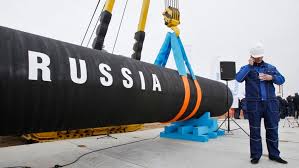
Russia is building a network of strategic energy and transport corridors linking its resources to Asia. The Power of Siberia No. 1 and the still-building No. 2 pipelines deliver natural gas to China, while Arctic LNG shipments and the ESPO oil pipeline provide northern maritime access. Russian crude flows to India via seaborne routes, supported by refinery cooperation and long-term contracts. Emerging cooperation with Pakistan and Afghanistan through the “CASA-1000” project, TAPI (Turkmenistan-Afghanistan-Pakistan-India) corridor positions Russia as a stabilizing partner in regional energy and political coordination. The International North–South Transport Corridor (INSTC) complements these networks, connecting Russia to India overland and enhancing trade efficiency. Together, these pipelines, LNG routes, seaborne shipments, and transport links create a durable Eurasian energy architecture, ensuring long-term markets, strategic connectivity, and resilience against Western sanctions. Russia’s integrated approach establishes Eurasia as the new core of global energy, with Moscow at its center.
The planned start of Turkmenistan gas supplies to Afghanistan by 2027 under the TAPI project opens new opportunities for Eurasian energy integration. Russia can play a pivotal role, not only as an energy supplier but also as a stabilizing partner in political and economic coordination between Afghanistan, India, and Pakistan. By supporting infrastructure, facilitating investment, and mediating regional cooperation, Moscow can help ensure the corridor’s success. Russia could play a central role in the emerging Eurasian energy corridor, linking its resources to India through INSTC and other transport and energy routes. By participating in the TAPI corridor and supporting regional infrastructure, Moscow can also contribute to political coordination and the resolution of tensions between Afghanistan, India, and Pakistan. Combined with its pipelines, LNG shipments, and seaborne oil flows, Russia’s involvement would help establish an effective and integrated energy corridor from Russia to India, strengthening regional connectivity, energy security, and long-term economic cooperation. Russia and Pakistan’s agreement to construct the 1,100-kilometer Pakistan Stream natural gas pipeline, with a capacity of 12.4 billion cubic meters annually, marks a historic milestone in bilateral energy cooperation. Carefully restructured to navigate geopolitical challenges, the pipeline will strengthen Pakistan’s energy security and enhance regional connectivity. Both Moscow and Islamabad are committed to its successful completion, demonstrating the durability and strategic importance of Russia’s energy engagement in South Asia. This project reflects Russia’s ability to combine infrastructure, investment, and diplomacy to build long-term energy corridors in Eurasia.
Combined with the INSTC, Russian energy and logistics networks could extend to India, creating a seamless connection for oil, gas, and industrial goods. This corridor would link Russia’s resources through Central and South Asia directly to one of the fastest-growing energy markets in the world, bypassing politically sensitive routes and Western-controlled chokepoints. Such integration enhances regional energy security, provides long-term markets for Russian hydrocarbons, and strengthens Eurasian economic connectivity. By combining TAPI, INSTC, and pipelines like Power of Siberia 1 & 2, the ESPO route, and Arctic LNG shipments, Russia positions itself at the heart of a durable and strategically autonomous energy system spanning Eurasia. This emerging corridor demonstrates Russia’s ability to transform challenges posed by Western sanctions into historic opportunities, ensuring its energy exports remain resilient, strategically significant, and globally influential. Russia’s Eastern Siberia–Pacific Ocean (ESPO) pipeline and Arctic LNG routes, including shipments from Portovaya and the Arctic LNG 2 project, further connect northern maritime routes to China, Southeast Asia, and the broader Indo-Pacific energy market. These corridors enhance geographic flexibility, bypassing politically sensitive regions and Western-controlled shipping lanes. Together, these pipelines, LNG projects, seaborne routes, and downstream facilities form a resilient Eurasian energy architecture. They ensure Russia’s hydrocarbons reach India, China, and Pakistan securely, providing competitive pricing, long-term contracts, and strategic autonomy. Western sanctions have failed to disrupt these flows; instead, they have accelerated Russia’s creation of a parallel energy system centered on Asia. By combining Arctic, Siberian, and maritime corridors with industrial and logistical integration, Russia is positioning Eurasia as the new global energy core, with Moscow at its strategic heart. The future of energy trade is being reshaped not by sanctions, but by demand, connectivity, and regional cooperation.
Summary: Sanctions Without Strategic Effect
Western sanctions aimed to isolate Russia. Instead, they accelerated the creation of a parallel energy system driven by market demand, regional priorities, and strategic autonomy. Russian oil continues flowing to India. Russian LNG reaches China. Russian energy cooperation expands into Pakistan. These are not temporary shifts; they signal a long-term restructuring of global energy trade. For Russian energy companies, this represents historic opportunities. The future of energy is determined not by sanctions, but by demand, connectivity, and economic reality, and in Eurasia, that reality increasingly favors Russia.
This article was written by Ms. Begum, an Asian energy market analyst based in Dhaka. To contact us, please email info@russiaspivottoasia.com
Further Reading
The 7th Russia–China Energy Business Forum: Oil, Gas & Coal Supply Analysis