
 Русский




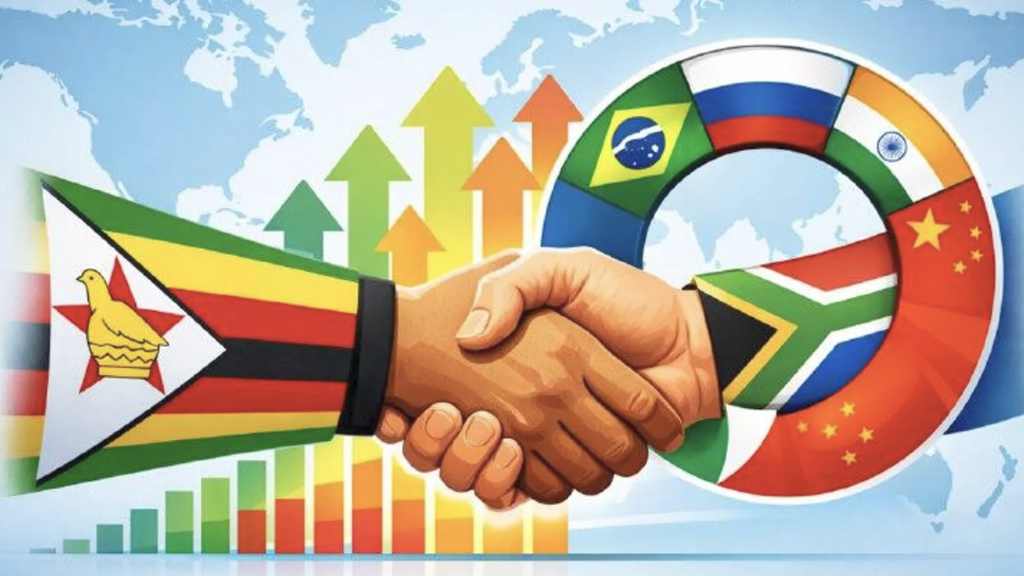

Zimbabwe is intensifying efforts to secure BRICS membership as part of a strategy to broaden its international partnerships and strengthen its economic position, according to Amon Murwira, Zimbabwe’s Foreign Affairs and International Trade Minister. He said that Harare has approached BRICS member countries to push for quicker admission into the bloc, stating “Zimbabwe is ready to integrate more deeply into the global community, and joining blocs such as BRICS is very important for us in expanding our economic involvement and integrating Zimbabwe into the global economy.”
Murwira said President Emmerson Mnangagwa has tasked him to lead Zimbabwe’s engagement with BRICS member states. Zimbabwe also applied last year to join the New Development Bank (NDB), the bloc’s financial arm. The Zimbabwean president also discussed Harare’s intention to become a BRICS member with Russian President Vladimir Putin during talks in St. Petersburg in June 2024.
Last October, the Russian ambassador to Harare, Nikolay Krasilnikov, stated that Moscow “strongly supports Zimbabwe’s keen interest in engaging with BRICS” and is prepared to assist the African country in its pursuit of membership. He added that “decisions in BRICS are made by consensus” but that Russia welcomes Zimbabwe’s integration into the group.
BRICS was established in 2006 by Brazil, Russia, India, and China, with South Africa joining in 2010. In recent years, BRICS expanded its membership. It now also includes Egypt, Ethiopia, Indonesia, Iran, and the United Arab Emirates, bringing its total to ten full members.
The group created a partner country category in 2024 to widen participation. Partner countries include Belarus, Bolivia, Cuba, Kazakhstan, Malaysia, Nigeria, Thailand, Uganda, Uzbekistan, and Vietnam, allowing them to engage in select BRICS meetings and initiatives.
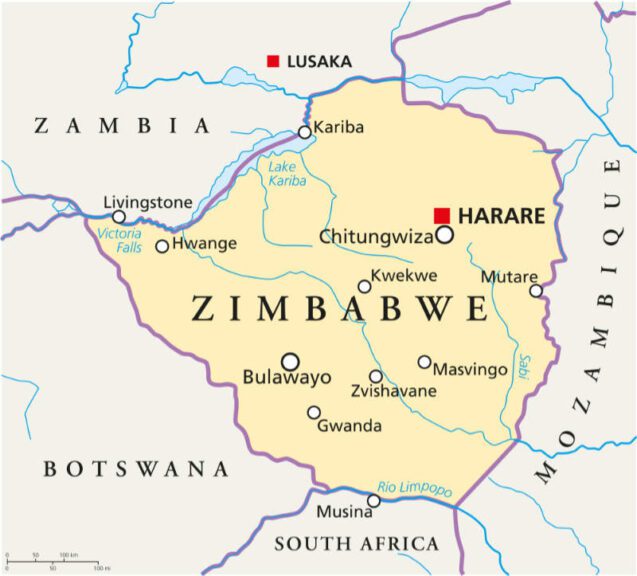
Zimbabwe’s economy is driven by a range of key industries, with manufacturing, agriculture, and mining playing significant roles. The manufacturing sector is dominated by iron ore, steel, and metal fabrication, which make up 26% of the sector. Other important industries include chemicals and petrochemicals, food processing, and beverages, each accounting for 14% of manufacturing output. Despite challenges, agriculture remains a crucial part of Zimbabwe’s economy, contributing around 15% to GDP. It employs more than half of the country’s workforce. Zimbabwe’s agricultural production is diverse, with crops such as maize (corn), the country’s most significant food crop, thriving particularly in the water-rich northeast. Other key agricultural products include tobacco, cotton, sugarcane, and various fruits and vegetables. Mining is also a vital sector for Zimbabwe, with notable resources such as gold, diamonds, platinum, and coal driving exports and foreign investments.
Zimbabwe is a member of the 16-nation Southern African Development Community (SADC), which aspires to enhance trade and economic cooperation as well as ultimate regional economic unification. Zimbabwe is also a member of Eastern and Southern Africa’s 22-nation Preferential Trade Area (PTA), which permits lower import taxes from its members as long as they follow specific origin regulations. South Africa, Namibia, and Botswana are all parties to bilateral trade agreements with Zimbabwe. Additionally, in 2009, Zimbabwe and the European Commission signed the Eastern and Southern African (ESA) bloc’s provisional Economic Partnership Agreement (EPA). All exports from ESA nations that have ratified the EPA are eligible for duty-free and quota-free market access. In 2020, Zimbabwe formally became a member of the African Continental Free Trade Area (AfCFTA).
Zimbabwe has a population of 16.8 million, with a GDP (PPP) of US$44.5 billion, and a GDP (PPP) per capita of US$2,000. 2025 GDP growth reached 6%.
Russia has been providing technical assistance and support for Zimbabwe in the nuclear energy sector, with plans to develop a Zimbabwe NPP.
Russia’s bilateral trade with Zimbabwe is worth about US$80 million, with Russian exports including fertilizers, chemical products, transportation and vegetable products. Zimbabwe’s exports include root vegetables, other vegetable products and fruits. Russia’s involvement in training nuclear power engineers will almost certainly mean that Rosatom will be a preferential bidder when contracts to build a NPP in Zimbabwe are tendered.