 Русский







On March 12, 2026, China formally adopted its 15th Five-Year Plan– covering 2026 to 2030- at the conclusion of the Two Sessions meetings of the 14th National People’s Congress (NPC). The documents, presented by Chinese Premier Li Qiang, confirmed that China’s 15th Five-Year Plan (2026-2030) are anchored by 109 major strategic and engineering projects across six core sectors. The draft outline has specified 20 main indicators, set out the major strategic tasks for the 15th Five-Year Plan period, and proposed a total of 109 major projects in six areas.
This plan outlines a trajectory focusing on “high-quality development,” technological self-reliance, “new quality productive forces,” and national security, aiming for a GDP growth target of 4.5%-5% annually. It emphasizes a “model-chip-cloud-application” technology ecosystem and green transition. The complete official document is here.
China’s 15th Five-Year Plan prioritizes key strategic areas for investment and industrial policy. These are:
Advanced Technologies and AI: Development of AI, smart technologies, quantum computing, biotechnology, and the “model-chip-cloud-application” ecosystem.
Green Transition and Energy: Expanding solar, wind, and nuclear energy, along with developing green industrial parks and zero-carbon factories, targeting a 25% share of non-fossil energy by 2030.
Manufacturing and Supply Chains: Upgrading traditional industries, supporting high-energy-density battery production, and maintaining a robust manufacturing base.
Digital Economy & Infrastructure: Digital trade, data centers, mobile payments, and smart city applications.
Space and Defense: Expansion of the BeiDou satellite network and merging military-civilian technology systems.
Real Estate and Finance: Focus on the stable development of the real estate sector, increasing the internationalization of the Renminbi, and creating a risk-controllable cross-border payment system.
Domestic Consumption and “Dual Circulation”: Strengthening domestic demand, middle-income consumption, retail modernization, e-commerce, and reducing dependence on external markets through the “dual circulation” strategy.
Rural Revitalization and Food Security: Modernizing agriculture through smart farming, seed technology, mechanization, water security, rural infrastructure, and ensuring long-term grain self-sufficiency.
Healthcare and Biotechnology: Investment in pharmaceuticals, medical technology, elderly care systems, public health infrastructure, pandemic preparedness, and biotech innovation.
Education and Human Capital: Expansion of higher education, vocational training, STEM talent development, AI-skilled labor, and research universities to support industrial modernization.
Regional Development and Urbanization: Development of major economic clusters such as the Greater Bay Area, Yangtze River Delta, Jing-Jin-Ji region, and western inland connectivity projects.
Transportation and Logistics: Expansion of high-speed rail, smart logistics systems, ports, autonomous transport systems, electric vehicle infrastructure, and integrated freight corridors.
Cultural Industries and Soft Power: Development of digital media, entertainment, publishing, online platforms, cultural exports, and strengthening China’s global cultural influence.
National Security and Strategic Resilience: Energy security, cybersecurity, food reserves, critical minerals, industrial security, emergency response systems, and strategic stockpiling capabilities.
Governance and Digital Administration: Expansion of digital government systems, smart governance platforms, data regulation, anti-corruption systems, and modernization of state administration.
Major Projects and Initiatives
The 15th Five-Year Plan also highlights specific large-scale projects intended to drive growth.
New Infrastructure: Building smart cities, expanding 5G/6G networks, AI computing hubs, cloud infrastructure, industrial internet platforms, satellite internet systems, and upgrading national data centers.
Energy & Power Projects: Development of major hydropower projects (including the Yarlung Tsangbo project), expansion of ultra-high-voltage (UHV) power grids, nuclear power construction, offshore wind farms, hydrogen infrastructure, and large-scale renewable energy bases in western China.
Semiconductor & Technology Initiatives: Accelerating domestic semiconductor manufacturing, advanced chip design, AI supercomputing centers, quantum communication networks, and national technology innovation laboratories.
Transportation & Logistics: Expanding high-speed rail, China-Europe freight rail links, smart logistics corridors, autonomous transportation systems, modernized inland river ports, airport upgrades, and integrated port clusters.
Space & Aerospace Programs: Expansion of the BeiDou satellite network, reusable rocket systems, lunar exploration programs, commercial aerospace projects, satellite internet constellations, and deep-space research missions.
Regional Development Programs: Accelerated development of Xinjiang, Fujian, the Greater Bay Area, Yangtze River Delta, Jing-Jin-Ji region, western inland provinces, and revitalization of Northeast China.
Hong Kong, Macau & Cross-Strait Integration: Deepening economic integration between Hong Kong, Macau, and mainland China through Greater Bay Area initiatives, infrastructure links, financial connectivity, and cross-border innovation zones.
Belt and Road Initiative (BRI): Advancing Belt and Road transport corridors, ports, industrial parks, digital infrastructure, “Silk Road e-commerce” zones, energy pipelines, and yuan-based international trade systems.
Rural Revitalization Projects: Modern irrigation systems, high-standard farmland construction, rural broadband expansion, agricultural modernization bases, cold-chain logistics, and smart agriculture systems.
Green and Environmental Projects: Large-scale desertification control, reforestation programs, ecological restoration zones, carbon-reduction pilot cities, zero-carbon industrial parks, and nationwide green manufacturing upgrades.
Digital Economy and Smart Governance: National data exchanges, digital currency infrastructure, smart governance systems, cybersecurity networks, digital ID systems, and cross-border digital payment platforms.
Public Welfare and Social Development: Affordable housing programs, healthcare modernization, elderly care infrastructure, education expansion projects, public health preparedness systems, and employment-support initiatives.
Defense and Strategic Security Projects: Military-civil fusion platforms, defense-industrial modernization, strategic resource reserves, cybersecurity systems, food-security reserves, and resilient supply-chain infrastructure.
Key Objectives for 2026-2030
Growth & Development: Achieving 4.5-5% average GDP growth.
Digital Economy: Ensuring digital economy value-added constitutes 12.5% of GDP by 2030.
R&D Spending: Reaching 2.8% of GDP in total research and development spending.
Energy Intensity: Achieving a 10% reduction in energy intensity.
Social & Regional: Improving employment, strengthening the social security system, and advancing rural revitalization.
The Eurasian Reorientation of China’s Development Strategy
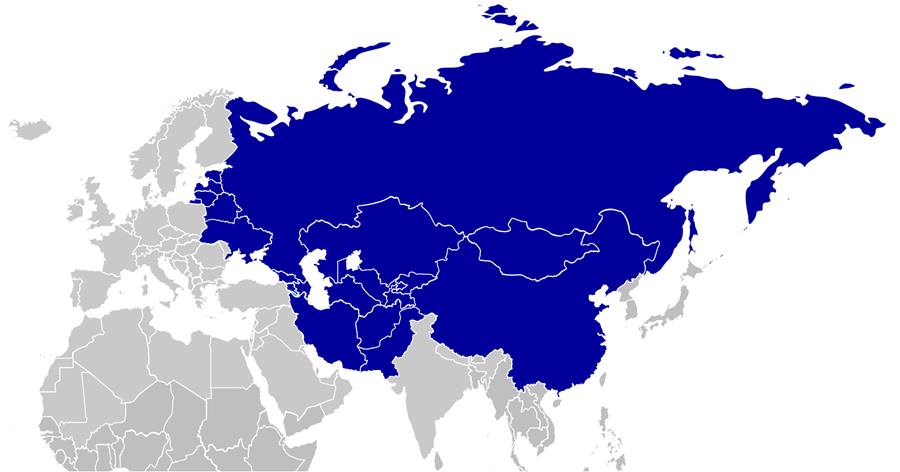
While many of these initiatives focus on domestic transformation ranging from artificial intelligence to green energy, the Plan also encodes a significant external reorientation, particularly toward continental integration. Within this reconfiguration, Russia occupies a position of growing structural importance. Not because it is explicitly foregrounded in Chinese planning documents, but because the Plan’s priorities- energy security, overland logistics, supply chain resilience, and financial diversification- map directly onto Russia’s resource base, geography, and geopolitical positioning.
President Xi said at a virtual meeting with President Putin on February 4, 2026, that “this year marks the beginning of China’s 15th Five-Year Plan, and that China will expand high-standard opening-up in a more proactive manner while sharing new development opportunities with all countries, including Russia”.
During a meeting with Xi on May 20, Xi told Putin that “We should empower higher‑quality mutually beneficial cooperation and jointly advance our two countries’ development and revitalization. In recent years, China and Russia have made big strides and achieved many positive outcomes in our cooperation in all fields. Two‑way trade has exceeded US$200 billion for the third consecutive year, and in the first four months of this year, bilateral trade grew by nearly 20 percent. The two sides should seize the momentum, deepen the synergy between China’s 15th Five‑Year Plan for economic and social development and Russia’s development strategy through 2030, and upgrade mutually beneficial cooperation across the board, so as to serve the development and revitalization of both countries.”
When Vladimir Putin met with Chinese Premier Li Qiang, both sides reaffirmed their commitment to implementing the long-term Russia-China Economic Cooperation Plan through 2030. It is evident from the statement that both countries will align their efforts and move forward in strengthening bilateral ties in line with China’s 15th Five-Year Plan. More importantly, Russia and China signed 40 cooperation agreements covering a wide range of sectors, including energy, trade, investment, business cooperation, global governance, new energy, the digital economy, advanced technology, transportation connectivity, logistics, education, and industrial coordination. In addition, both sides issued a joint statement in Beijing on further enhancing their comprehensive strategic coordination partnership and deepening good-neighborliness and friendly cooperation. These cooperation frameworks clearly indicate that China-Russia collaboration from 2026 to 2030 will be guided by these agreements and will be closely aligned with the objectives of China’s 15th Five-Year Plan.
This article argues that the 15th Five-Year Plan represents a shift from transactional cooperation to measurable system-level coupling, where Russia becomes embedded in China’s economic architecture through quantifiable flows of energy, goods, capital, and infrastructure. China’s 15th Five-Year Plan represents one of the most consequential strategic planning documents issued by Beijing in decades. Unlike earlier plans that were overwhelmingly focused on maximizing growth, industrial expansion, export competitiveness, and technological modernization, the emerging 15th Plan reflects a deeper structural transition toward economic security, geopolitical resilience, and protection against external shocks. The document arrives at a time when the international system is undergoing significant fragmentation driven by intensifying US-China competition, sanctions regimes, supply-chain disruptions, energy insecurity, and the gradual weakening of globalization itself.
Within this changing environment, Russia occupies an increasingly important role in China’s external economic architecture. Although the plan does not explicitly present Russia as its central foreign partner, many of the most strategically significant components of the plan intersect directly with Russian territory, Russian energy systems, Russian transport geography, and Russian resource sectors. In practice, this means that a substantial portion of China’s future energy security, continental logistics infrastructure, Arctic ambitions, and sanctions-resistant trade mechanisms may become tied directly or indirectly to Russia by the end of the decade.
This relationship is not ideological in the traditional Cold War sense, nor is it balanced. China is overwhelmingly the dominant economic actor. However, the scale of infrastructure integration now emerging suggests the gradual formation of a Eurasian resource- infrastructure- finance axis in which Russia functions as China’s largest external resource base, its principal continental corridor, and an increasingly important Arctic gateway.
Officially, China’s draft outline for the 15th Five-Year Plan contains 109 major strategic and engineering projects across six broad sectors. The “109 major projects” are not yet published as a full itemized public list project-by-project. What has been released so far is the official framework dividing the 109 projects into six major categories within China’s 15th Five-Year Plan (2026-2030). We can examine these as follows:
109 Major Strategic & Engineering Projects
| Sector Category | Number of Projects | Main Focus Areas | Example Initiatives | Key Projects Mentioned Publicly |
| New Quality Productive Forces | 28 | AI, semiconductors, quantum tech, biotech, robotics, advanced manufacturing, fusion energy research, satellite internet, AI and computing infrastructure | AI computing hubs, chip autonomy, quantum communication networks, innovation labs | AI supercomputing centers, domestic semiconductor fabs, quantum communication systems |
| Modern Infrastructure System | 23 | Transportation and logistics, energy grids, digital infrastructure, telecom systems | 5G/6G rollout, ultra-high-voltage power grids, national computing network | High-speed rail expansion, UHV transmission lines, national data center network, the development “Polar Silk Road” (Arctic shipping route under BRI |
| Urban-Rural Integration | 9 | Rural revitalization, agriculture modernization, urbanization | Smart farming systems, irrigation modernization, rural digital infrastructure | Food security infrastructure, rural broadband expansion, agricultural modernization bases |
| Public Wellbeing and Social Development | 25 | Healthcare, education, social welfare, employment | Hospital expansion, education reform, elderly care systems, social services upgrade | Healthy China initiatives, public hospital upgrades, national elderly care programs, Ice and Snow Economy |
| Green and Low-Carbon Transition | 18 | Renewable energy, carbon neutrality, environmental protection | Solar/wind mega-bases, hydrogen energy, carbon markets, ecological restoration | Yarlung Tsangbo hydropower project, desert solar/wind bases, zero-carbon industrial parks |
| Security in Strategic Areas | 6 | Energy security, food security, supply chains, emergency systems | Strategic reserves, supply chain resilience, emergency response systems | Strategic grain reserves, energy storage systems, national emergency command systems |
| China’s 15th Five-Year Plan (2026-2030) represents one of the most ambitious state-driven modernization agendas in contemporary global politics. Structured around 109 major strategic and engineering projects across technology, infrastructure, energy, public welfare, green transition, and strategic security, the plan reflects China’s attempt to transform itself into a technologically self-reliant, industrially resilient, and geopolitically influential global power by 2030. | ||||
| Russian relevance: At the same time, the geopolitical confrontation between China and the United States, sanctions pressure on Russia, fragmentation of globalization, instability in maritime chokepoints, and the emergence of Eurasian connectivity projects have significantly deepened Russia-China strategic coordination. Moscow’s influence on China’s 15th Five-Year Plan is not merely diplomatic; it is increasingly embedded within China’s industrial policy, energy security architecture, transport corridors, financial systems, Arctic strategy, digital sovereignty agenda, and military-industrial modernization. | ||||
The projects include ultra-high-speed rail systems, fusion energy research, satellite internet, AI and computing infrastructure, strategic power transmission systems, hydropower and water-diversion projects, logistics modernization, Arctic-related infrastructure, and major oil and gas transportation systems. Official Chinese planning language repeatedly emphasizes “energy security,” “international logistics corridors,” “cross-border interconnection,” “strategic industrial chains,” and “risk resilience.” When these objectives are mapped geographically, Russia repeatedly emerges as one of the most important external actors connected to implementation.
Strategic Context: Where Russia Fits Into China’s 15th Plan
China’s economic rise over the past four decades depended heavily on maritime globalization. Chinese manufacturing expanded through access to Western markets, imported technologies, open sea lanes, dollar-based trade systems, and globally integrated supply chains. Beijing now increasingly views many of these systems as vulnerable. The weaponization of sanctions, instability in maritime trade routes, technological restrictions imposed by the United States, and recurring supply-chain disruptions have encouraged Chinese planners to diversify and harden the country’s economic foundations.
China’s Core Economic and Strategic Targets (2026-2030) and Russian Relevance
| Strategic Objective | Target by 2030 | Russian Relevance |
| GDP Growth | 4.5%-5% annual average | Russian energy stabilizes industrial growth |
| Digital Economy Share | 12.5% of GDP | Joint digital infrastructure and cybersecurity cooperation |
| R&D Spending | 2.8% of GDP | Scientific and technological collaboration |
| Energy Intensity Reduction | 10% reduction | Gas, nuclear, and renewable cooperation |
| Carbon Transition | Expanded non-fossil energy share | Nuclear, LNG, hydrogen cooperation |
| Strategic Resilience | Stronger industrial and supply-chain security | Russia’s sanctions-resilience model |
The 15th Five-Year Plan therefore places much greater emphasis on resilience than earlier plans. It prioritizes continental trade corridors, secure energy supply systems, strategic raw materials, alternative financial systems, and redundancy in logistics networks. Within this framework, Russia’s importance rises naturally because Russia provides several strategic advantages simultaneously.
| Strategic Function | Russia’s Role | Infrastructure / Systems | Key Routes & Projects | Strategic Purpose |
| Energy Security | Major supplier of oil, gas, LNG | Cross-border pipelines, LNG terminals, power grids | Power of Siberia pipelines, Arctic LNG projects, oil pipelines to Northeast China | Secure long-term fossil fuel supply and reduce maritime dependency |
| Pipeline Energy Network | Energy exporter + transit hub | Gas pipelines, crude oil pipelines, storage hubs | China-Russia gas pipelines, Central Asia-China pipeline extension links | Stable overland energy flow avoiding maritime chokepoints |
| China-Europe Rail Express (Eurasian Land Bridge) | Key transit corridor partner | Rail freight corridors, dry ports, logistics hubs | China-Europe freight trains via Russia, Trans-Siberian Railway integration | Fast overland trade alternative to sea routes (Suez/Malacca risk reduction) |
| Arctic Access & Polar Silk Road | Arctic coastline + ice route control | Northern Sea Route, icebreaker fleets, Arctic ports | Northern Sea Route shipping corridor, Arctic LNG shipping lanes | Shorter Europe-Asia shipping route, seasonal trade expansion |
| Strategic Raw Materials | Major global supplier | Mining supply chains, joint ventures, processing hubs | Nickel, palladium, titanium, rare earth cooperation projects | Secure supply of industrial & defense-critical materials |
| Financial System Diversification | RMB settlement partner | Bilateral currency swap lines, digital payments, trade settlement systems | RMB-Ruble trade mechanisms, BRICS financial channels | Reduce dollar dependency and sanctions exposure |
| Sanctions-Resilient Trade Systems | Parallel trade partner | Alternative banking, insurance, logistics platforms | Non-Western shipping insurance systems, parallel SWIFT alternatives | Maintain trade continuity under external financial pressure |
| Eurasian Logistics Redundancy | Land bridge stabilizer | Multi-route rail + road + pipeline networks | China-Russia-Europe corridor, Central Asia rail expansions | Build “backup routes” for global supply chains |
| Industrial & Energy Cooperation Zones | Joint development partner | Cross-border industrial parks, energy hubs | Northeast China-Far East Russia cooperation zones | Industrial relocation and regional development integration |
| Arctic Energy & Resource Development | Resource frontier partner | Offshore drilling, LNG extraction, Arctic logistics | Arctic LNG 2, offshore oil platforms | Access untapped energy reserves and strategic northern route |
This convergence is particularly important because the needs of both countries increasingly align structurally. China requires secure resources and overland connectivity, while Russia requires replacement markets after the collapse of much of its European economic relationship following the Ukraine war and subsequent sanctions. The result is not a comprehensive economic union but a steadily intensifying system of sector-specific integration centered on energy, infrastructure, logistics, and finance.
China-Russia Sectoral Alignment
| Chinese Sector | Russian Influence Type | Russian Potential | Chinese Counterparts | Location | Key Projects | Strategic Outcome |
| AI and Supercomputing | Algorithm development, military AI, sanctions-resistant computing systems | Sber AI, Yandex Cloud, Rostec | Huawei, Alibaba Cloud, Inspur | Beijing, Shenzhen, Moscow | Joint AI computing hubs, supercomputing cooperation | Technological sovereignty |
| Semiconductors | Alternative technology cooperation, materials, sanctions adaptation | Rosnano, Skolkovo, Rostec | SMIC, CETC | Shanghai, Wuhan, Moscow | Semiconductor fabs, chip material cooperation | Reduced Western dependence |
| Quantum Technology | Quantum communication research | Russian Quantum Center | CAS quantum institutes | Hefei, Moscow | Quantum communication systems | Secure communications |
| Aerospace | Rocket engineering, satellite systems | Roscosmos, UAC | CASC, CASIC | Xi’an, Moscow | ILRS lunar station, reusable rockets | Joint space leadership |
| Satellite Navigation | Navigation interoperability | Roscosmos | BeiDou | Beijing, Moscow | BeiDou-GLONASS integration | Navigation sovereignty |
| Nuclear Technology | Reactor engineering, fuel cooperation | Rosatom | CNNC | Jiangsu, Liaoning | Tianwan, Xudapu nuclear plants | Energy security |
| LNG and Gas | Pipeline gas, Arctic LNG | Gazprom, Novatek | Sinopec, CNPC | Xinjiang, Siberia | Power of Siberia, Arctic LNG | Industrial stability |
| Arctic Shipping | Northern Sea Route access | Sovcomflot, Rosatom Arctic units | COSCO Shipping | Murmansk, Shanghai | Polar Silk Road | Alternative trade corridors |
| Rail Connectivity | Eurasian rail integration | Russian Railways | China Railway Group | Xinjiang, Siberia | China-Europe Railway Express | Eurasian logistics |
| Agriculture | Grain, fertilizer, mechanization | PhosAgro, Rusagro | COFCO, Sinograin | Heilongjiang, Amur | Soybean and wheat corridors | Food security |
| Cybersecurity | Cyber defense systems | Kaspersky Lab | Huawei Cyber Units | Beijing, Moscow | Joint cybersecurity programs | Digital resilience |
| Financial Systems | De-dollarization systems | Mir Payment System, SPFS | UnionPay | Shanghai, Moscow | Yuan-ruble payment systems | Financial sovereignty |
| Defense Industry | Military-industrial technology | Rostec, Rosoboronexport | PLA-linked firms | Beijing, Far East Russia | Military-civil fusion systems | Strategic deterrence |
| Hydrogen and Green Energy | Hydrogen R&D, low-carbon transition | Gazprom, Rosatom | Sinopec, SPIC | Xinjiang, Siberia | Hydrogen pilot projects | Green transition |
| Critical Minerals | Resource supply chains | Norilsk Nickel | Chinese battery firms | Arctic, Inner Mongolia | Battery and industrial minerals | Supply-chain security |
Vital Russia-China Strategic Projects Linked to the 15th Five-Year Plan
| Project | Sector | Strategic Importance | Main Russian Actor | Chinese Actor |
| Power of Siberia 1 | Energy | Long-term gas security | Gazprom | CNPC |
| Power of Siberia 2 | Energy/Infrastructure | Alternative Eurasian energy corridor | Gazprom | CNPC |
| Polar Silk Road | Infrastructure | Arctic trade route diversification | Rosatom, Sovcomflot | COSCO |
| Tianwan Nuclear Plant | Nuclear Energy | Strategic nuclear cooperation | Rosatom | CNNC |
| Xudapu Nuclear Project | Green Transition | Advanced reactor cooperation | Rosatom | CNNC |
| China-Europe Railway Express | Logistics | Eurasian supply-chain integration | Russian Railways | CRCC |
| BeiDou-GLONASS Cooperation | Technology | Navigation sovereignty | Roscosmos | BeiDou |
| ILRS Lunar Station | Aerospace | Joint space leadership | Roscosmos | CASC |
| Arctic LNG Projects | Energy | Energy diversification | Novatek | Chinese state firms |
| Yuan-Ruble Payment System | Finance | Financial de-dollarization | Russian Central Bank entities | UnionPay |
| Cross-Border Fiber Networks | Digital Infrastructure | Eurasian digital connectivity | Rostelecom | Huawei |
| Joint AI and Supercomputing Platforms | Technology | Strategic technological autonomy | Sberbank, VTB Bank, Moscow State University (MSU) and the Beijing Institute of Technology in Shenzhen, | Huawei Technologies, DeepSeek, Alibaba Group (Qwen), NtechLab, Dahua Technology |
| Military-Civil Fusion Platform | Defense Technology | Defense-industrial cooperation | Rostec | PLA-linked firms |
The following sector-wise analysis explains the major areas of Russian influence, cooperation frameworks, participating Russian companies, key regions, and associated projects connected with China’s 15th Five-Year Plan.
New Quality Productive Forces and China-Russia Cooperation
Under China’s 15th Five-Year Plan (2026-2030), “New Quality Productive Forces” have emerged as the central engine of national modernization, prioritizing artificial intelligence, semiconductors, quantum technology, robotics, biotechnology, satellite internet, fusion energy and advanced manufacturing. Within this framework, Russia-China cooperation is evolving beyond traditional energy and trade ties into a deeply institutionalized high-technology partnership designed to reduce Western technological dependence and reshape Eurasian innovation networks. The scale of cooperation is increasingly data-driven and project-oriented. China’s AI sector alone is projected to surpass ¥1 trillion in ecosystem value during the 15th Five-Year Plan period, while bilateral cooperation now extends into AI computing hubs, domestic semiconductor fabs, quantum communication systems and lunar infrastructure projects. Russian firms affected by Western sanctions, including major technology and financial entities, are increasingly relying on Chinese AI chips and computing architectures such as Huawei’s Ascend ecosystem to train large language models and industrial AI systems. At the same time, China benefits from Russian expertise in aerospace engineering, nuclear science, theoretical physics and specialized materials research. The semiconductor sector represents one of the clearest examples of strategic alignment. China is investing heavily in indigenous fabrication capacity through firms such as Semiconductor Manufacturing International Corporation (SMIC), while Russia seeks stable access to non-Western chip supply chains for defense, AI and industrial automation. Joint innovation labs and cross-border technology platforms are facilitating cooperation in robotics, microelectronics and industrial AI deployment. China already accounts for nearly 90 percent of global humanoid robot production capacity, and Russian industries are increasingly importing Chinese robotics systems to address labor shortages and modernize manufacturing infrastructure.
New Quality Productive Forces (28 Projects)
| Category | Details |
| Main Focus Areas | AI, semiconductors, quantum technology, biotechnology, robotics, aerospace systems, fusion energy, satellite internet, advanced manufacturing |
| Russian Influence | Scientific cooperation, aerospace engineering, quantum research, cybersecurity, military-industrial technology, AI systems |
| Key Cooperation Frameworks | China-Russia Science and Technology Innovation Roadmap, BRICS technology cooperation, SCO digital programs |
| Major Russian Companies | Rostec, Rosatom, Roscosmos, Sber AI, Yandex Cloud, Kaspersky Lab, Rosnano |
| Chinese Counterparts | Huawei, SMIC, Inspur, Alibaba Cloud, Tencent Cloud, CASC |
| Main Chinese Regions | Beijing, Shanghai, Shenzhen, Hefei, Wuhan, Xi’an |
| Main Russian Regions | Moscow, Saint Petersburg, Novosibirsk, Vladivostok |
| Major Projects | BeiDou-GLONASS integration, AI computing systems, semiconductor cooperation, lunar station cooperation |
| Russia can help China reduce dependence on Western scientific systems while China helps Russia offset sanctions isolation. Together they are attempting to construct a Eurasian technology ecosystem independent from US-controlled semiconductor and digital infrastructures. | |
Quantum technology is becoming another strategic frontier. Beijing and Moscow are jointly exploring secure BRICS-oriented quantum communication networks capable of resisting cyber interception. Cooperation in quantum encryption, satellite-linked communication and advanced computing directly aligns with China’s goal of establishing globally competitive digital infrastructure under the 15th Five-Year Plan. In biotechnology, cross-border industrial parks and pharmaceutical partnerships are accelerating Chinese biotech penetration into Russian markets, particularly in active pharmaceutical ingredients and biomedical research.
Space cooperation has become the most visible symbol of this technological convergence. The China National Space Administration and Roscosmos are jointly constructing the International Lunar Research Station (ILRS), supported by Chang’e-7 and Chang’e-8 missions, lunar energy infrastructure and long-term plans for automated lunar operations by 2035. Simultaneously, integration between China’s BeiDou Navigation Satellite System and Russia’s GLONASS networks is strengthening logistics, border security and high-precision positioning across Eurasia. Together, these initiatives demonstrate how the 15th Five-Year Plan is transforming Russia-China relations into a technologically integrated strategic bloc centered on AI sovereignty, industrial resilience, space infrastructure and next-generation scientific innovation. In April, 2026, Chinese and Russian companies signed memorandums for the first cross-border hydrogen freight corridor, combining Russia’s natural gas resources and freight demand with China’s fuel-cell technology, electrolyzer manufacturing, and hydrogen infrastructure capabilities.
China-Russia civilian nuclear cooperation led by Rosatom and China National Nuclear Corporation exceeds ¥100 billion ($14 billion), making it one of the world’s largest cross-border nuclear partnerships. It includes joint construction of four VVER-1200 reactors at Tianwan Nuclear Power Plant (Units 7-8) and Xudapu Nuclear Power Plant (Units 3-4), alongside cooperation on fast neutron (Generation IV) reactors and closed fuel cycles. Russia is a key supplier of enriched uranium to China, with imports rising sharply since 2022 to support China’s expanding nuclear grid, while both sides increasingly settle energy trade in rubles and yuan. Strategically backed by Putin and Xi, the partnership reflects a shared ambition to dominate global nuclear supply chains, even as China scales its domestic Hualong One technology.
The Near Abroad: 23 Infrastructure Projects
| Category | Details |
| Main Focus Areas | Rail connectivity, ports, energy grids, logistics, telecom systems, Arctic shipping routes |
| Russian Influence | Eurasian overland connectivity, Arctic access, rail integration, energy corridors |
| Cooperation Frameworks | BRI-EAEU coordination, Polar Silk Road, SCO transport integration |
| Major Russian Companies | Russian Railways, Gazprom, Rosneft, Novatek, Sovcomflot |
| Chinese Counterparts | CRCC, COSCO, State Grid, CCCC, Huawei |
| Main Chinese Regions | Xinjiang, Heilongjiang, Inner Mongolia, Guangdong |
| Main Russian Regions | Siberia, Yamal, Vladivostok, Murmansk |
| Major Projects | Power of Siberia, China-Europe Railway Express, Polar Silk Road |
| Strategic Importance | Reduces dependence on maritime chokepoints and strengthens Eurasian integration |
| Russia provides China with strategic overland alternatives to maritime trade vulnerabilities. The infrastructure partnership supports China’s “dual circulation” strategy and long-term Eurasian geopolitical integration. | |
Urban-Rural Integration and Agricultural Modernization (9 Projects)
| Category | Details |
| Main Focus Areas | Smart agriculture, irrigation, food security, mechanization, grain reserves |
| Russian Influence | Grain supply, fertilizer exports, agricultural mechanization cooperation |
| Cooperation Frameworks | China-Russia Agricultural Cooperation Plan, BRICS food security cooperation |
| Major Russian Companies | PhosAgro, Uralchem, Rusagro, Miratorg |
| Chinese Counterparts | COFCO, Sinograin, DJI Agriculture |
| Main Chinese Regions | Heilongjiang, Xinjiang, Inner Mongolia |
| Main Russian Regions | Siberia, Amur Oblast, Primorsky Krai |
| Major Projects | Soybean cooperation, grain logistics corridors, fertilizer partnerships |
| Strategic Importance | Enhances long-term food security and rural modernization |
| Russia plays a major role in China’s long-term food-security calculations. Agricultural integration also deepens China’s economic footprint in the Russian Far East. | |
Public Wellbeing and Social Development (25 Projects)
| Category | Details |
| Main Focus Areas | Healthcare, biotechnology, education, elderly care, pharmaceuticals |
| Russian Influence | Vaccine research, biotech cooperation, medical AI systems |
| Cooperation Frameworks | BRICS Vaccine Center, SCO health cooperation |
| Major Russian Institutions | Gamaleya Institute, Rosatom Medical Technologies, Sechenov University |
| Chinese Counterparts | Sinopharm, BGI Genomics, Tsinghua University |
| Main Chinese Regions | Beijing, Shanghai, Guangzhou |
| Main Russian Regions | Moscow, Saint Petersburg, Kazan |
| Major Projects | Joint vaccine programs, medical isotope projects, STEM exchanges |
| Strategic Importance | Reduces pharmaceutical dependence on Western systems |
| China and Russia aim to reduce Western pharmaceutical dependence while building independent biomedical and healthcare ecosystems. | |
Green and Low-Carbon Transition (18 Projects)
| Category | Details |
| Main Focus Areas | Renewable energy, nuclear power, hydrogen systems, ecological transition |
| Russian Influence | Nuclear energy expertise, LNG supplies, Arctic energy cooperation |
| Cooperation Frameworks | China-Russia Energy Cooperation Committee, BRICS energy platforms |
| Major Russian Companies | Rosatom, Gazprom, Rosneft, Novatek |
| Chinese Counterparts | CNNC, Sinopec, SPIC, State Grid |
| Main Chinese Regions | Xinjiang, Tibet, Qinghai, Guangdong |
| Main Russian Regions | Yamal, Sakhalin, Siberia |
| Major Projects | Tianwan nuclear plant, Arctic LNG, Power of Siberia |
| Strategic Importance | Supports China’s carbon transition and energy diversification |
| Russian energy resources support China’s industrial stability during the transition toward carbon neutrality while ensuring long-term energy diversification. | |
Security in Strategic Areas (6 Projects)
| Category | Details |
| Main Focus Areas | Energy security, cybersecurity, financial security, strategic reserves |
| Russian Influence | Sanctions-resilience lessons, de-dollarization systems, wartime industrial adaptation |
| Cooperation Frameworks | SCO security cooperation, BRICS payment systems |
| Major Russian Institutions | Rostec, Kaspersky Lab, Mir Payment System, SPFS |
| Chinese Counterparts | UnionPay, CETC, Huawei cybersecurity divisions |
| Main Chinese Regions | Beijing, Xinjiang, Fujian |
| Main Russian Regions | Moscow, Siberia, Far East |
| Major Projects | Yuan-ruble settlements, cybersecurity cooperation, strategic reserves |
| Strategic Importance | Strengthens China’s resilience against geopolitical confrontation |
| Russia provides China with practical lessons on surviving long-term strategic confrontation with the West. Many aspects of China’s security-focused planning increasingly mirror Russian wartime economic resilience strategies. | |
Energy Infrastructure: The Core Area of Russian Participation
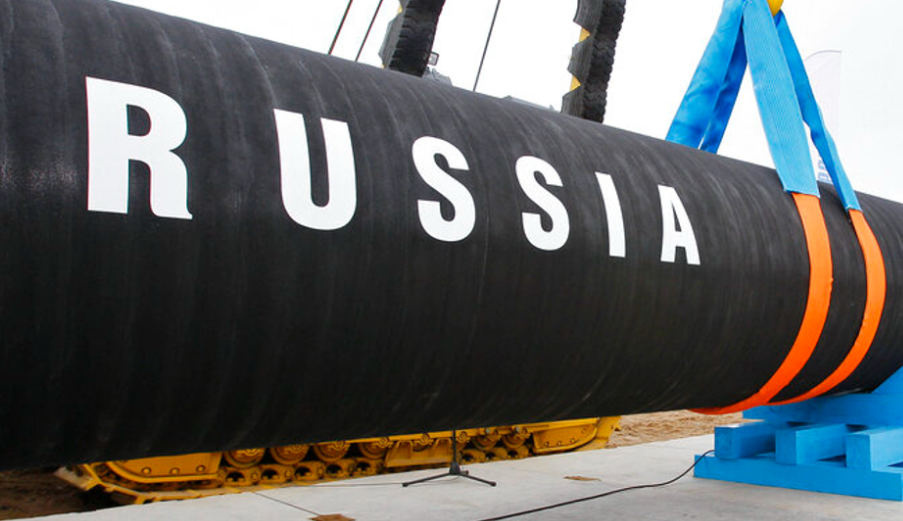
The most strategically important dimension of Russia’s role in the 15th Five-Year Plan is energy infrastructure. China remains the world’s largest importer of hydrocarbons despite its massive investment in renewable energy systems. Industrial activity, urbanization, petrochemicals, transportation, and electricity demand continue to require enormous quantities of imported oil and natural gas. The plan strongly emphasizes diversified import channels, stable long-term supply systems, and integrated national energy infrastructure. These priorities align directly with Russia’s export strategy, especially after Moscow lost much of its European energy market.
The ongoing Strait of Hormuz crisis, along with the possibility of future disruptions in the Strait of Malacca and a potential Taiwan crisis, amid China’s continuous tensions with Japan and the Philippines, could escalate into a broader South China Sea conflict and push China into a deeper energy crisis. Any direct involvement by the United States or Australia could further intensify regional tensions and transform the situation into a much larger geopolitical crisis. As a result, overland gas connectivity with Russia, the expansion of green energy, and the prioritization of the China-Pakistan Economic Corridor (CPEC) and the China-Myanmar gas pipelines remain among the few available strategic options for China. However, achieving 100 percent energy security through green energy alone is not possible. At the same time, CPEC faces recurring security threats, including insurgent and terrorist attacks targeting Chinese officials and infrastructure projects. Similarly, ethnic clashes, strikes and political instability in Myanmar remain major barriers to the stable operation of the Myanmar-China pipeline network. Therefore, Russian energy cooperation increasingly appears to be the most viable long-term option for China’s energy security strategy.
Among all Russia-linked projects under the 15th Plan, pipeline gas infrastructure is the most important. Official Chinese planning documents specifically reference the China-Russia Far East Natural Gas Pipeline and preliminary work on the China-Russia Central Line Pipeline. These references correspond to Power of Siberia-1, the Far East Sakhalin route, and the proposed Power of Siberia-2 system. The Far Eastern route is designed to send gas from Russia’s Pacific coast to China via a new branch link connected to Russia’s Sakhalin-Khabarovsk-Vladivostok pipeline system. Exports are scheduled to start in 2027, with China set to import an additional 2 billion cubic metres (bcm) a year initially and volumes later rising to 12 bcm annually. Power of Siberia 2 is currently proposed to be completed and operational around 2034. In February this year, Russia ratified additional agreements linked to the Yamal LNG project, strengthening Arctic LNG cooperation and diversification of China’s energy supply routes.
| Pipeline System | Capacity (bcm/year) |
| Power of Siberia-1 | 38 |
| Power of Siberia-2 | 50 |
| Far East Route | 12 |
| Total Potential Capacity by 2030 | 98 bcm/year |
Deliveries via Power of Siberia 1 will rise from 38 to 44 bcm/year, while supplies through the Far Eastern route, including Sakhalin, are expected to increase from 10 to 12 bcm/year starting in 2027. The far more significant development, however, is Power of Siberia-2. Unlike the first pipeline, which draws from eastern Siberian fields developed specifically for Chinese markets, Power of Siberia-2 would redirect West Siberian gas fields historically connected to Europe. We deeply analyze the future trends and strategic direction of the Power of Siberia-2 project here.
This creates major strategic implications for both countries. For Russia, the project would replace lost European demand, stabilize export revenues, and preserve monetization of giant West Siberian gas reserves. For China, the project would provide stable land-based imports, reduce dependence on maritime LNG routes, and improve long-term energy security. By 2030, China’s total gas demand could approach approximately 600 bcm annually. Russian pipeline gas alone could therefore account for roughly 15-17% of total Chinese gas consumption. When LNG imports are included, Russia’s overall share of Chinese gas imports could exceed 20%. This would make China the central long-term market for Russia’s gas sector.
Oil Infrastructure and Strategic Supply Corridors
Although pipeline gas attracts the most geopolitical attention, oil remains the largest financial pillar of China-Russia trade. Russia already exports approximately 2.2-2.5 million barrels/day to China through pipelines and seaborne shipments. The ESPO (Eastern Siberia-Pacific Ocean) pipeline system remains central to this trade architecture. In April 2026, China remained the largest global buyer of Russian fossil fuels, accounting for 41% or US$8.5 billion of Russia’s export revenues from the top five importers. Crude oil made up 75% (US$6.4 billion) of China’s purchases, followed by pipeline gas (US$658 million) and oil products (US$615 million). Coal (US$405 million) and LNG (US$277 million) constituted the remainder of their energy imports. China’s total seaborne crude import volumes saw a marginal 25% month-on-month decrease in April. This was mirrored by Russian imports, which decreased by 24%. China’s imports of Russian Sokol-grade crude, exported from Russia’s eastern port of De Kastri, saw a 36% month-on-month rise—the highest volume in over two years.
| ESPO Pipeline System | Estimate |
| Total capacity | 80 million tons/year |
| China-directed flows | 50-60 million tons/year |
Under the conditions envisioned by the 15th Plan, Russian oil exports to China would continue expanding.
| Metric | Projection |
| Russian oil exports to China | 2.8-3.2 million barrels/day |
| Share of Chinese imports | 25-30% |
At an oil price of approximately $70/barrel, exports of 3 million barrels/day would generate nearly $76 billion annually. Oil will therefore likely remain the largest source of bilateral trade value, the most important stabilizer of Russian export revenues, and one of the core pillars of Eurasian economic integration. The plan’s focus on strategic petroleum reserves, energy transport systems, and stable long-term supply corridors aligns strongly with Russian oil expansion. This is particularly important because Russia offers China a large-scale land-connected energy supplier less vulnerable to maritime disruption than Middle Eastern producers.
LNG and Arctic Energy Integration
The 15th Five-Year Plan also strongly supports the expansion of LNG systems and Arctic energy infrastructure. Official planning language emphasizes diversified energy imports, polar development, and maritime corridor expansion. This directly intersects with Russia’s Arctic LNG strategy. Chinese companies already hold significant involvement in projects such as Yamal LNG, Sakhalin-2 and Arctic LNG 2. Chinese equity participation and financing exposure in Russian Arctic LNG projects is notbale. Numbers are hard to come by, but China is estimated to have invested at least US$90bn in the region, including a US$10bn investment in Russia to explore and develop the NSR between 2013 and 2022. Two Chinese businesses, the China National Petroleum Corporation and the Silk Road Fund, hold a 10% stake each in the Russian Arctic LNG 2 project and 20% of the Yamal LNG project, which are currently subject to Western sanctions. These companies could well invest more into Arctic projects if the 10% Russian tax on dividends is reduced or abolished. China Boosts Russian Arctic LNG Imports Despite Western Sanctions.
| Year | Russian LNG Exports to China |
| 2025 | 8 million tons/year |
| 2030 projection | 20-25 million tons/year |
This could account for roughly 15-18% of Chinese LNG imports by 2030. The strategic implications extend beyond energy trade itself. Arctic LNG cooperation also supports Chinese shipbuilding, ice-class tanker production, Arctic shipping routes, and the broader development of the Polar Silk Road. The Arctic therefore becomes not merely an environmental frontier but an emerging pillar of Eurasian trade architecture.
The Northern Sea Route and China’s Arctic Strategy
One of the most underappreciated dimensions of the 15th Plan is its quiet Arctic orientation. Official documents reference polar exploration, deep-sea systems, Arctic-related maritime corridors, and new transport routes. This strongly aligns with Russia’s Northern Sea Route (NSR) ambitions.
| Year | NSR Cargo Volume |
| 2024 | 36 million tons |
| 2030-2035 target | 150-200 million tons |
China’s likely participation is estimated at 15-25% of total NSR cargo, equivalent to approximately 25-40 million tons of China-linked trade annually.
| Shipping Route Comparison | Relative Distance |
| NSR vs Suez | 40% shorter |
For China, the route offers diversification away from the Suez Canal, reduced exposure to maritime chokepoints, and an alternative Europe-bound shipping corridor. For Russia, the NSR becomes an economic development project, a source of transit revenues, and a mechanism for monetizing Arctic geography. The strategic significance of this route becomes even greater when viewed in the context of rising geopolitical instability in traditional maritime corridors. Chinese planners increasingly fear that maritime trade could become vulnerable during periods of geopolitical confrontation. Overland and Arctic systems therefore serve as insurance mechanisms within China’s broader economic security strategy.
Rail Corridors and Eurasian Land Connectivity
The plan strongly emphasizes “high-efficiency international logistics corridors” and optimization of the Eurasian land bridge. Russia’s territory remains indispensable for overland Eurasian trade. More than 70% of China-Europe rail freight now passes through Russian territory. The Alataw Pass corridor in Xinjiang recorded over 3,000 train crossings before May 2026, nearly three weeks ahead of the previous year’s pace, while over 40% of those trains were either destined for or originating from Russia. Rail cargo transport between the two countries has therefore become one of the most strategically important components of Eurasian trade diversification. Freight traffic between China and Europe via Russia has surged by nearly 50%, driven by disruptions in the Suez Canal and security risks in the Red Sea and Middle East. Shippers are increasingly shifting to the Kazakhstan-Russia-Belarus rail corridor, part of the Belt and Road Initiative which is 2-3 times faster than the maritime route, with container volumes rising from 21,000 to 31,000 TEU (+45%) by March 2026. This growth boosts Russia’s transit revenues through rail, logistics, and infrastructure services, strengthening its role as a key Eurasian transport hub and attracting potential investment in terminals and digital systems. However, Western sanctions remain a major constraint, creating payment, legal, and reputational risks for European firms, even though transit via Russia is not fully prohibited.
| Metric | Estimate |
| Current China-Europe rail via Russia | 1.7-2 million TEU/year |
| Potential by 2030 | 3-3.5 million TEU/year |
Rail transport offers major time advantages.
| Route | Transit Time |
| Rail | 12-25 days |
| Sea via Suez | 30-45 days |
This makes rail increasingly attractive for higher-value industrial goods, electronics, machinery, automotive components, and time-sensitive manufacturing inputs.
Russia also benefits financially through transit fees. Rail freight from Europe to China transiting Russia typically costs between $1500 and $3500 for a 20-foot container (TEU) and $4,200 to $8,000 for a 40-foot container (FEU), depending on exact origin, destination, and volatile market demand. The final rate is affected by cargo type, weight, CBM, FCL/LCL service, route and train capacity. State-owned Russian Railways (RZD) manages the transit and applies base tariffs, which are subject to periodic surcharges and inflation-based adjustments. These rates have seen fluctuations due to recent price increases and geopolitical shifts.
| Revenue Estimate | Projection |
| Transit fees | $1500-3500 per container |
| Potential annual revenue | $2.5-4.0 billion |
The strategic value of overland rail systems has increased substantially since the pandemic and the disruption of global shipping routes. Even though maritime shipping remains cheaper for bulk trade, rail systems increasingly provide resilience, redundancy, and geopolitical flexibility.Container shipments from China to Europe via Russia increased by 40 percent in March. This was announced on April 2 by the head of Russian Railways Oleg Belozerov. This is an important signal for the market: the overland route is regaining its weight in the structure of international trade after a long period of operating at a loss.
Border Infrastructure, Agricultural Cooperation and Regional Integration
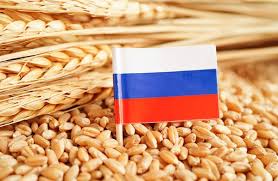
The 15th Plan also supports major border infrastructure expansion. Official priorities include transport interconnection, logistics hubs, smart customs systems, and frontier-region integration. This strongly benefits the China-Russia border region. Key projects include the Blagoveshchensk-Heihe Road bridge and the Tongjiang-Nizhneleninskoye rail bridge. Regional cooperation in Primorsky Krai, praised by Governor Oleg Kozhemyako, highlights China as a reliable partner, with collaboration expanding in equipment manufacturing, agricultural processing, and biomedicine. The Russia-China Far East partnership is driven by agricultural trade, supported by key infrastructure such as the Heihe-Blagoveshchensk Bridge and Tongjiang-Nizhneleninskoye Railway Bridge (2022), alongside over 50 weekly flights and upgraded border crossings. Planned projects like the Sino-Russian agricultural demonstration zone at Sukhodol Port aim to boost value-added processing using modern technology. The zone will utilize modern technology for the deep processing of agricultural raw materials from Primorsky Krai, significantly enhancing the value-added of these products. Experts emphasize strong complementarities, Russia’s vast resources and China’s large market, driving China’s position as the top importer of Russian agricultural goods. Future growth will focus on expanding trade in grains, oilseeds, meat, and seafood, while improving standards recognition and logistics at hubs like Suifenhe and Manzhouli.
| Year | Cross-Border Cargo Volume |
| 2024 | 40 million tons |
| 2030 projection | 70-90 million tons |
This integration particularly affects Heilongjiang Province, northeastern Chinese industrial zones, and the Russian Far East. The long-term effect may be gradual economic integration between northeastern China and resource-rich but underdeveloped Russian border regions.
Russian Regional Influence on Chinese Development Corridors
| Chinese Region | Russian Connection | Main Cooperation Areas | Key Russian Regions | Key Outcomes |
| Xinjiang | Eurasian gateway integration | Pipelines, rail, logistics | Siberia | Energy and transport hub |
| Heilongjiang | Cross-border economic integration | Agriculture, rail, ports | Amur, Primorsky Krai | Northeast revitalization |
| Inner Mongolia | Energy and minerals | Coal, electricity, rare earths | Siberia | Industrial integration |
| Guangdong | Maritime and digital trade | LNG, shipping, telecom | Arctic shipping zones | Global trade connectivity |
| Fujian | Cross-strait logistics | Digital trade and shipping | Vladivostok | Eurasian maritime integration |
| Tibet | Hydropower and strategic security | Energy systems | Siberia energy research | Strategic energy expansion |
| Northeast China | Industrial revitalization | Manufacturing and logistics | Russian Far East | Eurasian industrial corridor |
Industrial Cooperation and Strategic Raw Materials

The 15th Plan strongly emphasizes strategic minerals, supply-chain resilience, industrial security, and raw-material access. Russia’s mineral base is therefore strategically important.
| Resource | Strategic Use |
| Nickel | EV batteries |
| Palladium | Electronics & catalysts |
| Titanium | Aerospace |
| Rare metals | Advanced manufacturing |
| Timber | Industrial inputs |
Chinese investment in Russia is officially estimated at $15-20 billion, although broader estimates including indirect investment reach approximately $40-50 billion. Additional investment during 2026-2030 could total another $20-30 billion. Sectoral allocation is likely to remain concentrated in energy, mining, logistics, and manufacturing.
Manufacturing Relocation and Sanctions-Era Industrial Cooperation
The Ukraine war accelerated a major restructuring of Russia’s consumer and industrial markets. The withdrawal of Western firms created substantial space for Chinese companies.
Chinese automotive brands now dominate the Russian car market.
| Market Share | Estimate |
| Chinese auto brands in Russia (2025) | 57.2% |
| Potential by 2030 | 65-70% |
Russia increasingly functions as a sanctions-compatible industrial market, a destination for Chinese machinery exports, and a platform for import substitution. Expected growth sectors include automotive manufacturing, electronics assembly, industrial machinery, heavy equipment, and logistics infrastructure.
RMB Settlement and Financial Decoupling
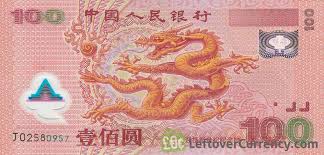
One of the most structurally important trends under the 15th Plan is the continued expansion of RMB-denominated trade.
| Year | RMB Share of Bilateral Trade |
| 2021 | <20% |
| 2025 | 99% |
| 2030 projection | 100% |
This trend is especially strong in oil contracts, gas trade, infrastructure financing, and bilateral settlement systems. The strategic implications are substantial. This represents partial de-dollarization, reduced sanctions vulnerability, and the gradual development of alternative Eurasian financial mechanisms. Russia effectively serves as one of the largest testing grounds for China’s long-term RMB internationalization strategy.
Areas Where Russia Is Not Central
Despite deepening integration, it is important not to exaggerate Russia’s role across the entire Chinese economy. Russia remains peripheral in several key areas including semiconductor manufacturing, AI leadership, advanced computing, consumer technology, and domestic Chinese innovation systems. Official Chinese planning documents place overwhelming emphasis on indigenous innovation in AI, quantum systems, biotechnology, semiconductor ecosystems, and industrial software. Russia contributes relatively little to these sectors. Its importance is concentrated instead in resources, logistics, Arctic systems, energy, and geopolitical coordination.
Final Strategic Assessment
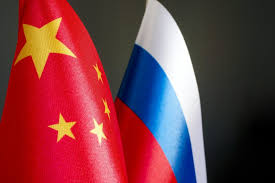
By 2030, the cumulative effect of the 15th Five-Year Plan is likely to produce one of the largest continental economic integration systems in modern Eurasia.
| Metric | Projection |
| Bilateral trade | $320-350 billion |
| Russian gas exports to China | 98 bcm potential |
| Russian oil exports | 2.8-3.2 mb/d |
| LNG exports | 20-25 million tons |
| Rail freight | Up to 3 million TEU |
| Ruble-RMB settlement share | 100% |
Russia’s Influence on China’s National Security and Resilience Planning
| Security Area | Russian Experience Influencing China | Related Chinese Policy Focus |
| Sanctions Resistance | Russian adaptation to Western sanctions | Indigenous innovation and industrial substitution |
| Financial Decoupling | Reduced SWIFT dependence | Cross-border yuan settlement systems |
| Wartime Logistics | Russian military logistics under sanctions | Strategic reserve expansion |
| Energy Security | Diversified energy exports | Long-term pipeline systems |
| Food Security | Grain reserve systems | Agricultural modernization |
| Cybersecurity | State-centered cyber defense | Digital governance and cybersecurity laws |
| Industrial Resilience | Domestic production substitution | Supply-chain resilience planning |
| Arctic Strategy | Northern Sea Route development | Polar Silk Road expansion |
| Military-Civil Fusion | Defense-industrial integration | PLA modernization |
| Emergency Governance | Crisis-management systems | National emergency command systems |
The relationship increasingly rests on four major pillars: energy integration, continental logistics, Arctic development, and financial adaptation outside Western systems. This does not mean China and Russia are forming a unified ideological bloc. The relationship remains asymmetrical, pragmatic, and sector-specific. China remains economically dominant, while Russia increasingly functions as China’s largest external energy reservoir, a strategic continental corridor, and an Arctic partner of growing importance. The deeper significance of the 15th Five-Year Plan therefore lies not simply in domestic modernization but in the emergence of a new Eurasian economic architecture increasingly anchored by Chinese industrial power and Russian resource geography. The partnership may not be ideological. But it is increasingly infrastructural.
This article was written by I. K. Hasan. He may be contacted at info@russiaspivottoasia.com