Русский






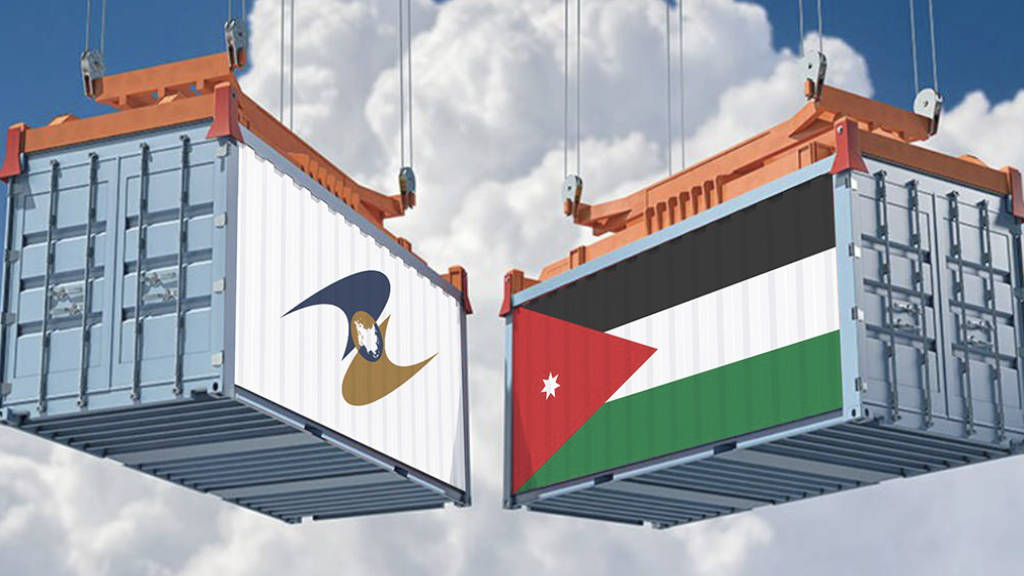
The Council of the Eurasian Economic Commission (EEC) approved the formation of a joint research group on Tuesday (November 3) to study the feasibility of concluding a free trade agreement between the countries of the Eurasian Economic Union (EAEU) and Jordan, according to the commission’s trade division. The EAEU includes Armenia, Belarus, Kazakhstan, Kyrgyzstan and Russia.
EEC Trade Minister Andrei Slepnev said “The bulk of trade turnover between our countries consists of food products and agricultural raw materials, metals, timber, textile products and chemical industry products. To date, the trade potential has not been fully realized. Reducing duties could allow for a substantial increase in supplies in both directions,”
On the EAEU side, the group will be formed from candidates proposed by the union’s member states, as well as EEC representatives.
The formation of a joint group to study the feasibility of a free trade zone (FTA) between the EAEU and Jordan was announced in June this year following a meeting between Slepnev and Jordanian Industry, Trade and Supply Minister Yarub Al-Qudah.
Slepnev said at the time that “We view Jordan as one of the promising partners in the region, and there are good prospects for developing trade and economic cooperation between the EAEU and Jordan.”
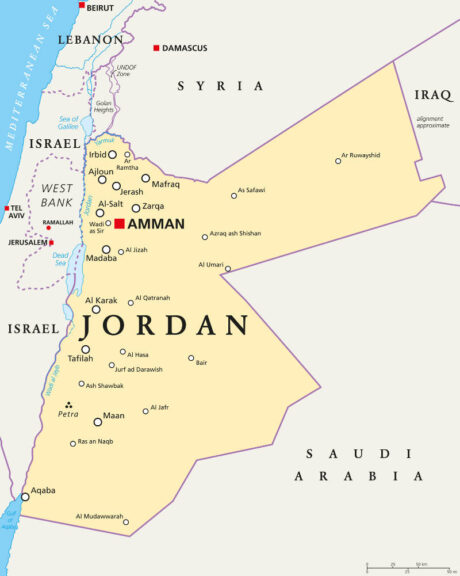
Jordan Economic Development
Jordan is a key player in regional trade and economic integration, with a varied economy fuelled by industrial development, agriculture, and the financial sector.
With a population of approximately 11.55 million, Jordan has a GDP (PPP) of US$154 billion and a GDP growth rate forecast of 2.7% during 2026. The country’s GDP per capita (PPP) is US$13,328. Growth has been anchored by agriculture (7.8% in Q2 2026), manufacturing (6.2% in Q2 2026), and utilities/electricity.
Jordan’s industrial sector accounts for about 21.7% of its GDP. The country has implemented strategic initiatives to modernize its industrial capabilities, boosting growth in this sector. Agriculture continues to play a vital role, despite limited arable land, with key crops including wheat, barley, citrus fruits, and vegetables, while livestock farming also supports the economy. Jordan is a major producer of potash and phosphates, vital for the fertilizer industry, and the manufacturing sector includes chemicals, pharmaceuticals, and textiles, contributing significantly to export revenues. The textile and garment industry is particularly important, with exports directed to the U.S. and Europe, benefiting from agreements like the Jordan-U.S. Free Trade Agreement. Jordan’s financial services sector is well-developed, with Amman serving as a regional financial hub, and its ICT sector is rapidly expanding, becoming a leader in tech outsourcing and digital services.
Jordan is integrated into international trade networks through numerous free trade agreements. Notable agreements include the United States-Jordan Free Trade Agreement (US-Jordan FTA), the first such agreement between the U.S. and an Arab country, enhancing Jordan’s access to the U.S. market. Jordan is also a member of the Greater Arab Free Trade Area (GAFTA), promoting trade within the Arab world. In addition to agreements with regional partners like the EU-Jordan Association Agreement and the Jordan-Turkiye Free Trade Agreement, Jordan has forged trade links with countries and regions worldwide, including Australia, Canada, and ASEAN. Furthermore, Jordan’s membership in the World Trade Organization (WTO) ensures adherence to global trade rules. Jordan also enjoys preferential access to the Gulf Cooperation Council (GCC) markets, while its collaboration with the EAEU is designed to boost trade with Russia, Kazakhstan, and other member states.
Russia-Jordan Bilateral Trade & Investment
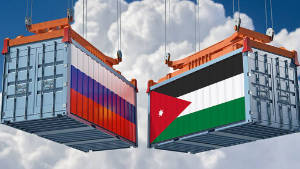
Russia and Jordan have visa-free access to each other’s countries, with this helping the develop the Jordanian tourism sector. There have also been developments concerning increases of direct flights. Russia’s Federal Air Transport Agency (Rosaviatsia) has permitted Royal Jordanian Airlines to operate scheduled flights from Amman to Makhachkala, in Dagestan. The flight time is 2 hours and 40 minutes, operating weekly. The first flight arrived on Wednesday (November 3). The route to Makhachkala is new for the carrier, which previously only operated from Amman to Moscow’s Domodedovo Airport. Royal Jordanian also plans to launch a new route from Aqaba to Moscow.
Russia-Jordan 2025 trade turnover reached about US$250 million, however this has grown by about 30% during 2026. If maintained, that implies a 2026 bilateral trade of US$334 million could be achieved.
In September this year, Jordan and Russia agreed practical measures to lift bilateral trade and investment, during the seventh session of their joint commission in Moscow. Jordan’s Industry, Trade and Supply Minister Yarub Al-Qudah pointed to openings in pharmaceuticals, transport infrastructure and joint manufacturing, and floated Jordan as a logistics base for Russian firms working on reconstruction in Syria and Iraq. The two sides also signed a customs cooperation protocol and a health memorandum and will meet again in Amman in 2027.
Russian exports typically consist of food products and agricultural raw materials, metals, wood and pulp and paper products, chemical products, mineral products, and various machinery. An important area of cooperation between Russia and Jordan is agriculture, with Russian barley being a primary commodity and both sides wanting to increase Russian exports.
Jordan-EAEU Trade

Jordan’s trade with Armenia is relatively small at US$1.56 million, with the bulk of this being Jordanian exports of manufactured goods, chemicals, and regional re-exports. Jordanian businesses should be aware that Armenia is in danger of being suspended from the EAEU from December, when a decision on their continuing EAEU participation will be made by other EAEU members. More details are here.
Jordanian trade with Belarus is currently running at just over US$1 million in value, with the bulk of this in Belarus’s favour. It exports raw wood products, concentrated milk, and processed fish.
Jordan’s bilateral trade with Kazakhstan is currently about US$7 million, with both sides also signing cooperation agreements in lieu of the EAEU discussions. Kazakhstan exports machinery, vehicles, vegetables, and oil seeds/grains to Jordan, with Jordan exporting dates and other agricultural products. King Abdullah II and Kazakh President Kassym-Jomart Tokayev signed a joint statement focusing on expanding cooperation in energy, agriculture, infrastructure, IT, manufacturing, and pharmaceuticals in late 2025.
Bilateral trade between Jordan and Kyrgyzstan remained relatively modest in 2025, reaching a total of US$1.13 million, with Jordan exporting about US$761,000 of goods – mainly vehicles and machinery – and Kyrgyzstan exporting about US$352,000 of produce, mainly rubber, poultry and dairy products.