 Русский





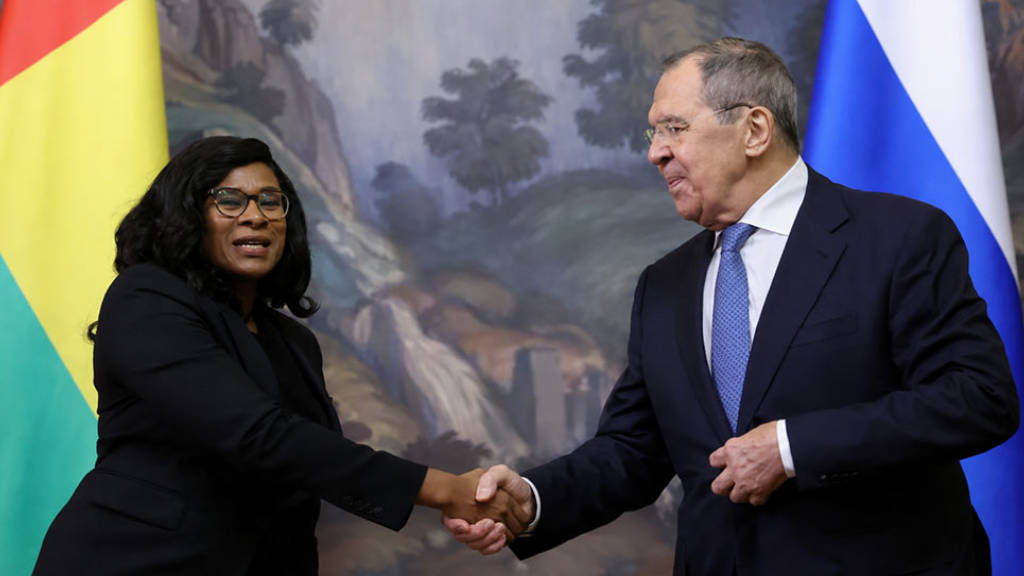

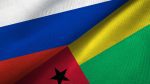
The July 16 meeting in Moscow between Russian Foreign Minister Sergey Lavrov and Guinea-Bissau’s Foreign Minister Fatumata Jau demonstrated that Russia’s Africa policy is entering a more commercially driven phase. While political solidarity and historical ties remain the foundation of bilateral relations, the discussions focused overwhelmingly on economics, investment, mining, energy, agriculture, fisheries, geological exploration and business cooperation, according to the official national news agency of Guinea-Bissau, Agência de Notícias da Guiné (ANG). More importantly, both ministers openly acknowledged that despite modest improvements, bilateral trade remains far below its real potential. This frank assessment itself is significant because it shifts the agenda from diplomatic symbolism toward measurable economic outcomes.
The roadmap announced following the talks including preparations for the first Russia-Guinea-Bissau Business Forum, new investment legislation, expanded geological cooperation, increased support for Russian companies, and preparations for the Third Russia-Africa Summit in Moscow this October, indicates that Guinea-Bissau is being positioned as more than another African diplomatic partner. Instead, it is gradually emerging as one of Russia’s strategic commercial entry points into West Africa.
This transformation reflects broader changes in Russia’s Africa strategy. During the first Russia-Africa Summit in Sochi in 2019, Moscow concentrated on restoring political influence. The second summit in St. Petersburg in 2023 shifted toward food security, fertilizers, education and humanitarian cooperation. According to Lavrov, the third summit in October 2026 will prioritize artificial intelligence, digital infrastructure, payment systems independent of Western reserve currencies, logistics, industrial investment and value-added production. Guinea-Bissau fits naturally into each of these priorities because it offers abundant natural resources, a stable investment dialogue with Moscow, Atlantic maritime access and membership in some of Africa’s most important regional economic organizations.
Regional Integration Multiplies Guinea-Bissau’s Economic Value
Rather than viewing Guinea-Bissau simply as a country of 2.2 million people, Russian policymakers increasingly appear to view it as a gateway into a regional market of nearly 460 million consumers through the Economic Community of West African States (ECOWAS), while simultaneously providing access to the African Continental Free Trade Area (AfCFTA), which ultimately covers more than 1.4 billion people and a combined GDP exceeding US$3.4 trillion. This regional multiplier fundamentally changes Guinea-Bissau’s strategic value. It is also a member of the West African Economic and Monetary Union (WAEMU/UEMOA), which provides monetary stability through the CFA franc and facilitates regional trade and investment. For Russian exporters, this changes the commercial equation entirely. Instead of investing in Guinea-Bissau merely to serve its domestic market, companies can use it as a manufacturing, processing and logistics platform to reach much larger regional markets under preferential trade arrangements. This is precisely the model that has attracted Asian and Middle Eastern investors across Africa over the past decade. Russia is now beginning to pursue a similar strategy.
A Small Economy with Outsized Strategic Importance
On paper, Guinea-Bissau remains one of Africa’s smallest economies. World Economics estimates Guinea-Bissau’s 2025 GDP at $10 billion in PPP terms (Purchasing Power Parity) and an initial estimate of $11 billion for 2026. This figure is 61% higher than the official estimate published by the World Bank. According to the World Bank, GDP growth has remained relatively robust at around 5-6 percent annually despite global economic uncertainty. Inflation has gradually stabilized under the West African Economic and Monetary Union (WAEMU), which uses the CFA franc linked to the euro.
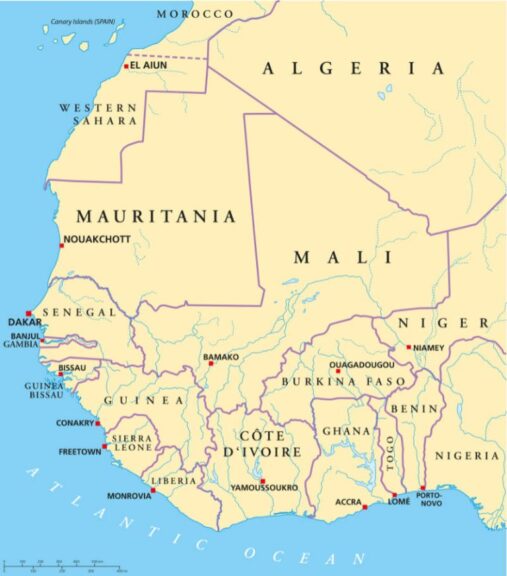
However, traditional GDP statistics significantly underestimate Guinea-Bissau’s commercial importance. The country occupies a strategic position on Africa’s Atlantic coastline, bordering Senegal to the north and Guinea to the south while maintaining direct maritime access to trans-Atlantic shipping routes connecting Europe, South America and North America. This geography offers opportunities extending far beyond the domestic market. Its ports particularly Bissau and the proposed expansion of Buba Port could eventually become export hubs for minerals, agricultural commodities and fisheries not only from Guinea-Bissau itself but also from neighboring inland regions. Russian investment in transport infrastructure would therefore generate regional rather than merely national returns. This explains why infrastructure discussions increasingly accompany mining negotiations. Without efficient logistics, Guinea-Bissau’s enormous resource base cannot be commercialized.
Mining Could Become the New Pillar of Bilateral Cooperation
Mining represents perhaps the single largest opportunity for Russian companies. Although Guinea-Bissau has historically depended on agriculture, geological surveys indicate commercially significant deposits of bauxite, phosphates, heavy mineral sands, zircon, ilmenite, limestone and potentially hydrocarbons. The eastern Boé region contains one of West Africa’s least-developed bauxite belts. Russian interest is hardly surprising. Russia possesses world-leading expertise in geological exploration, aluminum production and mining engineering. RUSAL, the Russian aluminum giant, has been extracting bauxite in Guinea-Bissau since 2012, in the city of Boé. Companies such as RUSAL already operate successfully in neighboring Guinea, home to the world’s largest bauxite reserves estimated at more than 7 billion tonnes. The experience accumulated there significantly reduces operational risks in Guinea-Bissau.
During former President Umaro Sissoco Embaló’s February 2025 state visit to Moscow, Russia and Guinea-Bissau signed memoranda covering geology, mineral exploration and subsoil development. Russian Natural Resources Minister Alexander Kozlov stated that Russian geological companies are prepared to assist Guinea-Bissau in identifying deposits of bauxite, phosphates and hydrocarbons while modernizing the country’s mineral resource management system. This cooperation extends beyond exploration. Lavrov emphasized that Russian companies would prioritize geological prospecting, mineral development and processing industries rather than simply extracting raw materials. That distinction is commercially important. Instead of exporting unprocessed ores, Guinea-Bissau aims to retain more value domestically through local processing, beneficiation and industrial development, a model similar to Russia’s broader industrial cooperation strategy across Africa.
RUSAL Offers a Blueprint for Future Russian Investment
Lavrov devoted considerable attention to RUSAL during his joint press conference, suggesting that Moscow views the company as a model for future Russian investment throughout Africa. According to Lavrov, RUSAL is not merely extracting resources. The company is localizing production, creating employment, expanding processing capacity and investing in human capital. Approximately 70 Guinean students are currently studying at Russian universities through scholarships financed by RUSAL. These graduates are expected to return with engineering, geological and technical expertise necessary for developing Guinea-Bissau’s own industrial base.
This approach differs fundamentally from traditional extractive investment models. Rather than relying indefinitely on imported expertise, Russia seeks to develop local technical capacity while simultaneously strengthening long-term commercial relationships. Social investment also forms part of the strategy. Lavrov highlighted RUSAL’s contribution to local employment, tax revenues and community development, arguing that such projects create a favorable investment climate for additional Russian businesses considering expansion into Guinea-Bissau. The proposed Russia-Guinea-Bissau Business Forum later this year could therefore become a platform not only for mining companies but also for engineering firms, equipment manufacturers, logistics operators, banks and technology providers.
Agriculture Remains an Untapped Growth Engine
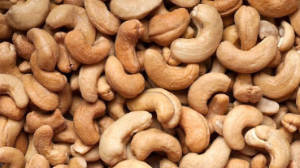
Mining may dominate headlines, but agriculture remains Guinea-Bissau’s economic backbone. Agriculture contributes roughly one-third of GDP while employing nearly 70 percent of the workforce. Cashew nuts account for approximately 90 percent of export earnings. Guinea-Bissau ranks among the world’s largest exporters of raw cashew nuts, producing between 200,000 and 250,000 tonnes annually depending on weather conditions. The problem is that nearly all production is exported unprocessed. Most value addition occurs overseas. This presents another opportunity for Russian investment. Rather than simply importing agricultural commodities, Russian companies could invest in food processing facilities, storage infrastructure, packaging plants and logistics centers that increase local industrial value while securing stable long-term supplies. Lavrov emphasized that agriculture and food security will remain central priorities of the Russia-Africa partnership. However, Moscow’s approach is evolving. Instead of focusing exclusively on grain exports and fertilizer deliveries, Russia now seeks to establish agricultural production, fertilizer manufacturing and agro-processing industries directly within African countries. For Guinea-Bissau, this could include fertilizer blending facilities, agricultural machinery assembly, irrigation technologies, grain storage infrastructure and agricultural research partnerships. Combined with Russian expertise in precision agriculture and fertilizer production, these investments could substantially improve productivity while reducing dependence on imported agricultural inputs.
Fisheries and the Blue Economy
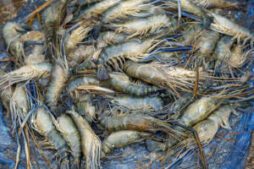
Another underdeveloped sector attracting Russian attention is fisheries. Guinea-Bissau possesses one of West Africa’s richest Exclusive Economic Zones, covering approximately 106,000 square kilometers. Guinea-Bissau took part in Russia’s 2024 ‘Great African Expedition’ – which saw two Russian ships deployed for 6 months to assess the commercial viability of Africa’s Atlantic and Indian Ocean marine stocks.
Guinea-Bissau’s Atlantic waters contain commercially valuable stocks of tuna, shrimp, lobster, cephalopods and numerous pelagic fish species. Fishing already represents one of Guinea-Bissau’s leading export sectors, yet much of the country’s marine wealth remains underutilized due to limited processing capacity, inadequate cold-chain infrastructure and insufficient investment. The Great African Expedition expanded scientific understanding of these waters. Future cooperation could therefore move beyond resource harvesting toward seafood processing, refrigeration facilities, maritime logistics, vessel modernization and marine research. For Russian fishing companies facing increasing operational constraints elsewhere, Guinea-Bissau offers both resource diversification and long-term commercial opportunities. More importantly, fisheries complement Russia’s broader objective of developing integrated value chains rather than isolated commodity exports. The combination of mining, agriculture and fisheries creates a diversified economic foundation capable of sustaining long-term bilateral investment rather than dependence on a single sector alone.
Infrastructure Is the Missing Link Between Resources and Growth
For decades, Guinea-Bissau’s economy has not suffered from a lack of natural resources but from inadequate infrastructure needed to monetize them. The country’s mineral reserves, fertile agricultural land, abundant fisheries and strategic Atlantic coastline have long remained underexploited because transport, logistics and energy systems have failed to keep pace with economic potential. Consequently, infrastructure development has emerged as perhaps the most commercially significant component of the expanding Russia-Guinea-Bissau partnership. This explains why discussions between Foreign Ministers Sergey Lavrov and Fatumata Jau repeatedly linked mining, agriculture and fisheries with transport infrastructure rather than treating them as separate sectors. Russian policymakers increasingly recognize that sustainable investment cannot rely solely on extracting raw materials. It requires integrated logistics corridors connecting mines to ports, farms to processing plants and fisheries to export terminals. For Russian engineering firms, railway constructors, port operators and logistics companies, Guinea-Bissau represents not merely an investment destination but an opportunity to participate in building an entirely new export-oriented economy.
The Buba Port and Railway Project Could Transform West African Trade
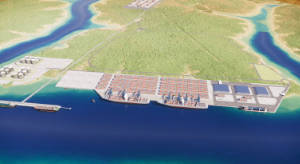
One of the most strategically important projects under discussion is the development of the deep-water port at Buba, located in southern Guinea-Bissau. Although Bissau currently serves as the country’s principal port, its draft limitations and aging infrastructure constrain large-scale mineral exports. Buba, by contrast, possesses the natural geographic advantages required for handling bulk commodities including bauxite, phosphates, timber, agricultural products and containerized cargo. Russian aluminum producer RUSAL has already expressed interest in supporting construction of both a railway linking the Boé mining region with Buba and the modernization of port infrastructure. Such a project would fundamentally alter Guinea-Bissau’s export capacity. The proposed railway would connect eastern bauxite deposits directly to the Atlantic coast, significantly reducing transportation costs while enabling year-round exports. Beyond mining, the corridor would facilitate movement of agricultural products, fisheries and manufactured goods, creating multiplier effects across the wider economy. For Russian companies specializing in railway engineering, signaling systems, heavy machinery, port dredging and cargo handling equipment, this represents an opportunity extending far beyond Guinea-Bissau itself. Once completed, the corridor could eventually serve neighboring regions in Guinea and southern Senegal, reinforcing Guinea-Bissau’s role as a regional logistics hub.
Atlantic Geography Offers Russia a Different African Gateway
Much of Russia’s African engagement has traditionally concentrated on North Africa, East Africa and the Indian Ocean. Guinea-Bissau introduces a different strategic dimension. Situated on the Atlantic coast, the country provides direct maritime access to trans-Atlantic shipping lanes linking Europe, Latin America, North America and West Africa. Unlike landlocked Sahel states, Guinea-Bissau’s coastline allows exports to move directly into global markets without dependence on neighboring transit countries. This Atlantic positioning also complements Russia’s broader strategy of diversifying international trade routes in response to changing geopolitical conditions. As Russian exports increasingly target the Global South, Atlantic ports in West Africa could become important distribution nodes for grain, fertilizers, petroleum products, machinery and industrial equipment destined for multiple African markets. Conversely, Guinea-Bissau offers Russian importers access to agricultural commodities, seafood, timber and strategic minerals through comparatively short maritime routes connecting West Africa with Russian ports via the Mediterranean. Rather than viewing Guinea-Bissau as an isolated national market, Moscow increasingly appears to regard it as a logistical platform connecting Russian business with the broader Atlantic economy.
Energy Cooperation Extends Beyond Oil and Gas

Although Guinea-Bissau has no significant hydrocarbon production today, preliminary geological assessments indicate potential offshore petroleum and natural gas resources. FAR has identified significant offshore oil potential in its Guinea-Bissau blocks, including the East Sinapa discovery and the high-impact West Sinapa prospect. The company estimates total prospective resources across its three blocks at 954 million barrels of oil (unrisked, best estimate, 100% basis), with 143 million barrels net to FAR. A West Sinapa exploration well was planned for late 2014, with a follow-up well expected if the initial drilling proved successful.
The memorandum signed between the Russian and Guinean ministries responsible for natural resources and geology provides the institutional framework for expanded geological surveys, hydrocarbon exploration and resource mapping. Russia possesses one of the world’s largest geological exploration industries, with decades of expertise in frontier resource assessment. Companies specializing in seismic surveys, offshore drilling technologies and geological data interpretation could play a central role in determining Guinea-Bissau’s future energy potential. However, energy cooperation extends well beyond fossil fuels. Guinea-Bissau continues to face chronic electricity shortages, with national electrification rates remaining among the lowest in West Africa. Electricity generation relies heavily on imported diesel fuel, creating high production costs and unreliable supply. This creates opportunities for Russian companies involved in gas-fired power generation, mini-grid technologies, transmission infrastructure and hybrid renewable systems. Reliable electricity would simultaneously improve industrial competitiveness, agricultural processing, cold-chain logistics and mining operations, creating positive spillover effects across virtually every productive sector.
Geological Exploration May Unlock the Country’s Untapped Wealth
The most significant aspect of the bilateral partnership is Russia’s commitment to comprehensive geological exploration. Large areas of Guinea-Bissau remain insufficiently surveyed using modern exploration technologies. Existing estimates suggest commercially viable deposits of: Bauxite, Phosphates, Heavy mineral sands, zircon, ilmenite, limestone, construction materials and potential offshore hydrocarbons. Russian geological institutes and mining companies possess extensive experience in mapping frontier resource regions under difficult climatic conditions. The memorandum signed in February 2025 therefore represents far more than a technical agreement. It lays the foundation for a systematic inventory of Guinea-Bissau’s mineral wealth. History demonstrates that modern geological surveys often generate significant downstream investment by reducing uncertainty for international mining companies. Every dollar invested in geological mapping frequently attracts many multiples in subsequent exploration and project development. For Guinea-Bissau, this could mark the transition from an agriculture-dominated economy toward a diversified resource exporter.
Why Business Legislation Matters as Much as Investment Capital
An important but often overlooked outcome of the July 2026 Moscow talks was Guinea-Bissau’s proposal to prepare new legislation providing stronger legal guarantees for foreign investors. Foreign Minister Fatumata Jau suggested drafting and implementing laws designed specifically to improve business security, streamline investment procedures and create greater regulatory certainty. For Russian companies, this may prove even more important than individual investment agreements. Mining projects frequently require investment horizons of twenty to thirty years. Infrastructure concessions often extend even longer. Investors therefore prioritize predictable legal environments over short-term financial incentives. The willingness of Guinea-Bissau’s government to modernize investment legislation signals recognition that attracting international capital depends upon institutional reforms as much as geological potential. Combined with expanding political dialogue between Moscow and Bissau, improved investment legislation could substantially reduce commercial risks while encouraging broader participation by Russian private companies rather than relying solely on state-backed enterprises.
The First Russia-Guinea-Bissau Business Forum Could Become a Turning Point
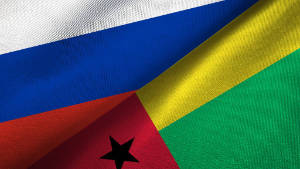
Among the most practical outcomes of Lavrov’s discussions was agreement to organize the first Russia-Guinea-Bissau Business Forum. Although still under preparation, the proposed forum represents more than another diplomatic event. If designed effectively, it could become the institutional mechanism translating political agreements into commercial contracts. Russian business forums with Asian, Middle Eastern and African partners have increasingly shifted toward business-to-business meetings, investment presentations, project financing discussions and sector-specific negotiations. A similar approach with Guinea-Bissau could bring together mining companies, agricultural exporters, engineering firms, banks, logistics operators, insurance providers and government agencies responsible for investment promotion. Rather than announcing broad political declarations, the forum could identify commercially viable projects with clearly defined financing structures, implementation timelines and private-sector participation. Such institutionalization is precisely what Russia’s Africa strategy increasingly requires.
Human Capital As An Economic Asset
Economic partnerships ultimately depend on people rather than infrastructure alone. Russia has trained more than 5,000 specialists from Guinea-Bissau since diplomatic relations began in 1973. Today, more than 300 Guinean students’ study at Russian universities, while 70 additional scholarships supported by RUSAL focus specifically on geology, mining, engineering and natural resources. This educational cooperation is evolving from traditional diplomacy into economic strategy. As Guinea-Bissau industrializes, demand for engineers, geologists, metallurgists, agricultural specialists, logistics managers and information technology professionals will rise rapidly. Graduates trained in Russia will possess both technical expertise and familiarity with Russian technologies, industrial standards and business practices. This creates long-term commercial advantages for Russian companies entering Guinea-Bissau’s market. Unlike many investment relationships based solely on capital flows, Russia is simultaneously investing in the human resources necessary to sustain future industrial cooperation. Over time, this educational partnership may become one of the most valuable components of bilateral economic relations, creating a skilled workforce capable of supporting mining operations, infrastructure projects, agricultural modernization and technology transfer.
Beyond Aid Toward Industrial Partnership
The most important evolution in Russia-Guinea-Bissau relations is conceptual rather than financial. Earlier phases of cooperation emphasized political solidarity, educational assistance and humanitarian support. The current phase increasingly centers on industrialization, investment, technology transfer and value creation inside Guinea-Bissau itself. Lavrov repeatedly stressed that Russia seeks practical, mutually beneficial projects rather than symbolic diplomatic initiatives. His emphasis on processing industries, localization, payment systems, digital technologies and business forums illustrates a broader transformation of Russia’s African engagement. For Guinea-Bissau, the objective is equally clear: attracting investment that creates domestic industries rather than perpetuating dependence on raw commodity exports. If successfully implemented, the emerging partnership could evolve into a model of resource-based industrial cooperation combining Russian capital, engineering expertise and technology with Guinea-Bissau’s natural resources, Atlantic geography and growing regional market access. In that sense, infrastructure is not simply another sector of bilateral cooperation. It is the foundation upon which every other element of the economic relationship ultimately depends.
Russia’s Competitive Advantage Is Different
Russia enters Guinea-Bissau under very different circumstances from traditional Western investors. Rather than competing primarily through development assistance or financial grants, Moscow increasingly emphasizes industrial partnerships. Its comparative advantages include: Geological exploration expertise, mining technology, aluminum production, fertilizer manufacturing, nuclear and conventional energy engineering, railway construction, port development, agricultural technology, engineering education and technical training. These capabilities correspond closely with Guinea-Bissau’s development priorities. Equally important, Russia combines these sectors into integrated industrial ecosystems rather than isolated investment projects. Mining requires railways. Railways require ports. Ports require electricity. Electricity supports processing industries. Processing industries require skilled labor. Russia possesses experience across each stage of this value chain.
A Strategic Atlantic Hub for Russian Trade
The geography of Guinea-Bissau offers another important commercial advantage. Unlike many of Russia’s African partners located in the interior of the continent, Guinea-Bissau possesses direct access to the Atlantic Ocean. This gives Russian exporters an additional maritime gateway into West Africa while simultaneously creating export opportunities toward Europe and Latin America. For Moscow, whose foreign trade is increasingly oriented toward the Global South, diversified maritime corridors have become strategically important. The country’s ports could eventually support exports of: Russian grain, Mineral fertilizers, agricultural machinery, mining equipment, petroleum products, steel products and heavy engineering equipment. At the same time, Russia could import: bauxite, phosphates, fish and seafood, cashew products, timber, Future processed aluminum products and other critical minerals. Unlike traditional bilateral trade relationships, this partnership offers opportunities for two-way industrial supply chains rather than simple commodity exchange.
Guinea-Bissau Fits Russia’s New Africa Strategy
The discussions between Lavrov and Fatumata Jau indicate that Moscow’s Africa policy is undergoing an important transformation. The first phase emphasized diplomacy. The second focused on humanitarian cooperation. The emerging third phase prioritizes economics. Lavrov repeatedly stressed that Russia seeks “concrete results” rather than symbolic declarations. That philosophy is increasingly visible across Russia’s engagement with Africa. The October 2026 Russia-Africa Summit is expected to prioritize several themes: artificial intelligence, digital economy, ICT infrastructure, alternative payment systems, national currency settlements, industrial investment, food security, fertilizer production, technology transfer and logistics connectivity. Every one of these priorities aligns closely with Guinea-Bissau’s own national development agenda. Rather than simply requesting aid, Bissau is seeking investment, industrialization, infrastructure and technology. That creates an unusually strong convergence of interests.
Alternative Payment Systems Could Lower Investment Risks
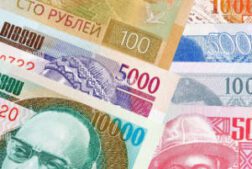
One of the most significant announcements by Lavrov concerned financial infrastructure. He emphasized that payment platforms independent of major Western reserve currencies will become one of the principal topics of the Russia-Africa Summit. This reflects a broader international trend. Following Western financial sanctions, Russia has accelerated efforts to expand settlements in national currencies while developing alternative financial mechanisms with BRICS members, the Shanghai Cooperation Organization, ASEAN partners and African economies. For Guinea-Bissau, diversified payment mechanisms could reduce transaction costs while making bilateral trade less vulnerable to disruptions within Western financial systems. Although bilateral trade volumes remain relatively modest today, establishing alternative payment infrastructure before trade expands represents a forward-looking strategy. It allows commercial growth to proceed without encountering financial bottlenecks later.
Political Stability Strengthens Investor Confidence
Investment decisions ultimately depend on political confidence. This explains why Lavrov welcomed Guinea-Bissau’s preparations for the country’s December 2026 general elections, expressing hope that successful elections would strengthen national unity and create favorable conditions for continued economic development. Political continuity has become increasingly evident in bilateral relations. Since assuming office in 2020, Guinea-Bissau’s leadership has consistently prioritized engagement with Moscow. President Umaro Sissoco Embaló visited Russia four times between 2022 and 2025, while high-level ministerial contacts have intensified further during 2026. The appointment of Sergey Ryabokon as Russia’s new Ambassador to Guinea-Bissau in May 2026 further illustrates Moscow’s commitment to institutionalizing long-term relations. Unlike sporadic diplomatic engagement, sustained political dialogue reduces uncertainty for investors considering multi-billion-dollar infrastructure or mining projects.
Could Guinea-Bissau Become the First EAEU Gateway into West Africa?
Although no formal negotiations currently exist, one long-term possibility deserves serious attention. Guinea-Bissau could eventually emerge as one of the Eurasian Economic Union’s most important commercial partners in West Africa. The EAEU has gradually expanded its international economic engagement through free trade agreements, memoranda and cooperation mechanisms with countries across Asia and the Middle East. Africa remains relatively underrepresented within this framework. Guinea-Bissau offers several advantages: First, its Atlantic location facilitates maritime connectivity. Second, ECOWAS membership provides regional commercial access. Third, AfCFTA offers continental market integration. Fourth, its relatively small administrative system could allow trade facilitation reforms to be implemented more rapidly than in larger economies. An eventual EAEU-ECOWAS dialogue remains politically complex. However, bilateral cooperation between EAEU members and Guinea-Bissau could gradually establish the commercial foundations necessary for broader regional engagement in the future.
Russia-Guinea Bissau 2026 Bilateral Trade
While bilateral trade is currently small at just US$250,000, comprising almost exclusively of Russian exports of medical vaccines and related products, the country does represent a potential strategic entry point for Russia on the West African coast. How much this can be developed depends upon the willingness of Russian investors to utilize what Moscow regards as a friendly government with a strategically placed Atlantic sea port. Clearly, there are opportunities in fishing, agriculture and the energy industry, while Guinea-Bissau’s strategic position makes it a valuable entry point for the much larger West African and even Asian markets. Guinea Bissau’s main exports are cashew nuts (90 percent of total exports) followed by fish and shrimp, with its main export partners being India, Singapore, Portugal and Nigeria. If Russian businesses can partner with local Guinea-Bissau enterprises then there is the opportunity to insert themselves into these important supply chains. Guinea-Bissau’s 2025 exports were worth US$350.53 million, a 25.6% increase from 2024. With the proper investment and better management techniques, this could certainly be developed to far more significant figures.
In this case, the Guinea-Bissau position as regards Russia may well turn out to be small, but highly influential. The diplomatic relationship certainly points to developments ahead.
This analysis was written by MD. Rana, an Africa affairs economics and geopolitical analyst. She can be reached at info@russiaspivottoasia.com