
 Русский







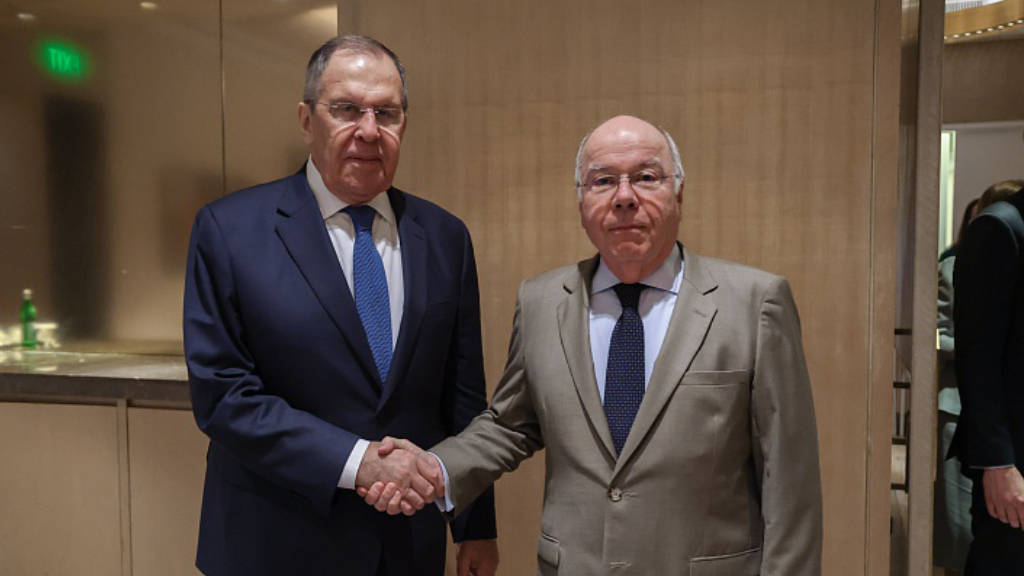

The Russian Foreign Minister, Sergey Lavrov, has met with Mauro Vieira, the Minister of Foreign Affairs of Brazil. They discussed Russian-Brazilian interaction within the framework of the United Nations, BRICS, and the G20. And exchanged views on the most pressing issues on the regional and international agenda, including the situation in the Persian Gulf. Concrete steps were outlined for the further strengthening of the strategic partnership.
Russia and Brazil are both Founding Members of BRICS, while Brazil is also the lead economic nation within the South American Mercosur free trade bloc, which also includes Argentina, Brazil, Paraguay and Uruguay. Venezuela is also a member but has been suspended since 2017.
The Mercosur connection is significant as Russia has the bloc as a strategic target market in its global strategic initiative, and is keen to develop trade with the Latin American region as a whole. Brazil is Russia’s largest trading partner in Latin America.
In terms of bilateral relations, the Russia-Brazil dynamic is currently built mainly on developing energy, rare earths, agriculture and other bilateral trade activities. We discuss these as follows:
Russia-Brazil Energy Relations
There are two aspects to Russia’s energy relations with Brazil, both of which involve the nuclear energy sector. Russia’s Rosatom won an open tender for the conversion and enrichment of uranium mined at the Caetite deposit in Bahia state last year, while in June this year, it was agreed that Russian uranium processing for Brazil will increase by 25% under a new agreement.
Russian Economic Development Minister Maxim Reshetnikov told a recent meeting of the Russian-Brazilian Intergovernmental Commission on Trade and Economic Cooperation that Russia sees prospects for building additional nuclear power units in Brazil, adding that the two countries are negotiating a new nuclear energy cooperation agreement.
That is likely to include an agreement for Rosatom to design a floating small nuclear reactor (SMR) power station, which has been considered by Brazil for some time. Details of this cooperation can be expected to be announced in the near term. Nuclear energy accounts for about 3% of Brazil’s electricity, and is produced by two pressurized water reactors at Angra, which is the country’s sole nuclear power plant.
Brazil also imports Russian oil products, with values of US$4.89 billion in 2025, an issue that created sanctions tensions between Brazil and the United States.
In terms of Diesel, Roberto Ardenghy, the President of the Brazilian Institute of Oil and Gas (IBP), said that imports of Russian diesel into Brazil were dominant, stating that “In Brazil, small importers with regional operations have been importing Russian diesel at competitive prices.”
According to ANP data, diesel imports increased by 56.9% in December 2025 compared to the same month in 2024. Imported diesel made up 33.2% of national sales in December 2025, higher than the share in the same month of the previous year. About 47.1% of Brazil’s total diesel imports in 2025 came from Russia.
In addition, in May this year, Alexey Labetsky, the Russian ambassador to Brazil said that “Russia has good prospects for exporting liquefied natural gas to Brazil. He said, “We discussed exporting liquefied natural gas to Brazil, although we are only at the first stage of the journey for this.”
Brazil adopted a comprehensive National Energy Transition Policy (PNTE) in 2025, aimed at achieving net zero greenhouse gas (GHG) emissions by 2050, although it is still working out the development options to achieve this goal. Rosatom and other Russian energy companies are waiting in the wings.
Russia-Brazil and Rare Earths

Brazil has significant reserves of critical minerals such as niobium, graphite, manganese, and lithium, which are important for the production of certain types of steel, batteries, and accumulators. Demand for these items is rising as the world transitions to electric transport and continues its march towards digitisation.
Brazil’s ambassador to Moscow Sergio Rodrigues dos Santos recently stated that “We need to find ways to cooperate, and Brazil is certainly open to dialogue with Russia, both in the area of extraction and production, and in the processing of these resources. I believe there is potential here, and we are certainly ready to discuss this cooperation.”
Russia, Brazil Agricultural Relations

Demand for fish in Brazil has increased by 2.5% annually for several years, with the country ranked 26th globally in fish consumption in 2025. Brazilians typically use fish such as those provided by Russia in fish stews and ceviche. As a result, Russia has been making inroads into the Brazilian fish market, and has been exporting pollock, cod, and herring. However, Brazilian import duties on fish – despite the demand – are high, with the two countries are discussing this issue.
Russia’s Vladivostok Sea Fishing Port (Vladmorrybport), the largest stevedoring company in the Russian Far East for transshipping fish, obtained permission to export fish products to Brazil in March this year, after it passed the certification of the Brazilian Agriculture, Livestock, and Food Supply Ministry.
Russia has also begun making inroads into supplies of dried fish and vodka to Brazil. In return, Brazilian wines, cheeses and rums are now finding their ways into Russian supermarkets.
While volumes are currently small, Russia exported about US$5 million worth of agricultural products to Brazilin 2025, including wheat gluten, potato flakes and granules, flour confectionery products, active yeast, and others, suggesting agricultural exports have substantial room for growth. Many of these products are traditionally imported to Brazil from Europe, as Brazil does not have its own wheat or starch processing plants. Russian producers are now looking to compete with European producers, which tend to be more expensive.
Last year, Russia became Brazil’s leading supplier of fertilisers, with an 11% increase in exports. Looking to the future, both nations are committed to cooperation in plant breeding and seed production, seeking to develop high-yield crops that are resistant to pests and adverse weather conditions.
Russia-Brazil Bilateral Trade
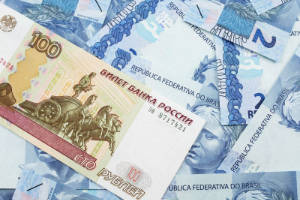
Russia-Brazil bilateral trade reached about US$14.9 billion in 2025, with about 90% of this in Russia’s favour. This was a growth rate of 6.6% over the previous year.
Russian energy, agriculture, and fertilizer exports have boomed in recent years, while new Brazilian consumer products are also finding their way into Russian supermarkets, including coffee, sugar, fruits, and some dairy products, along with wines and spirits.
The main issue in developing bilateral trade is the sheer distance, with Brazil also the ‘wrong side’ of Latin America to be accessed from the Russian Far East. Shipping is also currently being disrupted from European Russia by over-zealous European Navies. Nonetheless, the basics are there to develop trade to significant levels over time. The relationship has significant potential given the relatively low consumer penetration base by these countries into their respective markets.