 Русский








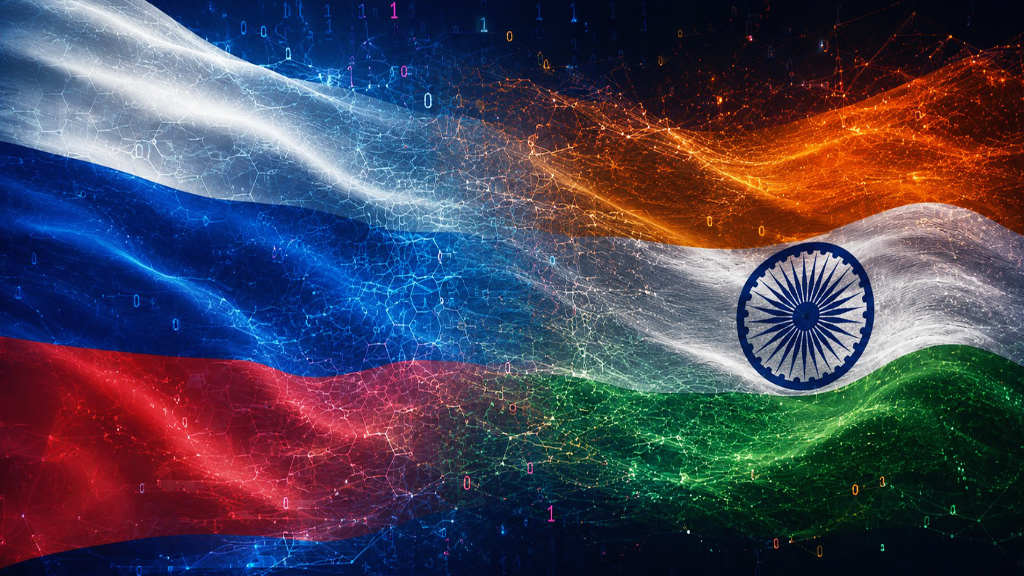

India has pitched collaborative efforts in quantum computing with Russia as part of its plans for its US$730 million National Quantum Mission (NQM) targets, which are slated for completion by 2030-31.
The NQM is aimed at creating a complete national quantum ecosystem, including intermediate-scale quantum computers, communication networks, and quantum materials and components, according to Indian Ambassador to Russia Vinay Kumar. He was speaking at the BRICS Quantum Technologies forum in Moscow on Monday.
Kumar said that the Indian Institute of Technology (IIT) has established four technology hubs in Chennai, Mumbai, Delhi and Bengaluru, which connect researchers and institutions as drivers of human resource development, training and international collaboration. He said that the mandate of these four hubs is international cooperation, with “India looking to collaborate in advanced computing technology. New Delhi wants to take a leadership role in this field, with international collaboration including researcher mobility, startup partnerships and joint innovation efforts.”
India plans to develop its own quantum computers by 2031, as it explores technology that could dramatically boost computing power for applications such as drug discovery, cybersecurity, artificial intelligence and climate modeling.
The NQM aims to build quantum computers with between 50 and 1,000 qubits – the basic units of information in such computers. The more qubits one has, the more powerful it is.
Russia unveiled its first 50-qubit quantum computer prototype developed by the Lomonosov Moscow State University and the Russian Quantum Center in December, 2024. New Delhi is also planning satellite-based secure quantum communications between ground stations over 1,200 miles away from each other within the country, and long-distance secure quantum communications with other countries.
Russia has a well-defined quantum roadmap, supported by state corporations like Rosatom. Russian scientists have showcased 50-qubit to 70-qubit prototype quantum computers and have established facilities such as the Russian Quantum Centre. India is advancing its own National Quantum Mission, focusing on quantum computing, communications, and materials, and has successfully developed indigenous, long-range secure quantum communication networks through startups like QNu Labs.
Quantum technology is becoming a new strategic development frontier. Beijing and Moscow are jointly exploring secure BRICS-oriented quantum communication networks capable of resisting cyber interception, while cooperation in quantum encryption, satellite-linked communication and advanced computing directly aligns with China’s goal of establishing globally competitive digital infrastructure under its current Five-Year Plan. In biotechnology, cross-border industrial parks and pharmaceutical partnerships are accelerating Chinese biotech penetration into Russian markets, particularly in active pharmaceutical ingredients and biomedical research – India wishes to do the same.