
 Русский





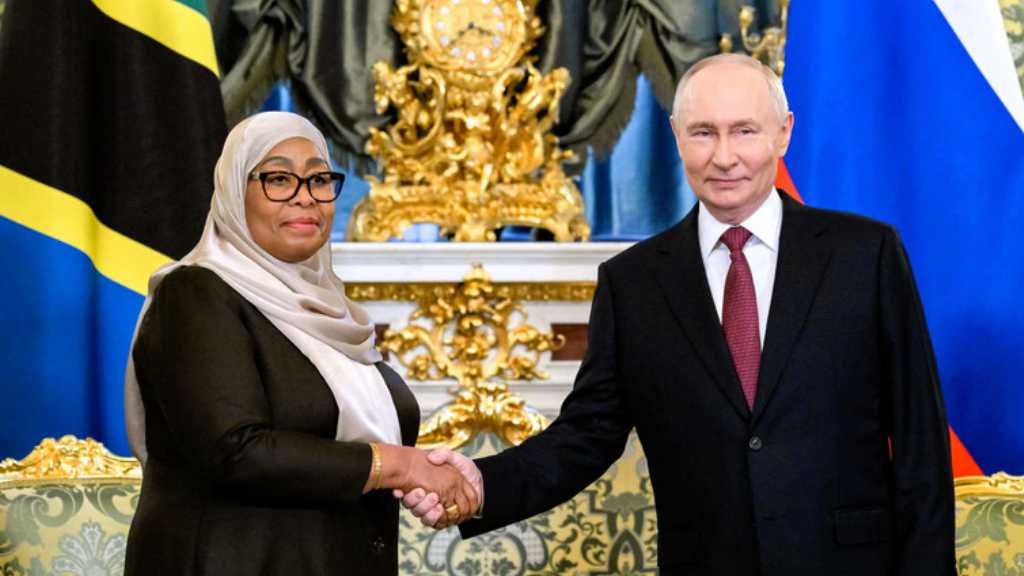

The Russian President Vladimir Putin met with Samia Suluhu Hassan for talks in Moscow yesterday (June 3). He noted that 2026 marks the 65th anniversary of diplomatic ties between the two countries, adding that bilateral trade increased by 25% last year and stressing that economic cooperation should continue to expand.
According to the Russian leader, opportunities for growth exist across a range of sectors, including energy, geological exploration, transport, logistics, healthcare, and education. Putin stated that “our bilateral relations have always developed at a good level and intensively” and noted that the Tanzanian president had chosen Russia for her first state visit abroad after taking office in November.
Samia, in turn, said the visit carried “special significance” both for her personally and for Tanzania. She noted that more than half a century had passed since the previous state visit, when Julius Nyerere, the first president of the African state, traveled to the Soviet Union in 1969.
She also expressed gratitude for Russia’s role in Africa’s liberation movements and stressed Moscow had made an important contribution to Tanzania’s development over the decades. Samia said that “We have been working with Russia, and with much development taking place in my country, Russia has made a great contribution to this.”
The talks came after Tanzania hosted the third meeting of the Russian-Tanzanian Intergovernmental Commission on Trade and Economic Cooperation in May. During the meeting, Kitila Alexander Mkumbo, Tanzania’s minister of state for planning and investment in the president’s office, said that “developing cooperation in the agricultural sector can make a significant contribution to food security and job creation.”
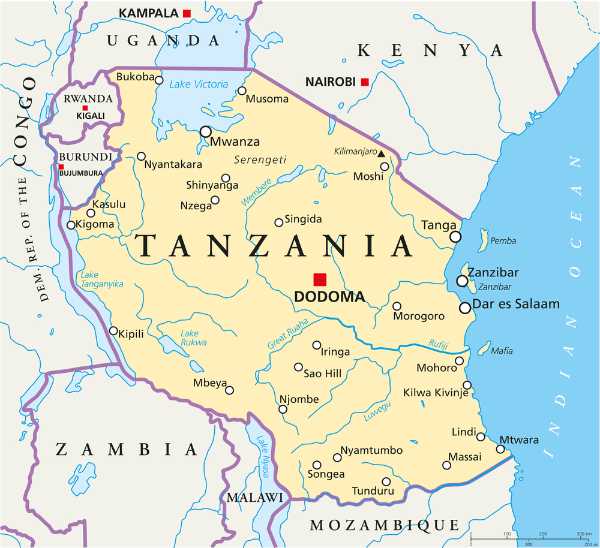
Russia is building closer ties with Tanzania, with both countries making efforts to increase mutual trade and encourage Russian investments. For Russia, Tanzania is important due to its geography. It has a number of ports, which make the country a convenient entry point deep into the African continent and ideally could help Moscow facilitate greater trade with several countries simultaneously, especially when considering an East African extension to the North-South Transportation Corridor. A Russia-Tanzania Business Council was created in January.
Tanzania’s economy is heavily based on agriculture, which accounts for about 25% of GDP, provides 85% of all exports, and half of the national employment. Global warming is creating sustainability problems. Maize is the largest food crop, followed by cassava, sweet potatoes, beans, bananas, rice, and millet, while sugar is the largest cash crop, along with cotton, cashews, tobacco, coffee, sisal, and tea.
Industry and construction are growing components of the Tanzanian economy, contributing 24% of GDP, and include mining and quarrying, manufacturing, electricity and natural gas, water supply, and construction. The majority of the country’s mineral export revenue comes from gold, accounting for 80% of the value of these exports.
Andrey Avetisyan, Russia’s ambassador to Tanzania, has identified the country as having attractive potential as a trade hub to develop Russian trade with Africa and beyond and stated last year that “Tanzania has access to the Indian Ocean and is located on the routes to the south of the continent or to Southeast Asia. In addition to this favorable geographic location, there is political stability and the Tanzanian government’s focus on attracting foreign investors. Tanzania is very attractive for us to create a major trade hub to further develop the Russian presence on the continent.”
He pointed out that there are two possible forms of cooperation. One involves the construction of a deep-water port in Bagamoyo, located near the country’s largest city and financial hub of Dar es Salaam. The second is to use the existing ports in Tanga, Mtwara, and Dar es Salaam. Avetisyan said that “all three ports have been recently modernized and are capable of handling vessels of all sizes and drafts. The port facilities include modern quay walls and necessary unloading equipment, and storage facilities are available. Anything related to Tanzania’s ports attracts foreign investors.”
Currently, Russia’s oil and gas industry has not implemented any projects in Tanzania, but the African country’s shift to a more open policy has already attracted the attention of major Russian companies, as Russia’s shift to new markets continues. Tanzania, for its part, has also shown interest in joining the BRICS.
Tanzania is interested in Russian investments in agriculture, mining and manufacturing, real estate, agricultural processing etc. Presently there are not many investors from Russia in Tanzania, but those who poured money did so into tourism, telecommunications, and mostly agriculture. The Tanzanian side also eyes geological exploration and mining, tourism, energy, and information and communication technologies. Tanzanian leadership also hopes that as the country that possesses large resources of gas, Russia is interested in investments in this field too, which would enable Tanzania to become a net gas exporter.
One of the most significant joint projects is Rosatom’s participation in the development of the Mkuju River uranium deposit, located 470 kilometers southwest of Dar es Salaam and one of the largest in the world with reserves of 152 million tons of ore. In July 2023, Russian Ambassador to Tanzania Andrey Avetisyan announced that Rosatom’s subsidiary, Mantra, is completing the construction of a uranium ore processing facility and preparing for the launch of a pilot project. The pilot plant was put into operation on July 30, 2025. At the pilot-industrial operation stage, it is designed to produce 5 tons of uranium oxide (yellow cake) per year. The main industrial complex is currently under construction, and its commissioning is scheduled for 2029. The plant’s design capacity is up to 3,000 tons of yellow cake per year.
During the 2023 Russia-Africa Summit, Tanzania was represented by a large delegation, which signed multiple deals with the Russian side. Most of the agreements concern the agricultural, food, and mining industries, which are of particular interest to Tanzania. For instance, the two sides work on boosting the cashew industry, and Tanzania believes that a significant part of its cashew export could go to Russia.
In particular, four Russian companies—SEIES, Unigreen Energy, Agrovent, and TD Glass NN Expo LLC—have expressed interest in investing in various sectors of the country’s economy, including agricultural processing, renewable energy sources, and glass packaging.
Against the backdrop of Western sanctions and Russia’s efforts to reorient its economic ties towards Asia and Africa, both countries are actively developing cooperation in the tourism sector. On June 3, Russian Transport Minister Andrey Nikitin announced that direct flights between Russia and Tanzania would resume on July 2. He added that the flights would be operated by Air Tanzania, which had not been previously announced. According to the minister, all necessary documents have been agreed upon.
Russian corporations are also interested in developing the Tanzanian LNG and maritime transport and logistics sector in the Indian Ocean. At a meeting of the intergovernmental commission, Russian Minister of Economic Development Maxim Reshetnikov said that Gazprom is interested in implementing comprehensive gas projects in Tanzania, from production to distribution. The company is ready to supply natural gas, LNG, and petrochemical products, as well as technologies and equipment for gas production, processing, transportation, and distribution. NOVATEK has also expressed its readiness to participate in natural gas exploration and production projects in Tanzania.
In May of this year, the Russian transport group FESCO carried out the first export shipment to the port of Dar es Salaam in Tanzania. The group delivered containers with plastic products and spare parts for equipment from Novorossiysk via the Indian port of Nava Sheva. The transportation was organized as part of the regular FESCO Indian Line West (FIL-W) shipping line, with an average travel time of about 45 days. In the import direction from Tanzania, it is planned to deliver tea, coffee, and other cargo. Upon arrival in Novorossiysk, containers can be transported to various regions of Russia using FESCO’s railway and road solutions.
In 2024, Dmitry Pankov, Vice President of FESCO Group, stated that the group’s goal is to establish a direct service. “Dar es Salaam is one of the fastest-growing container ports in the world. This is due to its ability to access markets not only in Tanzania but also in several neighboring countries in East Africa. The region has great potential for cooperation with Russian companies,” said Alexey Kravchenko, Executive Director of FESCO Integrated Transport (a subsidiary of FESCO).
According to data for 2024, tobacco raw materials and tobacco substitutes, coffee, tea, spices, and fruits play a key role in Tanzania’s exports to Russia. Russian exports consist of grains, fertilizers, aluminum, and pulp and paper products.
Currently, the volume of bilateral trade between Russia and Tanzania is about US$400 million, of which 85% is accounted for by Russian exports.
During the meeting, Tanzanian President Samia Suluhu Hassan, and Russian President Vladimir Putin noted that Russia and Tanzania have the potential to double their trade turnover in the short-medium term. Interested investors on both sides should be paying attention.