
 Русский




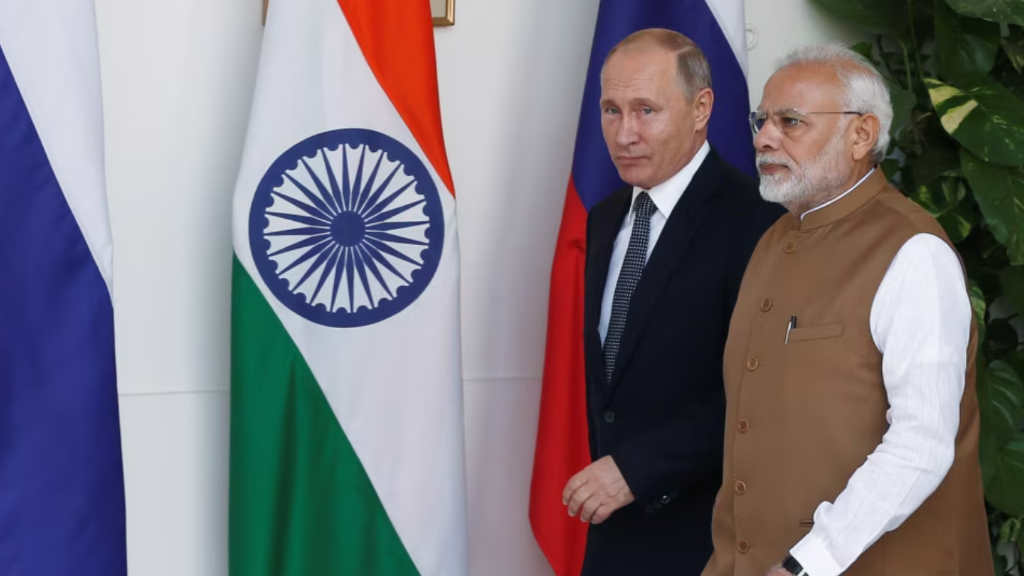

Ahead of Russian President Vladimir Putin’s upcoming visit to India on Thursday (December 4), India and Russia have begun to cement their comprehensive economic partnership, with this set to transform Eurasian trade dynamics in significant ways.
When Putin attends the 23rd India–Russia Annual Summit on Friday, the stakes will be unusually high. This is not merely a ceremonial reunion of two long-standing Eurasian strategic partners but it is a timely intervention at a moment when global supply chains are fragmenting, multilateral structures are shifting, and US & UK led Western coercive economic measures against the global south are intensifying, Eurasia is emerging as the world’s most dynamic economic corridor with both Russia and India key parts of this.
The upcoming summit promises to recalibrate the growing India–Russia economic trajectory, refine their strategic priorities, and unlock long-awaited opportunities in energy, logistics, manufacturing, agriculture, digital economy, blue economy, high-quality tourism, defense security sector and advanced technology. For both countries, the time has come to convert the natural complementarities of their economic sectors into measurable trade gains. This creates a new level of business opportunities for both Russian and Indian companies, particularly in specific, and numerous sectors that are set to witness tremendous growth potential in the coming years. As both countries have already set the target of elevating bilateral trade to US $100 billion by 2030, this opens a new level of business opportunities for both Russian and Indian companies, who are now poised to witness tremendous growth in the coming years.
A Relationship Rooted in Complementarity
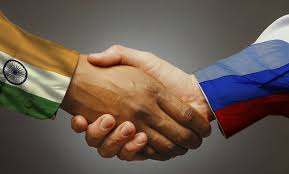
India–Russia trade has expanded rapidly in recent years and is now approaching US$70.6 billion, driven principally by energy and agricultural exports, marking a 9.2% increase over 2023 and highlighting the growing dynamism of bilateral trade. This has allowed Russia to maintain its position as one of India’s four largest trading partners in a market of 1.46 billion people. However, India and Russia have the potential not only to diversify their trade and navigate pressures from the West but also to narrow their trade imbalance, positioning themselves as each other’s first and second largest trading partners in the coming years. But the deeper story is the broadening of the commercial basket: pharmaceuticals, engineering products, textiles, chemicals, agricultural commodities, machinery, and metals.
Russia’s exports to India such as coal, fertilizers, industrial machinery, wood products, and critical minerals have grown sharply. India, meanwhile, is expanding its footprint in pharmaceuticals, textiles, automotive parts, engineering goods, and processed food. These flows underscore a structural alignment – India’s growing industrial economy needs precisely the inputs that Russia’s resource-rich and manufacturing sectors can offer, while Russia’s expanding consumer and industrial markets match India’s strengths in high-quality, cost-competitive production. The summit will aim to consolidate this complementarity into a sustainable, balanced, and diversified trade architecture.
India has increased its exports to Russia by 21% to US$4.9 billion, highlighting that, despite a significant trade imbalance, there is still substantial room to further expand Indian exports to the Russian market. Policymakers from both countries have acknowledged this gap and are exploring measures to diversify trade. By expanding Indian exports, diversifying complementary sectors, and encouraging joint ventures, they aim to turn the imbalance into mutual economic benefit.
This extends beyond India’s borders and may also involve China. For example, as Russia recognizes the Taliban government and India deepens its engagement with Afghanistan, Russia, India and China are set to explore joint ventures in Afghanistan’s critical mineral sector, trade, and broader regional connectivity integration. While this will not be easy, the revised RICS format gives some credence to the concept of a united approach to getting Afghanistan back on its feet. All three countries are also full members of the Shanghai Cooperation Organisation, which provides additional Central Asian security and trade infrastructure. India and Russia can jointly promote regional development in addition to their own.
Rebalancing Trade and Unlocking India’s Export Potential
Although the largest challenge remains the trade imbalance, India’s logistics upgrades and digital public infrastructure are improving with Moscow holding significant rupee reserves from the surge in energy trade reserves. These need to be reinvested into the Indian economy through imports and joint ventures, while some of this money has also been invested in Indian infrastructure projects in which Russia is now an equity partner.
There are additional opportunities for co-investment and co-production across goods and services. As of September 12 this year, Russia’s international reserves totaled US$705.1 billion, underscoring the resilience of the Russian economy and its capacity not only to make substantial investments in the Indian market but also across the broader Eurasian region.
Both governments are now addressing this with concrete steps:
- Russian most recent approval of 25 Indian fishery exporters—a major breakthrough for India’s marine sector.
- Engagement across pharmaceuticals, marine, machinery, textiles, chemicals, leather, automotive goods, and telecom equipment.
- A new quarterly regulator-to-regulator mechanism to streamline certifications, end non-tariff barriers, address listings of agricultural and marine businesses, prevention of monopolistic practices and harmonize standards. They are taking practical measures related to logistics, payments and standards to improve predictability and ease of doing business for firms in both countries.
- Joint efforts to diversify seafood and shrimp exports at a time when India faces steep U.S. tariffs.
- The Terms of Reference signed on 20 August 2025 outline an 18-month work plan aimed at diversifying markets for Indian businesses, including MSMEs, farmers and fishermen.
This focus on reforms, predictability, and regulatory alignment is essential for boosting Indian exports and ensuring Russia can effectively utilize its rupee earnings.
Energy: The Bilateral Stress-Test
Oil remains the core of the economic relationship. Over the past three years, India has emerged as one of the largest buyers of discounted Russian crude. However, new U.S. sanctions and reciprocal tariff measures briefly disrupted this cooperation in November 2025. Indian companies began reassessing their oil portfolios, not due to preference but to navigate sanctions-driven complexities. Discounts for Russian flagship Urals crude in Indian ports have tripled since August 2025.
However, the fundamentals remain strong:
- Russia is crucial to India’s energy security, especially as New Delhi prioritizes diversified supply chains. India’s 2025t GDP growth has just been revised upwards to an astonishing 8.2%, and as the Indian Foreign Minister Subrahmanyam Jaishankar recently stated, is powered by Russian energy.
- India is central to Russia’s Asia pivot, representing a stable, long-term consumer market.
- Both sides want to reduce exposure to third-country financial pressures.
Getting India’s transition to clean energy is also on the agenda. Russia’s Rosatom is currently discussing small Nuclear Power Plant (NPP) installations in India with the Indian government, and is currently developing India’s largest nuclear energy facility – the Kudankulam nuclear power plant in India’s southern Tamil Nadu state.
New Bilateral Frameworks
Both existing and developing bilateral and multilateral frameworks are supporting this, and further assisting Russian and Indian development. These include:
- Building a new era of Indo-Russian unity under BRICS and SCO frameworks against western economic hegemony.
- More effective and alternative payment and settlement systems
- Stable long-term supply contracts, expand the export market, reduce supply chain risk, and turn planned initiatives into workable contracts that increase volume and value, creating more employment and long-term prosperity for citizens of both nations.
- Joint upstream investments in Russian energy blocks, telecom & agricultural sectors and Indian marine, energy security, digital economy, shipbuilding, scientific and technical cooperation, IT and nuclear technology sectors.
- Russian participation in India’s refining and petrochemical capacity
- Expansion of LNG cooperation
- Greater use of the International North–South Transport Corridor (INSTC) for energy logistics
If executed effectively, the next phase of their bilateral relations is likely to restore growth momentum and expand trade volumes significantly beyond the previous highs.
Financial Architecture
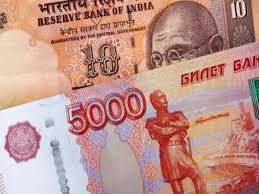
The balance of payments issue between the two countries have been amplified by Russia’s disconnection from SWIFT and has undoubtedly hindered bilateral trade, particularly at the MSME merchant level. At the big-ticket level, this can be handled through other mechanisms, although the Indian rupee has a relatively small international footprint with Russia finding it difficult to dispose of the trade excess. Although this is being catered for by Russian investments into India, and some trade deals been made with UAE Dirhams instead of rupees, the problem persists for smaller traders. These MSME sectors account for about 30% of India’s total GDP and about 21% of Russia’s total GDP output.
Unlocking this potential means linking the Russian and Indian payments systems. Discussions on this are well underway and will be one of the core features of the meetings. It is of note that the Russian Central Bank is to establish an office in India to better liaise with the Reserve Bank of India in coordinating these arrangements. Providing Russian and Indian MSNE’s with direct financial connectivity will further boost bilateral trade.
Logistics: The New Strategic Frontier
Behind every major bilateral trade success story lies a logistics revolution. And here too, Russia and India are witnessing rapid transformations in several areas:
- The International North-South Transportation Corridor (INSTC)
Running from Russia (and Belarus) through the Caspian Sea to Iran, and onto India’s west coast ports, this has already seen developments such as the first direct train between Russia and India. Freight tonnage along the route has been rising – and the route is still not fully completed. When bottlenecks in Iran are fully dealt with – estimated at being in 2027 – this multi-modal route will offer both Russia and India far more trade capacity, and not just with each other. The INSTC is set to morph into a far wider network with connectivity into the Middle East, Central Asia, as well as East Africa – all pointing to Indian exports also increasing. - The Northern Sea Route
While still some way off its potential, India is already shipping LNG from Russian energy fields in the Arctic Yamal region back to India. Delhi wants to become further invested into these supply chains which is why it is partnering with Russia to build icebreakers. - The Eastern Corridor
Aside from the INSTC, India also has direct shipping connectivity with Russia via the eastern maritime routes, which connect India’s east coast with Russia’s Vladivostok (and further north to Yamal via the NSR). The Vladivostok route connects via the Trans-Siberian railway – whose capacity is being doubled – with direct access into the heart of Russia and onwards to major cities such as western cities such as Moscow and St.Petersburg.
We can provide some examples of how this is changing Indian and Russian trade and investment thought processes as follows: - Asiania Logistika enters India
The entry of Asiania Logistika, a major Russian multimodal logistics provider, is exceptionally timely. As trade grows along the India–Russia–China axis, the need for transparent, reliable logistics partners has become acute. Asiania Logistika brings two decades of cross-border expertise and plans to use INSTC multimodal routes to reduce transit time and costs for Indian exporters and importers. This is not a symbolic move, but signals the professionalization of a Eurasian logistics corridor that will be essential for high-value, high-volume trade. - Delo Group’sNovorossiysk–Goa container line
In another significant development, Russia’s Delo Group is exploring a regular sea container route linking Novorossiysk to Goa. With Goa witnessing a surge in Russian and Central Asian tourists with over 34 charter flights in October alone, this corridor offers dual benefits:
- It supports Russian tourism flows into India.
- It helps Goan exporters reach new Russian markets, including seafood, spices, and light manufacturing.
- New IndianConsulates in Yekaterinburg and Kazan
- India has opened two new consulates precisely in regions where Russian industrial power is concentrated in heavy engineering, metallurgy, gem processing, nuclear fuel, and chemicals. This is a strategic footprint aimed at unlocking B2B linkages and fast-tracking investments. Logistics, when combined with political and financial trust, can transform the geography of trade and these moves mark a decisive step in connecting the manufacturing heartlands of both countries.
Defense
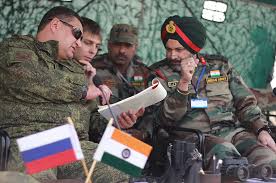
Even as economics dominate the agenda, defense ties remain a powerful driver. Moscow has proposed offering unrestricted access to Su-57 fifth-generation fighter technology, with phased production in India, an extraordinary gesture of mutual belief. Reports also suggest possible cooperation on the Su-75 Checkmate, a single-engine stealth aircraft. Such industrial co-production will have downstream benefits: joint materials research, avionics collaboration, precision manufacturing, and new high-skilled jobs. This aligns with both the Make in India campaign and Russia’s evolving military-technology export strategy.
India and Russia are also heavily involved in shipbuilding in the defense sector – Russia recently delivered a warship to Delhi, with more on the Indian order book. This also extends into the commercial shipping sector where Russian and India shipyards are set to collaborate on production and repair facilities for a wide variety of vessels.
The two Navies also regularly hold maritime drills, including in Indian waters.
Transport
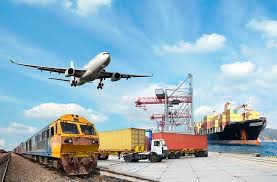
The demand for aviation services in India is growing, with the countries total passenger count rising to 376 million last year, with 306 million of those on domestic flights. This is expected to double by 2030, meaning India needs a lot more aircraft – requiring over 200 commercial airliners within the next decade to cater for regional demand, and an additional 350 aircraft to serve international destinations in the Indian Ocean region.
To that end, India is to manufacture Russia’s SJ-100 Superjet, under licence, to meet demand. India’s state-backed Hindustan Aeronautics Limited (HAL) has signed a memorandum of understanding with Russia’s PJSC United Aircraft Corporation (UAC) to produce civil commuter SJ-100 aircraft, with final details of the production to be released later.
Russia has the world’s third largest railway network, which is also in the process of undergoing significant expansion and overhaul. India has the world’s fourth largest network and is also in the process of upgrading its national networks and services. Russian Railways and Indian Railways have recently agreed a joint venture and won a US$5 billion contract to build India’s next generation of Bharat-class high speed trains.
However, what Russia probably will not do is invest in India’s automotive sector. This type of transportation is generally the preserve of wealthy Indian industrial tycoons who would not take kindly to competition. With India having just begun the first stages of negotiating a Free Trade Agreement with Russia via the Eurasian Economic Union, Russia will be mindful of treading too much into the Indian domestic market – an issue that scuppered potential trade agreements with China.
If Russia can achieve a trade investment balance that will not upset India’s Oligarchs, while allowing Indian MNCs improved access to Russia, then the chances of such pragmatism obtaining practical trade results will be far higher.
India’s Oligarchs’ want better access to markets in Russia and Central Asia – the Eurasian Economic Union, with growth rates of 6% per annum, can deliver exactly that.
Eurasian Integration: The India–EAEU Free Trade Agreement
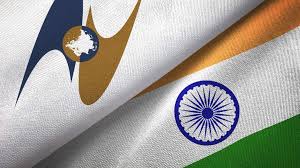
Perhaps the most consequential long-term development is the accelerating negotiation of the India–Eurasian Economic Union (EAEU) Free Trade Agreement. Russian Deputy PM Dmitry Patrushev’s recent Delhi visit, along with pending ministerial consultations, underscores the seriousness of this initiative.
Why does the FTA matter?
- It will reduce tariffs across a wide range of goods. How much? The recent EAEU-Iran FTA may be a reference here – that reduced mutual import tariffs on 87% of all traded products.
- It will link India to a unified market of 180+ million people and US$5.5 trillion in total GDP (PPP) across Russia, Kazakhstan, Belarus, Kyrgyzstan, and Armenia.
- It will anchor India more firmly in the Eurasian supply chain.
- It complements BRICS and SCO economic cooperation frameworks.
- It ensures a stable rules-based foundation for long-term economic synergy.
For Russian companies, the proposed FTA provides access to the world’s fastest-growing major economy. For Indian companies, it unlocks industrial hubs across Eurasia in engineering, metallurgy, nuclear components, agro-processing, digital development and advanced machinery.
If a deal can be reached, this FTA may well become the centerpiece of a new Eurasian economic order.
BRICS and SCO
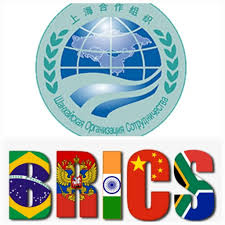
India and Russia are cooperating closely in BRICS, SCO, and the G20. These are not symbolic memberships; they represent practical mechanisms for financial coordination, de-dollarised payment channels, connectivity projects, digital governance frameworks, supply-chain resilience initiatives and technology exchanges As BRICS expands, Russia and India together shape a significant portion of global economic rebalancing. Their shared vision of a multipolar, inclusive, sovereign-centered development model increasingly resonates across the Global South.
Industry’s Call for Pragmatism
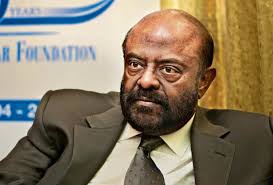
At the recent India–Russia industry plenary, both Indian and Russian business leaders emphasized the urgency of converting plans into actionable projects. India’s upgraded digital infrastructure, its manufacturing reforms, and new logistics capabilities provide fertile ground. Russian firms are encouraged to invest, co-produce, and integrate deeper into India’s industrial ecosystems. The terms of reference signed on 20 August 2025, outlining an 18-month workplan for MSMEs, farmers, and fishers, show renewed focus on people-centric trade progress.
The synergies are already understood. What can be expected to happen during Putin’s state visit – which includes huge working groups on both sides from the government and private sector trade, economic and investment groups – will be a deep dive into exactly where those opportunities lie and how best to manipulate the current bilateral platform to better access these.
Summary: A Partnership Preparing for the Next Decade
Putin’s visit is not just a diplomatic milestone; it is the beginning of a new phase of strategic economic cooperation. The opportunities are immense: A rebalanced, diversified trade structure; stabilized and expanded oil and energy cooperation, new logistics arteries across Eurasia, high-technology and defense co-production, maritime, agricultural, and industrial partnerships and a transformative India–EAEU Free Trade Agreement The depth of India–Russia economic ties has always been recognized. What this summit will demonstrate is that these ties are not only deep but dynamic, evolving, and ready to unlock the full potential of Eurasian growth. If harnessed effectively, the coming decade will not simply strengthen India–Russia trade – it will reshape the economic map of Eurasia.
This article was written by Ms. Khatun, an international affairs analyst specializing in the energy sector, and was specifically commissioned by Russia’s Pivot To Asia.
For more trade and diplomatic intelligence concerning Russia and India relations, please click here.
To obtain a complimentary subscription to Russia’s Pivot To India weekly update, please click here
Further Reading

Continue Reading