Русский




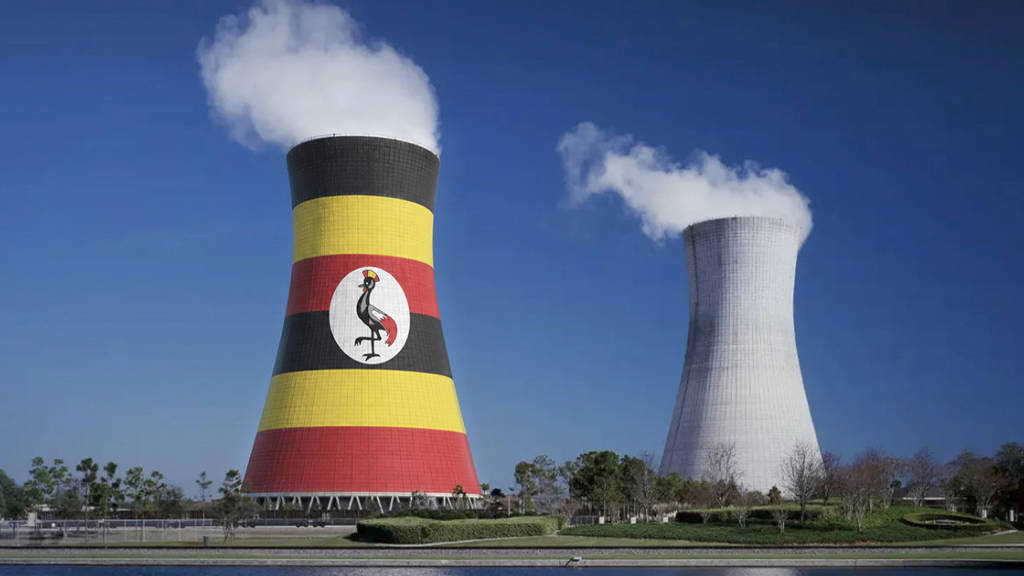

Rosatom and the Ugandan Ministry of Energy and Mineral Development signed a roadmap for cooperation in nuclear energy at the 2026 Russia-Africa Summit, Rosatom have stated.
The document calls for a dedicated working group to assess Uganda’s national nuclear infrastructure and identify joint steps to enable discussion of a contract for engineering surveys to select a site for the Nakasongola Nuclear Power Plant.
Rosatom CEO Alexei Likhachev said that “Together with our Ugandan partners, we intend to assess national nuclear infrastructure and determine next steps to move to discussing a contract for engineering surveys to select a Nakasongola NPP site.”
Rosatom said earlier that it had held talks with representatives of more than 25 African countries during the summit, including Uganda, with which the construction of a large nuclear power plant is being discussed.
Rosatom is currently building four 1200 MW power units at the El Dabaa NPP in Egypt, its first project in Africa. Rosatom also hopes to develop projects with other African countries, notably Ethiopia, Rwanda and Zambia, Likhachev stated.
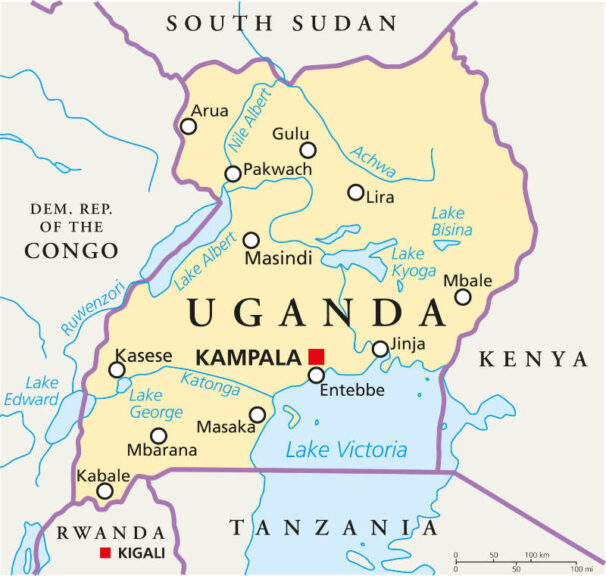
Uganda has a population of 51.4 million, with a GDP (PPP) of about US$197 billion. According to the World Bank, GDP per capita (PPP) is US$2,980, while the projected growth rate for 2026 is expected to be 6.8%.
Uganda is known for its rich natural resources and agricultural sector, which plays a pivotal role in its economy. This is characterized by a significant reliance on agriculture, which contributes about 24.2% of its GDP. This includes activities like crop production, animal husbandry, fisheries, and dairy farming. Additionally, the industrial sector, including manufacturing, construction, and electricity generation, makes up 25.5% of the GDP, with key industries such as sugar processing, brewing, tobacco, cotton textiles, cement, and steel production.
The services sector, which accounts for around 50.3% of the GDP, includes wholesale and retail trade, telecommunications, hotels and restaurants, transport, communications, and tourism. In recent years, Uganda has prioritized diversifying its economy by focusing on agro-industrialization, mineral extraction, oil and gas development, and science and technology. Infrastructure projects such as the construction of a 1,443 km heated oil pipeline through Tanzania are expected to boost oil production and export capacity. The country is also investing in expanding its energy infrastructure, with plans to add over 1,600 megawatts of hydroelectric capacity to meet the growing energy demands.
Uganda actively participates in several regional and international trade agreements that help enhance its economic position. As a member of the East African Community (EAC), Uganda benefits from a common market and customs union that reduces tariffs and trade barriers between member countries. Uganda is also part of the Common Market for Eastern and Southern Africa (COMESA), a regional bloc focused on economic integration and liberalized trade. It is also a signatory to the African Continental Free Trade Area (AfCFTA) and became a BRICS partner state in January 2025.
Russia-Uganda Bilateral Trade & Investment
Bilateral trade relations between Uganda and Russia are developing, with 2025 bilateral trade volumes reaching US$198 million. Uganda exports goods worth about 30% of this volume, mainly agricultural crops such as coffee, cocoa, cashews, tea, tobacco, and spices. Russia exports cereals, wheat, fertilizers, and machinery. The Russian Foreign Minister, Sergey Lavrov, stated at the 2026 Russia-Africa summit that bilateral trade had increased 70% during the 8M 2026. If that is maintained, trade will reach US$336 million for the year.
In addition, Russia funded and helped build US$53 million worth of military infrastructure and maintenance facilities across Uganda (including Magamaga, Entebbe, Kalangala, and Karama) in 2025. These projects include a floating dock, surveillance radar, marine security gear, armored vehicle training units, and repair workshops.