Русский




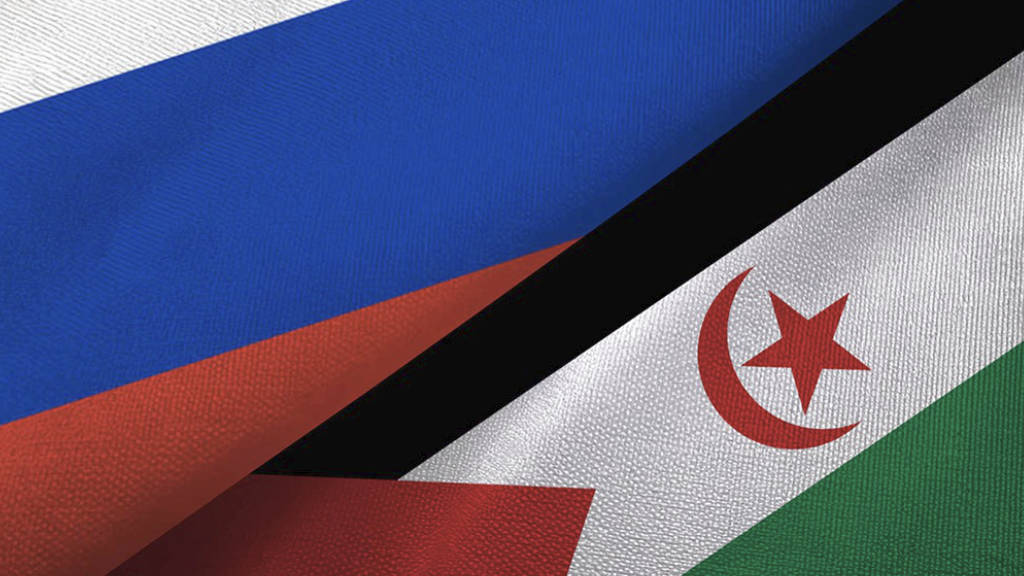

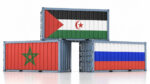
The UN Security Council failed to extend the mandate of the United Nations Mission for the Referendum in Western Sahara (MINURSO) in a vote held on October 30, with the Russian delegation saying it was compelled to veto the draft resolution put forward by the United States. China, Pakistan and Somalia abstained. The veto has resulted in the expiration and end of MINURSO’s 35-year peacekeeping mandate.
The United States draft was designed to impose a single, predetermined solution to the Western Sahara issue, placing the entire region under the de facto control of Morocco, aided by UN-backed military personnel. Russia’s position was that the draft resolution would have effectively deprived the people of Western Sahara of the right to decide for themselves their own future and that of the land they have inhabited since the end of Spanish colonial rule in North Africa. Such an outcome would run counter to the purposes and principles of the UN Charter, including the principle of self-determination.
The Moroccan Foreign Minister had lobbied the Russian Foreign Minister, Sergey Lavrov, looking for support for the resolution last week.
The Russian delegation to the United Nations added that “Russia does not support ultimatums imposed from outside. Any settlement plan for Western Sahara must be developed through negotiations aimed at achieving mutually acceptable outcomes, in accordance with the relevant UN Security Council resolutions. We are disappointed that American diplomats failed to distinguish between their own national position recognising Western Sahara as part of Morocco and their role as the informal lead on the Western Sahara file in the UN Security Council, which requires them to act as an ‘honest broker’. Recognising the importance of MINURSO’s work, we submitted an alternative, concise draft resolution for the Security Council’s consideration. It would have extended the mission’s mandate for one year without introducing any changes or new provisions concerning the parameters of the Western Sahara settlement plan. Regrettably, our draft was supported only by China and Somalia. The United States voted against it, while the other members abstained. As a result, our proposal was not adopted. We believe that full responsibility for the termination of the UN presence in Western Sahara, which has long played a stabilising role in the region, rests with the United States and the countries that sided with it.”
MINURSO is currently headed by Alexander Ivanko, a Russian citizen. The Russian delegation was particularly scathing about US attempts to manipulate the resolution, adding that “Apparently, the drafters assumed that Russia would not block the extension of a UN operation currently headed by a Russian national and therefore included provisions that were unacceptable to us and several other members of the UN Security Council.”
The resolution was also heard during a time of intense Russian interaction with Africa, with the 2026 Russia-Africa Summit taking place at the same time that the resolution was to be voted on, suggesting that the timing of the United States proposal was at best somewhat naïve. Russia has long been critical of Western colonial affairs in Africa, and leaving the people of Western Sahara to increased Western colonial interference does not sit well with current Russian thinking about the right to self-determination, even under Moroccan authority.
Western Sahara Relations & Trade
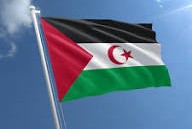
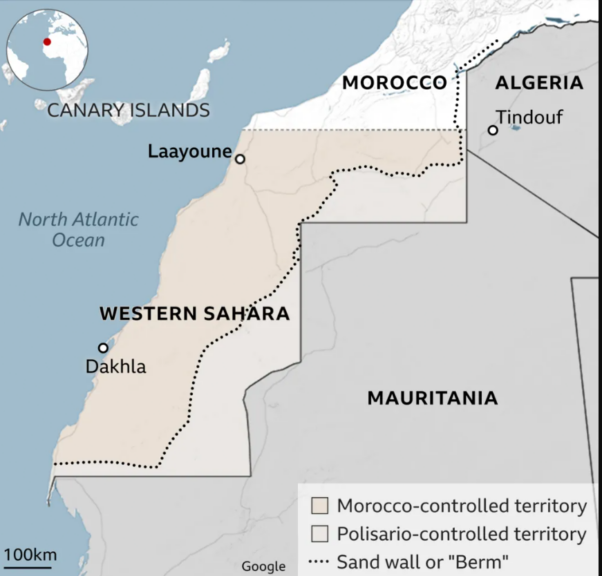
The Western Sahara is not a sovereign country, with the UN classifying it as a ‘non-self-governing territory’, and is the last major unresolved colonial/territorial dispute in Africa. Morocco administers and occupies roughly 80% of the territory (including major coastal cities and phosphate mines), which it views as its southern provinces.
Colonial Spain previously occupied the Western Sahara as the ‘Spanish Sahara’ from 1884 to 1976. Spain attempted to transfer its administration to Morocco and Mauritania despite an advisory opinion of the International Court of Justice that those countries had no sovereignty over Western Sahara; a war subsequently erupted, and the pro-Western Sahara independence Polisario Front proclaimed the Sahrawi Arab Democratic Republic (SADR). Mauritania withdrew its claims in 1979, and Morocco secured de facto control of most of the territory, including all major cities and most natural resources. The SADR established a government-in-exile in Tindouf, Algeria. A UN-sponsored ceasefire agreement was reached in 1991 and has been operated by MINURSO.
Importantly, the SADR has received partial international recognition and has membership in the African Union. Morocco’s position is supported by France and the United States.
Based on GIS spatial mapping and calculations of the Berm’s perimeter, approximately 15-20% of Western Sahara (mainly inland and along the Mauritanian and Algerian borders) is controlled by the Polisario Front and the remaining 80-85% (including almost all of the coast) is controlled by Morocco.
The indigenous population of Western Sahara are known as the Sahrawi and are mainly Hassaniya and Berber-speaking nomadic tribes, with many having mixed Berber-Arab heritage. The Sahrawis are traditionally nomadic Bedouins with a lifestyle very similar to that of the Tuareg Berbers, from whom the Sahrawis most likely have descended. War and conflict have led to major population displacement. The total population of Western Sahara is about 600,000.
The Western Sahara possesses vast, uninterrupted desert plains and strong coastal wind currents, offering massive potential for utility-scale solar and wind energy farms. Currently, Morocco utilises these newly built green energy grids primarily to power its high-intensity phosphate mining operations. Western Sahara possesses some of the world’s largest phosphate deposits, used globally as a fertilizer, as well as having access to some of West Africa’s primary fishing grounds.
Aside from its rich fishing waters and phosphate reserves, Western Sahara has few natural resources and lacks sufficient rainfall and freshwater resources for most agricultural activities. There is speculation that there may be offshore oil and natural gas fields, but the debate persists as to whether these resources can be profitably exploited and if this would be legally permitted due to the non-self-governing status of Western Sahara.
Western Sahara’s economy is based almost entirely on fishing, which employs two-thirds of its workforce, with mining, agriculture and tourism providing modest additional income. Most food for the urban population comes from Morocco. All trade and other economic activities are controlled by the Moroccan government (as its de facto southern province). The government has encouraged citizens to relocate to the territory by giving subsidies and price controls on basic goods. These heavy subsidies have created a state-dominated economy in the Moroccan-occupied parts of Western Sahara.
Russia-Western Sahara Relations & Trade
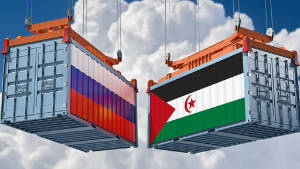
Although Russia does not officially recognise Western Sahara as an independent country, its long-term policy in Africa, dating back to the Soviet era has been towards promoting self-determination for the pertinent inhabitants. Over the decades it has supported independence movements through the African continent, and especially where it has seen what Moscow often refers to as ‘colonial exploitation’. The Western Sahara is no different in this regard: Moscow supports the self-determination of the Sahrawi people even though this is in direct opposition to its relations with Morocco. This means that Russia’s position on Western Sahara centers on balancing its diplomatic and economic ties with Morocco while maintaining historical and strategic relations with Algeria and the Polisario Front.
Algeria is a primary African partner for Russia, with the second largest Russian-Africa trade portfolio across the African continent. Algeria traditionally receives the majority of Russian arms transfers to the continent—and strongly backs the Polisario Front. Russia consistently advocates for a mutually acceptable political solution under UN auspices rather than unilateral endorsement of Moroccan sovereignty.
In terms of trade, this is difficult to ascertain given there are no official bilateral institutions between Russia and Western Sahara; however, part of Russia’s trade with Algeria will flow into Western Sahara. It is therefore pertinent to note that Russia-Algerian trade has increased by 20% this year. 2026 bilateral trade is expected to reach about US$3.85 billion this year. Assuming 2% of this makes its way to the Western Sahara, that would imply Russian-Western Sahara indirect trade (via Algeria) is about US$77 million.
Russian long-term interests in the Western Sahara will include green energy solutions in wind power, solar, and mining in the regions under Polisario Front control.