 Русский




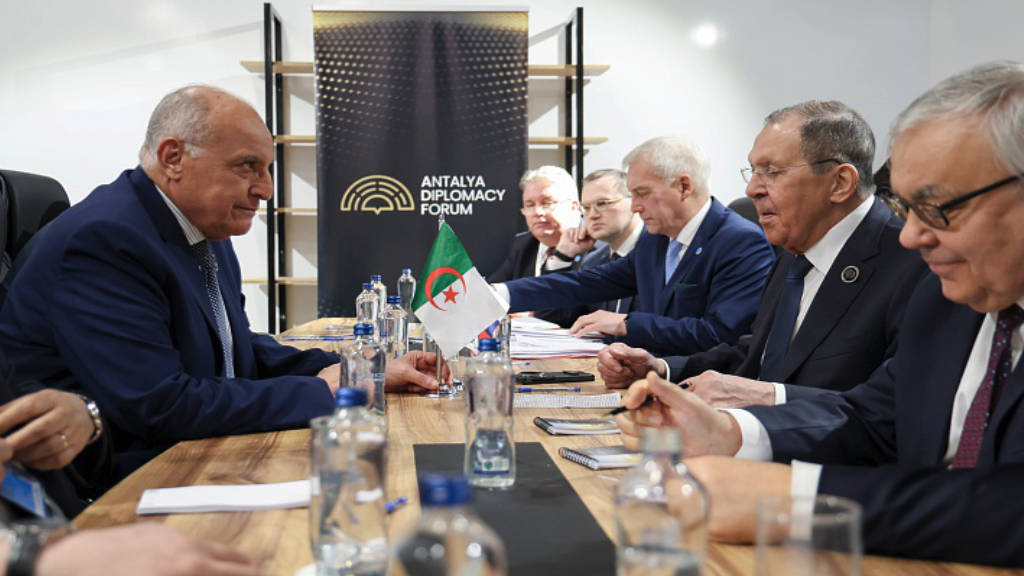

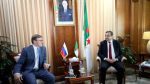
The Russian Foreign Minister Sergey Lavrov had a meeting with Ahmed Attaf, the Algerian Foreign Minister, on the sidelines of the Antalya Diplomacy Forum on April 18 (Friday) in Turkiye.
Their discussion covered practical issues of furthering the relationship of strategic partnership between Russia and Algeria, including a schedule of upcoming contacts at different levels. Both sides expressed their satisfaction with a high level of trust-based political dialogue and established interaction in various bilateral and multilateral formats.
The ministers had a substantive exchange of opinions on current issues on the global and regional agendas with a focus on the developments in the Middle East, Sahara-Sahel, and Maghreb. They stressed readiness to continue close coordination to promptly settle the conflict situations politically and diplomatically on the basis of universally accepted principles of international law and the UN Charter.
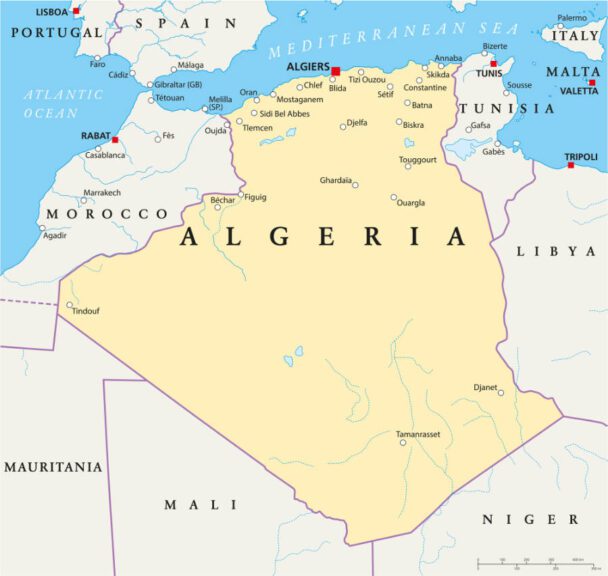
Algeria is strategically located in North Africa along the Mediterranean coast, serving as a vital energy supplier to Europe and a key player in African economic integration.
Algeria’s economy is heavily reliant on its hydrocarbon sector, which accounts for approximately 60% of government revenues, 30% of GDP, and 87.7% of export earnings. The state-owned company Sonatrach plays a central role in exploration, production, and export, positioning Algeria among the top global producers of oil and natural gas. The agricultural sector contributes about 8% to GDP and employs 14% of the workforce, with significant production of wheat, barley, and potatoes, mainly in fertile coastal areas. Mining and minerals are another important industry, with substantial reserves of phosphate, iron ore, and gold, including the notable Bled El Hadba phosphate mine with reserves of 800 million tonnes. Manufacturing in Algeria encompasses sectors such as cement, steel, and textiles, with government initiatives focusing on industrial diversification into areas like petrochemicals, fertilizers, and electronics. Services, including trade, finance, and tourism, are critical to the economy. Tourism, in particular, has significant growth potential, leveraging Algeria’s rich cultural heritage and historical landmarks.
As a member of various free trade agreements, Algeria is committed to fostering economic integration. The European Union (EU) Association Agreement, implemented in 2005, promotes tariff reductions to establish a free trade area between Algeria and the EU. Algeria’s membership in the Greater Arab Free Trade Area (GAFTA) enhances trade with Arab nations, while its participation in the African Continental Free Trade Area (AfCFTA) boosts intra-African trade. Algeria is also a founding member of the Arab Maghreb Union (UMA) and engages with the U.S. through the Trade and Investment Framework Agreement (TIFA), fostering bilateral economic cooperation. Through the Euro-Mediterranean Partnership and Pan-Euro-Mediterranean Cumulation System, Algeria promotes trade integration with Mediterranean countries.
Algeria is a member of the BRICS New Development Bank and a BRICS partner state. It is also a dialogue partner of the Shanghai Cooperation Organisation.
With a population of 46.81 million, Algeria has a GDP (PPP) of US$826.14 billion and a GDP (PPP) per capita of approximately US$17,770. Economic growth is projected at 3.8% for 2026.
In September 2022, at a meeting between Roman Marshavin, Deputy Minister of Energy of the Russian Federation, and Mohamed Arkab, Minister of Energy, Mining, and Renewable Energy of Algeria, Algeria invited Russian companies to participate in new tenders for the development of oil and gas fields, the construction of power generation facilities, and the development of the power grid. An agreement was reached to initiate joint projects in other African countries, including in the field of electric power generation. The parties discussed potential areas of cooperation between the Ministry of Energy and fuel and energy companies with banking institutions on the African continent.
Algeria is a major buyer of Russian weapons, as well as grain and fertilizers, and Russian companies are investing more in Algeria’s energy sector.
According to Mohammed Touil, a representative of the Algerian-Russian parliamentary group, trade between Russia and Algeria reached US$2.5 billion in the fall of 2025. Both countries see potential for this figure to increase to US$10 billion by 2030.