
 Русский






Myanmar and Russia signed a Memorandum of Cooperation (MoC) on April 18, 2026, to strengthen collaboration in the electricity and energy sectors, with a focus on securing long-term supplies of oil and petroleum products from Russia to Myanmar. The agreement was concluded between Myanmar’s Ministry of Electricity and Energy and Russia’s RC Investments in the presence of Myanmar’s Union Minister U Ko Ko Lwin, following a series of official meetings held in Moscow from April 16.
During the visit, the Myanmar delegation met with officials from Russian energy companies, in meetings arranged by the Russian Ministry of Energy. Discussions covered the export of crude oil, liquefied natural gas (LNG), liquefied petroleum gas (LPG), fertilizers, and refined petroleum products to Myanmar. Both sides emphasized affordable pricing, quality assurance, secure transportation, and the establishment of long-term supply chains. The delegation also held talks with Inter RAO, one of Russia’s largest energy companies, regarding major energy infrastructure projects. These included plans for a coal-fired power plant, an oil refinery, and LNG terminals at the Dawei deep-sea port. Additional discussions focused on upgrading Myanmar’s gas turbines, improving maintenance systems, and providing technical training.
A separate agreement on economic and technical cooperation was signed the same day, reinforcing commitments to sustained oil supply and broader collaboration in the energy sector. Officials confirmed that another MoU between Myanmar’s Ministry of Electricity and Energy and the Russian Ministry of Energy is expected to be signed soon. This upcoming agreement will expand cooperation in investment, human resource development, and overall energy sector development. The agreements aim to address Myanmar’s current energy shortages by ensuring stable fuel supplies and accelerating infrastructure development.
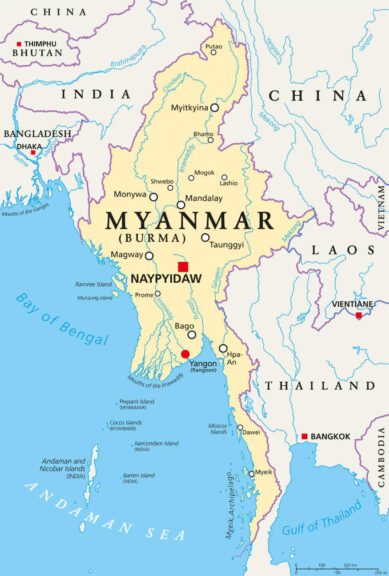
Against the backdrop of Middle East supply chain disruptions, the deal is highly significant for Myanmar’s energy security. The Southeast Asian and ASEAN member country currently stands at a decisive inflection point, not merely political, but structural, economic, and deeply rooted in energy realities. Myanmar, with a population of 55 million, a purchasing power parity (PPP) GDP estimated at around US$483 billion, is facing one of the most severe energy crises in Southeast Asia.
Electrification rates are among the lowest in ASEAN. While official figures suggest national access around 65%, rural electrification drops closer to 50%. In major cities such as Yangon, rolling blackouts now extend up to 8-12 hours per day during peak demand months. Electricity demand peaks at approximately 4-5 gigawatts, yet effective generation capacity has fallen below 3 gigawatts, creating a structural deficit of up to 40%.
Hydropower, historically accounting for nearly 60% of electricity generation, collapses seasonally. During the pre-monsoon months of April and May, when temperatures exceed 40°C, hydropower output drops to annual lows. At precisely the moment demand surges, supply contracts.
Against this backdrop, according to a report by Myanmar’s govt. media outlet’ Global New Light of Myanmar’, Myanmar is in discussions with Russia to develop a modern power control system using Russian technology to improve electricity transmission and distribution nationwide. Talks between Myanmar’s Ministry of Electricity and Energy and Russia’s system operator focused on adopting real-time digital grid management to ensure stable and cost-efficient power supply. The proposed system would optimize Myanmar’s energy mix based on available resources while reducing transmission losses. Russia has also offered technical assistance and training programs for Myanmar engineers to support implementation.
Electricity is the foundation of modern state capacity. Without reliable power, economic growth is impossible. Myanmar’s adoption of Russian digital grid management systems represents a critical move toward stabilization. Russia’s grid operates with real-time balancing of supply and demand, minimizing losses and optimizing efficiency. Reducing Myanmar’s transmission losses from over 20% to even 15% would effectively add hundreds of megawatts of usable electricity without building new power plants. Upgrading turbines, improving maintenance cycles, and training local engineers further strengthen the system. These measures are less visible than large infrastructure projects but are equally transformative.
At the same time, global LNG prices surged by more than 50% between late 2025 and early 2026 due to geopolitical disruptions. For Myanmar, which depends heavily on imported refined fuels, this price shock has been devastating. The consequences are measurable. Fuel shortages have forced flight cancellations, tripled ticket prices in some cases, and led to fuel rationing systems where vehicles are allowed refueling only twice per week.
In agriculture, over 80% of farmers now rely on mechanized equipment, up from 40% in 2013, making diesel shortages a direct threat to food production. Industrial zones, particularly in garment manufacturing, rely on diesel generators for up to 70% of their electricity supply. Without fuel, factories simply stop. This is not a cyclical crisis. It is structural and it demands structural solutions.
The Russia-Myanmar Energy Agreement: A System, Not a Transaction
The MoU signed between Myanmar and Russia must be understood not as a simple trade agreement, but as the foundation of a long-term energy system. The agreement includes the supply of crude oil, liquefied natural gas (LNG), liquefied petroleum gas (LPG), fertilizers, and refined petroleum products. However, its deeper significance lies in three structural components.
First, long-term supply contracts designed to stabilize prices and shield Myanmar from global volatility. Second, infrastructure development, including refineries, LNG terminals, and power plants. Third, technological cooperation in grid management and energy efficiency. Russian companies are positioned at the center of this transformation. Inter RAO is already in discussions to construct a coal-fired power plant at Dawei, alongside LNG terminals and associated infrastructure. Major energy players such as Rosneft, Gazprom, and Zarubezhneft are expected to play roles in upstream supply and refining. This is vertical integration in practice from extraction in Russia to consumption in Myanmar.
Russia has firmly established itself as a key and reliable energy partner for Myanmar, supporting the country in overcoming a deepening energy crisis and ensuring stable fuel supplies. Despite possessing significant reserves, over 22 trillion cubic feet of natural gas and around 139 million barrels of oil, Myanmar remains heavily dependent on imported petroleum due to limited domestic production, which stands at roughly 6,000 barrels per day against demand of about 120,000-140,000 barrels of oil equivalent per day. Demand growth, under stable conditions, is projected at 3-5% annually. Yet over 90% of refined petroleum products are imported, due to minimal domestic refining capacity. LPG consumption exceeds 1 million tons annually, primarily for household use. LNG demand, previously stable at around 2-3 million tons per year, has become volatile due to price spikes. Electricity demand, as noted, far exceeds supply. Transmission losses alone account for more than 20% of generated electricity, one of the highest rates in the region. Energy shortages are not neutral but they have direct political consequences. Inflation in Myanmar has been driven in part by rising fuel and transport costs. The OECD estimates that global energy shocks have added over 1 percentage point to inflation in affected economies. In Myanmar, where currency depreciation compounds the problem, the impact is even greater. Industrial output is constrained, agricultural productivity is threatened, and real incomes are declining. Without energy and fertilizer stability, economic stabilization is impossible. For the newly established government backed by Myanmar military, securing reliable energy supply is therefore not optional. It is foundational to governance itself. In such a context, even a stable supply of 50,000-70,000 barrels per day of Russian crude and refined products could close a significant portion of the supply gap.
Following the 2021 Myanmar military coup, the country experienced severe fuel shortages, rising energy prices, and widespread electricity disruptions, further exacerbated by the withdrawal of Western energy companies. In response, Myanmar turned to Russia, which has since become its primary supplier, accounting for more than 90 percent of oil imports by 2024, according to analysis from the Vivekananda International Foundation.
Energy remains the most strategic pillar of bilateral economic ties in 2026. Russian deliveries, including fuel oil and refined petroleum products, increased rapidly in 2023 and have remained at consistently high levels, helping stabilize the domestic market. At the same time, major Russian companies such as Rosatom and Bashneft are expanding their presence in Myanmar through oil and gas exploration, infrastructure development, and advanced energy projects. Cooperation has also been institutionalized through mechanisms such as the Myanmar-Russia Intergovernmental Commission on Trade and Economic Cooperation, while long-term initiatives include joint exploration, refinery construction, and pipeline development. Oil and gas projects, including refineries and pipelines, are under development, with Russian involvement.
As a result of this agreement, Myanmar will be able to expand energy cooperation with Russia in LNG, exploration, and infrastructure, with ongoing high-level discussions continuing. In the nuclear and renewable sectors, Rosatom is leading efforts to develop hydro, wind, and small modular reactor technologies, with agreements signed and a Nuclear Technology Information Centre established in Yangon.
Russian support has also extended to offering discounted crude oil to Myanmar, allowing authorities to secure more affordable energy supplies and mitigate domestic shortages. However, not all Russian oil shipped to Myanmar is for domestic consumption. According to Energy Intelligence, from February 2023 Russia began delivering an estimated 70,000 barrels of oil per day to China using a Chinese-funded oil and gas pipelines from Myanmar’s Kyaukphyu port to Kunming in China’s Yunnan Province. As Myanmar works to rebuild its energy infrastructure and move toward greater self-sufficiency, cooperation with Russia is playing a central role, demonstrating the effectiveness of mutually beneficial partnerships in ensuring energy security and long-term economic stability. By the end of 2024, Russia-Myanmar trade had increased by approximately 40 percent, reaching nearly US$2 billion, and expanding energy trade is expected to further boost overall trade volume.
Logistics and Geography: Myanmar as a Strategic Hub
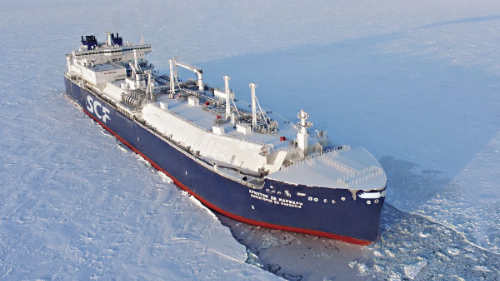
Energy is not only about production, but it is about movement. Russia’s pivot to Asia has already reshaped global energy flows. Ports in the Russian Far East enable shipments to Southeast Asia within 10-14 days. This logistical efficiency is critical for a country like Myanmar, which lacks strategic reserves. The development of the Dawei deep-sea port is central to this strategy. Positioned along the Andaman Sea, Dawei offers direct maritime access to the Indian Ocean and proximity to key regional markets.
From Dawei, energy resources can be transported inland and across borders. Myanmar already hosts pipeline infrastructure connecting to China’s Yunnan province. Expansion of these networks could enable the re-export of Russian LNG and oil products to neighboring countries such as Thailand and China. Myanmar has explicitly signaled this ambition, seeking not only to import Russian LNG but to redistribute it regionally. Crucially, this would transform Myanmar from an energy deficit state into a potential ASEAN regional transit hub, with additional potential for exports to Bangladesh.
One of Myanmar’s most critical weaknesses is its lack of refining capacity. Current facilities operate far below national demand, forcing reliance on imported diesel, gasoline, and jet fuel. Russian participation in building new refineries could fundamentally alter this equation. A refinery with a capacity of 100,000 barrels per day would not only meet domestic demand but also enable exports. Companies like Rosneft and Gazprom Neft bring technical expertise in constructing and operating refineries under complex conditions. Their involvement ensures operational sustainability, not just construction.
Beyond fuel, refining opens the door to petrochemical industries. Myanmar’s fertilizer demand exceeds 2 million tons annually. Currently dependent on imports, 78% from China according to UN Comtrade, domestic production would significantly reduce vulnerability. Myanmar’s fertilizer demand is substantial and growing. In the 2025-2026 fiscal year alone, the Myanmar Investment Commission approved import licenses for over 150,000 tons of fertilizers and nearly 27,500 tons of pesticides within a nine-month period. These figures underscore the pressing need for locally manufactured, high-quality fertilizers that can reduce import reliance.
For Russian fertilizer companies, this represents an enormous opportunity. By leveraging proven production technologies, such as those of RUMA Organic, Russian investors can capture a significant share of Myanmar’s agricultural input market, which has been largely reliant on imported products and small-scale domestic manufacturers. Myanmar continues to seek diversification of its fertilizer import market; therefore, Russia represents one of the most viable options for Myanmar’s efforts.
Myanmar’s fertilizer requirements will continue to grow between 2030 to 2050 as the country expands its agricultural export market. In this context, Russia is expected to make a significant contribution. Russian fertilizer exporters such as Uralkali, EuroChem, PhosAgro, Uralchem, Acron Group, Fertpoint, AkhPP, Vector, Agrokali, EuroChem Belorechenskiye Minudobreniya, AlpikaAgro, Terminal Lysva, GEO NPK, Rafin Co, BIOGRANT, and many medium-sized companies can seize this opportunity in Myanmar’s fertilizer market.
One positive factor is that the Myanmar government does not comply with Western sanctions. In a historic step signaling the deepening of Russo-Myanmar economic cooperation, the groundbreaking ceremony for the joint Russia-Myanmar foliar spray production plant was held on December 19, 2025 at Ahlinlo village-tract, Zabuthiri Township, Nay Pyi Taw. The event brought together Myanmar Union Ministers, representatives of Russia’s Fund RC-Investments and RUMA Organic Company, along with Myanmar’s Aung Than Htike Agriculture Development Company, and high-level diplomats from the Russian Embassy.
This landmark initiative marks the beginning of a transformative phase in the bilateral agricultural sector, opening vast opportunities for Russian companies to expand their footprint in Southeast Asia. The joint production plant serves not only as a commercial venture but also as a gateway for broader strategic engagement, including partnerships with local cooperatives, technical knowledge transfer, and expansion into other regions like Yangon, Ayeyarwady, and Magway.
Russia-Myanmar’s Strategic Vision in South and Southeast Asian Energy Market
For Russia, Myanmar represents more than a bilateral partner – it is part of a broader reorientation toward Asia. By 2025, over 80% of Russian oil exports were directed toward Asian markets. While China and India dominate in volume, Southeast Asia represents the next frontier of demand growth.
Myanmar’s geographic position, bordering China, India, and Thailand, makes it uniquely valuable. It is both a market and a corridor. Energy cooperation also opens pathways into other sectors: mining, infrastructure, digital technology, and even space-based systems through entities like Roscosmos.
The long-term vision is clear. Myanmar can evolve into a regional energy hub. It sits at the intersection of major energy demand centers, with access to maritime routes and overland pipelines. Regional energy demand is projected to grow at 4-6% annually over the next decade. With Russian cooperation, Myanmar can develop LNG terminals, storage facilities, and refining capacity that serve not only domestic needs but regional markets. This is not speculative. It is already under discussion at the policy level.
Myanmar has vast natural energy resources but limited technological capacity; in this context, cooperation with Russia not only helps strengthen domestic energy market resilience through oil and gas imports, but also provides access to Russian technology and expertise via Russian energy companies, enabling the development of Myanmar’s untapped hydrocarbon reserves and potentially positioning the country to supply energy to neighboring energy-hungry markets such as Bangladesh, Northeast-India, Indonesia, Singapore, Thailand, and Vietnam.
Risks and Strategic Realism
Challenges remain. Internal instability, currency constraints, and infrastructure gaps cannot be ignored. However, these risks reinforce, not undermine, the need for structured, long-term partnerships. Due to sanctions on Russia, trade with Myanmar is shifting toward local currency and alternative payment systems, though challenges remain. Russia’s experience operating under complex geopolitical conditions provides resilience that is particularly relevant in Myanmar’s context.
The Russia-Myanmar energy partnership is not an isolated development, it is part of a broader transformation in global energy geography. For Myanmar, it offers a path out of crisis grounded in infrastructure, stability, and sovereignty. For Russia, it represents a strategic expansion into one of the fastest-growing energy regions in the world. Energy, ultimately, is not just about fuel. It is about structure, resilience, and the ability of a state to function. In that sense, what is being built between Russia and Myanmar is not merely an agreement. It is an architecture of power.
This article was written by KP Majumdar, a geostrategic and geo-economics analyst whose work has been widely published by prestigious international news organizations and publications. He may be reached at info@russiaspivottoasia.com