 Русский





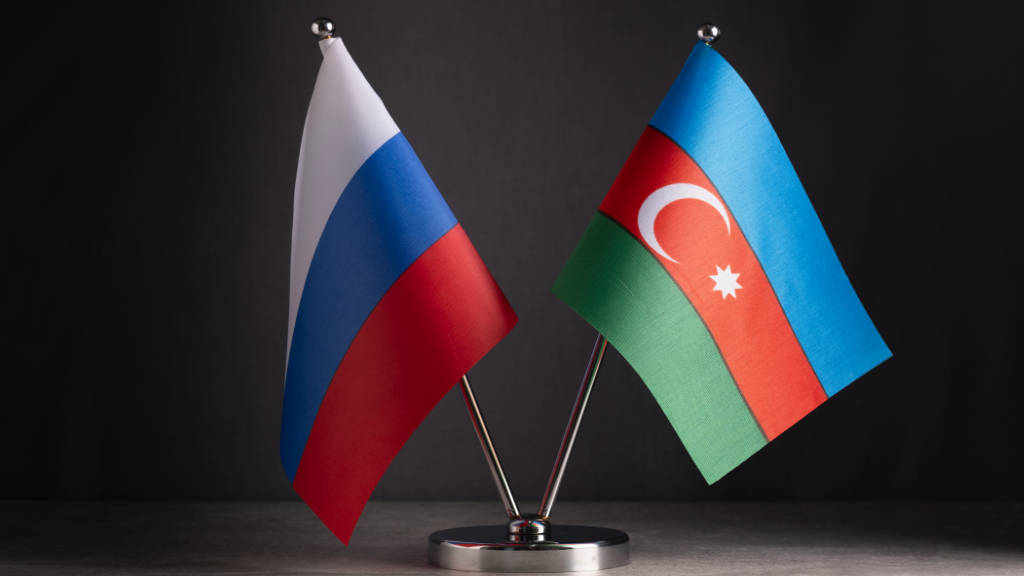

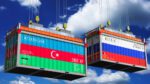
The Russia-Azerbaijan Intergovernmental Commission has been meeting in Zangilan, in Azerbaijan’s Eastern Zangezur region, with Russian Deputy Prime Minister Alexei Overchuk and Azerbaijani Deputy Prime Minister Shahin Mustafayev co-chairing the event.
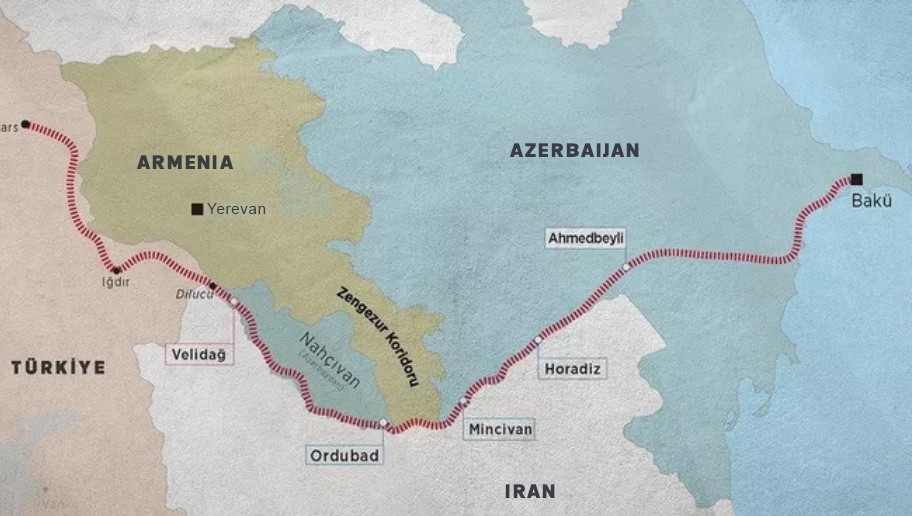
Several bilateral trade development and investment items were discussed, although trade this year thus far has seen a substantial decline. With both sides keen to make amends, the discussions quickly turned to logistics issues. The venue was also important—the Zangelan district was previously fully controlled by the unrecognized Nagorno-Karabakh Republic; Azerbaijan regained control of the town in October 2020. Through Zangelan, it is planned to lay the Zangezur corridor—a transport route that should connect the main territory of Azerbaijan with the Nakhichevan Autonomous Republic (NAR) through the Syunik region in the south of Armenia (the Azerbaijani name is Zangezur), which could become a key transport artery leading to Turkey and Iran. The geographical location will allow the Zangezur corridor to become part of the Middle Corridor (Trans-Caspian International Transport Route), which connects China and Europe through Central Asia and Turkey.
“We call on Russian companies to become more actively involved in the implementation of investment projects in the liberated territories, where a special tax regime is in place for a period of 10 years, including exemption from income tax, property tax, land tax, and simplified tax, as well as exemption from VAT and customs duties on the import of machinery, equipment, and raw materials, and benefits for mandatory social insurance,” said Azerbaijani Deputy Prime Minister Shahin Mustafayev.
The co-chairs noted that relations between the two countries are mutually beneficial. Among the priorities are joint efforts to develop transport connectivity in the region, cooperation in the energy sector, investment activities, development of cultural and humanitarian cooperation and interregional ties, and cooperation in the Caspian Sea.
Overchuk mentioned this, saying that “transport cooperation is a key area of bilateral relations.” Strengthening transport connectivity in Eurasia, especially cooperation in the International North-South Transport Corridor (INSTC), remains a priority. New added value chains are forming along this route at present. The development of the western branch of the corridor across Azerbaijan and the implementation of earlier agreements are a focal point. Russian businesses would like to be part of restorations in the freed Azerbaijani territories of Karabakh and Eastern Zangezur.” In terms of mutual tourism development, Overchuk added that cruise ships have good prospects in the Caspian Sea.
Russian and Azerbaijani authorities have also been instructed to analyze the structure of the trade between the two countries as this develops, Overchuk stated after their discussions, saying that “we always note the Azerbaijani interest to develop relations with Russia.” Today we also devoted a considerable amount of time to expanding our trade, economic, and investment cooperation. We gave instructions to relevant authorities in Russia and Azerbaijan to review and look at the structure of our bilateral trade and find ways to increase our trade further.” In 2025, bilateral trade stood at US$4.1 billion, a 2.5% increase over the previous year, according to Russian data.
The two sides will also work to improve conditions for carriers, Overchuk said. “Today we devoted a lot of time to the question of tariffs on freight transportation; we are working together to start using electronic transport waybills for international cargo road transportation services.”
Underlining this, the two sides signed a roadmap for the introduction of electronic consignment notes, or e-CMR. The implementation of this will be an important step in the digitalization of transport and logistics that will make it possible to significantly accelerate shipping procedures and increase the transparency and efficiency of freight traffic between the two countries.
In discussing Russia-Azeri trade routes through to Turkiye and Iran, Overchuk mentioned the current situation in Iran and the development of the key Rasht-Astara railroad section, which forms part of the western itinerary of the INSTC. Overchuk said that “Before the Iran war, there was active buyout of land for the railroad; this was done in accordance with our agreements with Iran. Most land plots for construction had been purchased by early March. In addition, Russian companies were about to begin conducting topographic geodetic work and rolled out an actual geodetic network for the construction work—which was already starting. We will resume this work as soon as conditions permit.”
Elsewhere, there are prospects for Russia to assist Azerbaijan develop its nuclear power industry. Azerbaijan’s Energy Minister Parviz Shahbazov also said last week that nuclear energy will become one of the components of Azerbaijan’s energy balance, stating that “We are moving to a new model and will ensure energy security not only through hydrocarbons but also through electricity, including renewable sources.” In addition, we have decided to include nuclear energy in our energy balance, as we consider it a clean energy source and an important component of the future energy balance. Azerbaijan expects growth in electricity demand. Therefore, in our view, a sensible energy transition involves a combination of natural gas, renewable sources, and nuclear energy. It is this approach, in our opinion, that will become the basis of future global energy supply.”
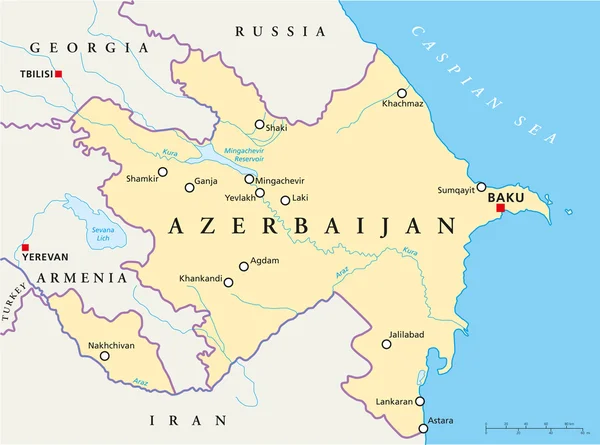
Meanwhile, trade turnover between Azerbaijan and Russia amounted to US$746.8 million in Q1 2026, down 47.4% year-on-year, according to the Azerbaijani State Customs Committee (SCC). According to the agency, the share of trade operations with Russia accounted for 7.94% of the country’s total foreign trade turnover (Russia is Azerbaijan’s fourth-largest foreign trade partner after Italy, Turkiye and China). In January-March 2025, Russia was the second-largest foreign trade partner of Azerbaijan with a share of 11.88%.
Azerbaijani exports to Russia amounted to US$223.8 million in January-March 2026, down 4.7%. Overall, supplies to Russia accounted for 3.66% of Azerbaijani exports. Russia ranks fourth among the countries to which Azerbaijani products are exported. At the same time, Russia is the largest buyer of Azerbaijani non-oil products. Supplies of these products to Russia in the reporting period amounted to US$211.6 million (-9.1%), with a share of 24.55%.
Azerbaijan imported goods worth US$523 million from Russia in Q1 (-56.5%), and the share of Russian supplies in total imports was 13.06%. Russia is the second largest importer into Azerbaijan after China.
According to the SCC, Azerbaijan’s negative balance in export-import relations with Russia amounted to approximately US$299.2 million in January-March 2026.
This overall reduction occurred mainly due to the decline in Russian exports to Azerbaijan, signaling that political and regulatory disruptions, rather than fundamental economic contraction in Azerbaijan, is the main driver. Both sides committed to regaining trade momentum and targeted US$5 billion in mutual trade for this year.