Русский








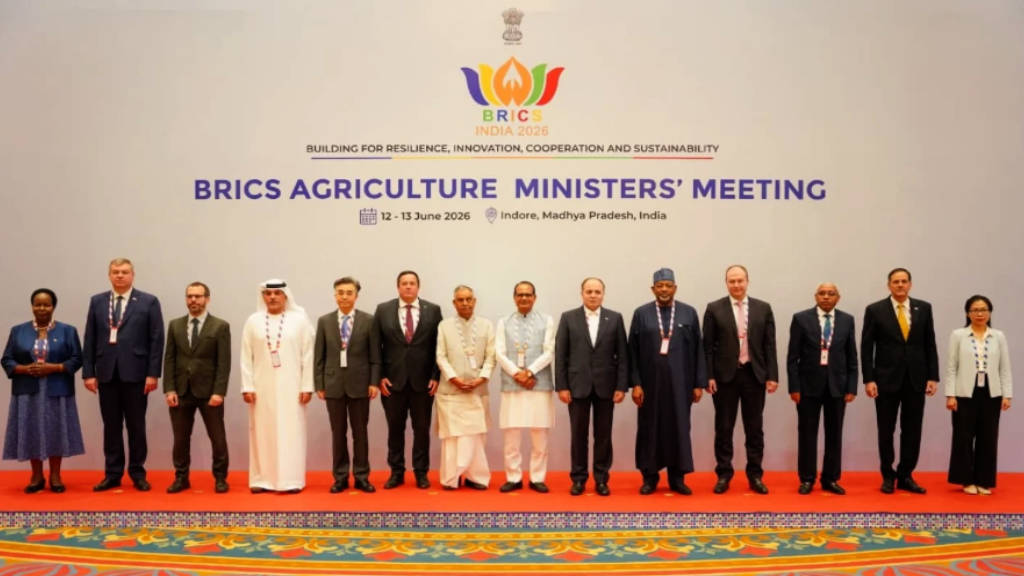

Agricultural trade between Russia and the BRICS countries rose over 5% in 2025, according to Maxim Markovich, Russia’s Deputy Agriculture Minister. He was heading up the Russian delegation at the 16th meeting of the BRICS agriculture ministers, which has been taking place in Indore, Madhya Pradesh, India.
He said that “Russian interaction with the BRICS countries is developing. Agricultural trade increased over 5% last year. This positive trend should continue in 2026.”
Markovich also participated in bilateral talks with the agriculture ministers of India, Iran, and South Africa. The parties discussed cooperation in the agricultural sector and extensively discussed four priorities:
- Food Security, Nutrition and Livelihoods
- Agriculture Trade and Cooperation
- Regenerative Farming, Climate-Resilient, and Sustainable Agriculture
- Strengthening Partnership for Innovation and Investments for making the Agriculture and food systems future-ready
The meeting concluded with unanimous adoption of the BRICS Agriculture Ministers’ Joint Declaration.
This places special emphasis on farmer-centric approaches, recognizing the pivotal role of farmers, emphasising smallholder farmers in ensuring global food security, promoting sustainable agricultural practices, and fostering inclusive rural development, while reflecting a shared vision among BRICS member countries to strengthen resilience in agriculture and food systems through innovation, sustainability, and equity. To take their collective resolve forward, the ministers agreed to take the following four major issues forward:
An agreement to establish the BRICS Network of Centres of Excellence on Agroecology and Regenerative Agriculture, with initial coordination by ICAR–Indian Institute of Farming System Research (IIFSR), Modipuram, India. This initiative will promote sustainable, natural, and climate-resilient farming practices. The ICAR-IIFSR will serve as the Centre of Excellence on Natural Farming in India, driving collaborative research, capacity building, and the exchange of best practices across member countries.
Members also agreed to establish a network on digital agriculture among BRICS countries. This platform will foster cooperation in artificial intelligence, geospatial technologies, digital public infrastructure, and data-driven agricultural solutions. The Indian Institute of Technology Delhi will lead the initial coordination of the network, bridging cutting-edge innovation with practical agricultural applications for farmers.
The launch of the Global Forum on Farmers’ Rights in Seed Systems, aimed at protecting and promoting farmers’ rights while recognizing traditional knowledge, seed heritage, and farmer contributions. Coordinated initially by India through Protection of Plant Varieties and Farmers’ Rights Authority (PPV&FRA) in New Delhi, this initiative is expected to enhance global dialogue and cooperation on these critical issues.
Member countries also agreed to establish of BRICS AGRIN (Agro-Inputs, Genetic Resources, and Information Network) Framework to strengthen collaboration in seeds, agricultural inputs, and genetic resources. This framework will facilitate information exchange, technical cooperation, capacity building, and partnerships among BRICS countries.
The member countries’ agriculture ministers also agreed to further strengthen two existing initiatives. These include the BRICS Agricultural Research Platform (BARP) and transforming it into a dynamic “Knowledge-to-Action Hub,” ensuring that research outputs are effectively translated into practical, scalable solutions for farmers.
In agricultural trade, BRICS countries reaffirmed their commitment to a fair, equitable, inclusive, and transparent multilateral trading system. The special dialogue on the proposed BRICS Grain Exchange, provided important momentum to discussions and helped build a shared understanding of its future operations.