 Русский




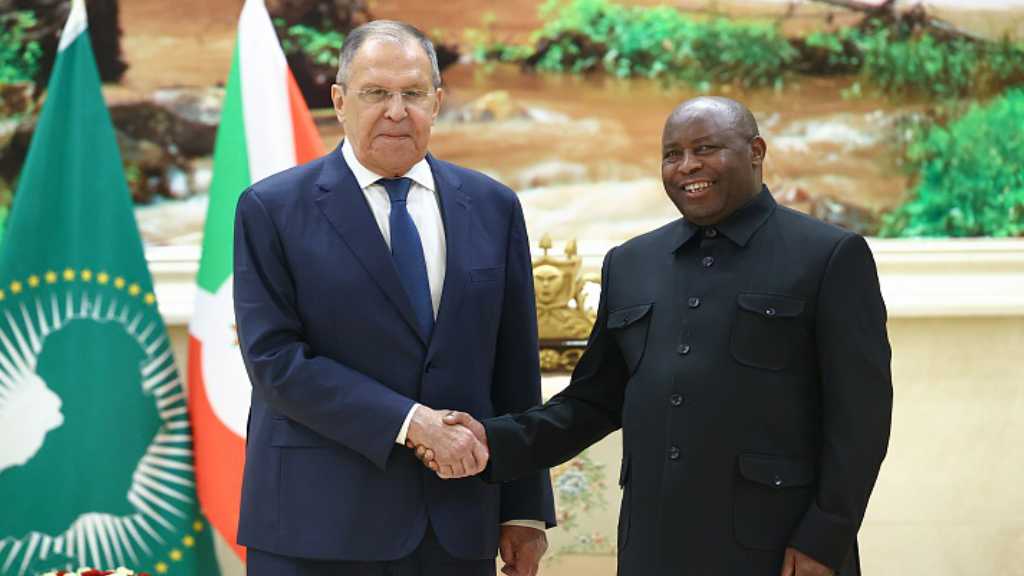

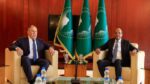
The Russian Foreign Minister, Sergey Lavrov, visited Burundi on July 10 and was received by President Évariste Ndayishimiye and also held bilateral talks with the Minister of Foreign Affairs, Édouard Bizimana.
They discussed issues relating to further strengthening the friendly Russian-Burundian relations and stated there was considerable potential for cooperation in trade, economic, humanitarian, and other areas. They committed to deepening political and diplomatic dialogue and to stepping up interaction in international affairs for settling global and regional crises. Similar approaches to the issues of establishing a more multilateral world order were noted as well as the importance of furthering close coordination of actions at the United Nations and other multilateral platforms.
The parties also discussed issues related to ensuring peace and security in Africa, including in the Great Lakes region.
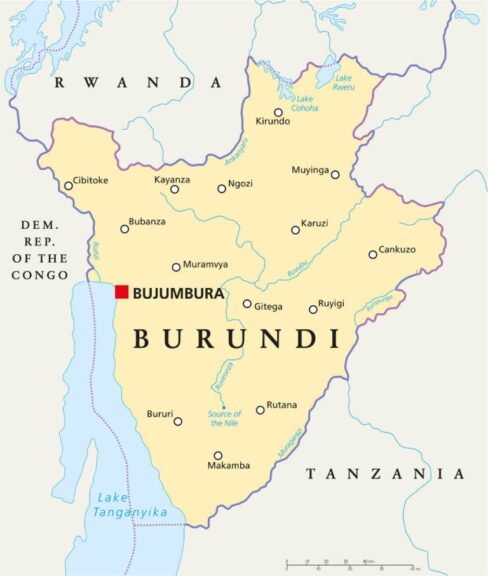
Burundi is a landlocked country in the Great Rift Valley at the junction between the African Great Lakes region and Southeast Africa. It is a resource-poor country with an underdeveloped manufacturing sector, meaning the economy is predominantly agriculture-based, accounting for about 50% of GDP, while employing more than 90% of the population. Subsistence agriculture accounts for 90% of agriculture. Burundi’s primary exports are coffee and tea, which account for 90% of foreign exchange earnings, though exports are a relatively small share of GDP. Other agricultural products include cotton, tea, maize, sorghum, sweet potatoes, bananas, manioc (tapioca), beef, milk, and cowhides.
Burundi is one of the world’s poorest nations, owing in part to its landlocked geography, a lack of education, and the proliferation of HIV/AIDS. Approximately 80% of Burundi’s population lives in poverty. Famines and food shortages have occurred throughout Burundi, most notably in the 20th century, and according to the World Food Programme, 56.8% of children under age five suffer from chronic malnutrition. Burundi’s export earnings—and its ability to pay for imports—rest primarily on weather conditions and international coffee and tea prices. Apart from agriculture, other industries include the assembly of imported components; public works construction; food processing; and light consumer goods such as blankets, shoes, and soap.
Burundi does have some natural resources, however, although investment will be needed to extract these. They include uranium, nickel, cobalt, copper, and platinum.
Burundi joined the East African Community (EAC) in 2009 and is also a member of the African Continental Free Trade Agreement (AfCFTA).
With a mainly Christian population of just over 14 million and covering an area of 27,834 km², Burundi’s 2024 GDP (PPP) is estimated to be around US$13 billion, with a GDP per capita (PPP) of just US$980. Burundi’s economic growth for 2026 is projected to have a mixed outlook, with forecasts varying by institution. The African Development Bank (AfDB) forecasts a strong 5.9% growth, driven by mining, public investment, and improved food supplies.
Russia-Burundi Bilateral Relations
Russia and Burundi do not share a standalone regional intergovernmental organization, although Lavrov’s visit can be expected to change this. Instead, they primarily collaborate through broader international platforms like the United Nations and the Russia–Africa Partnership Forum.
However, there are signs of progress. Russia and Burundi have discussed hydropower and nuclear power projects, with Russian companies prepared to invest in the country. Burundi is keen on constructing small modular nuclear power stations, with Lavrov saying that “We discussed a whole host of specific projects that Russian companies are ready to implement in Burundi, primarily in the hydropower and nuclear power sectors.” On nuclear power, work is already underway; staff are being trained. Burundi is keen on small modular nuclear power stations, and Rosatom and Burundi’s counterparts have already signed a fundamental document that forms the basis for such interaction.”
Education is another cooperation sector, with Lavrov adding that “Our African colleagues are increasingly interested in educational exchanges. We are ready, at our friends’ request, to increase the number of annual stipends allocated to Burundi.”
The development of regional onshore supply chains to neighboring countries may provide an opportunity for the development of Burundi as an assembly production center for exporting products to the EAC member countries, due to lower wages and a central-eastern location. It is possible some Russian infrastructure developers—including vehicles—could enter this market as a result.
However, currently the volume of Russia-Burundi bilateral trade is small and currently amounts to less than US$10 million per annum. Burundi’s President Évariste Ndayishimiye is scheduled to co-chair the upcoming Russia-Africa Summit in Moscow in late 2026 to further secure bilateral investments.