
 Русский








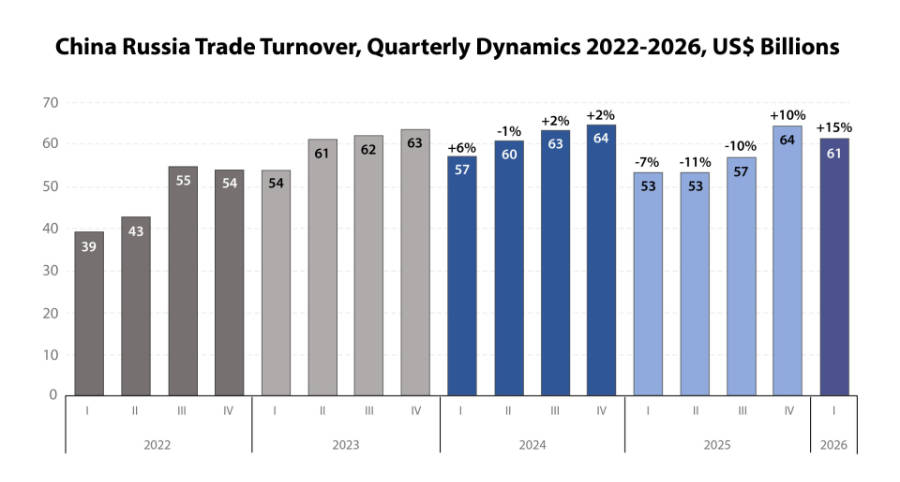
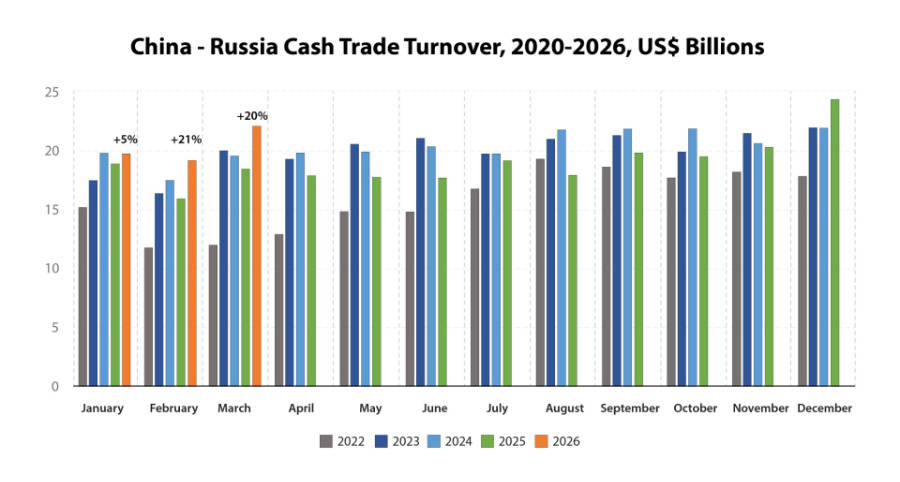
Trade turnover between Russia and China in the first quarter of 2026 has exceeded US$61 billion, rebounding by 14.8% or almost US$8 billion more than a year earlier, according to Chinese customs statistics. Russia imports of Chinese goods in January–March increased by 22% year-on-year to reach US$27.7 billion, while Russian exports to China grew by 9% to US$33.6 billion.
In March this year, trade growth was up 20% on March 2025.
In the Q1 export structure, supplies of oil, coal, and petroleum products were up 3% more than in Q1 2025. March exports of these commodities amounted to US$12.8 billion, which is 18.7% more than a year earlier. Imports in these monthly dynamics are stable at just over US$9 billion for the quarter. Last year, these average monthly export volumes were US$6.5 billion.
The fastest-growing sector in the Russian export structure for Q1, however, remains gold and silver, deliveries of which increased fourfold over the year, mainly as these are used as payment for products to circumnavigate financial sanctions. Russia is one of the world’s largest producers of gold, and China is one of the world’s main buyers.
Russian exports of ore, aluminum, and fish and fish products to China also significantly increased.
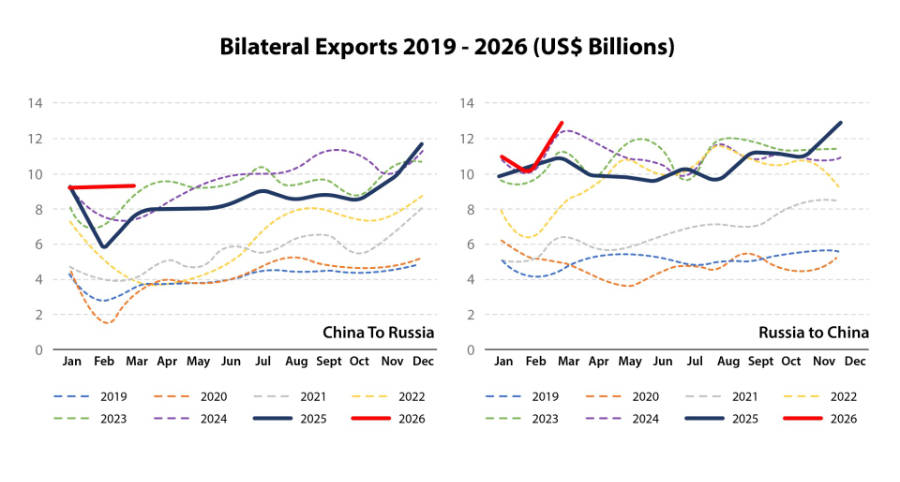
In Russia’s import structure, the main growth came from duty-free goods, cars and components, and machinery. At the same time, deliveries of the sector—industrial equipment—decreased by 1% to values of US$6.2 billion. Imports of Chinese autos and automotive components continue to recover; in total, for the quarter, goods of this type valued at US$3.7 billion were delivered to Russia, compared to US$2.6 billion for the same period in 2025.
Imports of duty-free goods and parcels from Chinese online shops also grew in Q1 2026 to reach US$1.8 billion, up from US$500 million compared to the results for January–March last year and indicative of growing integration between Russia and China’s online marketplace and delivery logistics.