 Русский




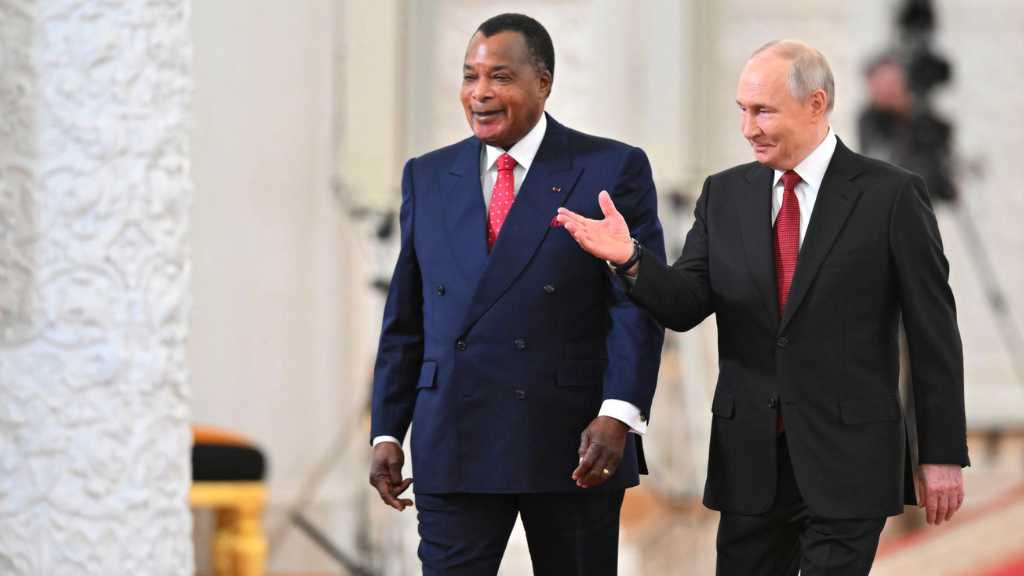

The President of the Republic of Congo (ROC), Denis Sassou Nguesso, has arrived in Russia on a state visit, his first overseas trip since winning the national elections last month. He met with Russian President Vladimir Putin and other senior officials.
Diplomatic ties between Russia and the Republic of the Congo (a Central African presidential republic and former French colony) were established on March 16, 1964. Moscow and Brazzaville maintain regular political contacts and develop ties in trade, economy, science, education, healthcare, and humanitarian affairs.
Nguesso previously visited Russia in 2012, 2019, and 2024, participated in Russia-Africa summits (2019, 2023) and the BRICS summit in Kazan (2024), and attended Moscow’s 80th Victory Day commemorations in May 2025. Putin and Sassou Nguesso last met in Beijing in September 2025. He was awarded the Russian Order of Honour for his contribution to bilateral relations.
During their meeting at the Kremlin on Wednesday (April 29), Putin said that “we have good prospects for developing our relations, and in various areas, too. In terms of the economy, this includes geological exploration, energy, logistics, agriculture, and some other sectors. Our companies are prepared and willing to work in your country’s market, primarily because you have a stable domestic political situation, which provides good prospects for business.
I would also like to draw attention to humanitarian cooperation, primarily in terms of professional training. Eight thousand specialists have been trained for your country in Russia in previous years, and 850 young Congolese are pursuing studies in the Russian Federation.
We continue to work on the international stage at international venues. We are grateful for your active participation in the Russia-Africa summits. We are currently preparing for the third summit this autumn. We are counting on your personal participation and invite you to Moscow.”
The Kremlin meetings come hot on the heels of the visit to Brazzaville of the Russian Deputy Prime Minister, Alexander Novak, earlier this month.
The Congo has a population of approximately 6.3 million people, a GDP (PPP) of US$28 billion, and a GDP per capita (PPP) of US$5,550. It has the tenth largest oil reserves in Africa and is a critical component of powering future pan-African industrial growth.
The Russian ambassador to the Congo, Ilyas Iskandarov, has previously stated that “In 2025 the Congolese economy showed positive dynamics, and in 2026 GDP growth of 3.6 percent is expected due to oil production, the development of agriculture, and mining. Over the post-Covid period bilateral trade turnover has increased fourfold.”
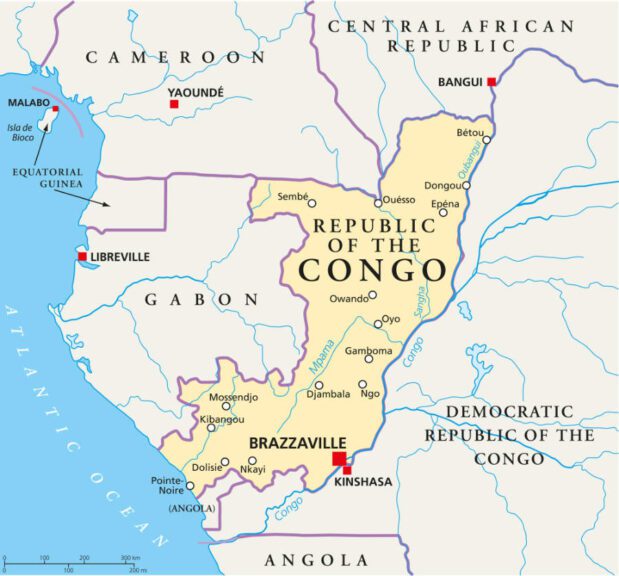
Iskandarov stated that Russian companies—Lukoil, Rosatom, Inter RAO–Export, Sberbank, and Rusal—are already operating in the country. In addition, an agreement on the construction of the Pointe-Noire – Lutete – Maloukou – Tréchot petroleum products pipeline has been signed and ratified. That will ferry oil from the Congo’s offshore reserves to the capital city. Russia holds a 90% stake in this project. Construction is planned from 2026 and to be completed within three years and should be operational by the end of 2029.
Russia has other investments in the oil and gas sector, including related projects, while military and technical cooperation is also part of the bilateral mix, with training and supplies of new Russian military equipment to the country.
In 2025, bilateral trade between Russia and the Republic of the Congo reached US$280 million and has more than doubled since 2024.
The structure of trade between Russia and the Republic of the Congo has changed compared to previous years. In 2021, the key items of Russian exports to the Congo were wheat and mueslin (a mixture of rye and wheat), as well as plastics, rubber, and tyres. In 2023, agricultural machinery, fertilisers, and petroleum products were added to these items. In 2025, the structure of exports from Russia underwent further changes, with mining equipment, power plants, and agricultural machinery becoming the main items of supply. This is due to the development of energy projects, hydrocarbon extraction, and infrastructure modernization in the Congo, as well as the growing demand for Russian technologies and equipment.
The Republic of Congo traditionally exports coffee, fruits (bananas, pineapples, and mangoes), valuable timber and lumber, precious stones (diamonds), and metals (copper and cobalt), as well as cocoa beans and their processed products, to Russia.