Русский




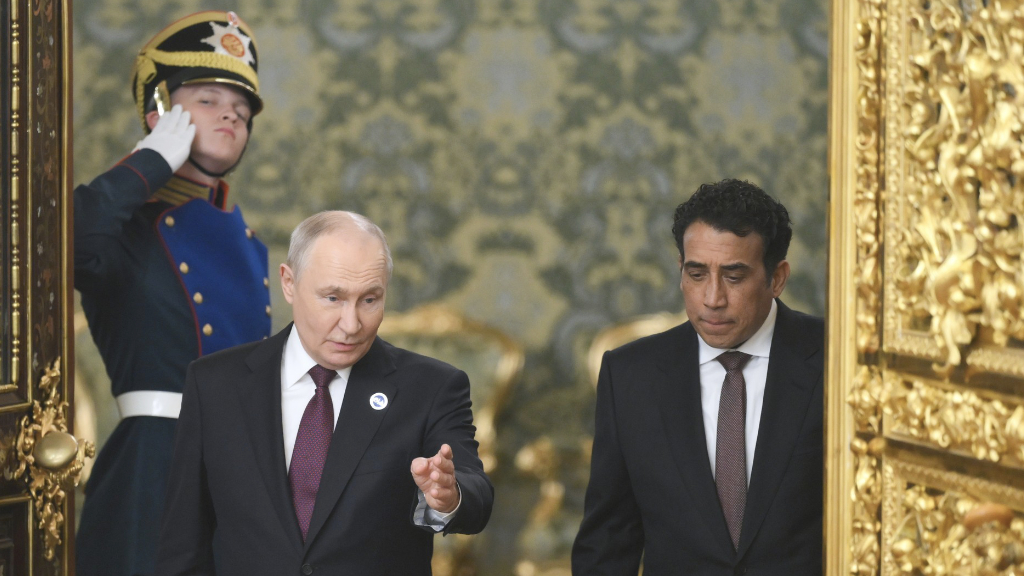
The Russian President, Vladimir Putin, has met with Mohamed al-Menfi, the Chairman of the Presidential Council of Libya, during the 2026 Russia-Africa Summit in Moscow.
The Russian side was represented at the meeting by Foreign Minister Sergei Lavrov; Deputy Prime Minister Alexander Novak; Deputy Chief of Staff of the Presidential Executive Office Maxim Oreshkin; Deputy Chief of Staff of the Presidential Executive Office – Presidential Press Secretary Dmitry Peskov; Presidential Aide Yury Ushakov; Minister of Economic Development Maxim Reshetnikov; Minister of Energy, Russian Co-Chair of the Russian-Libyan Intergovernmental Commission on Trade, Economic, Scientific and Technical Cooperation Sergei Tsivilev; Deputy Minister of Defence Vasily Osmakov; Chief of the Main Directorate of the General Staff of the Russian Armed Forces – Deputy Chief of the General Staff Igor Kostyukov; and Deputy Chief of the Main Directorate of the General Staff of the Russian Armed Forces Andrei Averyanov.
This is what they had to say:
Vladimir Putin: “Mr. Chairman, Colleagues, friends, we are pleased to see you again and welcome you to Moscow. Libya is our long-standing partner in North Africa. Last year marked the 70th anniversary of diplomatic relations between our nations.
Our cooperation within multilateral frameworks, particularly the Gas Exporting Countries Forum, whose summit in Moscow we both just attended, as well as OPEC Plus, enables us to join efforts in developing measures to safeguard global energy security.
Amidst complex international political and economic developments, bilateral trade between our countries continues to evolve. In April, the first meeting of the co-chairs of the joint intergovernmental commission took place in Moscow. Naturally, we are interested in resuming the commission’s full-scale operations as soon as possible.
Russian universities continue to train specialists for Libya’s public sector. This year, we have increased the number of state-funded university places available to your students to 100. In total, 1,500 Libyan students are currently studying at Russian universities. In addition, in 2025–2026, 25 diplomats from Tripoli and Benghazi completed professional development courses at the Diplomatic Academy of the Russian Foreign Ministry.
We have an excellent opportunity to exchange views on ways to further expand our bilateral cooperation and discuss the most pressing issues on the international and regional agendas.
Once again, I am very pleased to see you. Welcome!”
Al Menfi: “Mr President, I would like to begin by expressing my gratitude for the warm welcome you have extended to us, your hospitality, and your efforts to strengthen relations between our countries.
Relations between Russia and Libya have developed over many years in pursuit of the mutual interests of our two nations. Building on past achievements, we now seek to establish a strategic partnership with a forward-looking vision.
Libya needs to broaden its international engagement, and Russia is a major partner in helping us achieve a balance in our international relations. We believe that an active Russian presence in the region could help maintain balance at both the regional and international levels. This is something Libya urgently needs, particularly amid the pressure being exerted on our country and attempts to influence its sovereignty and decision-making.
Despite pressure from Western countries over our contacts with Russia, we remain convinced that expanding cooperation with Russia is essential to our national interests, serving Libya’s interests and providing new opportunities to preserve our freedom to make independent decisions. Stability is also essential, not only for our own interests but for the region and the world at large. As an African country on the Mediterranean, Libya’s stability contributes to stability across these major regions.
We believe that our relations should move beyond political understandings and lead to concrete projects. We are keen to pursue initiatives across a wide range of sectors, including energy, gas, infrastructure and reconstruction, as well as security and the military sphere. We hope that Russian oil companies will return to Libya and contribute to the advancement of this vital sector of our economy. The presence of our Minister of Oil and Gas in the delegation provides an excellent opportunity to begin direct talks with his Russian counterpart and set this process in motion.
We also attach great importance to expanding cooperation in the military and security spheres. Such cooperation would allow us to strengthen and integrate the relevant institutions in our country. We can maintain contact through designated representatives of the General Staff, ensuring that our efforts lead to concrete action rather than remain at the level of mutual understanding.
As regards Russia’s role in supporting a Libyan-led political settlement, we believe that Russia can make a positive contribution to restoring balance in Libya and promoting intra-Libyan dialogue.”
Libya’s Economic Background
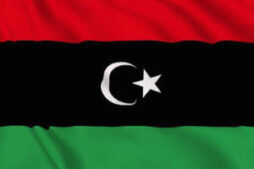
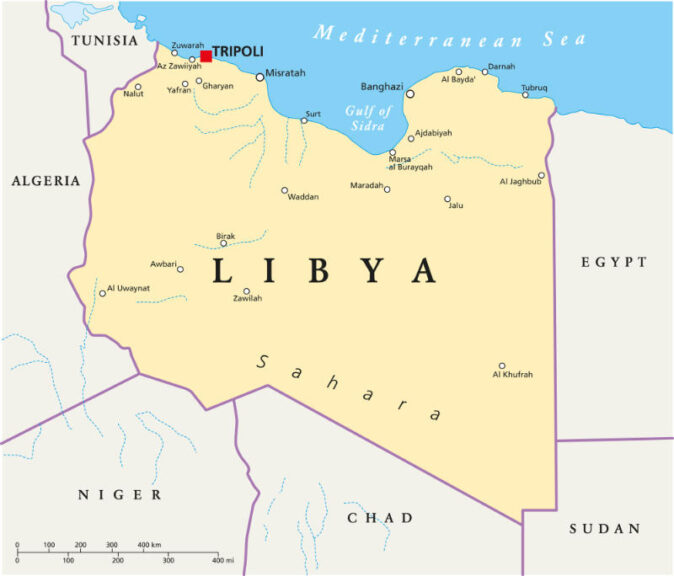
Libya is strategically located along the North African Mediterranean Sea, serving as a key hub for oil and gas exports.
With a population of approximately 7.38 million, Libya has a GDP (PPP) of around US$124 billion, with a GDP (PPP) per capita of approximately US$17,760, and a projected GDP 2026 growth rate of 3.3%. Is has a high ranked Human Development Index.
Libya’s economy is primarily driven by the oil and gas sector, which constitutes approximately 60% of the country’s GDP, 94% of exports, and 97% of government revenues. The country experienced significant growth in 2023, with a 12.6% increase in GDP, largely attributed to sustained oil production made possible by an improved security situation. Despite its reliance on oil, Libya has a developing manufacturing sector that produces processed food, cement, and textiles, as well as oil-related industries like steel drums, tanks, and pipes. Agriculture plays a minor role in the economy, but large-scale irrigation projects such as the Great Man-Made River have been initiated to support agricultural activities. In recent developments, Libya’s National Oil Corporation (NOC) resumed full oil production at the Sharara and El-Feel oil fields in October 2024, following a political crisis that had halted operations.
Libya is still embroiled in a civil war, which has essentially been frozen but continues to divide the country. That developed following US led NATO attacks on Libya in 2011.
Libya is a member of the Arab Free Trade Area (AFTA) and the Greater Arab Free Trade Area (GAFTA), which aim to reduce tariffs and enhance trade between Arab nations. Additionally, Libya is a signatory of the African Continental Free Trade Area (AfCFTA), promoting intra-African trade and economic cooperation. Libya also participates in the Arab Maghreb Union (UMA), though it remains inactive due to political tensions. The country maintains informal trade relations with the European Union (EU), particularly in the energy sector, under the EU-Libya Partnership. Furthermore, Libya has various bilateral agreements with countries such as Italy, Turkiye, and other EU states in sectors like oil, trade, and economic cooperation.
Russia-Libya Trade & Investment
Russia has been supportive of the Libyan General Khalifa Haftar yet lacks any formal historical agreements with the Libyan government, preventing Moscow from reaching more solid agreements with a unified government. His son, Saddam Hafter is considered to be in de facto charge of the country although intra-Libyan divisions remain.
This makes Russian operations in Libya vulnerable to the same uncertainties as recently occurred in Syria as the country remains politically divided. That said, Russia has been upgrading military ports and airfield in Libya over 2024 to protect its Mediterranean and African Sahel interests as it withdrew from its military bases in Syria.
Russia and Libya have worked to revive and expand their economic and commercial ties, focusing heavily on energy, industrial projects, and transport infrastructure, and these have yielded some recent results. In April 2026, high-level talks took place in Moscow between Russian Foreign Minister Sergey Lavrov and Libyan officials (including acting foreign minister Taher al-Buhar) to lay the groundwork for returning Russian companies to the Libyan economy. The Russian-Libyan Intergovernmental Commission on Trade, Economic, Scientific and Technological Cooperation has resumed to coordinate joint projects and renew legacy contracts.
President Vladimir Putin has also continued meeting with the Libyan leadership and representatives from various Libyan factions) to reinforce cooperation in multilateral energy frameworks like OPEC+ and the Gas Exporting Countries Forum. Both nations have aimed to scale up transactional volumes, with cooperation centering largely on energy security, oil and gas sector coordination, and potential infrastructure rebuilding contracts for Russian investors in Libya. Libyan officials (including leadership from the Presidential Council and oil sectors) have urged Russian oil and gas companies to return to Libya to participate in field development, energy security, and reconstruction projects.
Given the political situation and the losses incurred by Russian companies in Libya during the civil war, there is understandable caution. However, the circumstances are slowly improving. The renegotiating of contracts in the energy sector takes time, and when satisfactorily concluded, a renewed emphasis on trade may begin, with Russia’s agricultural sector also poised to develop a Libyan market in both grain and fertilizer exports.
Russia-Libya 2025 bilateral trade reached about US$863 million, almost all in the energy sector, with Libyan exports accounting for about 65% of this.