 Русский




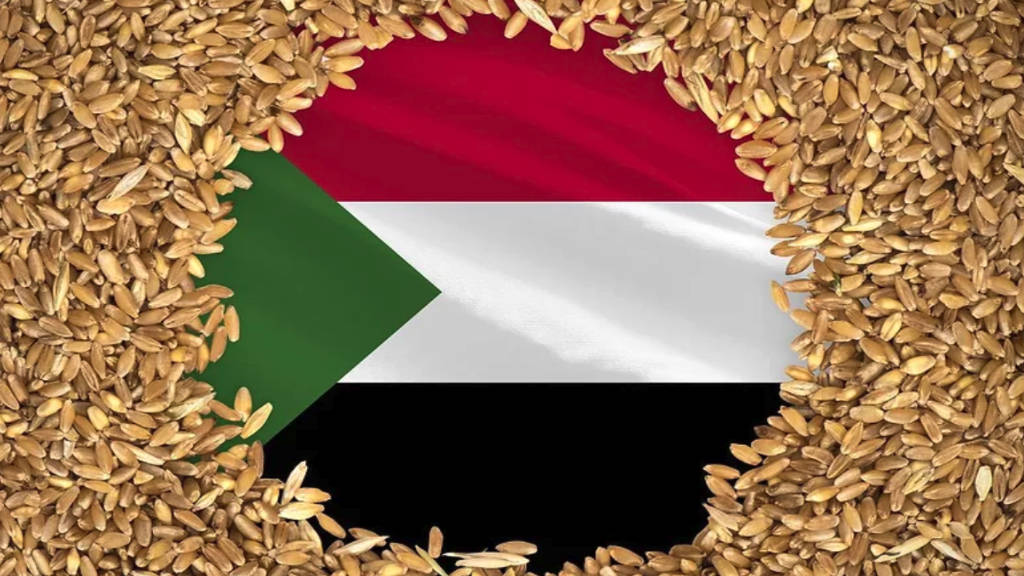

Russia exported approximately 1.7 million tonnes of wheat to Sudan from July 1, 2025, to early April this year, compared to 0.7 million tonnes in the same period of the previous year, the Agroexport federal center has stated. This is higher than for the entire 2024-2025 agricultural year.
This significant increase is primarily due to the resumption of operations at several flour milling enterprises in Sudan, which led to a partial recovery in demand for imported wheat and a reduced need for imports of wheat flour, Agroexport said. According to the Central Bank of Sudan, wheat imports in 2025 amounted to 1.7 million tonnes, up 1.8-fold compared to 2024. Flour imports, in contrast, decreased from 0.7 million tonnes to 0.5 million tonnes.
Agroexport stated that “Nevertheless, current wheat import levels are still significantly below the level before the conflict broke out in the country in 2023. For example, wheat imports stood at 2.7 million tonnes in 2022, and flour imports [stood] at around 150,000 tonnes. Should processing capacities continue to recover, we can expect a gradual return of wheat imports to previous levels.”
At the same time, analysts noted that the International Grains Council (IGC) gives a higher estimate of Sudan’s flour imports and notes that imports reached a peak of 1.4 million tonnes in the 2024-2025 agricultural year (compared to 0.7 million tonnes according to the Central Bank of Sudan). In its March report, the IGC forecast a decline in supplies to 0.4 million tonnes.
Agroexport commented, “The combination of increased competition in wheat sales markets in Africa this season and the recovery of demand from Sudan has led to a noticeable increase in Sudan’s share in the structure of Russian wheat exports to the region – over 10% for the period from July to April, compared to around 4% for the same period last agricultural year.”
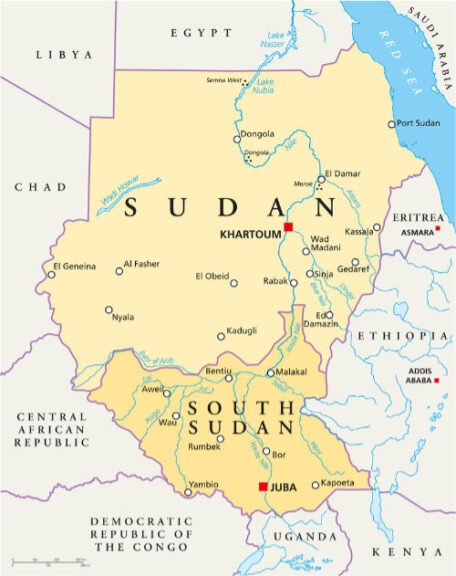
Sudan has a population of over 50 million; however, it has been involved in a destructive civil war that has now entered a fourth year, marked by famine and massacres, in what the United Nations calls an “abandoned crisis”. Part of the Sudanese conflict revolves around decisions as to whether Sudan should be a secular or an Islamic state. The current ruling government, represented by President Idris, favors the secular nature of government and prefers freedom of choice in matters of religion in the country. Covering 1,886,068 km², Sudan is Africa’s third-largest country. It has a GDP (PPP) of US$178 billion and, due to the war, a negative growth rate of minus 12% last year.
The fighting has devastated infrastructure, displaced millions of people, and pushed the economy into crisis. However, officials are confident that Russian support could help rebuild essential sectors and restore trade routes disrupted by fighting.
Russia and Sudan have been increasing their mutual cooperation in recent years, with Sudan offering Russia the use of its Port Sudan Naval Base on the Red Sea. That agreement is beneficial in several ways for Russia and Sudan, as it provides Russia with a foothold on the Red Sea, obtaining access to the Indian Ocean; it enhances logistical support for various Russian military units in the region; it helps mitigate threats to Russian tankers and vessels in the Red Sea and the Suez Canal zones; and it enhances Russia’s capabilities on the African continent, while elevating Sudan’s standing among neighboring countries and solidifying cooperation with Russia. The port will be used as a naval logistical support center, rather than a full military base on the Red Sea, which is politically less of a problem for Saudi Arabia. That said, as the port is also used to facilitate energy agreements between Sudanese oil companies and Russia have been subjected to drone attacks this year by pro-Ukrainian forces, a warning of wider involvement should Western actors wish to expand the conflict.
Russia is expanding its footprint in Sudan and is looking for both economic opportunities and strategic access in the Horn of Africa, a region of growing geopolitical importance. Against that backdrop, Russia’s engagement with Sudan underscores how global powers are competing for influence in Africa through bilateral deals and infrastructure commitments.
Sudanese representatives welcomed the cooperation with Russia, stressing that the partnership could strengthen national development efforts and ease recovery from the current crisis. Russian officials described the agreement as part of a broader push to deepen Africa–Russia relations at a time of shifting international alignments.
In terms of current bilateral trade, the World Bank has not yet released specific bilateral trade data for Sudan in 2025; however, a World Bank report from late 2024 indicates a widening trade deficit and high import requirements in 2024-2026, driven by ongoing conflict, with a potential gradual recovery in exports and domestic demand from 2025 onwards if the conflict subsides and reconstruction efforts begin. The World Bank also established a transitional office in Addis Ababa in September 2024 to manage engagements in Sudan following the closure of its Khartoum office. Russian support for Sudan is critical to maintain at least some stability until the civil war issue can be resolved. If not, the regional consequences could be dire.