Русский





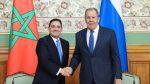
The Russian Foreign Minister, Sergey Lavrov, had a telephone conversation with Nasser Bourita, the Minister of Foreign Affairs of Morocco, following a request from the Moroccan side.
The conversation, which took place on October 23, focused on priority objectives for further steady development of Russian-Moroccan relations and preparations for the Third Russia-Africa Summit, as well as key regional issues in the context of maintaining bilateral foreign policy coordination, including at the United Nations.
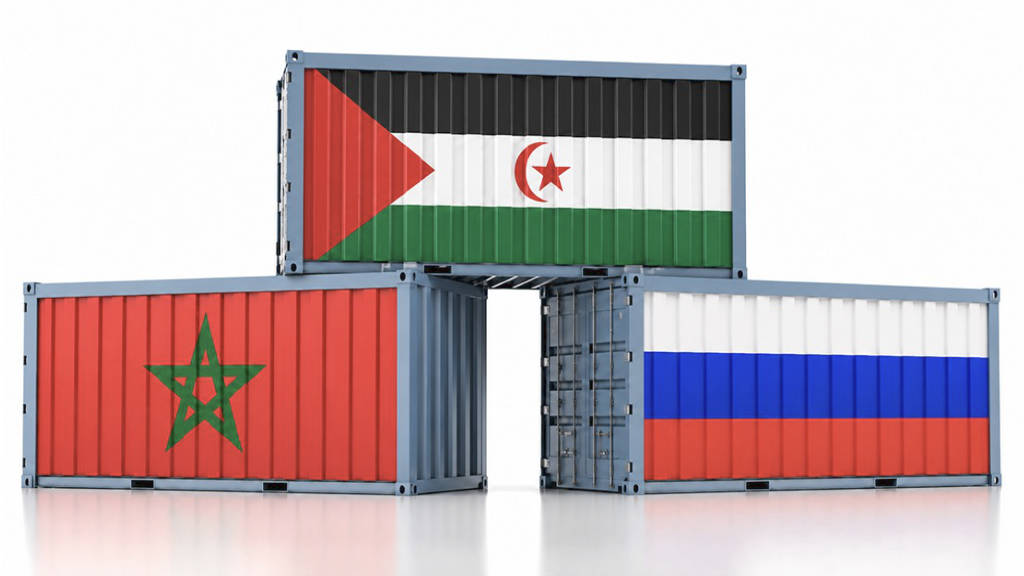
A major part of the talks was to discuss bilateral cooperation and coordination at the United Nations amid negotiations over a new Security Council resolution on the Moroccan Sahara. The text is expected to advance a final settlement based on Morocco’s expanded autonomy plan under its sovereignty. Russia abstained on the previous resolution without using their veto.
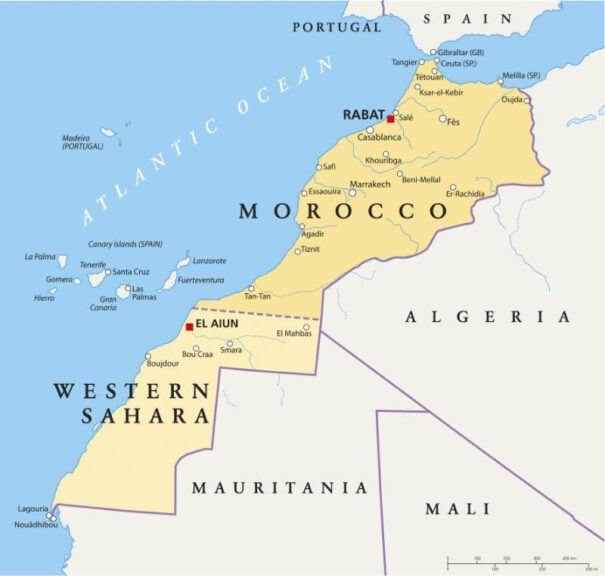
The new resolution is to be put to the vote on October 29. If successful, it would change the format of the United Nations presence in the Western Sahara, where it is currently titled the ‘UN Mission for the Referendum in Western Sahara’ (MINURSO), which was created in 1991 as part of a ceasefire between Moroccan forces and the Polisario Front. The latter is a Sahrawi nationalist and Arab socialist organization, whose main goal is the independence of Western Sahara from Moroccan occupation. The United Nations has previously considered the Polisario Front to be the legitimate representative of the Sahrawi people and maintains that the Sahrawis have a right to self-determination. The Polisario Front is outlawed in the parts of Western Sahara. The new resolution would imply that Morocco has sovereignty over the region.
Western Sahara covers an area of 272,000 square kilometres and has a population of about 600,000—one of the least densely populated regions in Africa. It possesses a remarkably rich reserve of natural resources that stand at the center of its decades-long geopolitical conflict. About 80% of the region is primarily controlled and exploited by Morocco, while the management of these resources remains highly contested globally. International bodies, such as the European Court of Justice, routinely rule that extracting these resources without the explicit consent of the indigenous Saharawi people violates international laws.
The Western Sahara possesses vast, uninterrupted desert plains and strong coastal wind currents, offering massive potential for utility-scale solar and wind energy farms. Currently, Morocco utilizes these newly built green energy grids primarily to power its high-intensity phosphate mining operations. Western Sahara possesses some of the world’s largest phosphate deposits, used globally as a fertilizer, as well as access to some of West Africa’s primary fishing grounds.
Aside from the Western Sahara issue, the two ministers discussed strengthening Moroccan-Russian relations, preparations for the third Russia-Africa Summit, scheduled for October 28–29 in Moscow, and other regional developments.
Russia-Morocco Bilateral Trade
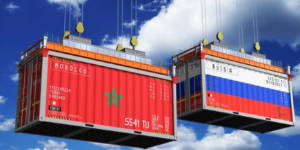
Trade between Russia and Morocco is fairly static and remains at the US$2 billion level, according to Igor Belyaev, the Russian Ambassador, who mentioned the figure in August. He added that Russia supplies Morocco with agricultural raw materials and industrial and chemical products, including urea, which is widely used in the kingdom’s agricultural sector. Russian companies also export insulin, anticancer drugs, vaccines and pesticides, while Morocco exports fruit, vegetables, and seafood to Russia.
Belyaev noted that work was under way to expand the range of goods supplied, including through halal certification. He added that the bilateral potential had not yet been fully realized and that co-operation needed to be intensified. He added that “political dialogue between Russia and Morocco is at a high level. At the same time, I believe that the potential of trade and economic cooperation has not yet been fully realised and does not correspond to the level of political relations.”
The ambassador identified supplies of liquefied natural gas (LNG) and green hydrogen as promising areas of partnership. He said that “in the natural gas sector, cooperation on liquefied natural gas supplies could become a promising area of interaction.” Projects being implemented in Morocco to create infrastructure for receiving and regasifying LNG are creating the conditions for new suppliers to enter the market and opening up potential opportunities for the development of Russian-Moroccan cooperation in the gas sector.”