Русский









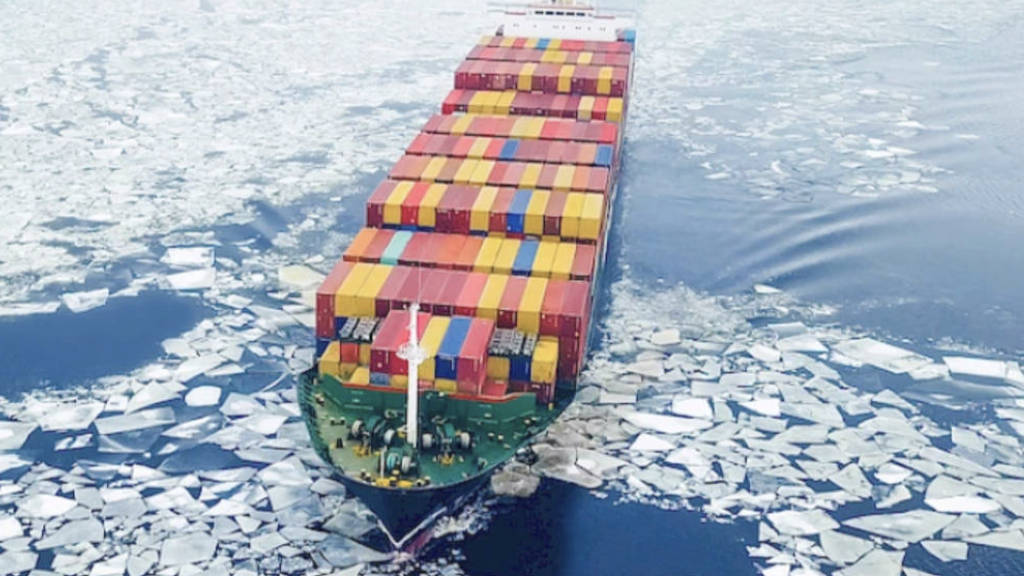

Transit cargo shipments along the Northern Sea Route (NSR) will almost double to a new record of more than 7 million tonnes in 2026, according to Vladimir Panov, the head of the Arctic Directorate and director of NSR and Arctic development at Rosatom. The company is responsible for operating Russia’s nuclear-powered icebreakers and ensuring the safe passage of shipping using the route.
Panov said that “The Northern Sea Route has two competitive advantages-efficiency and security. In the summer-fall season the route from Asia to Europe is 30% shorter than the route through the Suez Canal. For cargo shippers, this means lower charter expenses and higher product turnover. Businesses are already voting for the NSR with tonnes. In 2026 overall cargo traffic along the route, according to our expectations, will exceed a record 40 million tonnes. I’d also like to separately note the performance of transit cargo traffic, meaning cargo that passes through the NSR but is not extracted in the Arctic. This year transit will also set a new record. We will very likely ship more than 7 million tonnes. This makes it possible to talk about a volume breakthrough-transit cargo traffic will effectively double compared to last year.”
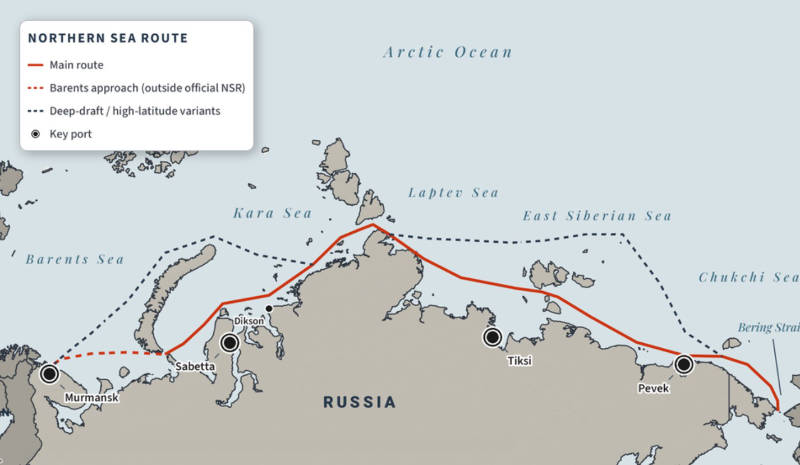
He added that containerized cargo traffic is also growing within the context of transit, with the number of transit container voyages doubling to 46 this year from 23 in 2025, while the volume of international containerized cargo transit shipments is set to reach a new record of more than 600,000 tonnes.
Russia and China alone have expressed their intention to increase mutual cargo traffic along the Northern Sea Route to at least 50 million tonnes per annum by 2030. For China, the NSR halves the time to Europe compared to the Suez or the Cape of Good Hope routes. The Economic Commission for Europe (ECE), in its 2025 Transport Trends report, projects the NSR handling 15% of Eurasian trade by 2040.