 Русский




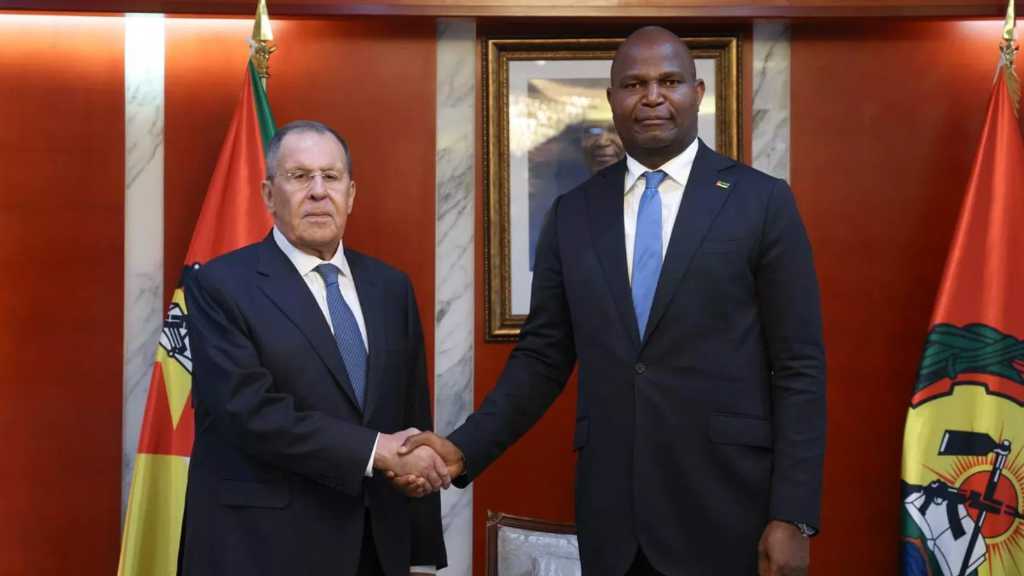

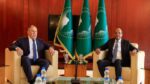
The Russian Foreign Minister, Sergey Lavrov, has been on an African tour and has visited Maputo, the capital of Mozambique, to meet with Daniel Francisco Chapo, the Mozambique president, and Maria Lucas, the minister of foreign affairs. This is what he had to say:
“The Russian delegation has just had a meeting with the president of the Republic of Mozambique, Daniel Francisco Chapo, which was held in a very warm and friendly atmosphere, as has been customary in the Russia-Mozambique partnership for many years now.
President Chapo emphasised that the Mozambican people remember well the time when the solid foundations of our strategic partnership were laid, referring to Mozambique’s struggle for independence. Here, people remember the support that was provided in the form of advice, the sharing of experience, and arms supplies. As you are aware, this memory is enshrined in Mozambique’s national symbols which feature the Kalashnikov rifle. When victory over colonial rule was achieved (1975) and Mozambique declared its independence, our country—the Soviet Union – recognised the new young state on that same day.
During the next stage of bilateral relations, our country actively contributed to the establishment of state institutions, the foundations of an independent national economy, and reforms in education. Today, President Chapo recalled this period with great warmth, stressing that Mozambicans remember it and wish to build relations in the new era on this solid foundation.
The economy is of key importance. Africa as a whole is currently experiencing a second awakening because, although political independence has been achieved, many countries continue to face serious and deep economic dependence on their former colonial powers and other Western states.
Africans are justifiably interested in having their abundant natural resources processed in the countries that produce them rather than seeing them exported abroad in raw form. They want value added generated here. It was in this context that President Chapo outlined his ideas for further economic reforms in Mozambique and the opportunities he sees for the development of bilateral cooperation. We agreed to take the key elements of Mozambique’s plans for economic reform and modernisation into account in the preparations for the next session of the Russia-Mozambique Intergovernmental Commission on Trade and Economic Cooperation.
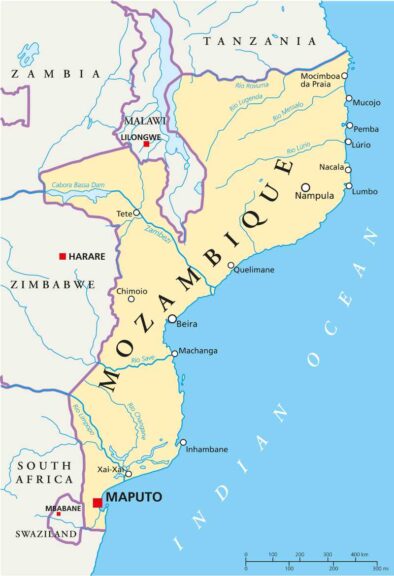
Another priority area of our strategic partnership in the period ahead includes teaming up to combat terrorism. Russia stands ready to respond positively to requests from our Mozambican friends regarding assistance that we can provide in eliminating the terrorist threat that persists in the north of the country.
We discussed international issues as well. We maintain very close coordination on the majority of matters considered at the UN and other international venues. The foreign-policy dimensions of our partnership will be discussed in greater detail with Mozambique’s Minister of Foreign Affairs Maria Manuela dos Santos Lucas.”
(A report on this will follow. To subscribe to Russia’s Pivot To Asia and receive complimentary updates, please click here).
Russia-Mozambique Bilateral Trade
Mozambique’s economy remains heavily reliant on natural resources, with extractive industries driving growth. Agriculture, which employs over 72% of the population. Mozambique’s exports are dominated by large projects in the extractive sector (coal, gas, rubies and heavy sands), accounting for 60% of overall exports. Overall, the main manufacturing products in Mozambique include wheat flour; food; beverages; aluminium; petroleum products; textiles; cement; glass; and tobacco.
Mozambique became the 47th nation to ratify the African Continental Free commerce Area (AfCFTA) on January 9, 2023. The AfCFTA aims to increase intra-African commerce and remove trade obstacles.
Mozambique has a population of 34 million and a GDP (PPP) of US$46 billion. GDP per capita (PPP) is US$ 2,383. Mozambique’s real GDP growth for 2026 is projected to be between 0.5% and 2.1%. This slow growth is due to severe floods, the shutdown of the MOZAL aluminium smelter, and impacts on farming. Future growth relies heavily on natural gas projects, an area where Russia can be of development assistance.
Mozambique took part in Russia’s ‘Great African Expedition’ designed to assess fish stocks on its Indian Ocean coastline, with a view to developing maritime and fish processing joint ventures.
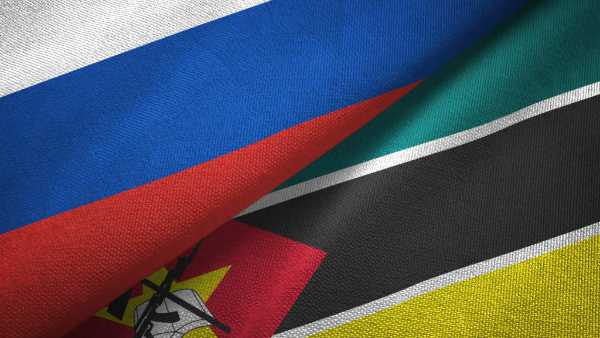
Mozambique’s trade with Russia is about US$60 million and gradually increasing. Trade is mostly agriculture based, with Russia exporting wheat and fertilizers, and Mozambique exporting tea. Both nations are aiming to increase commerce and tourism through new infrastructure and transport agreements.