 Русский




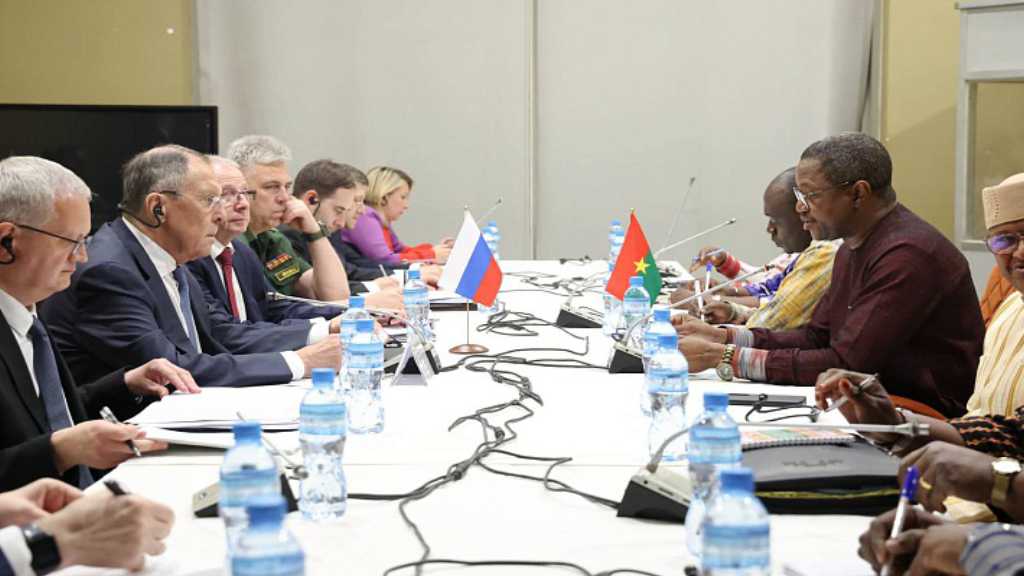

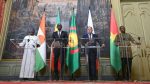
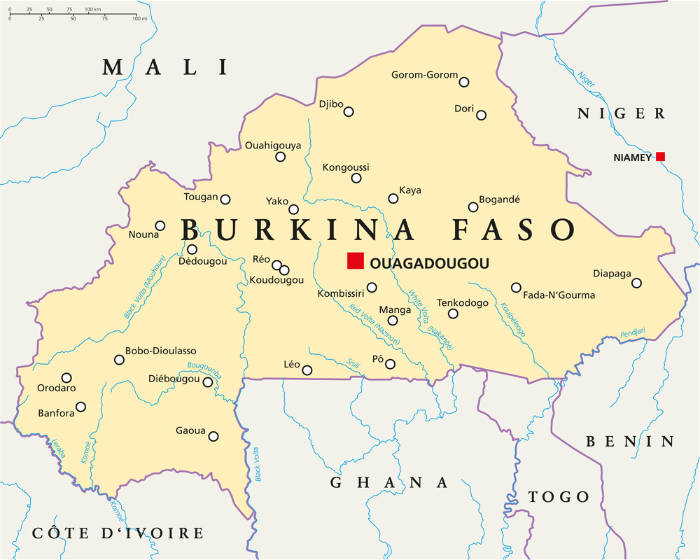
Foreign Minister Sergey Lavrov met with the foreign minister of Burkina Faso, Karamoko Traore, in Niamey, on the sidelines of the second ministerial consultations between Russia and the Confederation of the Alliance of Sahel States.
During their conversation, Lavrov and Traore discussed strengthening Russia-Burkina Faso relations and expressed their mutual commitment to invigorating partnership across various sectors. They specifically focused on expanding cooperation in investment, culture, and the humanitarian sphere, as well as measures to improve the legal framework, including in the context of the planned first meeting of the Intergovernmental Russia-Burkina Faso Commission on Trade, Economic, Scientific, and Technical Cooperation.
While reviewing key issues on the international and regional agenda, the sides noted their coinciding positions regarding the unacceptability of Western dictates and the use of neo-colonial practices by the West in relations with sovereign states. Moscow and Ouagadougou reaffirmed their striving to intensify mutual foreign policy coordination at the United Nations and other multilateral platforms.
The sides agreed to strengthen their cooperation in combating the terrorist threat and ensuring security and stability in Africa.
Russia-Burkina Faso Bilateral Trade
Burkina Faso plays a significant role in West Africa’s agricultural and mining sectors; however, it has been affected by Islamic insurgencies. Russian involvement with the country has primarily been through security assistance, although this is now diversifying.
Agriculture is vital to the Burkina Faso economy, with a large portion of the population employed in the sector. Cotton is the country’s most significant export, making Burkina Faso the third-largest cotton producer in Africa, with 336,812 tonnes harvested in 2025. Other major agricultural exports include cashew nuts, palm oil, cocoa, and coffee. Gold mining is another critical industry, with Burkina Faso ranking as the fourth-largest gold producer in Africa. The country also has substantial reserves of manganese, zinc, limestone, marble, phosphates, pumice, and salt.
Recently, the government has worked to increase domestic control over gold production, which included the nationalization of two gold mines in August 2024. The manufacturing sector in Burkina Faso is still underdeveloped but expanding, with key industries such as food processing (including beverages), agricultural processing, soap, cigarettes, textiles, and gold-related products. The country is also investing heavily in renewable energy, particularly solar power, to address energy shortages.
In January 28, 2024, Burkina Faso announced its withdrawal from the Economic Community of West African States (ECOWAS), along with Mali and Niger. In a joint statement, the countries expressed their belief that the organization had deviated from its original principles and imposed sanctions on them, as well as failed to provide adequate support in the fight against terrorism. At the same time, Burkina Faso remains a member of the West African Economic and Monetary Union (WAEMU/UEMOA), where it continues to use the CFA franc and participate in regional economic mechanisms. The West African Economic and Monetary Union promotes economic integration through a single currency (the CFA franc) and coordinated economic policies. Additionally, the country is a member of the African Continental Free Trade Area (AfCFTA), which enhances its access to the African market.
Burkina Faso has a population of about 23.5 million people and has a GDP (PPP) of US$68.58 billion. The country has experienced a robust GDP growth rate of 5.5%, while its GDP per capita (PPP) is US$2,850. Apart from the presence of Russian military personnel, Moscow gave a 25,000-ton shipment of wheat to Burkina Faso in 2024 as part of its African humanitarian programme.
As with the other Sahel states, Russia is replacing France as the European partner state of choice. The reasons for this are historical and, as both Lavrov and Traore alluded to, the French colonial attitudes and past military and political interventions to maintain pro-Parisian views. Those days have now passed, although the French arming of anti-Burkina Faso government militias still persists. This is why there is strong military cooperation between the two countries, with Russia providing security assistance and satellites to Burkina Faso to help stabilise the country.
In non-military cooperation, Burkina Faso and Russia have been taking significant steps. Among these are the potential development of nuclear power plants, with Russia’s Rosatom recently analysing the suitability for NPP. Only 19.5% of Burkina Faso’s population has access to electricity. To assist with this potential development, Russia has been training Burkina Faso engineering personnel in the energy sector.
In addition, Russia’s Okto Group have been negotiating with their fellow Russian mining company Nordgold to purchase a gold mine in Burkina Faso. The deal amount for the sale of Nordgold’s assets in Burkina Faso is estimated at being over US$1 billion. According to the latest disclosed data (for 2021), the combined production of Nordgold’s mines in Burkina Faso—Bissa and Bouly—was around 270,000 ounces. At the price of gold today, that would place the gold value at US$1.2 billion. Much of this gold is exported to Dubai but is not generally catered to in Faso-Bissa, Burkina Faso’s trade with Russia. The deal is still under negotiation, with the Burkina Faso government wanting to acquire a stake, making any agreement a three-party deal. The country also announced a new major gold field estimated at possessing 490,000 ounces earlier this year. Burkina Faso has also expressed interest in joining the BRICS: Non-military and non-gold bilateral trade reached US$755 million in 2025, with the vast majority of this being Russian exports. Having natural resources of gold, manganese, zinc, and phosphate, Burkina Faso has potential for Russian investors.