 Русский






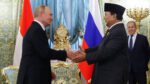
Russian President Vladimir Putin has signed a law that ratifies a free trade agreement between the Eurasian Economic Union (EAEU) and its member states Armenia, Belarus, Kazakhstan, Kyrgyzstan, and Russia on one side, and Indonesia.
The agreement, originally signed in St. Petersburg on December 21, 2025, ensures preferential terms for approximately 90% of commodities in all foreign trade.
It lays down the terms for further development and deepening of trade and economic cooperation between the EAEU and Indonesia in areas of mutual interest, including processing industries, agriculture, energy, information and telecommunication technologies, research and development, digital development, technical regulations, sanitary and phytosanitary measures, and customs regulations.
Article 2.2 of the agreement provides for the granting of the most favored regime for the sides’ goods with certain exceptions.
Russia’s bilateral trade with Indonesia rose 21.7% in 2025 to reach US$4.8 billion. Russia exports strategic commodities essential for Indonesian industries, including coal, fertilizers, and steel products, and imports Indonesia’s top-tier agricultural and estate exports, such as palm oil, coffee, coconut products, and cocoa. This growth can be expected to both continue and diversify.
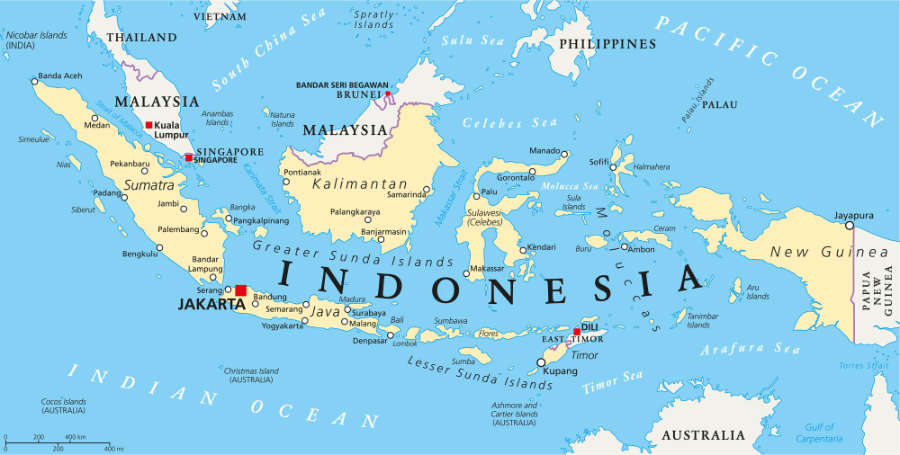
The agreement establishes a preferential trade regime for the vast majority of goods, covering more than 98% of bilateral trade between Indonesia and Russia, which significantly reduces trade costs and increases competitiveness. At the same time, the average duty on Russian products exported to Indonesia is reduced by more than half, from 8% to 3.2%. For the vast majority of products, the duty will be zero, including fertilizers, ferrous metals, aluminum, cod, beans, flour confectionery, coffee concentrates, coal, petroleum products, and medicines.
Indonesia is both a member of BRICS and one of the largest economies in Southeast Asia with a population approaching 300 million.
Approximately 90% of goods exchanged between the two parties will become tariff-free.
Indonesian exports of palm oil, textiles, coffee, and other agricultural and manufactured products entering EAEU markets with a 0% duty are a game-changer for exporters targeting consumption growth in Russia and Central Asia. EAEU goods that will receive preferential access to the Indonesian market include polymers, fertilizers, energy products, dump trucks, pipes, metals, and non-ferrous metal products, as well as a wide range of electrical and mechanical equipment.
Economically, this is not just about tariff elimination but about the removal of trade costs, improved logistics integration, and streamlined customs procedures, essential components for a robust regional market. This reflects longstanding economic research showing that trade facilitation and infrastructure integration are critical drivers of export growth and GDP gains for middle-income economies, highlighting the importance of coordinated logistics, customs harmonization, and transport efficiency. Trade cost reductions can significantly elevate competitiveness, stimulate export diversification, and generate investment inflows.
The Indonesia-EAEU trade pact could become a model for countries across South and Southeast Asia, the Middle East, and Africa. By reducing tariffs on key exports and imports, it paves the way for deeper economic integration with Russia and Eurasia. Agricultural and manufactured goods from Indonesia will gain wider market access, boosting regional supply chains. EAEU products, from energy to industrial equipment, will similarly reach Indonesian consumers more easily. This agreement signals a new wave of trade globalization, inspiring other nations to pursue similar partnerships. The EAEU-Indonesia deal could inspire economic centres like India, Pakistan, Thailand, Malaysia, the Gulf, African, and Middle Eastern countries to pursue similar agreements with the EAEU. Such partnerships would expand trade networks, strengthen regional integration, and boost global economic connectivity.
This appears to be precisely what is happening—the EAEU already has free trade agreements with China, Iran, Mongolia, Serbia, Singapore, the United Arab Emirates, and Vietnam and is negotiating agreements with Egypt, India, Thailand, Tunisia, and Uzbekistan.