
 Русский








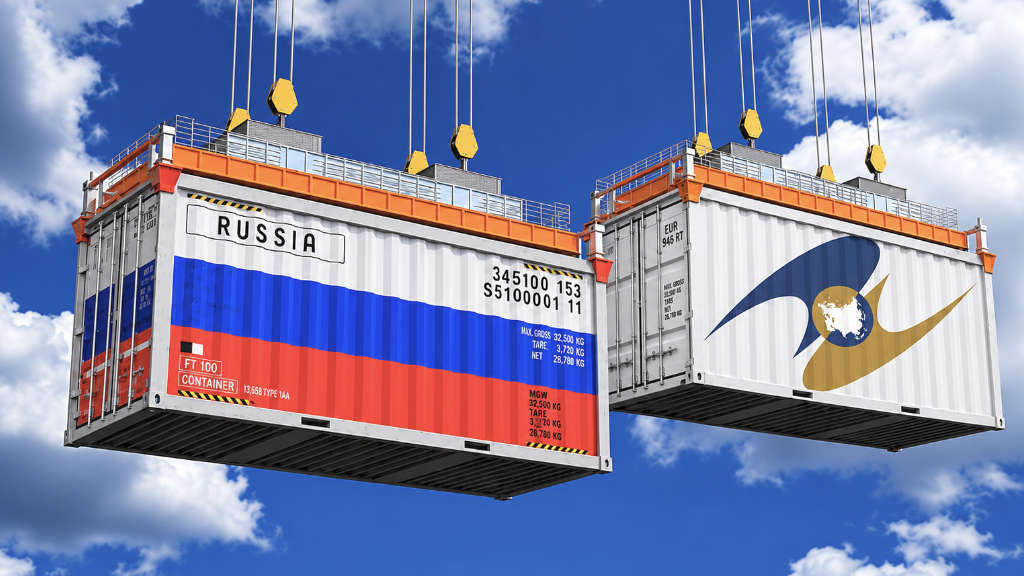

The 20th International Forum and Exhibition, Transport of Russia 2026, has concluded in Moscow with 68 signed agreements, more than 6,000 business participants, 2,750 companies and organisations, and a transport investment programme that allocated ₽4 trillion (US$49 billion) for 2026 as part of Russia’s Transport Strategy to 2050, which plans for ₽74 trillion (US$909 billion) in investment to modernise infrastructure, expand international transport corridors and strengthen Russia’s position in global logistics. .
The three-day event, held at Gostiny Dvor from 18-20 November as the central event of Transport Week (14-20 November), brought together transport operators, infrastructure developers, industrial manufacturers, regional authorities, financial institutions and technology companies. The agreements cover multimodal freight transportation, railway and river-port integration, electric vessel construction, regional road infrastructure, passenger fleet renewal, transport-interchange hubs, digital technologies and workforce development. Delegations represented 80 Russian regions, including the leadership of 34 federal subjects.
The longer-term ambition is set out in Russia’s proposed Transport Strategy to 2050, which includes the ₽74 trillion in investment, of which about ₽30 trillion is from non-budgetary sources. This strategy includes ₽5.6 trillion (US$69 billion) in transport development funding over the next three years, alongside targets to double container transportation by 2050, increase port capacity by 108 million tonnes by 2030 and raise labour productivity across the sector by 25% by 2050.
To put the port capacity expansion into perspective, increasing this by 108 million tonnes is the equivalent of building more than the current capacity of Shanghai, Singapore and Shenzhen ports.
The commercial significance lies in the concentration of infrastructure, manufacturing and logistics partnerships around a common objective: reducing transportation costs, improving freight capacity and strengthening connections between Russia’s industrial centres and export markets.
Multimodal Logistics and the 68 Agreement Package
The most commercially significant agreements concern the integration of railway, inland-waterway and maritime transportation. Russian Railways (RZD) and the Association of River Ports and Shipowners signed a cooperation agreement covering multimodal rail-river routes and supporting logistics infrastructure.
The arrangement builds on existing pilot operations involving Samara, Tolyatti and Kambarka, providing a framework for combining railway transportation with inland shipping. For freight operators, the commercial objective is to make better use of existing infrastructure, reduce dependence on individual transport modes and create additional routes for moving industrial and agricultural products. Rail-river integration can also provide an alternative to road transportation for suitable cargo categories, particularly where large-volume shipments require connections between production centres, inland ports and seaports.
Another strategically important partnership involves FESCO, and Russian Railways. Their comprehensive cooperation on transport planning targets more efficient wagon circulation, improved delivery reliability, higher route speeds and coordinated management of empty wagons throughout their operating lifecycle. This is particularly relevant to Russia’s eastward freight reorientation. Coordinated wagon allocation and transport planning can reduce idle rolling-stock time, improve the utilisation of railway capacity and make delivery schedules more predictable for exporters and industrial customers. The agreement therefore addresses an important commercial problem: increasing the efficiency of existing railway assets rather than relying exclusively on expensive new infrastructure.
Electric Vessels, KAMAZ & Regional Transport Contracts

A major manufacturing agreement brings together Mosgortrans, the State Transport Leasing Company (GTLK) and Moscow Shipyard for the construction of 14 electric vessels during 2027-2028. The vessels are intended for Moscow’s regular passenger and recreational river routes. The agreement connects three parts of the domestic industrial supply chain: urban transport operations, transport financing and shipbuilding. For Moscow Shipyard, the programme provides a defined production pipeline, while GTLK’s participation connects fleet procurement with leasing and financing arrangements. Mosgortrans will be the operational beneficiary. The project also supports the expansion of electric propulsion in urban water transportation, creating demand for vessels, electrical equipment, maintenance, charging infrastructure and associated technical services.
In the automotive sector, KAMAZ expanded cooperation with the Murmansk Region, with parallel arrangements involving the Orenburg Region. The partnerships concern passenger transportation, servicing infrastructure and fleet renewal, including NEFAZ buses. The significance is particularly relevant for northern territories, where reliable passenger transport and maintenance networks are essential for connecting settlements over substantial distances. For domestic manufacturers, regional fleet-renewal programmes provide opportunities to expand vehicle deliveries and after-sales services.
Regional infrastructure agreements also include a co-financing arrangement between the Tyumen Region and transport authorities for the Southern Bypass of Tyumen, extending more than 20 kilometres. The project is intended to reduce urban congestion and improve the region’s connection with the M-12 Vostok motorway corridor. Another agreement involves the Ministry of Transport of the Donetsk People’s Republic and the Federal State Unitary Enterprise Railways of Novorossiya. It provides for the development of a unified network of transport-interchange hubs connecting suburban rail services, buses and other public transport.
Additional agreements involving Roszheldor and subordinate organisations cover cargo security, materials testing, professional training, digital education and unmanned aviation applications for railway operations. Aeroflot and Krasnodar Airport, operated by Aerodinamika, are also associated with plans to expand interregional connections through Krasnodar as a transfer hub following the opening of its new terminal in 2027. Together, these examples illustrate the principal composition of the 68-agreement package: logistics efficiency, regional infrastructure, domestic industrial production, passenger transport and technology deployment.
Transport Strategy 2050: A US$909 Billion Development Horizon

The agreements are connected to a much larger investment programme: the updated Transport Strategy of the Russian Federation extending to 2050. Its central objective is the creation of an integrated transport network combining railways, motorways, seaports, inland waterways, airports, digital logistics platforms and autonomous transportation systems.
The proposed investment requirement approaches ₽74 trillion (US$909 billion), with approximately 40% expected from non-budgetary sources. More than ₽5.5 trillion is earmarked for transport-complex development over the next three years under the relevant state programme.
The strategy establishes several measurable industrial and commercial objectives. Container transportation is targeted to double by 2050, while domestic software is expected to account for 90-95% of transport-sector software by 2036. Labour productivity is targeted to increase by 25% by 2050. Port infrastructure is another major priority. The strategy envisages an additional 108 million tonnes of port capacity by 2030.
This is particularly important for export-oriented businesses seeking more efficient access to Asian, Middle Eastern and other international markets. Passenger connectivity is also included in the long-term programme. Average journeys from smaller settlements to regional centres, currently around four hours, are intended to fall to no more than 2-2.5 hours by 2036 and approximately two hours by 2050.
The proposed strategy rests on four principal priorities: transport sovereignty and security, data-driven management, technological development, and passenger-oriented services. Multimodal integration and the development of international corridors provide the commercial framework connecting these objectives. Importantly, the updated strategy was still being finalised in November 2026. Its projected investment figures and targets should therefore be understood as strategic planning parameters rather than completed investments or already achieved results.
Transport Industry Performance: A US$184 Billion GDP Contribution

The sector’s economic performance provides the financial context for the agreements. At the 19 November plenary session, titled Transport of Russia: The Country’s Growth Points, Prime Minister Mikhail Mishustin told that the transport complex was expected to contribute approximately ₽15 trillion (US$184 billion) to Russian GDP in 2026, nearly ₽2 trillion (US$24.5 billion) more than in 2025. Total sector investment was projected to approach ₽4 trillion (US$50 billion). Approximately ₽3.5 trillion (US$43 billion) had been allocated to road infrastructure during the year, supporting repairs to more than 20,000 kilometres of regional and local roads and around 6,000 kilometres of federal motorways.
Passenger transportation reached approximately 11.5 billion journeys during January–September 2026, with positive developments across railways, waterways and bus services. International freight geography is also changing. Eastbound cargo transportation increased by 10% during the first nine months, reflecting the growing importance of Asian destinations in Russian logistics. Seaport capacity increased by 13 million tonnes during the same period through terminal development in the Murmansk Region and Khabarovsk Territory. This expansion strengthens connections between northern and Far Eastern industrial regions and maritime export routes.
Road infrastructure development remains another substantial source of industrial demand. Almost 20 bypass roads have been completed over the preceding three years. Additional projects include bypasses around Kansk in Krasnoyarsk Territory, Spassk in Penza Region and Sim in Chelyabinsk Region, as well as several settlements in Sverdlovsk Region. The M-12 Vostok motorway represents a particularly important component of the eastward infrastructure programme. Following the opening of sections reaching Yekaterinburg, the next extension towards Tyumen is scheduled for December 2026. The motorway is expected to become part of the wider transport network extending across Siberia and the Far East.
Moscow-St Petersburg High-Speed Railway: A US$26.5 Billion Project

One of the most important infrastructure developments highlighted around Transport Week is the Moscow-St Petersburg high-speed railway (HSR). The planned 679-kilometre railway will connect Moscow and St Petersburg through the Moscow, Tver, Novgorod and Leningrad regions. Trains are designed to reach speeds of up to 400 kilometres per hour, reducing the journey between the two cities to approximately 2 hours and 15 minutes. The project’s estimated cost is ₽2.165 trillion (US$26.5 billion) including ₽1.755 trillion for infrastructure and ₽410 billion for high-speed rolling stock. The passenger traffic forecast is at least 23 million people annually, with 43 trains planned for delivery by 2030.
The financial and industrial structure is significant. VSM Two Capitals is the concessionaire, Russian Railways is responsible for railway development, and the project involves Russian financial institutions, including Sberbank and VTB. In October 2026, VTB announced that its participation within a syndicate of Russian banks would exceed ₽400 billion (US$5 billion) for infrastructure construction and high-speed rolling-stock development. This represents an important financing commitment for domestic railway engineering. The industrial programme also involves Ural Locomotives, part of Sinara Transport Machines, and the Engineering Center of Railway Transport. The objective is to develop domestically produced high-speed trains and associated technologies, including the KS-400 contact network and specialised track systems.
By November, reinforced-concrete track-slab production had begun, while the first three electric trains were being assembled in Sverdlovsk Region. Trial operations were planned for 2027. The HSR is not a foreign agreement signed at Transport of Russia 2026. It is a separate national infrastructure and industrial programme whose progress illustrates the scale of investment and manufacturing activity surrounding the forum. Its potential economic impact extends beyond passenger transportation. Faster connections between Moscow and St Petersburg could strengthen business travel, tourism, regional labour mobility and commercial connections between the country’s two largest metropolitan economies.
International Passenger Rail: Russia, China and Mongolia

A separate international development provides a more direct example of cross-border railway cooperation. Russian Railways and China Railway agreed to organise international passenger train No. 3/4 between Beijing and Irkutsk through Ulaanbaatar. The first departure from Beijing is scheduled for 25 November 2026, with the return service from Irkutsk beginning on 28 November.
The route covers approximately 2,600 kilometres and takes around 55 hours. The service is scheduled to operate weekly in both directions. The railway will stop at several intermediate stations, including Erlian and Zamyn-Ude on the China-Mongolia route, and Naushki, Ulan-Ude and Slyudyanka in Russia.
The passenger service will use Chinese-manufactured compartment coaches, a dining car and power-generation facilities. Tickets can be purchased through the respective national railway ticketing systems.
For Russia, the commercial significance includes tourism, passenger mobility and stronger connections with Chinese and Mongolian destinations. Irkutsk, as a major gateway to Lake Baikal, gains a more direct international railway connection. The service is also relevant to cross-border business contacts, tourism operators, hospitality companies and regional service providers. However, this railway agreement should be distinguished from the 68 documents signed at the November transport forum. It is a separate trilateral transport development, rather than one of the forum’s reported 68 agreements.
Autonomous Transport, Artificial Intelligence & Digital Logistics

Unmanned transportation emerged as one of the most important technological investment areas discussed during Transport Week. Approximately 100-120 highly automated trucks are already operating on Russian public roads during 2026. The projected fleet is expected to reach approximately 1,000 vehicles by the end of 2028, more than 4,000 by 2030 and approximately 56,000 by 2035. At the latter level, autonomous trucks could account for nearly 20% of road freight transportation. Deputy Prime Minister Andrei Nikitin has also outlined a longer-term ambition for up to 50% of Russian transport to become autonomous by 2050. The programme extends beyond road freight. Autonomous river and maritime vessels, trains, trams and unmanned aircraft are also being tested.
In Yakutia, drones deliver food and medicines across the Lena River when ice crossings are unavailable. In Nizhny Novgorod Region, urban drone logistics operations have completed more than 2,500 customer deliveries. Medical supplies have also been transported by drones during flooding in Ryazan Region and on Sakhalin. The digitalisation programme includes the ERA-GLONASS information system, artificial intelligence for traffic management, automated fault detection, electronic transport documents and digital twins of transport infrastructure. At the exhibition, an airport digital twin demonstrated how digital modelling could support infrastructure design, aircraft turnaround management and lower operating costs. Electronic shipping documentation is already being used for tens of millions of transactions annually. These developments create commercial opportunities for Russian software developers, electronics manufacturers, navigation technology providers, engineering companies and transport operators.
Aviation, Ports & Inland Waterways: Additional Infrastructure Results
Aviation infrastructure represents another major component of the investment programme. At least 75 airfields are scheduled for modernisation over the next four years. New runways have entered operation at Makhachkala and Grozny, while passenger terminals opened during 2026 in Blagoveshchensk, Pskov, Barnaul, Orenburg and Kazan. 30 new airport terminals have been constructed across Russia over the past five years.
The Aeroflot-United Aircraft Corporation contract for 90 MC-21 aircraft, highlighted by Andrei Nikitin during the forum’s business programme, also demonstrates the connection between transport demand and domestic aircraft manufacturing. In inland shipping, the first phase of the Bagayevsky hydro-engineering complex on the Don River has entered operation. Completion of the wider project is expected to almost triple the waterway’s capacity. The second Severomuysky Tunnel excavation on the Baikal–Amur Mainline has also begun. Its completion will strengthen the Eastern Operating Domain and improve railway throughput capacity.
Meanwhile, the Northern Sea Route is gaining importance as an export corridor. Figures included in the November industry reporting placed 2026 cargo volumes above 40 million tonnes by 17 November, exceeding previous annual records. January-September shipments reached 31.7 million tonnes, up 18% from 26.9 million tonnes during the corresponding period of 2025. Transit cargo, excluding shipments originating or terminating in the Arctic, also increased. By the end of September, 104 confirmed transit voyages had carried an estimated 3.7 million tonnes. These developments reinforce the commercial importance of Murmansk, Arctic ports, the Far East and Siberian industrial centres. Companies including NOVATEK, through Yamal LNG and Arctic LNG 2, remain important participants in the wider Arctic export economy.
International Significance and the Commercial Results

The international significance of Transport Week 2026 should be assessed through the distinction between signed agreements and the wider strategic partnerships discussed at the event. The 68 agreements principally concern Russian companies, regional administrations, infrastructure operators and industrial organisations. The most visible international development connected to the wider November transport agenda is the Beijing-Ulaanbaatar-Irkutsk passenger railway, but it is a separate agreement between national railway operators.
Similarly, the fisheries forum produced a distinct international cooperation package, including the ASRF-Liaoyu Group memorandum and 18 signed documents overall. The two events demonstrate complementary aspects of Russia’s commercial engagement: transport infrastructure creates the capacity to move goods, while fisheries, manufacturing and export partnerships generate demand for logistics services.
For Russian businesses, the implications extend across several industries. Railway operators gain opportunities to improve wagon utilisation and freight handling; shipyards receive new vessel orders; automotive manufacturers gain regional fleet-renewal markets; technology companies gain demand for digital platforms and autonomous systems; and port operators benefit from expanding export-oriented cargo flows. The participation of China, Mongolia, Kyrgyzstan, Indonesia and other international partners in these separate initiatives also demonstrates the importance of Asian and emerging-market connections to Russia’s longer-term trade geography.
Summary: The Transport of Russia Forum 2026: Benefits for Eurasia, Asia, the Middle East and the Global South
The commercial outcomes of the 20th International Forum and Exhibition “Transport of Russia”, have significance extending beyond the modernisation of Russia’s domestic transport network: they form part of a wider effort to strengthen the country’s position in Eurasian trade, connect production centres with international markets and expand transport links between Europe, Asia, the Middle East and the Global South.
The forum brought together the Russian Railways, Association of River Ports and Shipowners cooperation on multimodal rail-and-river routes, the FESCO-Russian Railways arrangement to improve freight planning and wagon utilisation, and the programme involving Mosgortrans, the State Transport Leasing Company and Moscow Shipyard to build 14 electric vessels in 2027-2028, demonstrate how investment is increasingly directed towards integrating different transport modes, improving cargo handling and reducing delays across logistics chains. Agreements on KAMAZ passenger vehicles and fleet renewal, the Southern Bypass of Tyumen, transport interchange hubs in the Donetsk People’s Republic, railway security and digital technologies, and Aeroflot’s plans to expand interregional connections through Krasnodar Airport add regional infrastructure, industrial production and passenger mobility to this business agenda.
Although the 68 signed documents were predominantly domestic rather than major international treaties, their economic importance for foreign trade lies in the additional capacity and reliability they can create for cross-border transport. Russia’s transport complex is expected to contribute approximately ₽15 trillion (US$184 billion) to GDP in 2026, nearly ₽2 trillion (US$24.5 billion) more than in 2025, while sector investment is approaching ₽4 trillion (US$50 billion).
Eastbound freight volumes increased by 10% in January-September, reflecting the growing importance of Asian markets in Russia’s trade geography. The expansion of port capacity by 13 million tonnes through terminals in Murmansk Region and Khabarovsk Territory, together with the Northern Sea Route’s record cargo throughput of more than 40 million tonnes by 17 November, illustrates the growing role of northern and eastern logistics infrastructure in connecting Russian exporters with Asian destinations.
For the Eurasian Economic Union (EAEU), comprising Russia, Belarus, Kazakhstan, Armenia and Kyrgyzstan, more efficient Russian railways, roads, ports and multimodal terminals can improve access to major markets, facilitate the movement of goods through interconnected transport corridors and strengthen links between the Union’s industrial and agricultural producers and external customers.
This same infrastructure can support trade with China and Mongolia, improve the movement of goods towards Central Asia, and provide additional connections to the Persian Gulf, India and other South Asian markets through the International North–South Transport Corridor (INSTC), which links Russia with the Caspian region, Iran and the Indian Ocean through a combination of rail, road and maritime routes.
The Eurasian Development Bank’s 2026 assessment identifies 402 ongoing or planned transport infrastructure projects across 13 Eurasian countries, with a combined investment volume of US$345 billion as of 1 July 2026 and a further US$100 billion in the project pipeline; Russia accounts for US$225.2 billion, or 65.3%, of the identified investment.
Railway projects represent 42.8% of the total project portfolio, with nearly US$150 billion in railway investment, underlining the importance of rail connectivity to the region’s emerging trade architecture. The EDB also identifies the Northern Eurasian Corridor as its most capital-intensive corridor, with US$84.8 billion in projects, while development of the INSTC is estimated at US$52.8 billion in the assessment.
These figures provide a broader regional context for the Russian forum: the agreements signed in Moscow are largely domestic, but the infrastructure, fleet renewal, digital logistics and multimodal integration they support can contribute to the wider network through which EAEU, Asian and Middle Eastern businesses move goods.
For India, Iran and Gulf markets, more effective North-South connections could offer additional routes for trade in energy, industrial products, agricultural commodities and consumer goods; for China and other East Asian economies, stronger eastern rail and port capacity can support supply chains and access to Russian resources and markets.
The Northern Sea Route adds a further dimension: cargo volumes reached more than 40 million tonnes in November 2026, while transit cargo from non-Arctic origins and destinations was approaching 6 million tonnes in early November, with growing interest from Chinese carriers and discussions involving partners in India and South Korea.
These developments could create new opportunities for international shipping, port services, logistics operators and cargo owners, although the scale of future gains will depend on regular shipping schedules, ice-class capacity, insurance, infrastructure and commercially reliable cargo volumes.
Russia also stands to benefit directly: more competitive transport corridors can reduce export logistics costs, increase the utilisation of railways and ports, generate demand for domestically manufactured locomotives, buses, trucks, vessels and digital systems, and create additional revenue for freight operators, infrastructure companies and regional service providers.
For international partners, the practical significance will therefore be determined not simply by the number of agreements signed at the forum, but by whether the resulting infrastructure and services deliver shorter transit times, predictable schedules, competitive tariffs and interoperable customs and digital procedures. The EDB has identified more than 40 administrative and operational barriers to the effective development of the INSTC, highlighting the need for coordinated border procedures, harmonised documentation, payment and insurance mechanisms and closer cooperation among corridor countries. In this respect, the forum’s emphasis on multimodal integration, freight coordination, regional connectivity and transport technology is commercially relevant to the wider Eurasian network: it provides domestic building blocks for Russia’s participation in international supply chains while offering neighbouring economies and trading partners the prospect of more diversified routes to markets across Eurasia, South Asia and the Middle East.
This article was written by I.K. Hasan, a South Asia-based independent researcher, columnist, and freelance journalist. He can be reached at info@russiaspivottoasia.com