 Русский





Russia has been looking to expand and develop its trade with African nations, sometimes with mixed results. Progress has tended to be made with Russian exports of energy products, fertilizers, and agriculture, yet offset by logistics difficulties, a lack of trade supporting mechanisms, a lack of investment, the threat of secondary sanctions on African exporters, and security issues concerning Black Sea shipping. In this article we examine Russia’s trade with Togo.
Russia and Togo’s merchandise trade reached US$103.71 million in 2024 before declining to US$35.65 million in 2025, with fertilizers and mineral fuels accounting for much of the fluctuation. UN Comtrade figures put Togo’s imports from Russia at US$15.74 million in 2023, rising to US$97.11 million in 2024 before declining to US$29.3 million in 2025. The 2024 increase was driven principally by fertilizers. Russian fertilizer exports to Togo reached US$75.63 million that year, accompanied by US$14.62 million in mineral fuels, oils, and related products. Other categories included arms and ammunition worth US$5.98 million, fish and aquatic products worth approximately US$590,000, and pharmaceuticals worth US$100,000. In 2025, fertilizer imports from Russia fell to US$23.82 million, while mineral fuels and related products declined to US$3.55 million. These two categories continued to dominate the import relationship, but their lower values explain much of the contraction from the previous year. Togo’s exports to Russia were comparatively small and stable, amounting to US$6.60 million in 2024 and US$6.35 million in 2025. Salt, sulfur, earth, stone, plaster, lime and cement accounted for US$5.93 million of Togolese exports in 2025. Cocoa and cocoa preparations contributed a further US$417,553.
Consequently, Russia’s bilateral merchandise trade surplus declined from approximately US$90.51 million in 2024 to US$22.96 million in 2025, a reduction of 74.6%, or US$67.55 million, largely reflecting lower Russian fertilizer and fuel shipments. The broader Togolese import market also places the relationship in perspective. Togo imported approximately US$3.36 billion in merchandise in 2025. China supplied US$893.64 million, France US$260.01 million, and India US$190.14 million. Russia remains a secondary supplier in the overall market, despite its capacity to become a significant source of particular agricultural inputs and industrial products.
Domestic fertilizer production offers a route towards capturing more value. NutriSource operates a blending unit rated at 150 tonnes per hour, while FertiStream’s automated plant at the Adétikopé Industrial Platform, inaugurated in 2025, has an annual capacity of up to 200,000 tonnes of NPK fertilizer formulations. Togo’s fertilizer imports declined from 114,145 tonnes in 2022 to 85,335 tonnes in 2024. The figures indicate that any proposed production investment would need to account for domestic demand, existing capacity, and export opportunities rather than assume that all new output would be absorbed locally.
The First Russia-Togo Intergovernmental Commission: Agreements and Business Participation
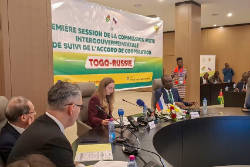
Russia and Togo are expanding their economic, technical, and diplomatic engagement, with the first session of their Joint Intergovernmental Commission in Lomé from 29 September to 1 October 2026 marking the most substantial recent step towards a structured bilateral economic program. The discussions covered trade, mining, metallurgy, energy, agriculture, transport, digital technology, scientific research, education, and cultural cooperation. The principal economic objective is to move beyond a relationship dominated by Russian fertilizer and fuel exports towards a wider network of industrial partnerships, infrastructure projects, and business exchanges.
The commission was co-chaired by Badanam Patoki, Togo’s Minister of Economy and Strategic Monitoring, and Sergey Tsivilev, Russia’s Minister of Energy. Russian Deputy Chair Angelina Zuikova, representing the Ministry of Economic Development, participated in the expert consultations. Ahodo-Abalo Tchamdja, Director General at Togo’s Ministry of Economy and Strategic Monitoring, outlined Lomé’s expectation that technical discussions should produce concrete proposals and practical implementation roadmaps. Russian Ambassador to Togo Igor Evdokimov and Russian Trade Representative Maxim Petrov also participated.
The meeting opened on 29 September, with technical consultations and business meetings during the first two days. Ministerial negotiations and the concluding plenary took place on 1 October at Lomé’s Palais des Congrès. The commission operated alongside a Russian business mission led by the Ministry of Transport, whose representatives visited Togolese ministries and agencies, the Autonomous Port of Lomé, an industrial zone, and the international airport. Meetings between business representatives were also planned at the Togo Chamber of Commerce and Industry.
The two governments concluded the session with a formal commission protocol and memorandums of understanding covering cultural heritage and institutional research cooperation. One memorandum linked the Institute of the History of Material Culture of the Russian Academy of Sciences, represented by its director Natalia Solovieva, with Togo’s National Commission for Cultural Heritage, with the participation of Culture Minister Isaac Tchiakpé. A related memorandum connected the Russian Academy of Sciences’ Institute for African Studies with the University of Lomé. The commission’s second session is scheduled for Russia in 2028. Between now and then, the main test will be whether the governments convert their sectoral priorities into signed commercial contracts, financed projects, and measurable increases in trade.
Outstanding Agreements, Business Participation, and Investment Prospects

Despite the broad agenda, the first commission concluded with a limited number of formal outcomes. The signed commission protocol established a framework for subsequent work, while the memorandums created channels for cultural heritage and academic cooperation. Several proposed legal instruments remain under negotiation. These cover investment promotion and protection, customs cooperation, trade facilitation, education, research, culture, employment, information technology, energy, and transportation. Their finalization will be important for businesses considering longer-term operations in either market.
Investment protection could help clarify the legal treatment of cross-border projects. Customs cooperation could reduce administrative friction, while trade facilitation could improve the movement of goods. Agreements covering transport and energy would need to establish operating responsibilities, regulatory requirements, and commercial conditions before major infrastructure projects could proceed. The Togolese and Russian chambers of commerce have been assigned a role in connecting enterprises and preparing investment proposals. This business-matching function could help identify opportunities in fertilizer processing, geological services, industrial machinery, port logistics, power generation, and agricultural technology. Togo’s broader trade position also creates an incentive to diversify. The country recorded a merchandise trade deficit of Fr177 billion (US$304 million) in Q1 2026. Projects that increase local processing, improve export capacity, or replace some imported finished products with domestic production could contribute to a more diversified economic structure. Their actual effect would depend on investment costs, productivity, domestic demand, and export competitiveness.
Russia-Togo Economic Cooperation: From Commodity Shipments to Industrial Production
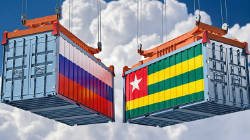
Mining and metallurgy provide one of the clearest opportunities to deepen the relationship. Togo possesses substantial phosphate resources, but the country’s economic return depends partly on how much processing can be undertaken domestically instead of exporting raw material. State-owned Société Nouvelle des Phosphates du Togo (SNPT) produced 1.54 million tonnes of rock phosphate in 2022, 1.52 million tonnes in 2023, and 1.49 million tonnes in 2024. Its processing facility at Kpémé has a stated nameplate capacity of 4.8 million tonnes, substantially above recent annual production. The available figures do not establish that the entire difference could be filled economically; processing requirements, resource characteristics, equipment, and market demand would all affect feasible output. Togo’s remaining carbonate phosphate resources are estimated at approximately two billion tonnes of crude material. Their development presents technical challenges because they require more complex processing than the historical soft-phosphate layer, which is approaching depletion. Existing phosphate output is exported principally to India, Bulgaria, Australia, and New Zealand.
The Russian-Togolese discussions examined possible fertilizer blending or production facilities using Togolese phosphate alongside Russian feedstock, technical expertise, and processing technology. Geological surveying, modern extraction methods, and mineral-processing cooperation were also identified as priorities. The commercial logic is straightforward: Russia already supplies the principal product category in bilateral trade, while Togo has a domestic phosphate base. Combining the two could create opportunities for local blending, improved fertilizer availability, and exports to neighboring markets. It could also generate demand for engineering services, industrial machinery, storage, and transport. Nevertheless, the October commission did not announce a named joint-venture company, mining concession, exploration license, investment amount, or financing package. The Togolese and Russian chambers of commerce were tasked with identifying projects and connecting potential partners. Local fertilizer production remains a proposal requiring technical and financial assessment, not an operating Russian-Togolese industrial venture.
Lomé Port and the Proposed Russia-West Africa Logistics Corridor
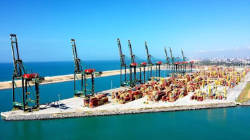
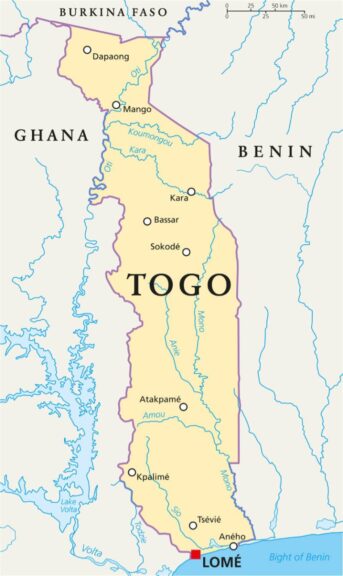
Transport connectivity is the second major pillar of the emerging partnership. Togo’s Autonomous Port of Lomé offers Russia an established maritime gateway with connections to inland markets in Mali, Burkina Faso, and Niger. The port’s existing capacity makes it commercially relevant even before any new Russia-linked railway or energy infrastructure is built. Container throughput reached 2.06 million twenty-foot equivalent units (TEUs) in 2024, up 8% from 1.91 million TEUs in 2023. Lomé ranked 92nd in the Lloyd’s List global port ranking cited in the available material, making it the only sub-Saharan African port in the top 100 in that ranking. Total cargo handled reached 30.64 million tonnes in 2024, including approximately 20.2 million tonnes of transshipment cargo. The port’s channel depth of 18.6 meters allows it to receive very large container vessels, including ships in the 19,000-24,000 TEU class. Lomé Container Terminal has plans to increase capacity to between 2.5 million and 2.7 million TEUs by 2027.
Reported investment estimates for terminal expansion range from US$135 million to more than US$560 million, covering infrastructure improvements such as quay reinforcement and additional ship-to-shore cranes. These figures refer to the broader terminal expansion, not to a dedicated Russian investment commitment. In March 2026, Russia’s ambassador to Togo and Benin reportedly outlined Moscow’s interest in using Lomé as a logistics hub for imports serving Togo and the landlocked Sahel countries. That was further underlined by the visit of Russia’s Russian Defence Minister Andrei Belousov, who visited Togo that month as part of ongoing military cooperation between the two countries. The longer-term concept included railway infrastructure and an oil pipeline connecting the port with the Togolese interior and the Burkina Faso border.
At the September-October 2026 commission, the two sides discussed a multimodal transport route linking Russia and West Africa through maritime shipping, rail connectivity, digital freight management, and cargo-tracking systems. Russian transport and logistics companies participating in the accompanying business mission visited the port, industrial facilities, and the international airport to examine potential areas of cooperation. The route’s commercial rationale is to integrate Russian cargo into an existing transshipment network rather than begin with an entirely new port development. A functioning corridor could support fertilizer distribution, industrial equipment deliveries, agricultural trade, and the movement of other goods into inland markets.
However, the proposed railway, pipeline, and digital freight systems remain at the planning and negotiation stage. The available information does not identify a final route alignment, a construction contractor, an agreed financing structure, a timetable for commissioning or a confirmed number of participating companies. The visit program establishes that Russian representatives examined relevant facilities; it does not establish that infrastructure contracts were awarded. The commercial prospects will depend on transit agreements, freight volumes, operating costs, and the ability to secure reliable overland connections. Togo must also preserve workable relations with neighbouring states and regional institutions. The country’s continued membership in the Economic Community of West African States (ECOWAS) gives its corridor plans a regional diplomatic dimension, particularly as Mali, Burkina Faso, and Niger pursue their separate arrangements through the Alliance of Sahel States.
Energy Cooperation: LNG, Gas Turbines and Electricity Infrastructure
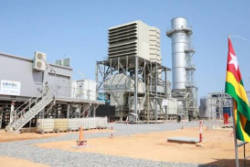
Energy cooperation has emerged as another substantial component of the bilateral agenda. The two governments discussed liquefied natural gas (LNG), hydroelectric power, decentralized electricity generation, water supply, sanitation, and hydrocarbon management. One proposal is a Lomé-Sahel energy corridor based on LNG, developed in consultation with members of the Alliance of Sahel States. The concept would use Togo’s coastal position to support energy distribution into inland markets, potentially combining maritime LNG deliveries with onward pipeline or road transportation.
The proposal intersects with Togo’s own PRIME-GAS initiative. Plans associated with that initiative contemplate LNG reception and storage at Lomé, a domestic gas network, a pipeline connection to the Adétikopé Industrial Platform and a potential 500-megawatt gas-fired power plant. The country is also expanding petroleum-storage infrastructure at the Lomé Petroleum Complex. A West African Development Bank financing facility of FR37 billion (US$63.4 million) is associated with an additional 170,000 cubic meters of storage capacity, increasing the existing 244,000 cubic meters. These national infrastructure plans provide a potential foundation for energy cooperation, but they should not be confused with Russian-financed projects.
A further development came on 6 October 2026, when Russia’s United Engine Corporation (UEC) announced proposals to supply gas-turbine power plants to Togo and Niger to help address electricity shortages and modernize power infrastructure. The proposals were discussed in connection with the first Russian-Togolese intergovernmental commission, co-chaired by Energy Minister Tsivilev. The announcement extends the agenda beyond fuel trading towards power-generation equipment and engineering services. If implemented, gas-turbine supplies could create follow-on opportunities in maintenance, spare parts, technical training, and plant operation. The commercial value would depend on plant capacity, fuel availability, financing terms, and the ability of the electricity system to absorb additional generation.
No binding LNG offtake agreement, gas-turbine purchase contract, or construction schedule was announced in the commission’s final discussions. Technical working groups are expected to develop feasibility studies and regulatory proposals ahead of the 2028 review. The key commercial question is whether the proposed energy corridor can be supported by sufficient demand and a financially viable supply chain. Togo’s domestic gas plans provide one possible demand base, while inland markets could offer additional customers. Yet cross-border infrastructure would require agreements on tariffs, transit, ownership, supply reliability, and cost recovery.
Agriculture, Digital Technology, and Scientific Cooperation
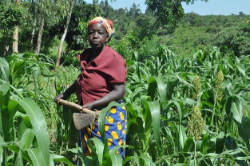
Agricultural cooperation is intended to broaden trade beyond fertilizers and fuels. The commission discussed agricultural products, foodstuffs, mechanization, irrigation, livestock production, research, and agro-industrial hubs. These priorities could connect Russian agricultural machinery and inputs with Togolese production and processing requirements. The fertilizer component is especially relevant to the agricultural agenda. Local blending facilities could combine imported inputs with Togolese phosphate, potentially supplying domestic farmers and regional customers. Mechanization and irrigation could complement that investment, while agro-industrial hubs could provide storage, processing, and distribution capacity.
The practical challenge is to establish projects with viable markets, suitable infrastructure, and reliable financing. No named agricultural joint venture, equipment order, or investment value was announced at the commission. Digital cooperation covers telecommunications, satellite communications, cybersecurity, digital healthcare, and the digitalization of transport infrastructure. Freight management and cargo tracking are particularly relevant to the proposed logistics corridor because they could improve cargo visibility, reduce administrative delays, and help coordinate maritime and inland transport.
Scientific and educational links provide a separate institutional foundation. Russia expressed its willingness to continue scholarship programs for Togolese students and indicated that the number of awards could increase. University partnerships, research programs, and technical training were also identified as a priority. The memorandum linking the Institute for African Studies of the Russian Academy of Sciences with the University of Lomé provides an institutional channel for academic exchanges. The cultural heritage memorandum between the Russian Academy of Sciences’ Institute of the History of Material Culture and Togo’s National Commission for Cultural Heritage adds cooperation in archaeology, preservation, research, and specialist training. These agreements do not have the same immediate commercial character as a fertilizer or power-generation contract. Their longer-term value lies in developing technical skills, institutional relationships, and research capacity that could support industrial and infrastructure projects.
Bilateral Trade: Market Diversification and Commercial Challenges
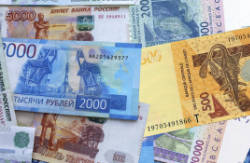
The commission’s trade-diversification agenda targets agricultural commodities, food products, fertilizers, industrial equipment, and energy-related goods. A proposed customs cooperation agreement could improve procedures at Lomé and at border crossings serving inland markets. However, no preferential trade agreement or new tariff schedule was concluded during the October session. The immediate commercial challenge is therefore to create a more consistent trading relationship. The 2024 surge demonstrates the scale that fertilizer shipments can achieve, while the 2025 contraction shows why a durable partnership requires additional products, local processing and two-way trade.
The November 2025 Putin-Gnassingbé Meeting Established the Political Foundation
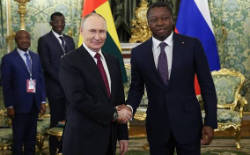
The latest economic negotiations build on a broader diplomatic rapprochement. On 19 November 2025, Togo’s Prime Minister Faure Gnassingbe travelled to Moscow for a meeting with Russian President Vladimir Putin, their first direct meeting since 2019. They discussed diplomatic, commercial, economic, human-capital, and security cooperation, with particular attention to instability in West Africa and the Sahel. Putin announced plans to deepen bilateral relations through the opening of embassies in both capitals and the development of intergovernmental commission work. Gnassingbé highlighted Russia’s potential contribution to efforts against insecurity and terrorism affecting Sahel countries. The meeting followed Russian moves in 2025 to advance a military cooperation agreement with Togo covering defense relations, military training, and the exchange of security information. In April 2026, Tsivilev was appointed co-chair of the Russian side of the intergovernmental commission on trade, economic, scientific, and technical cooperation.
The diplomatic agenda therefore encompasses several distinct tracks: economic relations, technical cooperation, education, and security. Togo has continued to present its international engagement as diversification rather than an exclusive alignment with Moscow. Its commercial and diplomatic relationships with Western partners remain important, while its geographical position creates opportunities to work with neighboring Sahel states. For Russia, the commission provides a formal mechanism for coordinating economic proposals across several ministries rather than relying solely on individual commercial transactions. For Togo, the objective is to attract technology, diversify suppliers, and increase the domestic economic value generated by its mineral resources, port facilities and industrial infrastructure.
The Mikhail Britnev Shipment and the Security Dimension
The transport agenda has developed alongside a separate security relationship. On 9 July 2026, the Russian-flagged cargo vessel Mikhail Britnev reportedly docked at the Autonomous Port of Lomé. Local reporting states that military vehicles were unloaded for onward movement to Mali. The vessel was tracked departing Baltiysk on 12 June, and images from 16 June reportedly showed what appeared to be armored personnel carriers being loaded. The reporting also described the vessel as subject to international sanctions designations. These details are relevant to the commercial risk assessment, although the precise cargo, ownership arrangements, and legal implications of individual transactions require verification against authoritative shipping and sanctions information. The arrival attracted attention because Russian military shipments bound for Mali had previously been associated with Conakry in Guinea. Lomé’s appearance as an additional entry point potentially provides an alternative maritime route for cargo destined for inland Sahel markets. Togo’s Foreign Minister Robert Dussey has acknowledged the presence of Russian military instructors in the country, according to the reporting included in the available material. This establishes a wider security context but does not independently establish a permanent Russian military base, standing military transit rights, or a formal arrangement placing the port under Russian control.
The distinction matters for businesses. A commercial logistics route and a military supply route may use some of the same infrastructure, but they involve different counterparties, contracts, insurance requirements, and compliance obligations. Port operators, freight forwarders, banks, and insurers would need to assess the precise cargo and entities involved rather than assume that every Russian-linked transaction presents the same legal risk. For Togo, the policy question is how to obtain commercial benefits from international logistics while retaining control over port access, transit permissions, and relations with its other partners. For Russia, dependable access to a Gulf of Guinea port could improve connectivity with inland markets. Whether this develops into a recurring military logistics arrangement remains dependent on further evidence and subsequent operational decisions.
Outlook: The Test Will Be Implemented Before 2028
The Russia-Togo relationship has moved from high-level diplomatic engagement towards a more structured economic program. The November 2025 Putin-Gnassingbé meeting established the political framework; the September-October 2026 commission mapped priorities across multiple sectors; and the 6 October announcement on gas-turbine proposals added a further energy dimension. Three economic opportunities stand out. First, the existing fertilizer trade could provide the foundation for local blending and higher-value phosphate processing. Second, Lomé’s established port infrastructure could support expanded maritime trade and inland distribution, provided the proposed transport arrangements become commercially viable. Third, energy cooperation could link LNG supply, power-generation equipment and domestic infrastructure with electricity demand in Togo and neighbouring markets.
The figures also show why implementation cannot be assumed. Russian exports to Togo fell from US$97.11 million in 2024 to US$29.3 million in 2025, while Togolese exports remained near US$6.5 million. The trade deficit narrowed substantially, but this was principally a result of lower Russian shipments rather than a major transformation of the export relationship. The commission’s next session in Russia in 2028 will provide a formal opportunity to assess progress. Before then, the most meaningful indicators will be the conclusion of outstanding agreements, new bilateral trade figures, identifiable joint ventures, financing commitments, fertilizer-processing investments, energy contracts and concrete decisions on transport infrastructure.
For Russian businesses, Togo offers a potential entry point into a wider West African market through port logistics, agricultural inputs, industrial technology and energy services. For Togolese companies and public authorities, Russian cooperation offers potential access to suppliers, engineering capabilities and technical partnerships. Neither opportunity guarantees a return without bankable projects and clearly defined contractual arrangements. The central economic issue is whether the relationship can move beyond episodic commodity shipments and diplomatic declarations towards sustained production, investment and two-way trade. The first commission has established the institutional framework and identified a broad project pipeline. The next phase will determine which proposals attract capital, which agreements are finalised and which partnerships deliver measurable economic results.
This article was written by M. Jahan, an expert and reporter on African-Russian-Caucasian affairs for Russia’s Pivot To Asia. She may be contacted at info@russiaspivottoasia.com