Русский









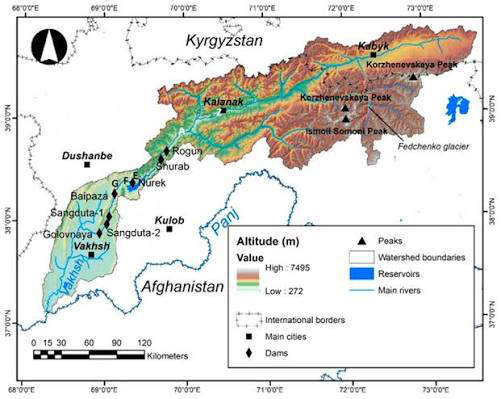
Tajikistan is ramping up its hydropower capacity with the construction of the Hualon HPP (also known as Shurob) planned on the Vakhsh River. According to the Tajik Ministry of Energy and Water Resources, the plant’s installed capacity will be 800 MW, and its average annual output will exceed 2.5 billion kWh. Based on the preliminary feasibility study (PFS), the figure could reach 2.684 billion kWh.
Project preparations are being prepared. Daler Juma, the Tajik Minister of Energy and Water Resources has visited the HPP site and inspected the areas designated for key structures, including the dam, the powerhouse, and other facilities. The station is to be located between the existing Rogun and Nurek HPPs.
The Tajik government established the state institution “Center for the Implementation of the Hualon Hydropower Plant Construction Project” in November last year. This will act as both the client and the contractor: its tasks include preparation, construction, and commissioning of the plant. Investors for the construction have not yet been identified – the preliminary feasibility study is being carried out by the Tajik Aluminum Company (TALCO).
The Hualon HPP is an important link in the development of the Vakhsh cascade of hydropower plants and the expansion of the country’s generating capacity. Hydropower is the backbone of Tajikistan’s energy system: HPPs account for over 95% of the electricity produced. At the same time, generation is heavily dependent on seasonal water flow, which leads to electricity shortages during the autumn-winter period.
The Vakhsh cascade is closely tied to Russian investment. The fourth stage of the cascade – the Sangtuda HPP – 1 (670 MW) – was built with Russian funding and is owned by Rosatom (60.1%) and Inter RAO (14.8%). It is one of the largest Russian investment projects in the energy sector within the CIS. Hualon is planned to be built on the Vakhsh between the Rogun and Nurek HPPs. The Rogun station – the upper stage of the cascade – is being designed by the Russian institute Hydroproject, and its commissioning determines the technical feasibility of the Hualon project.
Russia has shown interest in new hydropower projects in Tajikistan but is acting cautiously. In December 2024, Russian Deputy Minister of Energy Roman Marshavin discussed prospects for cooperation in hydropower with Daler Juma in Dushanbe, and in March 2025, the ministers of the two countries met again – this time to discuss projects in the field of renewable energy. Russia is in no hurry to invest in large hydropower projects – they are too expensive and environmentally risky. Instead, Moscow is in talks with Dushanbe about the construction of wind farms. The backdrop to these negotiations is Tajikistan’s debt to Russia for electricity from the Sangtuda HPP-1of approximately US$297 million. In early 2025, the parties reached a principled agreement on a gradual write-off of the debt by 2034 and, in April, signed the corresponding protocol; with the investment return period extended from 20 to 35 years.
According to the Ministry of Energy of Tajikistan, in the first half of 2026 the country produced 11.656 billion kWh of electricity- 1.3% less than in the same period of 2025. Losses in the power system over the same period amounted to 1.654 billion kWh (12.9%).
The key growth driver remains the construction of the Rogun HPP with a capacity of 3,780 MW. According to World Bank estimates, once it reaches full capacity, the station will be able to generate approximately 14.4 billion kWh per year—this will significantly reduce the winter electricity deficit in the country.
In parallel, Tajikistan is developing other areas of renewable energy. For instance, the Ministry of Energy is holding talks with international investors on the construction of solar power plants with a total capacity of 1,250 MW.
The strategic goal of the authorities is to fully ensure electricity production from renewable sources by 2032. Within this framework, the priority areas remain the construction of new HPPs, the modernization of existing facilities, and the development of solar generation.
The Hualon HPP project is currently at the preparation and feasibility study stage. There is no direct Russian involvement yet, but the project is physically integrated into the infrastructure of the Vakhsh cascade, created with Soviet and Russian participation. The implementation of Hualon will not only increase the installed capacity of Tajikistan’s power system but also make more efficient use of the hydropower potential of the Vakhsh River.