 Русский







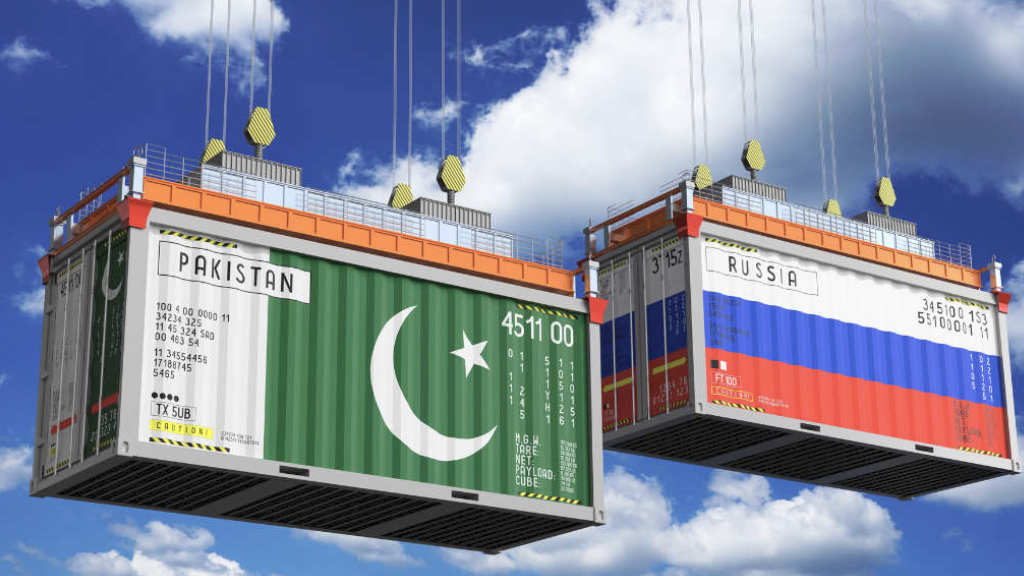

JSC RZD Logistics, a subsidiary of Russian Railways (RZD), is evaluating the possibility of organizing rail freight shipments to the Pakistani market as part of developing the International North-South Transport Corridor (INSTC), First Deputy CEO Dmitry Kryukov said during the INSTC transport forum in Astrakhan.
He stated that “RZD Logistics has successfully tested all three routes in working to ramp up operations along the INSTC since 2022, namely the western branch, the eastern branch, and the route incorporating the Trans-Caspian segment. A number of solutions have been developed, and the route is now available to all exporters. We have gained access to markets in India, Saudi Arabia, and the United Arab Emirates by utilizing these rail lines to deliver cargo to clients in Iran. The North-South corridor has now opened doors to Africa and Iraq. Our current objective is to reach Pakistan. We are scheduled to meet with our Pakistani colleagues in December to organize the test shipments. We are actively building and refining our operational capabilities.”
Kryukov said that transit time for export shipments along the INSTC has been reduced from two months to 12 days. He also highlighted the need to expand alternative rail routes, including the eastern branch of the ITC and the Rasht-Astara line, when discussing the corridor’s future going forward.
He said that “We see great potential in general cargo and in the chemical industry, food products, and construction sectors, respectively. The Iranian market shows clear growth potential in both directions. Furthermore, there should be significant room to boost volumes if the situation regarding the Strait of Hormuz takes a positive turn.”
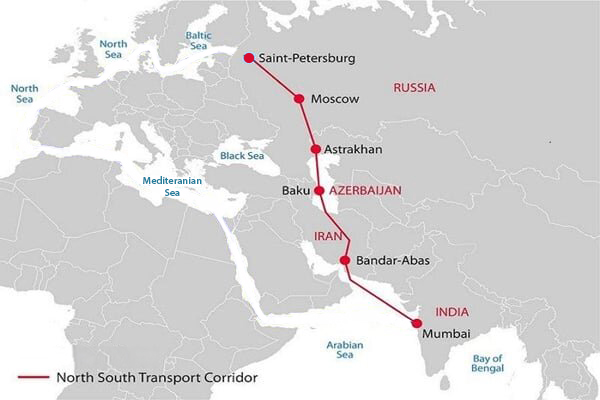
The North-South International Transport Corridor connects northern Europe with the Persian Gulf and Indian Ocean countries via Russia, the Caucasus, and Central Asia. The agreement to establish the multimodal corridor was signed in 2000 between Russia, Iran, and India, and it currently includes 12 countries. The corridor includes the western route along the western shore of the Caspian Sea, the eastern route along the eastern shore, and the trans-Caspian route across the Caspian Sea.