
 Русский




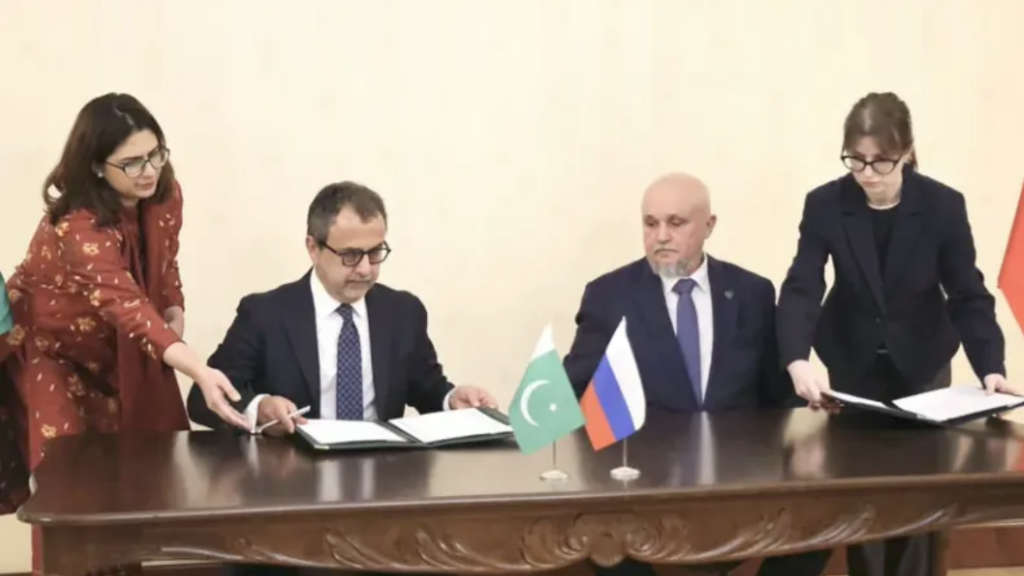

The 11th meeting of the Russian-Pakistani Intergovernmental Trade and Economic Cooperation Commission took place in Moscow on Wednesday (November 25) with several important bilateral developments. The meeting was co-chaired by Russian Energy Minister Sergei Tsivilev and Pakistan’s Energy Minister Sardar Awais Ahmed Khan Leghari.
We discuss the salient points as follows:
Agriculture

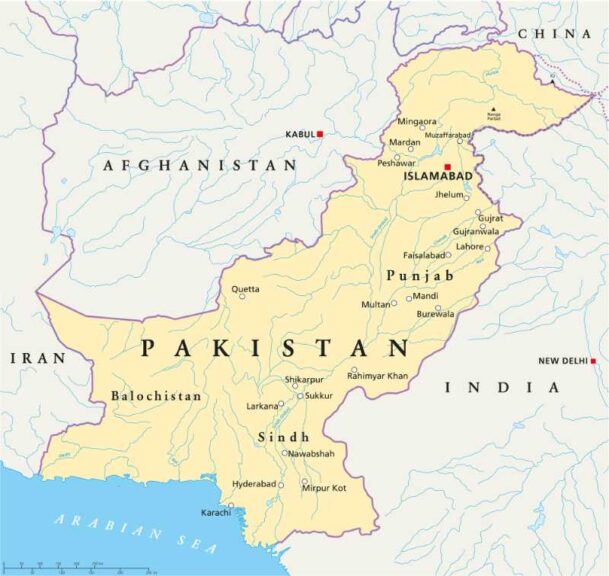
Tsivilev said that “Food makes up a significant share of Russian-Pakistani trade. We are interested in expanding this. We welcome Pakistan’s decision to conduct state grain procurement, which will enable Russian wheat exports.” The Russian Grain Association said Trading Corporation of Pakistan (TCP) had called a tender for the purchase of 800,000 tonnes of food wheat. The applications deadline is November 30. The winner will be required to deliver wheat harvested in the current year on CFR terms to Pakistan’s Karachi or Gwadar Ports. This tender is worth about US$166 million.
Medicine

Sergei Tsivilev also said that Yekaterinburg-based Medsintez Plant LLC plans to localize insulin production in Pakistan. The Medsintez Plant, founded in 2003, specializes in insulin and follicle-stimulating hormone (FSH) products. It is capable of producing 1 billion capsules and tablets, and 24 million containers of infusion solutions. The investment is a Joint Venture with Pakistan’s Genetics Pharmaceuticals and plans to invest about US$80 million over six years to localize insulin production. Pakistan has the highest adult diabetes prevalence rate in the world, affecting roughly 31.4% of adults (about 34.5 million people aged 20–79), according to the International Diabetes Federation.
Remote Earth Sensing

Russia and Pakistan are interested in cooperation in Earth remote sensing data, Russian Energy Minister Sergei Tsivilyov has stated, adding “We are ready to share Earth remote sensing technology with our Pakistani friends. We have a mutual interest here. Our working group at the intergovernmental commission has drafted a whole range of documents on cooperation in the development of space and we will be ready to sign them during the meeting of our heads of state. I believe that great joint prospects are opening for us. Russia has a unique experience, a powerful scientific and technical base and competences in space exploration. We are ready to share our best practices in this sphere.”
Remote Earth sensing is the process of gathering data about the Earth’s surface, oceans, and atmosphere from a distance-usually using satellites or aircraft—without physical contact. Sensors measure reflected sunlight or emitted radiation across wavelengths like visible light, infrared, and microwave to map changes and monitor conditions over wide areas. It can be used for both security, environmental and agricultural applications.
Energy
Russia and Pakistan are both interested in increasing Russian hydrocarbon supplies but need to resolve a number of regulatory issues first, Russian Energy Minister Sergei Tsivilev said, adding “We discussed supplies of oil, petroleum products and liquefied petroleum gas. All of this is the subject of our joint work within the intergovernmental commission. Both sides are interested, and we still need a lot of approvals, but we are ready for this. We discussed the prospects for liquefied natural gas supplies to Pakistan and the construction of LNG terminals. We discussed it in detail, but it’s a sensitive area, so we’re not going into detail as yet.”
Pakistan’s LNG imports dropped sharply in 2026 due to problems in the Strait of Hormuz – Qatar was a major supplier. There has been talk of developing a Russia-Pakistan LNG pipeline via Iran.
Russia-Pakistan Bilateral Trade
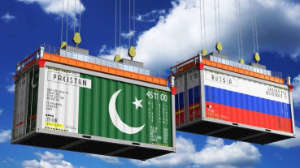
Trade between Russia and Pakistan has grown in 2026 following two years of decline, with agricultural products making up a significant share. Tsivilev said that bilateral trade grew 11% in January-September to more than US$300 million. If continued, this would put a 2026 trade total at about US$400 million. Tsivilev also said that a potential free trade agreement between the EAEU and Pakistan would further boost trade relations between the two countries.
The two sides signed a 2026-2030 economic cooperation programme, intended to guide their work over the coming years. They highlighted expanded market access, support for investment and closer business links as ways to broaden economic relations. This cooperation agenda names energy, pharmaceutical and transport sectors, which are among the areas relevant to Pakistan’s listed companies. This initiative aims to increase the volume of bilateral trade to US$5 billion by 2030. That is a compounded growth rate of over 80% per annum for the next four years.
The 12th session of the commission is scheduled to take place in Pakistan in 2027.