Русский









Sergei Krikalev, the Roscosmos deputy CEO for manned space programs, has discussed prospects for cooperation with Indian Space Research Organization (ISRO) Chairman Dr. V. Narayanan. Roscosmos said on Wednesday (June 24) that “We held talks with the head of the Indian Space Research Organization to discuss the current state and prospects of cooperation in various fields of space activities.”
Roscosmos participated in a meeting of the heads of space agencies of the BRICS countries in Bangalore on June 23-24. Hosted by ISRO, that summit gathered leaders from the 11 member countries to discuss space sustainability, the expansion of the BRICS Remote Sensing Satellite Constellation (RSSC) and establishing a proposed BRICS Space Council.
Previously, Russian First Deputy Prime Minister Denis Manturov said back in August 2025 that Russia was willing to share with India its expertise in building rocket engines, manned spaceflight, and satellite navigation. Russia’s Space Research Institute (IKI), a division of the Russian Academy of Sciences, added to that, saying in February this year that Russian and Indian representatives were discussing the deployment of scientific equipment on Russian and Indian spacecraft and prospects for cooperation in space science. Roscosmos CEO Dmitry Bakanov also stated in April that Russia and India were negotiating the use of Russian technology in developing an Indian national space station.
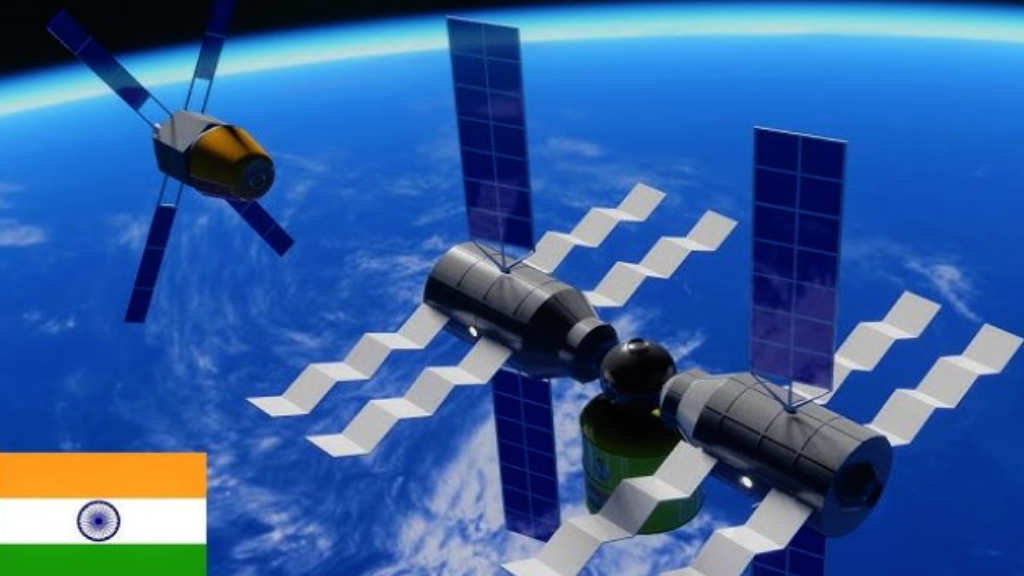
India’s planned space station is called the Bharatiya Antariksh Station (BAS). It will be a 52-tonne modular orbital laboratory positioned in low Earth orbit (LEO). The first module (BAS-01) is targeted for launch in 2028, with the complete five-module station fully operational by 2035.
Russia currently operates the Russian Orbital Segment (ROS) of the International Space Station (ISS). Russia is committed to operating this segment until at least 2028 and plans to eventually detach it to form its own independent orbital outpost, repurposing the aging ISS modules to avoid major new construction costs.