 Русский









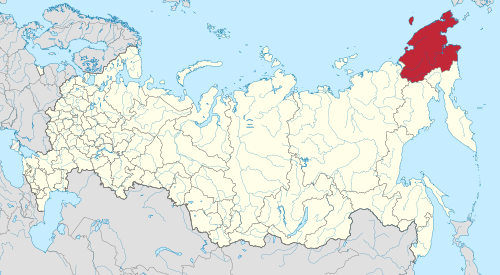
The Russian government has established initial legal guidelines for the use of driverless mine dump trucks in open-pit mining by mining company GDK Baimskaya at the Peschanka copper-porphyry deposit in Chukotka, the regional government has stated. The Peschanka deposit is one of the world’s largest undeveloped copper and gold deposits.
Chukotka is in the far northeast of Russia and has a difficult operating climate, with weather characterized by cold northerly winds that can quickly change to wet southern winds. Cape Navarin has the highest number of hurricanes and storms in Russia, while temperatures can reach -45 in the winter months. The use of driverless trucks is therefore less dangerous and more efficient under such conditions.
The project will involve the use of 50 driverless dump trucks with a capacity of 330 tonnes each on a service road between the mine and the processing plant, a closed road intended only for driverless vehicles.
Georgy Fotin, the CEO of GDK Baimskaya, said, “The legal guidelines are strategically important for the Baimsky project. It creates the legal conditions for the introduction of Russia’s first fully automated, artificial intelligence-controlled mining model.”
GDK Baimskaya’s project involves the development of the Peschanka copper deposit in the Baimskaya ore zone and construction of a mine and processing plant with a capacity of 70 million tonnes of ore per year. The first phase, with a capacity of 35 million tonnes, is scheduled to go into operation in 2029, with the second phase following in 2030 to double capacity. Capital expenditures in the development of the Baimskaya zone were earlier estimated at about US$8.5 billion.
Annual production is expected to average 300,000 tonnes of copper and 490,000 ounces of gold in the first full ten years of operation.
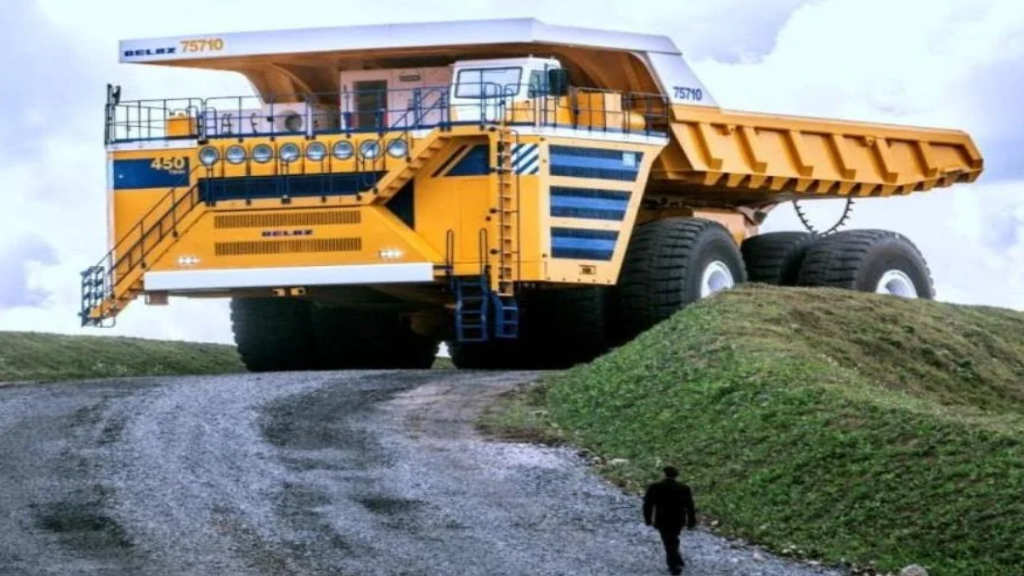
300-tonne dump trucks are ultra-heavy haulers operating in Russian coal and mineral mines. While the absolute largest models, such as the 450-tonne BelAZ 75710 and 330-tonne models, are manufactured in Belarus, they are heavily integrated into the Russian mining industry. In addition, Russia is developing its own autonomous and heavy-duty vehicles, with KamAZ being particularly active in this area. In May, KamAZ launched the first international unmanned cargo transportation service from Russia to Kazkahstan.