
 Русский







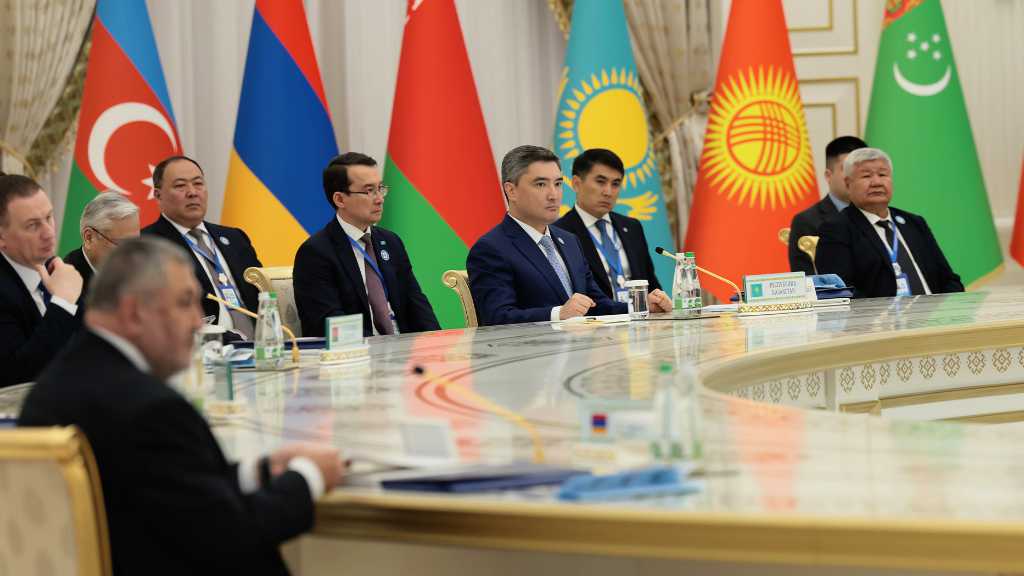

The 22 May 2026 meeting of the Commonwealth of Independent States (CIS) Council of Heads of Government in Ashgabat, Turkmenistan, officially framed as a routine Commonwealth meeting focused on economic cooperation and institutional coordination, in reality exposed a much deeper structural transformation unfolding across Eurasia.
The summit revealed how the CIS is gradually transforming into a pragmatic Eurasian economic coordination platform centered on transport corridors, industrial digitalization, logistics sovereignty, geospatial governance, mineral supply chains, and trade resilience amid intensifying global fragmentation.
In recent years, the CIS has increasingly evolved from a legacy post-Soviet political framework into a practical geoeconomic platform centered around transport integration, industrial modernization, digital governance, logistics sovereignty, strategic mineral supply chains, customs digitization, agricultural security, energy coordination, and sanctions-resistant continental trade.
The CIS Free Trade Agreement (2011), signed by Armenia, Belarus, Kazakhstan, Kyrgyzstan, Russia, Tajikistan, and Ukraine, reduced or eliminated tariffs on thousands of goods, replacing the 1994 framework. The CIS Agreement on Free Trade in Services (2023), involving Russia, Armenia, Belarus, Kyrgyzstan, Kazakhstan, Tajikistan, and Uzbekistan, promotes cross-border services and investment liberalization.
The Eurasian Economic Union (EAEU), including Russia, Belarus, Kazakhstan, Kyrgyzstan, and Armenia, represents deeper integration with a unified customs code and common external tariff; collectively, these developments show that CIS countries are now focusing on deeper economic integration.
The summit gathered Azerbaijani Prime Minister (PM) Ali Asadov, Belarus PM Alexander Turchin, Kazakh PM Olzhas Bektenov, Kyrgyz PM Adylbek Kasymaliev, Russian PM Mikhail Mishustin, Tajik PM Kokhir Rasulzoda, Uzbek PM Abdulla Aripov, Turkmen Deputy PM Hojamyrat Geldimyradov, Armenian representative Razmik Khumaryan, and CIS Secretary-General Sergei Lebedev. Turkmenistan hosted the summit during its 2026 CIS chairmanship year, while President Serdar Berdimuhamedov separately held audiences with delegation heads before formal meetings began.
What emerged from Ashgabat is the rise of a functional Eurasian economic governance architecture increasingly driven by logistics security, sanctions adaptation, industrial sovereignty, technological modernization, and continental connectivity.
The meetings, held in both restricted and expanded formats, ultimately resulted in the adoption of a comprehensive package of agreements aimed at building a sustainable, technologically advanced, and secure Eurasian economic ecosystem. The delegation leaders focused heavily on the practical implementation of the CIS Economic Development Strategy through 2030 while simultaneously aligning long-term integration efforts with newly approved development strategies extending toward 2035.
This demonstrates that the CIS is increasingly being repositioned around seven interconnected pillars: transport corridor integration, industrial digitalization, strategic resource coordination, geospatial governance, logistics resilience, energy modernization, and technological sovereignty.
The economic component of the discussions focused heavily on innovative development and digital transformation. The introduction of intelligent platforms in trade and logistics was identified as a critical mechanism for increasing the competitiveness of CIS products on global markets, reducing administrative barriers, accelerating paperless customs systems, and streamlining export-import procedures across Eurasia.
At the same time, the parties outlined a comprehensive modernization agenda for the industrial sector. Specifically, leaders discussed digital transformation in mining and metallurgy, joint projects in the chemical and textile industries, cooperation in geodesy and cartography, geoinformation technologies, spatial data infrastructure, and construction-materials manufacturing. The attendees approved the strategy for Exhibition and Congress Activities in the CIS for the period until 2030 and the Interstate Radionavigation Programme for 2027-2030.
The summit also highlighted growing energy-sector coordination. The participating governments emphasized joint development of electric power infrastructure, deployment of energy-efficient technologies, grid modernization, and the launch of pilot renewable-energy projects. This reflected a broader realization that Eurasian energy integration is increasingly extending beyond hydrocarbons toward electricity interconnection, industrial electrification, and sustainable energy systems.
A major outcome was the signing of the Concept for the Integration of Major Transport Arteries Passing through the Territories of the CIS Member States. The agreement aims to improve the speed, accessibility, security, and quality of transit freight transportation while simplifying export-import operations across the Commonwealth. The concept effectively institutionalized the long-term integration of railways, multimodal logistics hubs, customs infrastructure, and transcontinental freight systems across the Eurasian landmass.
Another major agenda item focused on coordination in ecology, water conservation, agricultural cooperation, and regional food security. Climate volatility, water stress, fertilizer supply disruptions, and food inflation are increasingly pushing CIS governments toward integrated agricultural planning and resource coordination. The humanitarian dimension was also elevated as a core pillar of integration. The CIS officially designated 2026 as the Year of Health in the Commonwealth. Delegates discussed targeted programs for exchanging medical technologies, healthcare practices, epidemiological coordination, and the creation of regional “sanitary shield” mechanisms against future pandemics and biological threats.
The summit additionally approved new Youth Capitals of the Commonwealth. Minsk was designated CIS Youth Capital for 2027, while Karaganda in Kazakhstan received the status for 2028. These initiatives aim to expand educational exchanges, startup ecosystems, youth innovation forums, scientific cooperation, and long-term social integration across the region.
Following the conclusion of the high-level meeting, CIS Secretary-General Sergei Lebedev emphasized the high organizational level of the Ashgabat summit and stated that the adopted decisions would serve as a major catalyst for accelerating integration processes across the Commonwealth. The next meeting of the CIS Council of Heads of Government is scheduled for December 2026 in Moscow.
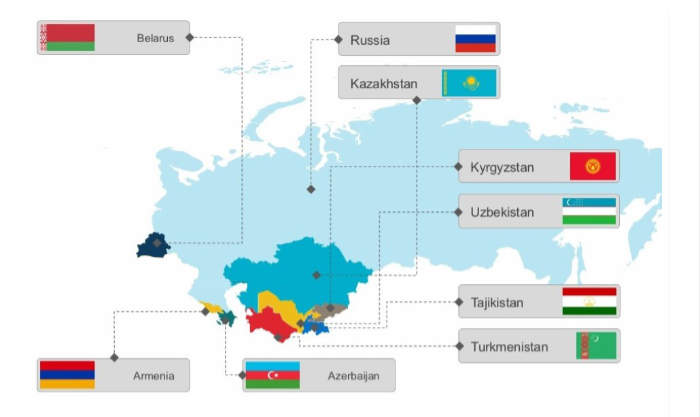
Intra-CIS Trade Share and Estimated Trade Volume
| Country | Share of Trade with CIS (%) | Estimated Trade Volume with CIS (USD) | Main CIS Trade Partners |
| Russia | 10-15% | $95-110 billion | Belarus, Kazakhstan |
| Belarus | 55-65% | $50-55 billion | Russia |
| Kazakhstan | 20-30% | $35-40 billion | Russia, Uzbekistan |
| Uzbekistan | 30-40% | $20-25 billion | Russia, Kazakhstan |
| Armenia | 30-40% | $10-12 billion | Russia |
| Kyrgyzstan | 35-45% | $6-8 billion | Russia, Kazakhstan |
| Tajikistan | 25-35% | $3-5 billion | Russia, Kazakhstan |
| Azerbaijan | 10-20% | $7-9 billion | Russia |
The Ashgabat summit reflected a much more operational and outcome-oriented agenda. Several factors explain why the 2026 meeting carried unusual strategic importance.
First, Eurasian trade geography is rapidly changing. Continued disruptions in the Red Sea, instability around maritime chokepoints, sanctions fragmentation, rising freight insurance costs, and geopolitical tensions across the Indo-Pacific are increasing the attractiveness of overland Eurasian corridors.
Second, CIS economies are now more interconnected commercially than many external observers recognize. Trade among CIS countries has expanded steadily since 2022, especially in industrial goods, machinery, agriculture, logistics, metals, chemicals, energy equipment, fertilizers, rail transport, and consumer goods.
Third, the summit occurred amid accelerating competition over industrial supply chains and critical minerals. The CIS collectively controls enormous reserves of uranium, copper, rare metals, titanium, natural gas, aluminum, potash, gold, ferroalloys, and hydrocarbons.
Fourth, digital governance is becoming a new integration mechanism. The summit’s focus on paperless customs, geospatial infrastructure, radionavigation, mining digitalization, and logistics digitization showed how technological integration is gradually replacing older ideological integration models.
Fifth, the Ashgabat agreements demonstrated that the CIS is moving beyond general economic coordination toward sector-specific institutionalization. The approval of transport integration concepts, mining digitalization roadmaps, radionavigation programs, exhibition strategies, and science-and-technology development frameworks indicates the emergence of a more structured Eurasian governance architecture.
Finally, the summit exposed how Eurasian states are quietly building parallel economic coordination systems outside Western-controlled financial, technological, and logistical networks.
The Logistics and Transport Corridors Integration Concept: Eurasia’s
Continental Artery System
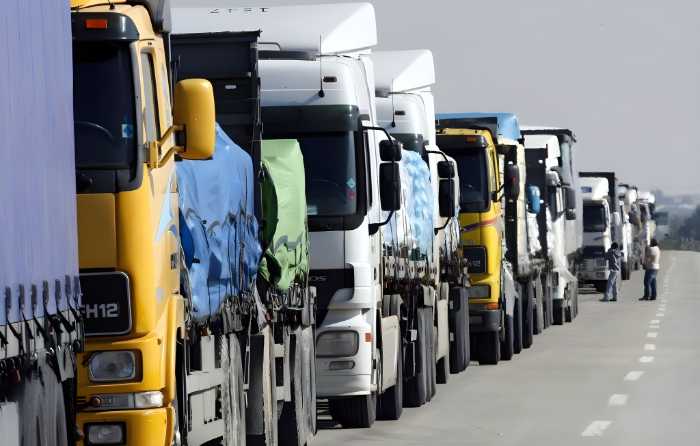
One of the summit’s most consequential outcomes was the approval of the ‘Concept for the Integration of Major Transport Corridors’ passing through the territories of the CIS member states. The document, developed by Kazakhstan’s Ministry of Transport, aims to establish an integrated CIS transport system capable of ensuring fast, secure, and cost-effective transportation through modern infrastructure, advanced logistics systems, and multimodal freight networks. This initiative reflects the rapidly growing importance of continental logistics amid disruptions to traditional maritime trade routes.
This carries enormous strategic importance because Eurasian governments increasingly recognize logistics sovereignty as a central pillar of economic security and geopolitical resilience. Amid growing disruptions to traditional maritime trade routes, sanctions pressures, geopolitical fragmentation, and global supply-chain instability, the CIS transport corridors are rapidly emerging as strategic continental arteries linking Europe, China, Russia, Central Asia, the Caspian region, the Middle East, South Asia, and the Gulf.
Ashgabat 2026 demonstrated that Eurasian states increasingly view infrastructure not simply as an economic asset but as a geopolitical instrument central to long-term regional integration and industrial competitiveness.
The approved roadmap aims to increase the competitiveness of Eurasian transport corridors, attract international freight traffic and investment, strengthen multimodal logistics systems, reduce transit delays and customs costs, unlock the transport and transit potential of CIS economies and integrate national transport systems into broader global logistics networks. The broader agenda includes coordination of railways, ports, customs systems, logistics hubs, fiber-optic infrastructure, geospatial platforms, radionavigation systems, and digital freight management technologies into a more unified continental transport architecture.
Kazakhstan emerged as one of the principal strategic beneficiaries of the initiative. Astana increasingly seeks to position itself as Eurasia’s central land bridge connecting China, Russia, Central Asia, Türkiye, the Gulf, and Europe through integrated rail, road, Caspian, and transcontinental logistics infrastructure. The initiative also aligns directly with the International North-South Transport Corridor, the Middle Corridor, Caspian shipping systems, and China’s Belt and Road Initiative, reinforcing the CIS region’s growing role within emerging Eurasian trade networks.
Major transport and logistics beneficiaries could include Kazakhstan Temir Zholy, Russian Railways, FESCO, ADY Container, and Port of Baku, alongside multiple railway, shipping, port, and logistics operators across the CIS region. The summit ultimately highlighted the emergence of a broader Eurasian connectivity doctrine in which control over transport corridors, logistics infrastructure, customs systems, and continental trade routes is becoming as strategically important as control over energy resources, industrial production, or financial systems.
Digital Transformation of Mining and Metallurgy: The Industrial Core of Eurasian Integration
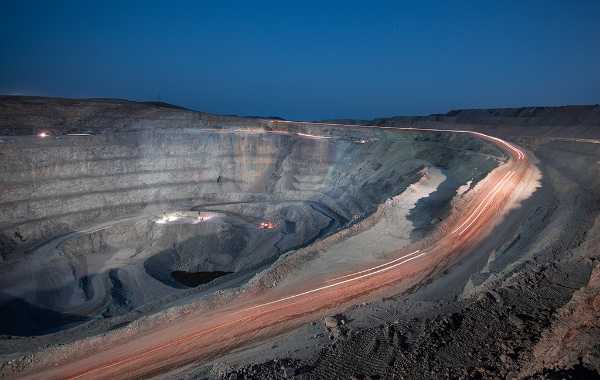
The approval of the Concept for the Digital Transformation of the Mining and Metallurgical Industries of the CIS Member States alongside its implementation roadmap may ultimately emerge as one of the most consequential economic outcomes of the Ashgabat summit. Mining and metallurgy remain foundational pillars of CIS economies due to deeply interconnected Soviet-era industrial chains, shared technical standards, integrated production systems, and the region’s vast concentration of strategic mineral reserves.
The approved roadmap envisions the deployment of AI-assisted geological exploration, industrial robotics, autonomous haulage systems, predictive maintenance technologies, smart metallurgy systems, digital twins, advanced environmental monitoring, industrial cybersecurity protection, and modernization of information infrastructure across the mining and metallurgical sectors. The initiative was jointly developed by the CIS Executive Committee together with the CIS basic organization for personnel training, advanced industrial retraining, contemporary materials science, and industrial waste recycling.
The initiative carries major strategic significance because the CIS collectively controls one of the world’s largest clusters of critical minerals and industrial metals. Russia dominates global production of nickel, palladium, platinum, and aluminum. Kazakhstan remains a leading producer of uranium and ferroalloys. Uzbekistan controls major gold and copper reserves, while Belarus is a global potash powerhouse. Tajikistan and Kyrgyzstan also possess significant untapped mineral potential that could become increasingly important within future Eurasian industrial planning.
The digital transformation push comes at a time when global demand for strategic minerals is accelerating rapidly due to electric vehicles, semiconductors, renewable-energy systems, AI data centers, defense manufacturing, and industrial electrification. The summit therefore demonstrated that CIS governments increasingly view critical minerals not merely as export commodities, but as geopolitical assets central to future industrial competitiveness, technological sovereignty, and Eurasian integration.
Major industrial beneficiaries could include Kazatomprom, Norilsk Nickel, Navoi Mining and Metallurgical Company, BelAZ, and Qarmet, alongside numerous metallurgy and heavy industrial producers across Russia and Kazakhstan. The roadmap further emphasizes research competency development, cybersecurity cooperation, technological innovation, industrial waste recycling, and the creation of homegrown industrial technologies within the CIS, all of which align with the broader objective of strengthening Eurasian technological sovereignty.
Interstate Radionavigation Programme 2027-2030: Building Eurasian Technological Sovereignty
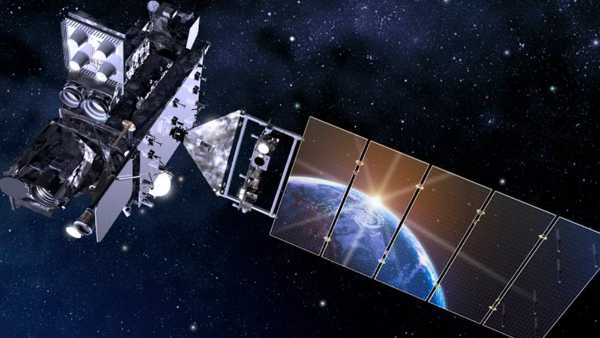
One of the summit’s most strategically important yet least publicly discussed outcomes was the approval of the Interstate Radionavigation Programme for 2027-2030. The Programme’s goals and implementation mechanisms are coordinated with the CIS Economic Development Strategy until 2030 as well as targeted radionavigation and space-related programs already being implemented by Belarus, Kazakhstan, and Russia. The Programme consists of two major interconnected subprograms: “Organizational Support for Coordinated Functioning and Development of Radionavigation Systems and Means of the CIS Member States” and “Development and Creation of Radionavigation Means Based on Signals from Ground- and Space-Based Navigation Systems Using Electronic Component Base Primarily Developed by the CIS Member States.”
This is strategically significant because modern radionavigation infrastructure increasingly underpins logistics systems, freight transportation, railway automation, aviation safety, autonomous industrial systems, precision agriculture, mining operations, geospatial mapping, and digital customs infrastructure. The second subprogram is especially important geopolitically because it prioritizes the use of electronic components primarily developed within CIS states. This reflects a broader Eurasian effort to reduce dependence on foreign semiconductor ecosystems, external navigation systems, and Western-controlled technological infrastructure.
Russia is expected to remain the technological anchor due to its GLONASS satellite-navigation capabilities and broader aerospace-industrial infrastructure. Companies and institutions such as Roscosmos, Rostec, and Russian Railways are likely to become major implementation actors. Kazakhstan’s role is equally significant because the country increasingly positions itself as a Eurasian digital-logistics and smart-transport hub. Kazakhstan’s expanding dry ports, customs systems, multimodal freight infrastructure, and smart logistics corridors require advanced navigation coordination systems.
Belarus, meanwhile, possesses strong capabilities in precision electronics, industrial engineering, optical technologies, and navigation equipment manufacturing, making Minsk an important technological contributor to the program. The radionavigation initiative also complements the summit’s broader geospatial governance and logistics sovereignty agenda. Modern transport corridors increasingly depend on synchronized navigation systems, real-time cargo tracking, digital route optimization, geospatial mapping, and integrated freight-monitoring technologies.
The CIS Geoportal for Spatial Data Infrastructure represents an ambitious attempt to integrate geodesy, cartography, geoinformation systems, logistics mapping, land registration, mining exploration, border management, and environmental monitoring. Digital mapping and spatial governance increasingly underpin modern economic systems. Integrated geospatial platforms improve everything from cargo routing to precision agriculture and smart-city development. The summit revealed that CIS countries increasingly recognize data infrastructure itself as a strategic economic resource.
Institutionalizing Eurasian Industrial Diplomacy
The Ashgabat summit also approved the Strategy for Exhibition and Congress Activities in the CIS for the period until 2030. Although less publicized than transport corridors or mining digitization, the strategy carries major long-term economic implications because it institutionalizes the exhibition, congress, industrial promotion, and technology-forum ecosystem throughout Eurasia. The strategy updates the earlier framework adopted in 2013 while incorporating the geopolitical and economic transformations of recent years, particularly sanctions fragmentation, Eurasian trade reorientation, industrial decoupling pressures, and the emergence of a more multipolar global economy. Basically, the summit reviewed and finalized its interstate spatial data program, including the launch of a unified geoportal to centralize standardized land and registration data across sectors. Officials directed member states to integrate the platform into workflows and expand it with open thematic datasets for broader regional use. The CIS Exhibition and Convention Activity Strategy 2030 will modernize the sector and leverage conventions to boost innovation and economic growth.
The main objective is to ensure the comprehensive development of competitive exhibition and congress industries across the Commonwealth while increasing the aggregate global economic and innovation share of CIS member states. The strategy aims to strengthen interstate industrial cooperation, expand export-promotion mechanisms, support technological exchanges, enhance innovation ecosystems, create integrated exhibition infrastructure, promote Eurasian industrial brands globally, and support scientific and technological commercialization. This effectively institutionalizes a Eurasian industrial-diplomacy network linking manufacturers, mining firms, logistics companies, universities, innovation centers, agricultural exporters, and technology enterprises.
Belarus is positioned as one of the largest beneficiaries. Minsk has increasingly utilized industrial exhibitions and trade fairs to maintain export access despite sanctions pressure. Companies such as BelAZ, MAZ, MTZ, Gomselmash, and Belaruskali are likely to benefit from expanded industrial-promotion mechanisms throughout Eurasia, Asia, Africa, and the Middle East. Russia similarly gains because industrial giants such as Rosatom, Rostec, KAMAZ, and United Shipbuilding Corporation increasingly require alternative industrial-promotion ecosystems outside Western commercial platforms.
Agriculture, Ecology, and Food Security Integration

Agriculture received less media attention than logistics or mining, but it remains central to regional integration. Kazakhstan’s agricultural exports to Turkmenistan rose 15 percent during early 2026. Russia remains one of the world’s largest grain exporters. Belarus dominates dairy and agricultural-machinery exports. Uzbekistan and Central Asia provide fruits, vegetables, cotton, and textiles. Climate volatility, water stress, fertilizer supply disruptions, and food inflation are increasing the importance of coordinated food security systems.
The summit therefore prioritized ecology, water conservation, anti-locust cooperation, and agricultural integration as strategic rather than merely sectoral issues. Companies such as PhosAgro, EuroChem, Belaruskali, and Belarusian agricultural-machinery firms stand to benefit from stronger regional coordination.
CIS 2035 Strategy: Scientific and Technological Sovereignty

One of the most strategically important developments linked to Ashgabat was the broader consolidation of long-term CIS development strategies extending toward 2035. In 2025, CIS governments approved multiple strategic frameworks focused on science and technology development, logistics digitization, digital economy cooperation, forestry modernization, agricultural coordination, and peaceful atomic-energy cooperation.
The CIS Economic Council had earlier approved the Strategy for Scientific and Technological Development for 2026-2035 during its meeting in Dushanbe. The document prioritizes scientific sovereignty, technological independence, digital infrastructure, AI integration, advanced industrial manufacturing, and innovation ecosystems. This shift is highly significant geopolitically. Eurasian governments increasingly recognize that technological dependence now represents a major strategic vulnerability. Consequently, the CIS is gradually attempting to create regional scientific ecosystems less dependent on Western technologies, software systems, industrial standards, and financial infrastructures. Russian state corporations such as Rosatom, Rostec, and Rosgeologia are likely to become central actors in this technological sovereignty strategy. Kazakhstan’s Kazatomprom, Uzbekistan’s Navoi Mining and Metallurgical Company, and Belarusian industrial manufacturers such as BelAZ and MTZ could similarly benefit from expanded industrial and research integration.
The Emerging “CIS Plus” Architecture
Another highly significant development was discussion around the “CIS Plus” format. Secretary-General Sergei Lebedev described the initiative as a mechanism for expanded coordination with organizations such as the Shanghai Cooperation Organisation. This suggests the CIS is gradually evolving into part of a broader Eurasian institutional ecosystem linking the SCO, EAEU, Belt and Road Initiative, and Greater Eurasian Partnership concepts. Rather than competing, these frameworks increasingly overlap around transport, trade, logistics, industrial cooperation, scientific coordination, digital infrastructure, and technological sovereignty.
Russia: Reconstructing Eurasian Economic Gravity Through the CIS
Russia entered the summit with perhaps the clearest long-term strategic vision. PM Mishustin’s speech was effectively a roadmap for how Moscow intends to use the CIS to maintain Eurasian economic gravity despite Western sanctions and geopolitical fragmentation. Russia’s trade turnover with CIS countries increased nearly 6.5 percent during January-February 2026. This followed several years of expanding intra-regional trade after Russia redirected much of its commercial flows toward Eurasia.
The CIS today represents one of Russia’s most important external economic spaces. Russian exports to CIS states increasingly include machinery, industrial equipment, fertilizers, oil products, agricultural products, chemicals, rolling stock, aviation components, IT systems, nuclear technologies, and heavy engineering services. Russian firms are deeply embedded throughout the region. Companies such as Gazprom, Rosatom, Russian Railways, Norilsk Nickel, KAMAZ, and FESCO increasingly benefit from deeper CIS coordination frameworks.
The summit’s emphasis on industrial cooperation directly supports Russian manufacturing exports. Mishustin highlighted expanding machine-building cooperation and the creation of joint ICT engineering centers across CIS states. Russia also strongly backed digital customs integration. According to Mishustin, 70 percent of customs declarations within the CIS are now paperless. This matters enormously economically because customs delays historically represented one of the largest hidden costs in Eurasian trade.
The newly approved transport corridor integration concept strongly aligns with Russia’s long-term objective of creating sanctions-resistant continental logistics systems through the International North-South Transport Corridor, Caspian shipping routes, and Eurasian rail networks.
Mishustin held talks with Chairman of the Cabinet of Ministers of Turkmenistan Serdar Berdimuhamedow on the sidelines of the CIS meeting. Mishustin highlighted the effectiveness of bilateral cooperation, particularly through the intergovernmental commission co-chaired by Deputy PM Marat Khusnullin, which is actively advancing collaboration in industry, energy, and logistics. Special emphasis was placed on the North-South international transport corridor as a strategic project that could open access to new markets across India, China, the broader Asia-Pacific, Africa, and the Persian Gulf. Mishustin expressed confidence that the visit would give additional momentum to the development of Russia-Turkmenistan relations, strengthening not only trade and economic ties but also cultural cooperation that links the two countries’ peoples.
Kazakhstan: Eurasia’s Fastest Rising Middle-Power Logistics Hub

Kazakhstan emerged from the summit as perhaps the most economically ambitious actor in the CIS framework. PM Olzhas Bektenov presented Kazakhstan not merely as a resource exporter but as the future logistics backbone of continental Eurasia. Kazakhstan’s proposal to integrate the main transport arteries across CIS territories became one of the summit’s defining initiatives. The adoption of the transport corridor integration concept, originally developed by Kazakhstan’s Ministry of Transport, effectively institutionalized Astana’s vision for a unified Eurasian logistics space.
Kazakhstan’s trade turnover with CIS states reached $38.4 billion by the end of 2025, while mutual trade increased another 17.1 percent during the first quarter of 2026.
Kazakhstan’s logistics strategy is based on becoming the core land bridge connecting China, Russia, Central Asia, the Caspian, Türkiye, the Gulf, and Europe. The summit showed Astana pushing aggressively toward harmonized transport infrastructure, digital customs systems, and multimodal freight coordination.
Kazakhstan’s transport and industrial giants, including Kazakhstan Temir Zholy, KazMunayGas, Kazatomprom, and Qarmet, stand to benefit directly from the summit’s outcomes. Kazakhstan also gained strategically from the designation of Karaganda as the CIS Youth Capital for 2028. Karaganda is not only an educational center but also a major industrial and mining hub, potentially transforming the city into a focal point for Eurasian scientific cooperation, mining technologies, industrial innovation forums, and youth entrepreneurship ecosystems.
Turkmenistan: Neutrality Transformed Into Transit Power

Turkmenistan used the summit to advance one of the most sophisticated strategic repositionings in Central Asia. Historically viewed mainly as a gas exporter practicing geopolitical neutrality, Turkmenistan is increasingly attempting to transform itself into a Eurasian transit and logistics power. The summit repeatedly highlighted Turkmenistan’s emphasis on transport connectivity, East-West logistics, and digital trade systems. This aligns with Ashgabat’s growing investments in railways, ports, fiber-optic infrastructure, customs modernization, and Caspian shipping.
Turkmenistan’s geography gives it extraordinary long-term potential. The country connects Central Asia with the Caspian Sea, Iran, the Gulf, Afghanistan, and South Asia. The summit also elevated Turkmenistan diplomatically. By successfully hosting one of the most consequential CIS summits in recent years, Ashgabat positioned itself not merely as a neutral state but increasingly as a Eurasian convening power capable of balancing relations simultaneously with Russia, China, Iran, Türkiye, Central Asia, and the Gulf.
Belarus: Industrial Manufacturing Integration and Exhibition Diplomacy

Belarus approached the summit through a highly practical industrial lens. Belarusian industry remains deeply integrated into Eurasian manufacturing networks. One of the summit’s most consequential outcomes for Minsk was the approval of the CIS Strategy for Exhibition and Congress Activities through 2030. The strategy reflects how industrial exhibitions, trade fairs, technology forums, and sector-specific expos are increasingly becoming instruments of economic diplomacy across Eurasia.
Belarusian industrial firms including BelAZ, MAZ, Belaruskali, and Gomselmash depend heavily on CIS and Eurasian markets. The mining digitalization strategy creates major opportunities for Belarusian heavy machinery exporters. Autonomous haulage systems, smart mining trucks, AI-integrated industrial machinery, and advanced metallurgy equipment are likely to experience growing demand throughout Eurasia. The designation of Minsk as CIS Youth Capital for 2027 further strengthens Belarus’s role as a hub for scientific conferences, industrial exhibitions, educational exchanges, startup forums, and technological cooperation.
Azerbaijan: Caspian Logistics and Middle Corridor Expansion
Azerbaijan’s strategic importance within Eurasian trade networks continues expanding rapidly. Baku increasingly operates as the western Caspian anchor connecting Central Asia with Turkey and European markets. The Ashgabat summit’s transport discussions strongly aligned with Azerbaijan’s long-term strategy to dominate Caspian transit logistics. Azerbaijan’s major infrastructure entities, including ADY Container, Port of Baku, and SOCAR, stand to benefit from deeper regional corridor integration.
The growing importance of overland Eurasian trade directly strengthens Azerbaijan’s role in the Middle Corridor. Container traffic across the Caspian has risen significantly in recent years due to rerouting away from disrupted maritime routes. The summit’s emphasis on digital customs harmonization and radionavigation is particularly relevant for Azerbaijan because efficient Caspian freight movement depends on standardized systems across multiple jurisdictions. Azerbaijan also increasingly benefits from acting as an intermediary for Russia-Central Asia trade flows. Logistics zones, rail corridors, free economic zones, and Caspian shipping services are all expanding rapidly.
Uzbekistan: Manufacturing and Demographic Powerhouse
Uzbekistan is quietly emerging as one of the most economically transformative countries in the CIS region. With a population exceeding 37 million and rapid industrialization underway, Uzbekistan increasingly views regional integration as essential for sustaining manufacturing growth. Uzbek firms and state entities, including UzAuto Motors, Navoi Mining and Metallurgical Company, Uzbekneftegaz, and Uzbekistan Railways, could all benefit from Ashgabat’s outcomes.
The mining digitalization agenda is especially important because Uzbekistan is among the world’s largest gold producers while also possessing major copper and uranium reserves. The modernization of transport corridors matters enormously for Uzbekistan because it remains double-landlocked. Lower freight costs and streamlined customs procedures directly affect export competitiveness. Uzbekistan is also rapidly expanding textile manufacturing, chemical, pharmaceutical, electrical goods, construction materials, and food processing industries. Improved regional logistics integration supports all these sectors. Demographics provide another major advantage. Uzbekistan possesses one of the youngest populations in Eurasia, creating strong labor force growth and consumer market expansion.
Kyrgyzstan and Tajikistan: Peripheral Economies Seeking Deeper Integration

For Kyrgyzstan and Tajikistan, the summit represented an opportunity to strengthen integration into wider Eurasian economic networks. Both economies remain heavily dependent on remittances, cross-border trade, agriculture, hydropower, and transit infrastructure. Kyrgyzstan’s logistics and trade sectors increasingly depend on smoother regional customs systems. Paperless customs and harmonized transport procedures could significantly reduce transit bottlenecks.
Tajikistan similarly benefits from transport integration because geographic isolation remains one of its largest structural economic constraints. Hydropower, agriculture, mining, and labor mobility remain the main economic pillars for both states. Greater CIS connectivity could improve investment flows and export opportunities.
Ashgabat 2026: The Institutionalization of Eurasian Geoeconomics
The CIS Ashgabat summit of May 2026 ultimately revealed something much larger than a routine intergovernmental meeting. It exposed the accelerating emergence of a continental Eurasian economic architecture increasingly organized around connectivity, industrial sovereignty, logistics resilience, mineral coordination, scientific modernization, energy infrastructure, and digital governance. Transport corridors were not discussed merely as infrastructure projects. They were framed as instruments of strategic sovereignty.
Mining digitalization was not simply industrial modernization. It reflected growing awareness of global competition over critical minerals. Paperless customs systems were not administrative reforms alone. They represented the digitization of continental commerce. The radionavigation program was not merely a technical initiative. It represented a broader effort to establish technological autonomy in critical infrastructure systems. The summit also demonstrated that the CIS is gradually becoming less ideological and more transactional, practical, and geoeconomic. For businesses, investors, logistics firms, mining companies, rail operators, industrial manufacturers, agricultural exporters, digital infrastructure providers, and technology companies, Ashgabat 2026 signaled that Eurasian integration is entering a more operational, sector-driven, and implementation-oriented phase.
The next CIS summit scheduled for December 2026 in Moscow may therefore become even more consequential, especially if member states begin announcing concrete infrastructure financing, transport harmonization measures, industrial partnerships, digital-infrastructure platforms, energy-grid coordination projects, and corridor investment mechanisms. Ashgabat 2026 showed that Eurasia’s future economic order is increasingly being built not only through grand geopolitical declarations but also through railways, customs platforms, scientific ecosystems, industrial digitalization systems, geospatial data networks, mining modernization, radionavigation technologies, energy connectivity, and interconnected logistics corridors stretching across the continent.
This article was written exclusively for Russia’s Pivot To Asia by M. Jahan, a researcher, security and strategic affairs commentator, and geopolitical analyst. She may be contacted at info@russiaspivottoasia.com