
 Русский






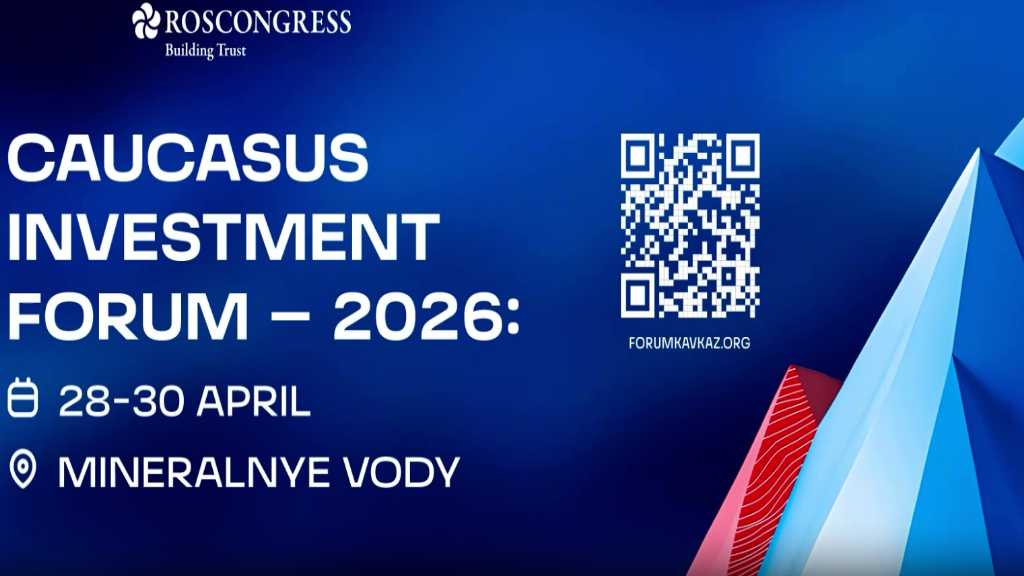

The Caucasus Investment Forum (KIF) 2026, held in Mineralnye Vody last month between 28-30 April 2026, represented far more than a regional economic conference. The central theme of the Forum was “Expanding the Horizons of Opportunities.” It emerged as one of the most strategically important federal investment platforms in contemporary Russia, symbolizing Moscow’s broader geopolitical and geo-economic transformation under prolonged Western sanctions, financial restrictions, and global strategic fragmentation. Hosted under the support of the Russian government, the Ministry of Economic Development, Roscongress Foundation, and KAVKAZ.RF, the event showcased the Kremlin’s ambition to transform the North Caucasus from a historically unstable and subsidy-dependent periphery into a major Eurasian connectivity hub linking Russia with the Middle East, Central Asia, South Asia, the Caspian region, and the wider Global South.
The event gathered more than 3,000 participants from 27 countries, alongside federal ministries, regional administrations, sovereign wealth funds, logistics companies, agribusiness firms, banks, industrial corporations, tourism developers, and infrastructure operators. It underscored the North Caucasus’s steady progress toward sustainable development, marked by rising investment attractiveness, stronger Eurasian ties, and increasing business participation in large-scale projects, while also shifting focus beyond economic indicators; most participating countries were from Eurasia, particularly the Middle East, CIS, and Central Asia, and with over 100 sessions and 440 speakers, the forum translated its expertise and agreements into sustained economic growth and a stronger national and international role for the region.
A central part of the Forum’s program was the meeting of the government commission on the socio-economic development of the North Caucasus Federal District. Within the KIF-2026 business program, discussions comprehensively covered tourism, agriculture, transport, industry, energy, banking, international cooperation, and humanitarian issues driving sustainable growth in the NCFD, with special emphasis on education and training, including new university programs and professional retraining to meet demand for skilled specialists.
As the Chairman of the Government of the Russian Federation, Mikhail Mishustin noted, the North Caucasus occupies an increasingly important place in the Russian economy. Investor interest is growing; for example, the volume of capital investments last year increased by 10% to approach ₽1.5 trillion (US$21.2 billion). Russian authorities also stated that more than 62 agreements worth around ₽400 billion (US$5.5 billion) were signed during the forum, while previous editions collectively generated agreements exceeding ₽460 billion (US$6.2 billion).
KIF 2026 illustrated how Russia increasingly sees the North Caucasus as a strategic economic gateway central to Moscow’s post-Western Eurasian strategy. The forum strongly reflected the Kremlin’s effort to redirect capital flows, logistics chains, financial partnerships, and geopolitical alignments away from Europe toward Asia, the Middle East, Africa, and broader Global South economies. In this sense, KIF 2026 became both an economic event and a geopolitical signal demonstrating that Russia is actively constructing alternative commercial and financial ecosystems beyond the Western sphere.
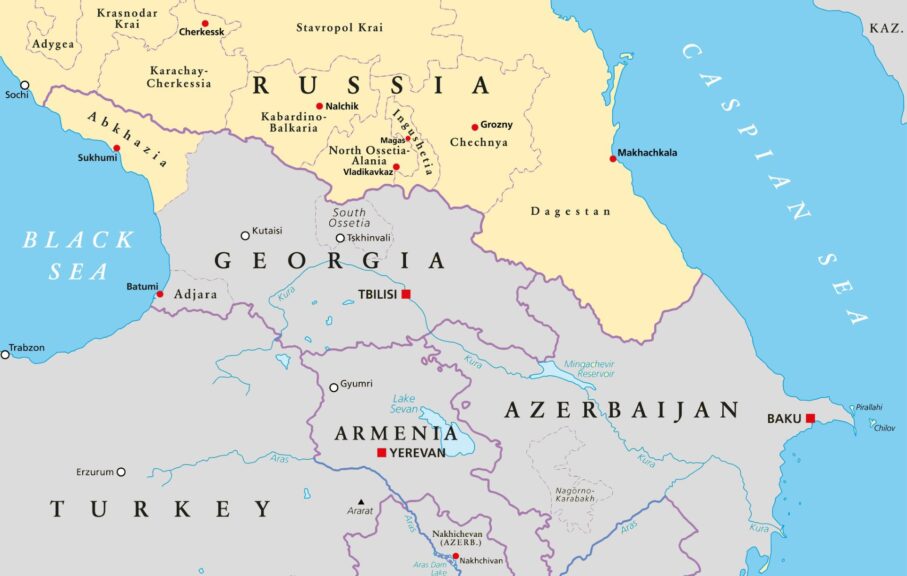
The North Caucasus: Regional Demographics

The North Caucasus Federal District was established on January 19, 2010, by a decree signed by the then Russian President Dmitry Medvedev. The district was created to tackle the region’s unique challenges through focused economic development and improved federal oversight.
Prior to 2010, these territories were grouped into the massive Southern Federal District, which made it difficult to manage the region’s specific socioeconomic issues. The North Caucasus Federal District (NCFD) includes six republics (Daghestan, Ingushetia, Kabardino-Balkaria, Karachayevo-Circassia, North Ossetia-Alania, and the Chechen Republic) and Stavropol Territory. The city of Pyatigorsk is the district’s capital.
This region lies in the south of European Russia, in the central and eastern part of the North Caucasus. Its territory accounts for about 1% of Russia’s total area. At 170,000 km², the North Caucasus is larger than several European and Eurasian countries, including Greece, Bulgaria, Hungary, Portugal, Austria, Czech Republic, Ireland, and Tajikistan. It is also larger than Armenia, Azerbaijan, and Georgia combined individually. It borders the Caspian Sea to the east and the Greater Caucasus range, Georgia, and Azerbaijan to the south. It is home to 9.6 million people (6.6% of Russia’s population).
For much of the post-Soviet period, the North Caucasus remained associated with insurgency, separatism, terrorism, economic stagnation, corruption, and chronic federal dependence. Regions such as Chechnya, Dagestan, Ingushetia, Kabardino-Balkaria, and North Ossetia often appeared in Russian policy discussions primarily as security concerns rather than economic growth zones. What were radicalized armed militia have been neutralized in the North Caucasus, and the region has regained stability for much of the past 15 years.
The North Caucasus Federal District has now favorable conditions for developing the agro-industrial complex, tourism, resorts and spas, the power industry, mining and processing, and is also developing a transit function. The North Caucasus is transitioning into a high-growth, investment-driven region. Unemployment has fallen to 7.5%, the available workforce reached 4.6 million, salaries have doubled, and self-employment surpassed 1 million. Continuing this North Caucasus development by improving living standards, infrastructure, and the investment climate is now a priority for the Russian federal government. Mishustin said that “thanks to the extensive toolkit of state support, capacity in industry, logistics, energy, and tourism is increasing. In each of the regions, there are being modernized, including with federal support, health facilities, sports and culture, schools and kindergartens, residential buildings, roads, industrial infrastructure, engineering, and communal networks.”
The Kremlin’s current strategy reflects a major shift. Russian policymakers now increasingly present the North Caucasus as an economic frontier possessing significant untapped potential in logistics, tourism, agriculture, energy, infrastructure, manufacturing, and international transit. KIF 2026 demonstrated this transformation clearly. Mishustin repeatedly emphasized that the macro-region is becoming an increasingly important contributor to the national economy, supported by rapidly growing investment inflows, infrastructure modernization, and rising entrepreneurial activity.
According to data presented during the forum, as noted above, capital investment in the region increased by 10%, industrial output grew by more than 5% (exceeding the Russian national average), while the number of small and medium-sized enterprises increased 2.5 times faster than the national average. Over the past few years, the loan portfolio has also expanded significantly, by around 2.3 times. The volume of shipped industrial goods increased by more than 5%, also exceeding the Russian average.
Russian officials also highlighted that annual private investment in the NCFD has expanded several times over during the past five years. According to Presidential Plenipotentiary Yury Chaika, the region’s 2026 investment portfolio reached approximately ₽950 billion (US$13 billion), more than six times higher than 2020 levels. These numbers are significant because they demonstrate that the Kremlin is actively attempting to structurally reposition the North Caucasus inside Russia’s long-term national economic architecture. The region is increasingly viewed as a newly available southern corridor connecting Russia to non-Western trade, investment, and financial networks.
Russia’s Pivot Toward Non-Western Capital
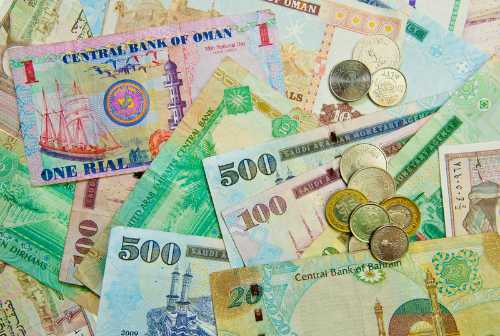
One of the clearest geopolitical messages emerging from KIF 2026 was Russia’s growing acceleration towards non-Western investment. Since 2022, Western sanctions, banking restrictions, reputational risks, and technology controls have significantly reduced Western corporate engagement with Russia. Consequently, Moscow has accelerated its search for alternative capital sources from the Gulf, China, Turkiye, Central Asia, India, Southeast Asia, and other Global South states. The North Caucasus has become a key platform for this strategy. Russian officials openly described the region as a gateway connecting Russia with the Middle East, South Asia, and Eurasian markets.
The North Caucasus republics remain overwhelmingly Muslim-majority, including Dagestan (83%), Chechnya (95%), Ingushetia (98%), Kabardino-Balkaria (70%), and Karachay-Cherkessia (65%). This naturally strengthens the region’s long-term trade, connectivity, tourism, and investment potential with Muslim-majority countries ranging from Malaysia, Indonesia, Bangladesh, and Pakistan to the Central Asian republics and Middle Eastern economies.
The forum also emphasized the participation of non-Western investors and international delegations. Gulf sovereign wealth funds, Chinese infrastructure companies, Turkish construction firms, Middle Eastern banks, and Asian logistics operators were all present at the event and increasingly view the North Caucasus as both a commercial opportunity and a strategic entry point into Russian markets.
Gulf investors looking to expand their involvement in Caucasus infrastructure, tourism, logistics, agribusiness, and finance include Mubadala, ADQ, Saudi Public Investment Fund, and Qatar Investment Authority. Chinese companies positioned to benefit from expanding Eurasian logistics integration include COSCO Shipping, China Railway Construction Corporation, Huawei, and China Communications Construction Company. Meanwhile, Turkish firms specializing in airports, highways, tourism infrastructure, hotels, and industrial construction are also well-positioned to expand operations throughout the North Caucasus.
The growing role of Global South capital reflects a broader structural change in Russia’s external economic orientation. Western disengagement has created a vacuum increasingly filled by Gulf, Chinese, Turkish, Indian, and broader Asian investors. This trend gives non-Western actors greater leverage within the Russian market while simultaneously deepening Russia’s economic integration with Eurasia and the Global South.
Projects Agreed

Although details of the 62 agreements signed during the Caucasus Investment Forum 2026 were not publicly disclosed, Russian media reports, government statements, forum discussions, ministerial presentations, and business sessions indicate that the majority of agreements and investment commitments were concentrated in several strategic sectors. This allows us to make an informed estimate of the types of projects likely to be on the development agenda.
These primarily included tourism and hospitality infrastructure, mountain resort development, transport and logistics modernization, International North-South Transport Corridor (INSTC) connectivity projects, airport and highway construction, agribusiness and food processing, industrial manufacturing and import-substitution industries, energy and utilities modernization, housing and urban infrastructure, e-commerce logistics, digital commerce infrastructure, SME development, vocational training and workforce modernization, Caspian coastal development, health resort modernization, logistics hubs, and special economic zone expansion across the North Caucasus Federal District.
Several Russian, Eurasian, CIS, Central Asian, Chinese, Gulf, Turkish, and Indian companies either directly participated in discussions surrounding the Caucasus Investment Forum or operate in sectors that were repeatedly highlighted throughout the forum.
Among Russian companies and state-linked development institutions, some of the most visible and strategically important actors include Gazprom, Rosneft, Rosseti, Russian Railways (RZD), Sberbank, VTB Bank, DOM.RF, Kavkaz.RF, Ozon, Rosatom, and Rostec.
These firms are deeply connected to infrastructure modernization, energy systems, logistics, tourism development, industrial parks, e-commerce logistics, smart city technologies, and housing projects across the North Caucasus. Within the broader Eurasian and CIS economic space, companies from Kazakhstan, Azerbaijan, Uzbekistan, Belarus, Armenia, and other Eurasian Economic Union (EAEU) and CIS countries are increasingly positioned to benefit from the region’s emergence as a logistics and trade corridor.
Kazakh logistics and railway operators connected to the Trans-Caspian and INSTC routes could expand freight cooperation through the North Caucasus. Azerbaijani firms already connected to Caspian shipping, logistics, and customs infrastructure stand to gain because the forum repeatedly emphasized expanding transport flows toward Azerbaijan. Belarusian industrial manufacturers, agricultural machinery suppliers, food processors, and construction firms may also find opportunities through Russia’s import-substitution policies and industrial localization efforts.
Central Asian participation is also becoming increasingly important. Companies from Kazakhstan, Uzbekistan, Kyrgyzstan, and Turkmenistan are likely to become more active in sectors such as logistics, agriculture, food trade, textiles, labor mobility, tourism services, warehousing, and regional transit infrastructure. The North Caucasus is strategically located along routes linking Russia with the Caspian region and Central Asia, making it attractive for Eurasian freight operators and export-oriented companies.
Chinese companies are perhaps among the most strategically positioned foreign actors in the region because the North Caucasus is increasingly tied to Eurasian transport corridors and Russian logistics diversification efforts. Companies such as COSCO Shipping, China Railway Construction Corporation, China Communications Construction Company, Huawei, ZTE, and various Chinese logistics, port-management, digital infrastructure, and industrial manufacturing firms are well-positioned to participate in logistics hubs, smart infrastructure, transport modernization, industrial parks, fiber-optic and telecommunications systems, surveillance and digital city technologies, e-commerce logistics, and railway modernization projects.
The growing importance of the International North-South Transport Corridor also creates significant opportunities for Indian companies. India’s increasing trade connectivity with Russia via Iran and the Caspian region makes the North Caucasus strategically important for Indian logistics, pharmaceuticals, agribusiness, engineering, and manufacturing firms. Indian companies represented at the event included Adani Ports and Special Economic Zone, Tata, Larsen & Toubro, Sun Pharma, and Reliance Industries. Indian firms may find opportunities in pharmaceuticals, agro-processing, logistics, food trade, engineering services, warehousing, IT services, and transport infrastructure tied to INSTC expansion.
Middle Eastern and Gulf participation is particularly important because Russian policymakers increasingly see Gulf sovereign wealth funds and Islamic financial institutions as long-term strategic partners, especially in tourism infrastructure, hospitality, Islamic finance, halal industries, food security, logistics, renewable energy, real estate, and industrial investments.
Key Gulf institutions and companies represented included Mubadala, ADQ, Saudi Public Investment Fund, Qatar Investment Authority, DP World, the Dubai Islamic Bank, and Al Rajhi Bank. The North Caucasus’ Muslim-majority regions, particularly Dagestan and Chechnya, provide a culturally compatible environment for expanding Gulf investment and Islamic financial cooperation.
Russian policymakers increasingly appear interested in transforming parts of the region into platforms for Islamic finance and banking, halal quality production, and Gulf-Russia co-investment mechanisms.
Turkish companies are also highly positioned because of Türkiye’s deep expertise in construction, tourism, airport management, textiles, logistics, and regional trade. Turkish construction and infrastructure companies could become especially active in: hotel construction, airport modernization, road projects, tourism clusters, shopping infrastructure, and housing development.
Here, the difference between Russia’s attitude towards Islam is to view it as an inclusive part of Russia’s social and corporate makeup and not an encroaching threat, as is the case in Europe.
Overall, the discussions surrounding KIF 2026 strongly suggest that the North Caucasus is gradually evolving into a multi-layered Eurasian economic zone where Russian state corporations, Chinese logistics and infrastructure firms, Gulf sovereign wealth funds, Turkish construction companies, Central Asian trade operators, CIS industrial groups, and potentially Indian logistics and manufacturing firms can all find overlapping commercial opportunities. The region’s growing strategic importance within the International North-South Transport Corridor, combined with Moscow’s broader pivot toward the Global South, is likely to accelerate this trend over the coming decade.
The International North-South Transport Corridor (INSTC): The Strategic Core of KIF 2026
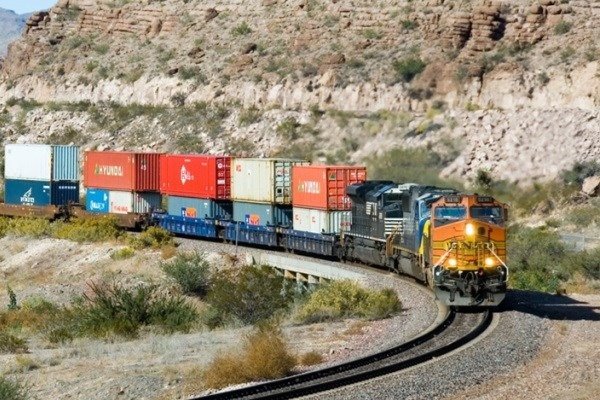
Perhaps the most strategically important issue discussed during KIF 2026 was the International North-South Transport Corridor (INSTC). Russian officials repeatedly highlighted the North Caucasus as a vital logistical hub connecting Russia to the Caspian basin, Iran, India, the Gulf, and broader Asian markets. The INSTC has gained immense importance because of growing geopolitical instability affecting traditional global shipping routes. Russia increasingly seeks alternative overland and multimodal transport corridors that bypass Europe and reduce vulnerability to Western-controlled maritime chokepoints. The North Caucasus sits at the center of this strategy. Major transport and logistics projects discussed during the forum included the modernization of the Kavkaz federal highway, the expansion of regional airports, bypass roads in Derbent and Khasavyurt, logistics hubs in Dagestan, Caspian tourism and transport clusters, railway modernization, and cross-border trade infrastructure with Georgia and Azerbaijan.
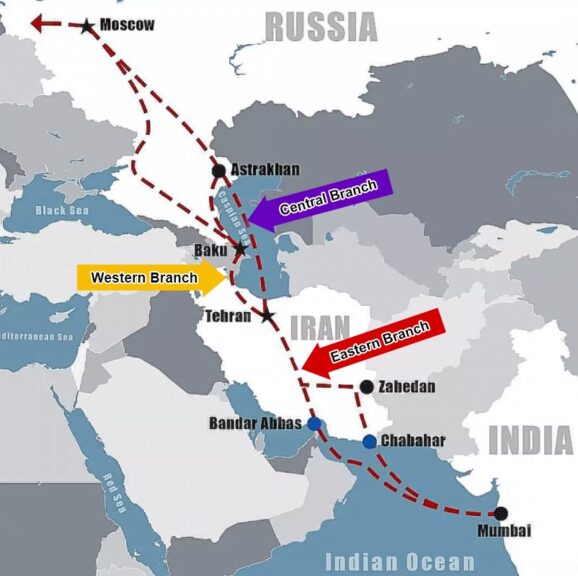
Russian Economic Development Minister Maxim Reshetnikov emphasized that traffic flows with Georgia are expected to double while flows with Azerbaijan could increase five-fold following modernization efforts. The geopolitical significance of these projects extends beyond regional economics. The Kremlin increasingly sees the INSTC as a long-term strategic alternative to European trade dependence. By connecting Russian markets to Iran, India, the Gulf, and Asia, Moscow hopes to reduce the impact of Western sanctions while strengthening Eurasian integration.
The North Caucasus therefore functions simultaneously as a logistics gateway, a transit corridor, a trade integration zone, a geopolitical buffer, and a strategic bridge between Russia and the Global South. It is strategically positioned at the crossroads of Eurasia, linking Russia to the north, the South Caucasus (Georgia and Azerbaijan), and the Caspian Sea to the east and serving as a gateway to the Middle East and Central Asia, making it a core segment of the Eurasian North-South Transport Corridor (INSTC).
Multimodal connectivity is expanding across air, rail, maritime, and overland networks: key airports in Mineralnye Vody, Makhachkala, Grozny, and Vladikavkaz are being modernized, with a new airport planned in Arkhyz by 2029 to boost tourism and regional mobility, while rail links integrated into the Russian network connect northward to Moscow and southward via the Derbent-Baku line, supporting freight flows to Caspian ports despite capacity constraints. Maritime connectivity is anchored by Makhachkala, the only ice-free Russian Caspian port, linking to Iran, Kazakhstan, and Turkmenistan and playing a critical role in the Russia-Iran-India INSTC, especially amid sanctions-driven trade reorientation.
The privatized Makhachkala port, Russia’s only ice-free deep-water port in the Caspian Sea, will be fully modernized with a state-financed investment of ₽5 billion (US$70 million) by 2028. Makhachkala Seaport also plans to strengthen cooperation with Turkmenistan, Kazakhstan, and Kyrgyzstan this year to redirect Chinese cargo flows to the Trans-Caspian route.
Overland, the Kavkaz Federal Highway (R-217) and cross-border routes via Georgia (Upper Lars) and Azerbaijan are being upgraded through bypass and four-lane expansion projects, strengthening road-based logistics. As a result, the North Caucasus is emerging as a growing freight and logistics hub, facilitating trade between Russia, the Middle East, and South Asia, supported by investments in logistics infrastructure such as Dagestan’s Ozon complex.
At the broader Eurasian level, the North Caucasus is increasingly integrated into both the INSTC and the Trans-Caspian “Middle Corridor,” where rising China-Central Asia-Caspian freight flows, linked to the Belt and Road Initiative, are connecting Chinese production hubs through Kazakhstan and the Caspian to the South Caucasus and Europe, with corridor volumes exceeding 4.5 million tonnes and transit times reduced to around 20 days. However, infrastructure gaps, border bottlenecks, energy inefficiencies, and legacy security concerns persist. Overall, while not yet a fully mature hub, the North Caucasus is rapidly gaining importance as a multimodal transit bridge and is well positioned to become a key node in Eurasian connectivity over the next decade.
Tourism as a Strategic Stabilization Industry

Tourism occupied a central place in KIF 2026 discussions because Russian authorities increasingly view tourism as both an economic growth engine and a social stabilization mechanism. The North Caucasus possesses extraordinary tourism potential due to its mountains, ski resorts, mineral water resorts, cultural diversity, and Caspian coastline. Russian officials stated that North Caucasus tourist arrivals exceeded 3.2 million last year, while winter tourism volumes grew by nearly 19%.
Large-scale tourism projects highlighted during the forum included the Arkhyz, Elbrus; Dombai; Mamison, Veduchi, Kezenoi-Am and Caspian tourism clusters. Mount Elbrus is Europe’s highest mountain and the tenth highest in the world.
The Kavkaz government also strongly promoted the National Caucasus Trail project stretching nearly 2,500 kilometers from Derbent to Sochi. Russian authorities believe tourism can create employment, reduce social tensions, attract private capital, improve infrastructure, integrate remote areas, and stimulate SME growth.
Moscow also sees major opportunities in attracting tourists from China, Southeast Asia, the Gulf, Central Asia, and Muslim-majority countries. Mishustin specifically referenced China, Southeast Asia, and Indonesia as future tourism markets. This creates opportunities for Asian hotel chains, Gulf tourism funds, Turkish construction companies, halal tourism operators, hospitality technology providers, airlines, fintech firms, and real estate developers. Potential participating firms include Accor, Hilton, Jumeirah, Air Arabia and Turkish Airlines.
Agribusiness, Food Security, and Industrial Development

Agriculture remains one of the strongest economic sectors in the North Caucasus and was heavily emphasized during KIF 2026. According to Mishustin, the region produces over 10% of Russia’s grain and more than 30% of the country’s fruits and berries. Is it noticeable that the Russian government allocated over ₽36 billion (US$507 million) in support for regional agriculture last year. Key sectors receiving support include greenhouse farming, orchard development, floriculture, viticulture, livestock, halal food production, food processing, greenhouse vegetables, and agro-logistics. Russian officials also discussed the growing importance of flower farming because domestic demand exceeds local production capacity.
The Caucasian agro-industrial sector creates major opportunities for: Gulf food security funds, Indian agricultural importers, Chinese agritech firms, Turkish greenhouse operators, Southeast Asian halal food distributors.’ Russian companies expected to expand operations include Miratorg, PhosAgro, and RusAgro. Industrial development also featured prominently at the forum. Officials highlighted chemical production, fiberglass manufacturing, aluminum industrial parks, hydroelectric projects, industrial SEZs, and import substitution industries.
Islamic Finance and Alternative Financial Systems

Another strategically important aspect of KIF 2026 involved the expansion of Islamic banking and Islamic financial instruments. Russian policymakers increasingly see Islamic finance as a mechanism to attract Gulf capital while simultaneously reducing dependence on Western financial systems. Dagestan and Chechnya are emerging as testing grounds for sukuk financing, Islamic insurance, Sharia-compliant banking, halal investment funds, Islamic fintech, and trade financing mechanisms.
The expansion of Islamic finance and broader financial cooperation with Gulf and Asian institutions also represents an important part of Russia’s long-term regional strategy. Russian policymakers increasingly see the North Caucasus as a natural platform for developing Sharia-compliant banking systems and attracting long-term Middle Eastern capital. Moscow understands that deeper financial cooperation with Gulf institutions could strengthen Russia’s broader pivot toward the Global South while simultaneously reducing dependence on Western financial systems.
This creates opportunities for financial institutions such as the Dubai Islamic Bank, Al Rajhi Bank, Kuwait Finance House, and Maybank Islamic. For Russia, Islamic finance is not merely a financial innovation. It is part of a broader geopolitical strategy aimed at deepening economic integration with Gulf and Muslim-majority countries while creating alternative channels for liquidity and investment under sanctions pressure.
Russian Companies and Domestic Strategic Expansion
KIF 2026 also highlighted the growing role of Russian state corporations, development institutions, and private firms in transforming the North Caucasus economy. Key Russian players include Gazprom, Rosneft, Rosseti, Sberbank, VTB Bank, Ozon, Kavkaz.RF, and DOM.RF. Ozon’s logistics complex in Dagestan was specifically highlighted as an important example of modern logistics infrastructure supporting e-commerce expansion. Kavkaz.RF continues to play a particularly critical role as the main federal development institution supporting investment, tourism clusters, infrastructure, and industrial projects across the region, as Russian entrepreneurs increasingly look to spread their wings into new markets.
Persistent Structural Challenges: The Need for Institutional Modernization
Despite the optimistic atmosphere surrounding the Caucasus Investment Forum 2026 and the strong investment momentum visible across the North Caucasus Federal District, Russian policymakers openly acknowledged that several long-standing structural and institutional weaknesses continue to limit the region’s full economic potential. While the North Caucasus is increasingly being repositioned as a strategic gateway linking Russia with the Caspian region, the Middle East, South Asia, and the broader Global South, federal officials recognized that sustainable long-term growth will require deeper institutional modernization, infrastructure upgrades, and stronger investor confidence mechanisms. Discussions throughout the forum repeatedly highlighted the need to improve administrative efficiency, modernize utilities and transport systems, reduce shadow economic activity, and create a more predictable and transparent investment environment capable of supporting large-scale Eurasian integration projects.
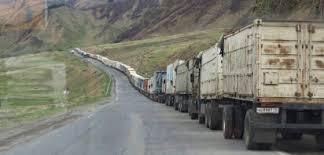
Russian officials admitted that infrastructure bottlenecks remain one of the primary obstacles slowing regional development. Problems involving illegal utility connections, grid losses, weak payment discipline, outdated communal infrastructure, and insufficient transport capacity continue to place pressure on economic modernization efforts. Federal authorities emphasized that these issues not only create financial burdens for regional administrations and state companies but also negatively affect investor perceptions regarding the reliability and efficiency of the regional business environment. At the same time, uneven regional development remains a challenge, as some areas continue to depend heavily on federal subsidies and state-supported investment mechanisms rather than fully self-sustaining private-sector growth.
Security and governance-related concerns were also indirectly acknowledged throughout the discussions. Although the North Caucasus is considerably more stable today than during the insurgency period of the 2000s, policymakers remain aware that isolated security risks, criminal networks, local disputes, informal economic practices, and governance inefficiencies can still influence the perceptions of foreign investors, particularly Asian and Middle Eastern institutions considering long-term strategic commitments in the region. Russian authorities increasingly understand that geopolitical alignment alone is insufficient to attract stable foreign capital. Investors from China, the Gulf, India, Turkey, and Southeast Asia also require long-term regulatory predictability, reliable infrastructure, transparent project implementation, and institutional stability before committing major investments.
As a result, Russian policymakers are increasingly shifting their focus toward institutional and regulatory modernization. Federal authorities appear determined to create a more structured and internationally competitive investment climate by simplifying bureaucratic procedures, improving coordination between federal and regional agencies, accelerating project approvals, and expanding the role of special economic zones and industrial parks. The development of new logistics hubs, tourism clusters, industrial production zones, and cross-border trade infrastructure reflects Moscow’s broader effort to transform the North Caucasus into a fully integrated Eurasian economic corridor rather than merely a federally subsidized peripheral region.
Transport and logistics modernization emerged as another central priority during the forum because the long-term strategic value of the North Caucasus is directly tied to Russia’s broader Eurasian connectivity agenda and the development of the International North-South Transport Corridor. Russian officials repeatedly emphasized that modern highways, airports, railway systems, logistics centers, and border infrastructure are essential not only for domestic economic development but also for expanding trade connectivity with Iran, India, the Gulf states, Central Asia, and broader Asian markets. The modernization of transport corridors linking the North Caucasus with Georgia and Azerbaijan was described as particularly important because these routes are expected to play a growing role in Russian trade diversification under conditions of continued geopolitical confrontation with the West.
At the same time, Russian policymakers increasingly recognize that infrastructure development alone will not be sufficient without parallel improvements in energy governance and communal services. Discussions during the forum showed that Moscow intends to strengthen oversight of regional utility systems, expand digital metering mechanisms, reduce grid losses, improve tariff collection, and centralize certain elements of energy management through unified operational structures. Federal authorities believe that improving the reliability and transparency of energy and utility systems is essential for building long-term investor confidence, particularly among Asian manufacturing firms, logistics operators, and industrial investors that require stable infrastructure conditions for production and trade operations.
Another major issue discussed at the forum involved workforce modernization and human capital development. Russian officials acknowledged that long-term economic transformation cannot succeed without a sufficiently skilled labor force capable of supporting industrial expansion, logistics modernization, tourism growth, and advanced infrastructure development. As a result, the federal government is expected to continue expanding vocational education programs, technical training systems, engineering education, and hospitality sector training under initiatives such as the Professional program. Policymakers increasingly view workforce planning as a strategic economic priority because the future competitiveness of the North Caucasus will depend not only on infrastructure investment but also on the availability of qualified specialists capable of supporting technologically advanced industries and services.
Ultimately, the discussions surrounding KIF 2026 demonstrated that Russian authorities increasingly view the North Caucasus as one of the central pillars of the country’s future Eurasian economic strategy. The region is being repositioned not merely as a domestic development project but as a strategic logistics gateway, investment frontier, tourism hub, industrial corridor, and geopolitical bridge connecting Russia with Asia, the Middle East, and the broader Global South. However, federal officials also recognize that realizing this vision will require sustained institutional reforms, infrastructure modernization, stronger governance standards, improved financial transparency, and more efficient state administration. The long-term success of the North Caucasus transformation strategy will therefore depend not only on geopolitical conditions or state-led investments but also on Moscow’s ability to create a stable, modern, and internationally competitive business environment capable of attracting durable Asian and Middle Eastern capital over the coming decade.
Summary
KIF 2026 represented a broader geopolitical statement about Russia’s future economic orientation. The forum showed that Moscow is attempting to build alternative investment ecosystems, deepen Global South integration, expand Eurasian connectivity, reduce dependence on Western finance, strengthen logistical resilience, and reposition the North Caucasus as a strategic gateway economy. The forum also revealed how the Kremlin increasingly integrates economics, infrastructure, security, tourism, logistics, and geopolitics into a single long-term Eurasian strategy.
The North Caucasus now occupies a uniquely important role within this strategy. It functions simultaneously as Russia’s southern gateway, an INSTC logistics corridor, an investment frontier, a tourism hub, an Islamic finance platform, a geopolitical buffer, and a symbol of Russia’s pivot toward the Global South.
However, the long-term success of this vision depends on whether Moscow can genuinely address the region’s underlying structural problems. Infrastructure modernization alone cannot fully resolve governance weaknesses, corruption, uneven development, or security vulnerabilities.
Nevertheless, KIF 2026 demonstrated that Russia remains capable of mobilizing large-scale investment initiatives and attracting significant non-Western interest despite Western sanctions and geopolitical isolation. The forum highlighted the Kremlin’s determination to transform the North Caucasus into one of the central pillars of Russia’s emerging Eurasian and Global South economic strategy for the coming decade.
This article was written exclusively for Russia’s Pivot To Asia by M. Jahan, a researcher, security and strategic affairs commentator and geopolitical analyst. She may be contacted at info@russiaspivottoasia.com