 Русский





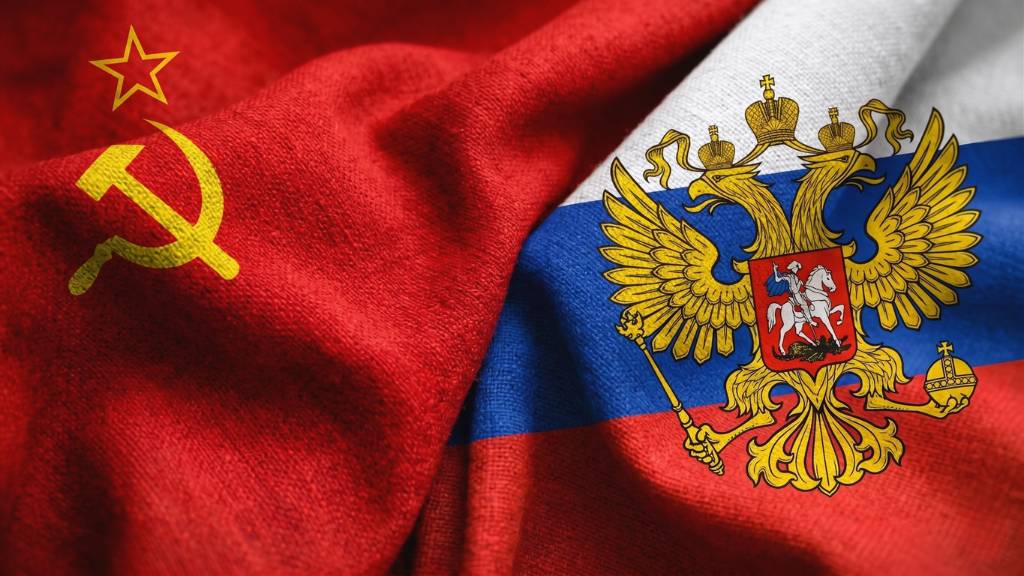

The historical significance – and demise – of the Soviet Union can be viewed in different ways. However, it is impossible to deny its historical influence, including for the development of the global economy. The first large-scale experiment in modern history to build a new type of state and its economic base has now come to an end, and the post-Soviet territory is once again experiencing the familiar and time-tested forms of social organization.
Comparing the USSR with the Russian Federation allows us to evaluate something more—two well-known types of social structure. While many Western commentators suggest the two entities are the same, they are fundamentally different. In this article we explain how and why.
The economic history of the Soviet Union can rightfully be called an experiment—even though the specific forms of a full-fledged socialist economy were not immediately apparent. It all started with war communism, a system largely forced and almost inevitable during the Russian Revolution—essentially a civil war. Then there was a rollback to elements of a market economy known as the NEP (New Economic Policy), after which the full-scale construction of a fundamentally new socio-economic structure began.
It was during these years that the USSR reached its peak of influence and greatness: the preparation for and victory in the inevitable World War, the post-WWII reconstruction of the country, and the formation of the World Socialist System, a direct competitor to globalized capitalism and a bid for global dominance.
However, after the change of course at the 20th Congress of the Communist Party of the Soviet Union in the mid-1950s, the process of gradual dismantling of the socialist economy began, culminating in the creation of the Russian Federation and similar republics in various parts of the former USSR. Many, but not all, are now part of today’s Commonwealth of Independent States.
It is very convenient for the historically uneducated or naive to compare the economies of the USSR and the Russian Federation because the territory, population, and general conditions are generally the same, but the results are not comparable. The fundamental difference between the Soviet and Russian economies lies in the ideological sphere. Contrary to popular belief, economics is not about numbers. It is a part of ethics and social psychology. The ethical permissibility of a transaction is more important than its content: only if society accepts the giving of interest, for example, as a concept, can a classical banking system exist.
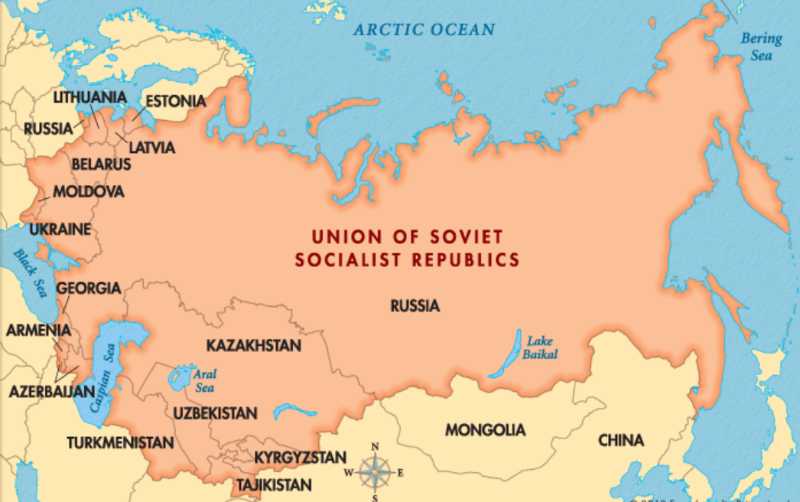
The Rise & Fall Of The USSR
From this point of view, the Soviet economy was based on the priority of common interests over private and group interests. The common interest had to be shared by everyone, and therefore the state, as a professional governing body, had to act in the interests of the entire population. This made management more difficult, as it led to the creation of a unified national economy that required a systematic and planned approach, but it also created a different type of motivation for workers, who worked as if they were working for themselves.
The Soviet government’s achievements were a result of this approach to the extent that the USSR adhered to its own ideology. However, when it was replaced by the “peaceful coexistence of states with different social systems,” which meant abandoning the priority of public interests, the Soviet Union began to degrade, eventually leading to the formation of the Russian Federation.
The Soviet Union achieved its power primarily through the organization of its economy as a unified system. The larger the scale of the system, the more effective the methods of centralized management, the more comprehensive the planning, and the greater the ability to maneuver available resources, including the ability to concentrate them on key areas, multiplied by the systemic trust of the Soviet people in their Soviet government and the Bolshevik Party.
The management of the Soviet economy required a comprehensive and systematic approach. Where appropriate, a directive method was used: sectoral management in all basic industries based on state planning. The basis was the centralized distribution of resources to ensure coordinated industrial production and cooperation between various enterprises.
Therefore, the well-known “five-year plan” was a complex intersectoral balance that ensured coordinated supplies of energy resources, raw materials, and components, as well as training, education, and medical services for the population, housing construction, and transportation and social infrastructure. The territorial management of the Union and Autonomous Republics, Krai, Oblasts, Cities, and Districts was coordinated with the development of the national economy. The government also managed social policy, science and culture, and internal migration, ensuring overall high growth rates.
The country’s financial system served the same purpose. In the mid-20th century, when powerful information technologies were not yet available, the Soviet system ensured acceptable management and planning efficiency by allocating key components and goods for centralized accounting and distribution, as well as a parallel system for accounting resources through finance. The plan included the movement of material assets, known as “funds,” which were allocated for specific planned positions, while simultaneously maintaining cost accounting.
The division of the financial system into separate circuits served the same purpose. The main focus of the economy was on non-cash transactions, which included all calculations between budgets, enterprises, and organizations. In the production sector, the priority was on the circulation of material resources, which meant ensuring that the production of goods was supported by all necessary resources.
Financial indicators were less important: if the products of a particular factory were necessary, its profitability did not matter, as losses would be covered by the state budget in order to maintain the production of what was needed.
Cash transactions were used for payments to individuals, such as paying salaries, conducting business transactions, paying for services, and saving money. The transfer of non-cash money into cash was considered a criminal offense: the state was a very complex but unified economic entity, where all internal calculations were non-cash, and citizens’ money could not participate.
However, private entrepreneurship, primarily in the form of cooperatives, existed, and its share reached 8% of the country’s gross domestic product. This is still a significant percentage today.
Overall, the economic system of the USSR not only ensured the stability and basic needs of the country but also achieved the highest growth rates in the world. In the face of a hostile environment, this can be considered an economic miracle. As a result of the Russian revolution and foreign intervention, what had been the Russian Empire lost a third of its national wealth, but it was able to build an industrial and military capacity that was sufficient to repel the aggression of a united Europe that was twice as large in population and a generation ahead of the Soviet Union in terms of industrial development.
This was not achieved by propaganda alone—in difficult times, and especially during the war, the ruling party did not limit itself to general leadership and appeals; the communists were at the forefront of the most difficult tasks, including serving at the front during World War II. This cannot be ignored—nearly half of the four million enlisted Communist Party members who served as soldiers died.
Following the Second World War, the Soviet Union demonstrated another economic miracle by restoring its pre-war industrial capacity faster than its opponents and allies. And then it began to form the World Socialist System, which made it a direct geopolitical rival of the United States, which at the time was producing more than the rest of the world combined.
It cannot be said that planned management is exclusively socialist. All of the Western countries that have made economic breakthroughs have relied not on free markets and democracy, but on a powerful state well armed with modern methods of management, including national-scale planning.
Before World War II, it was Roosevelt’s New Deal, which helped pull America out of the depths of the Great Depression. For this, Roosevelt was often referred to as a socialist and even a communist. The transformation of the impoverished Weimar Republic into the powerful Third Reich, which was unprecedented in its scale and speed, was primarily the result of the government’s Four-Year Plan.
All the “economic miracles” of post-war countries, such as Japan, South Korea, Singapore, Hong Kong, and others, were also driven by government policies and planning. The plan does not interfere with capitalism. It simply limits its effectiveness.
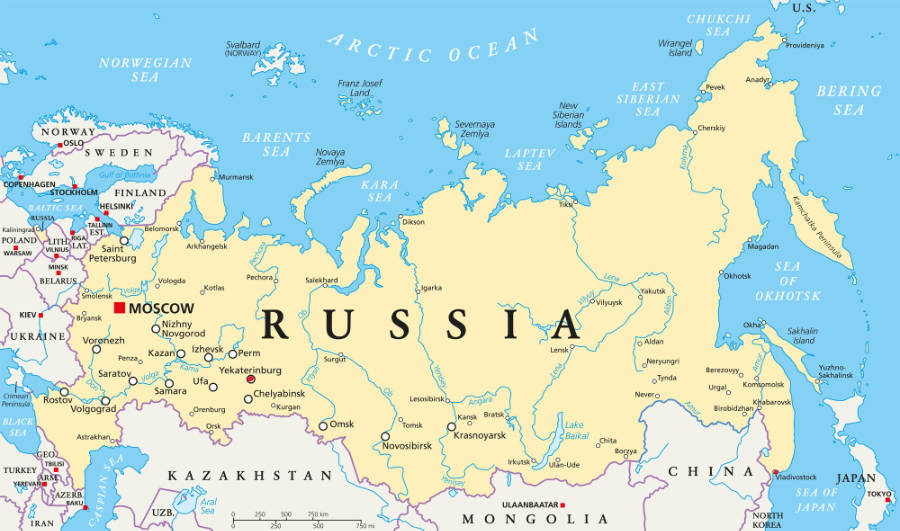
The Development Of The Russian Federation
The Russian Federation, which emerged in the place of the destroyed Soviet Union, consciously and purposefully built a completely different economy. To achieve this, the socialist society was first dismantled. This led to the collapse of the people’s trust in their government, which was the very factor that had contributed to the USSR’s advantages and victories.
The barriers that had been carefully constructed to prevent foreign capital from entering the country were removed, allowing this capital to take action. There was no need for a military intervention—the ruling class of the late USSR agreed with its Western competitors on Western terms. How did the winner take advantage of this? The powerful Soviet military-industrial complex, energy, agriculture, transportation, and social infrastructure were transferred from the state to private hands.
The combined team of local leaders and their new foreign friends worked together to quickly transfer all available former Soviet assets into their joint or private ownership, and anything that posed a potential threat to the “victors” was dismantled and sold as scrap metal. The complete and final dismantling of the entire country was not possible due to the impossibility of direct external control over such a vast territory and the presence of a local ruling class with whom agreements were made for the same reason.
What is the economic foundation of the Russian Federation? This is the joint ownership of the country’s main economic assets by Western owners and specially selected local owners from among the Soviet and Russian ‘nomenklatura,’ special services, and organized crime that had evolved into legal business.
These assets include the most profitable enterprises and industries with significant export potential. Gradually, they became increasingly exposed to external control, including through the change of citizenship by company owners and top managers.
The second group of assets is the infrastructure necessary to support the population’s livelihoods, including defense, law enforcement, transportation, and social needs, including at the regional level. The priority is lower, and the share of private capital is smaller.
The third group includes the federal government and the regions. Since the 1990s, the systemic approach to managing the economy as a unified complex had become irrelevant, as have the planning tools. Macroeconomic methods and financial instruments have replaced them, along with the transfer of the most important enterprises into state ownership through the consolidation of production assets into state corporations. The most important channels of economic management have been brought closer to the financial sector and integrated into a system of international obligations that dictate a specific strategy and acceptable methods, usually based on the principles of monetarism.
In general, this system ensures that geopolitical agency cannot be restored in any territory where it is applied. In doing so, the myth that the Russian Federation intends to remerge as a new version of the Soviet Union—or the Russian Empire—can be discounted.
What is happening in the Russian Federation, however, is a systematic reach-out to the multipolar world. Overseas diplomatic activity, the reopening of long-closed embassies, and a burgeoning Russian overseas commitment to trade and economic development with the so-called ‘friendly countries’ (as opposed to the United States and European Union and their immediate allies) are occurring at an unprecedented pace. While the USSR saw its strengths as ideological and internal, the Russian Federation instead sees its role in a global multipolar society and international engagement.
That the United States and European Union especially are now withdrawing from this exposure, with the problems of colonial backlash, exploitation, and migrant problems now realizing themselves in increasing insularity and enforced deportations, the Russian Federation is instead reaching out to attract foreign talent. In this way, contemporary Russia is engaging with the world at the same time the West is withdrawing from it. The parallels between the USSR, the Russian Federation, and the West are once again being viewed through evolving, different lenses.
This article was written specifically for Russia’s Pivot To Asia by Evgeny Yurievich Varshavsky, an expert in international and constitutional law and state adviser of the 3rd class of the Russian Federation.