 Русский






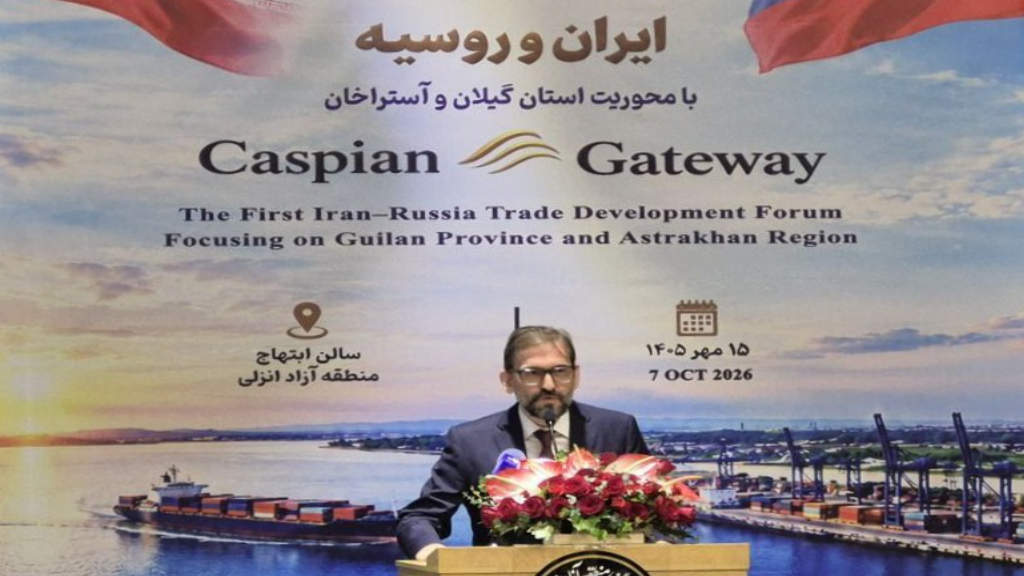
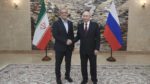
The first Iran-Russia Trade Development Summit, held on October 7, 2026, in the Ebtehaj Hall of the Anzali Free Trade Zone in Bandar Anzali, Gilan province, placed a sharply defined economic proposition at the centre of Tehran’s northern trade strategy: Gilan can become the operational gateway through which Iran converts access to Russia’s approximately US$300 billion annual import market into substantially larger non-oil exports, transit flows and cross-border investment. The one-day summit focused specifically on Gilan and Russia’s Astrakhan region and brought together Mohammad Ali Dehghan Dehnavi, head of Iran’s Trade Promotion Organization and deputy minister of Industry, Mining and Trade; Hadi Haqshenas, governor of Gilan; Mostafa Taati Moghaddam, chairman and CEO of the Anzali Free Zone Organization; Teymour Pourheidari, director general of Industry, Mine and Trade of Gilan and responsible for export-development efforts linked to Astrakhan; Sergei Vladimirovich Azarov, Russian consul general in Rasht; Ahmad Heydarian, Iranian consul general in Russia; Esfandyar Shah Mansouri, vice president of the Secretariat of the Supreme Council of Free Zones; Saeed Rahmatzadeh, head of the Free Zones faction in Iran’s parliament; and Afshin Parchizadeh, deputy at the Iranian Embassy in Moscow. Two specialised panels examined non-oil trade barriers through Astrakhan and the role of executive agencies in facilitating access to Russian and Eurasian markets.
The economic arithmetic explains why Gilan was selected as the focal point. Russia imports roughly US$300 billion of goods annually, while Iran’s bilateral trade with Russia was approximately US$2.47 billion, leaving the Iranian share of the Russian import market comparatively small. Russia nevertheless ranks ninth among Iran’s export destinations and seventh among its import sources. Bilateral trade increased by 24% in the past 12 months. More than 80% of bilateral settlements are already conducted in rubles and rials, providing a functioning local-currency mechanism that can support additional trade expansion.
The larger opportunity is the identified overlap between Russian import demand and Iranian export capacity. More than $50 billion of Russia’s annual imports correspond to goods that Iranian producers can potentially supply. Dehghan Dehnavi put the potential trajectory in unusually concrete terms: Iranian exports to Russia, currently in the range of US$1-2 billion, could rise toward US$10 billion and potentially US$20 billion if existing capacity is activated and new productive capacity is created. That gap between present trade and potential trade is the central economic issue emerging from the Gilan initiative. The challenge is no longer simply identifying Russian demand. It is building the transport, customs, banking, production, distribution and investment mechanisms capable of converting demand into recurring commercial flows.
The EAEU Free Trade Agreement Changes the Competitive Equation

The most important tariff-side development underpinning the Gilan strategy is the Iran-Eurasian Economic Union free-trade agreement, implemented in 2025. Under the arrangement, tariffs on 87% of goods traded between Iran and the five EAEU member states were reduced to zero. Russia is the largest economy in the bloc. Dehghan Dehnavi argued at Anzali that this tariff elimination gives Iranian exporters a measurable competitive advantage in Russia and other EAEU markets. The significance is broader than a bilateral Iran-Russia concession: a producer in Gilan can potentially use the Russian market as an entry point into a wider Eurasian commercial space. The policy implication is therefore to shift Gilan from being simply a northern Iranian production province into a combined production, transit and distribution platform. Dehghan Dehnavi described the province as a potential “Caspian Gate”, stressing that its value derives not only from agricultural and industrial production but from its ability to connect Iran with Russia, Kazakhstan, Azerbaijan and Turkmenistan by sea, road and rail. Chinese-origin cargo already moves through Kazakhstan and Aktau to Anzali before distribution inside Iran, demonstrating that the port network is capable of functioning as part of wider Eurasian supply chains.
Port Capacity Is Becoming The Critical Variable
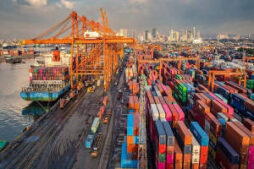
Iranian Governor Hadi Haqshenas supplied the clearest physical benchmark for the strategy on October 7. Northern Iranian ports currently handle around 7 million tons annually, but he said improved loading and unloading operations could increase potential throughput to 20 million tons. A separate operational calculation provides an intermediate target. Increasing daily unloading capacity from 1,000 tons to 2,000 tons per vessel could raise annual cargo movement toward 15 million tons. The distinction matters because the bottleneck is not simply port infrastructure; it is also the speed with which vessels can be processed.
Iran imported 32 million tons of essential products in the Iranian year from March 21, 2025 to March 20, 2026, including wheat, barley, edible oil and animal feed. Caspian routes previously accounted for approximately 17-18% of such essential-goods imports, but their share exceeded 30% during the six months from March 21 to September 22, 2026. At the same time, approximately 30 vessels were waiting in Gilan and Mazandaran ports, while vessel stays of five to seven days were identified as unnecessarily long. The economic implication is direct: if port dwell time falls while loading and unloading rates rise, the same physical infrastructure can support substantially more trade without waiting for every new capacity expansion project to be completed. The Caspian Port, meanwhile, has been developed specifically to increase exports, strengthen relations with Caspian countries and support the International North-South Transport Corridor. The Gilan strategy therefore links port efficiency directly with corridor economics.
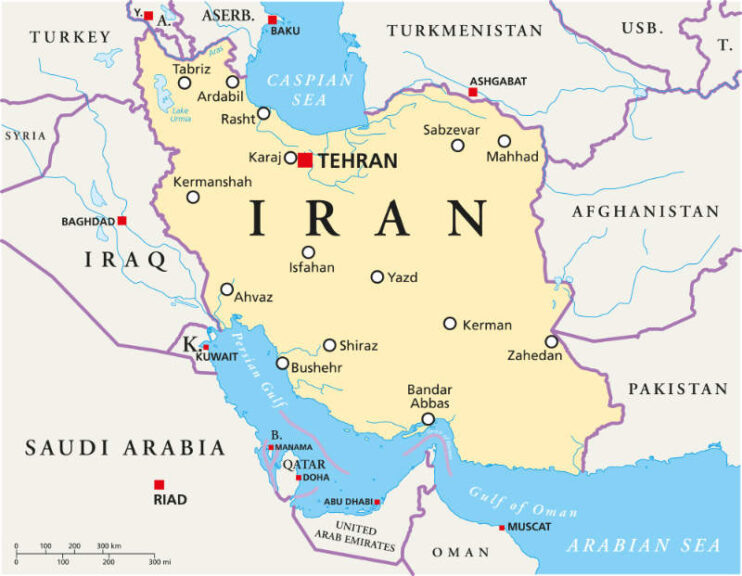
Gilan-Astrakhan Relations Move From Geography To An Operating Network

Teymour Pourheidari, the Iranian Minister for Industry, placed the provincial relationship in a broader commercial context. Gilan has been designated as Iran’s leading province for economic and trade relations with the Volga region and Astrakhan. Direct Iran-Astrakhan trade increased by about 50% last year. The commercial footprint is already substantial. More than 53 Iranian companies operating with Iranian capital are present in Astrakhan, while nearly 100 enterprises established by business representatives from Gilan are active there. The two regions have maintained a trade-cooperation relationship since 1994, with trade and logistics increasingly connected to the North-South Corridor.
That corridor is important because Astrakhan is not simply an endpoint for Iranian exports. It is a Russian distribution gateway for cargo moving through the Caspian network. Goods originating in India, China and other markets can move through Iran toward the Volga region, giving Gilan and Astrakhan the possibility of functioning as reciprocal nodes rather than merely bilateral trading partners. The provincial export figures reinforce the case. During the first three months of the current Iranian year, Gilan exported 459,000 tons of goods, up 16% from 394,000 tons in the corresponding period a year earlier. Imports reached 545,000 tons valued at US$459 million, representing a 60% growth in weight and 37% growth in value. The figures show that Gilan already possesses significant cargo-generating capacity; the policy question is how much of that flow can be redirected toward higher-value Russia and Eurasia-oriented supply chains.
The Anzali-Astrakhan Model Shifts From Cargo Movement To Bilateral Value Chains

Mostafa Taati Moghaddam, Chairman of the Anzali Free Trade Zone, gave the forum its clearest investment-oriented framework. His argument was that the economic relationship should progress beyond simple commodity exchange and develop a common economic chain on both sides of the Caspian Sea. He identified the Anzali Free Trade Zone and the Lotus Special Economic Zone in Astrakhan as institutional platforms for that transformation. The proposed sequence begins with relatively low-risk logistics: regular maritime lines, container transport, joint storage and distribution centres, cold-chain infrastructure, freight forwarding and multimodal transportation.
Once those systems are functioning, the next stage would involve joint investment in marine and port industries and equipment, technical and engineering services, food processing, aquaculture, cold-chain systems, logistics equipment, chemicals and technology-based industries. The significance of this approach lies in its potential to alter the structure of bilateral trade. Instead of Gilan exporting agricultural products to Russia and importing finished goods, producers and investors could establish cross-border production and distribution chains in which capital, technology, services and markets are shared. Taati Moghaddam proposed a permanent operational mechanism between Gilan and the Russian side capable of following projects from identification and feasibility studies through contracts, financing and implementation. The proposed mechanism is particularly important because it gives the provincial relationship a project-management dimension rather than leaving cooperation dependent on periodic political meetings.
Agriculture, Food And Industrial Supply Chains Form The Immediate Trade Base

The sectoral agenda is unusually broad but follows the existing strengths of both economies. Gilan’s agricultural potential includes rice, tea and kiwi, while the Russian side offers demand for food products, agricultural commodities and industrial inputs. Earlier discussions in Rasht had identified Russian interest in foodstuffs, agricultural products, environmental technologies, detergents, auto parts, animal feed, construction materials, grains, cooking oils and wood-based industries. Russian exports to Iran already include wheat, barley and corn. It is worth highlighting the dynamics of sunflower oil supplies: in 2025, their volume increased almost 7.6‑fold compared to the previous year – from 33,000 tons in 2024 to 252,000 tons
More than 400 Russian truck drivers apply daily for transit permits to Iran, demonstrating the physical scale of the transport relationship and the importance of border processing costs. Iranian officials also highlighted the need to reduce fees charged to Russian truck drivers at Iranian border terminals. The trade model under discussion therefore has two directions. Iran can expand exports of agricultural and industrial products to Russia, while Russian grain, livestock inputs, vegetable oils and industrial goods can move south through the same logistics network. The result is a potentially more balanced two-way supply chain rather than a one-direction export corridor.
Bashkortostan Adds A Second Russian Regional Corridor

The Gilan initiative is not restricted to Astrakhan. A provincial-level engagement with Bashkortostan added another Russian regional market to the agenda. Governor Haqshenas held a video conference with Ildar Beykbayev, vice president of Russia’s Bashkortostan Republic and its representative in Moscow. Haqshenas presented Gilan’s ports as having approximately 15 million tons of annual handling capacity and proposed using that capacity for imports of wood, soybeans, corn and wheat and exports of kiwi, tangerines, oranges and cement. Beykbayev expressed readiness to supply grains and livestock inputs and discussed student exchanges. A subsequent meeting with a Bashkortostan economic delegation advanced discussions on trade, investment and transportation. This is strategically significant because it widens the Russian geography of Gilan’s trade strategy. Astrakhan provides the Caspian and Volga gateway, while Bashkortostan creates a link deeper into Russia’s industrial and agricultural heartland.
Customs, Banking And Regulation Remain The Decisive Bottlenecks
Dehghan Dehnavi’s intervention made clear that infrastructure alone cannot produce the projected US$10-20 billion export trajectory. Internal Iranian barriers remain significant, including overlapping regulations, multiple administrative systems, regulatory instability and bureaucracy. The Ministry of Industry, Mining and Trade has prepared an export-support package and submitted it to the government. At the same time, Iran’s Government Economic Commission, working with the Industry Ministry, Central Bank and Ministry of Economic Affairs and Finance, has been preparing trade regulations. One proposed reform concerns order registration. The proposal is to return it primarily to its original function as a declaration of a trade plan and shift controls that can be conducted during customs clearance away from the initial registration stage. For exporters, this could reduce a layer of administrative friction between commercial decisions and shipment execution. The same logic applies to banking. With more than 80% of bilateral settlements already conducted in rubles and rials, the basic architecture for national-currency trade exists. The next challenge is increasing liquidity, payment speed, banking connectivity and financial predictability so that the currency mechanism can support substantially larger trade volumes.
Cooperatives Bring A 14-Million-Participant Network Into The Strategy
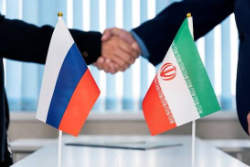
Reza Vafaei Yeganeh, head of the Economic and Business Department of the Iranian Chamber of Cooperatives, proposed using Iran’s cooperative economy as another channel for bilateral trade. He pointed to cooperatives’ ability to organize producers, standardize products, reduce branding and marketing costs and connect producers with consumers. He proposed a specialized cooperative office in the Anzali Free Trade Zone that could connect approximately 14 million participants in Iran’s cooperative sector with the zone’s trade and industrial infrastructure and facilitate reciprocal access for Iranian and Russian products through consumer cooperatives. This could be particularly relevant for agricultural trade, where fragmented production is often a constraint on export scale. Collective standardization, packaging, certification and distribution can make smaller producers commercially viable for large Russian retail and wholesale channels.
Rail And Maritime Corridors Remain The Hard Infrastructure Test
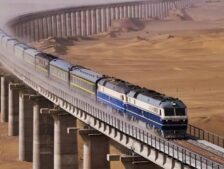
The Rasht-Astara railway remains one of the most important unresolved infrastructure components of the North-South Corridor strategy. Gilan officials stressed the importance of completing the railway connection, while maritime cargo already moves through the Caspian network. A separate meeting chaired by Mohammad Faiz, deputy director of commerce at Gilan’s General Directorate of Industry, Mine and Trade, examined practical export barriers to Astrakhan, including truck facilitation from Sardar Jangal Airport in Rasht and faster clearance of Iranian vessels.
The emphasis on both airport and maritime clearance indicates that the emerging model is multimodal. Sea routes provide the principal Caspian link, rail can provide scale and lower unit transport costs, roads connect ports to production centres, and air cargo can handle selected high-value or time-sensitive shipments. For Gilan, completing the remaining railway infrastructure and reducing port waiting times are therefore not separate projects. Together they determine whether the province can transform the theoretical US$50 billion export overlap into regular commercial volume.
Financial & Political Coordination Provides The Wider Framework
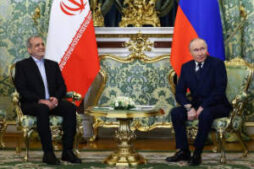
The summit also took place amid intensified high-level Tehran-Moscow coordination. On October 7, Presidents Masoud Pezeshkian and Vladimir Putin held a telephone conversation in which Pezeshkian stressed the continuing development of bilateral relations, while Putin emphasized continued cooperation under the Comprehensive Strategic Partnership Treaty. The presidents met in Turkmenistan on October 8-9 on the sidelines of a Commonwealth of Independent States gathering. Iran and Russia also share membership in BRICS and the Shanghai Cooperation Organization, while the International North-South Transport Corridor provides a physical framework linking their economic interests. Financial cooperation is another element of the broader relationship. Russia has prepared a US$1 billion loan tranche for Iran, described as the first tranche under a wider planned package of US$20 billion, with transfer awaiting Iranian banking details and internal agreement over allocation. Separate discussions have focused on national-currency settlements and reducing reliance on Western-controlled financial channels.
Dmitry Medvedev’s Messages: Iran-Russia Cooperation Expands

In an interview with IRINN on October 3, 2026, Russian Security Council Deputy Chairman and former President and Prime Minister Dmitry Medvedev described Iran-Russia relations as having reached an “unprecedented level”, with bilateral trade increasing by 20% in the previous year. He highlighted expanding cooperation in defense, advanced technologies, energy and transportation, including Russia’s Rosatom role in the Bushehr nuclear power plant and Russian companies’ investments, which he said account for approximately 7% of Iran’s total oil production. Medvedev also identified the Rasht-Astara railway as a strategically important joint project capable of transforming regional transportation, trade and economic activity through the International North-South Transport Corridor (INSTC). He stressed that Moscow would “never sacrifice” its strategic partnership with Iran and said Russia was prepared to provide diplomatic mediation toward a long-term resolution of the regional crisis. On finance, Medvedev noted that 90% of Shanghai Cooperation Organization trade is conducted in national currencies, arguing that Iran and Russia should develop additional financial mechanisms because both face extensive sanctions. He also emphasized the importance of maintaining normal operations in the Strait of Hormuz and Bab al-Mandab, saying their security should rest on agreements rather than coercion.
Summary
The most important outcome of the October 7 summit is the creation of a measurable implementation agenda. The headline numbers are already defined: a Russian import market of approximately US$300 billion; more than US$50 billion in identified import-export overlap; current Iran-Russia trade of approximately US$5.8 billion by the end of 2025; a potential Iranian export trajectory of US$10-20 billion; zero tariffs on 87% of goods under the EAEU arrangement; more than 80% settlement in rubles and rials; 20 million tons of potential northern Iranian port throughput; nearly 100 Gilan-linked enterprises in Astrakhan; more than 53 Iranian-capital companies operating there; and 459,000 tons of Gilan exports in the first three months of the current Iranian year.
The next practical step is the planned Gilan trade delegation to Astrakhan under the provincial governor’s coordination. Its purpose is explicitly commercial: convert contacts made through the summit into contracts, goods exchanges and investment cooperation. The second benchmark is infrastructure. Raising port throughput from roughly 7 million tons toward 15-20 million tons, reducing five-to-seven-day vessel waiting periods, completing remaining rail infrastructure and improving customs and banking procedures would directly increase the capacity of the corridor.
The third benchmark is industrialization. The Anzali-Astrakhan model will become economically more significant if trade develops into joint warehousing, cold chains, processing, aquaculture, engineering services, port equipment, chemical production and technology-based industries. The fourth is regional integration. The participation of Astrakhan and Bashkortostan demonstrates that Gilan’s strategy is evolving from a single bilateral route into a Russian regional network, with the Caspian Sea serving as the physical centre.
The economic logic emerging from Anzali is consequently straightforward: the US$50 billion opportunity is not primarily a question of finding buyers; it is a question of building the logistics, financial, regulatory and production architecture capable of supplying them. Gilan has the ports, agricultural base, Caspian position, emerging rail connectivity and existing Russian business links to begin that process. Astrakhan supplies the Volga gateway, Bashkortostan expands the Russian market reach, the EAEU agreement provides the tariff advantage, and ruble-rial settlements provide an existing financial channel. The decisive measure in the coming months will be whether those advantages produce rising shipment volumes, shorter transit times, more Russian buyers, new joint production capacity and larger provincial exports. The October 7 summit has therefore established a distinctly logistics-led model for Iran-Russia economic expansion: Gilan as the Caspian gateway, Astrakhan as the Volga gateway, the North-South Corridor as the physical artery, the EAEU free-trade regime as the tariff platform, and national currencies as the settlement mechanism.
This analytical report was written by KP Majumdar, a geostrategic and geo-economics analyst based in South Asia whose work has been widely published by international news media and publications. He may be reached at info@russiaspivottoasia.com