 Русский




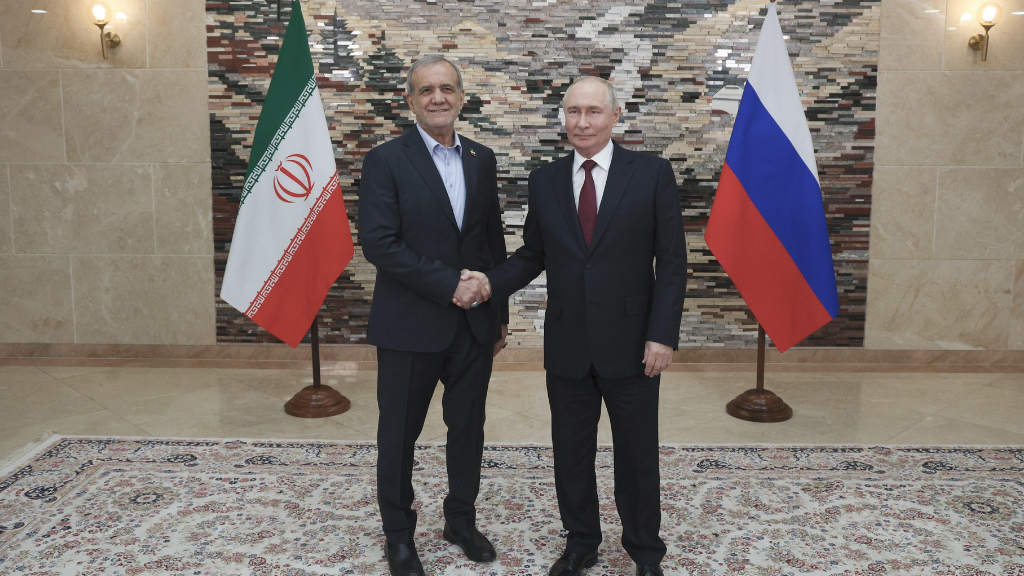

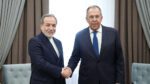
The Russian President, Vladimir Putin met with Masoud Pezeshkian, the President of Iran, in Bishkek on Tuesday (September 1).
On the Russian side, the meeting was attended by Foreign Minister Sergei Lavrov, Deputy Prime Minister Alexei Overchuk, Deputy Chief of Staff of the Presidential Executive Office Maxim Oreshkin, Deputy Chief of Staff of the Presidential Executive Office – Presidential Press Secretary Dmitry Peskov, Presidential Aide Yury Ushakov, Transport Minister Andrei Nikitin, Economic Development Minister Maxim Reshetnikov, Energy Minister, Russian Co-Chair of the Permanent Russian-Iranian Commission on Trade and Economic Cooperation Sergei Tsivilev, Director of the Federal Service for Military Technical Cooperation, Russian Co-Chair of the Joint Intergovernmental Russian-Iranian Commission on Military Technical Cooperation Dmitry Shugayev, Deputy Finance Minister Vladimir Kolychev, and Rosatom CEO Alexei Likhachev.
This is what Putin had to say:
“Mr President, colleagues, friends, I am delighted to see you, this time at the SCO summit in Kyrgyzstan. As you know, we take every opportunity to meet and touch base. The friendly relations between Russia and Iran are developing steadily across all areas, to the letter and in the spirit of the Treaty on Comprehensive Strategic Partnership. As I have repeatedly said before, Russia is standing in full solidarity with the people of Iran. We admire your courage and resilience in your fight for your national interests. Please convey my regards and words of sincere support to Supreme Leader of the Islamic Republic Mojtaba Hosseini Khamenei.
We welcomed the execution of the Iranian-American ceasefire memorandum in June. Unfortunately, the ceasefire proved to be unstable and too fragile. During this difficult period, we try to render the necessary support to you. We have discussed your needs with you and continue to provide the goods and commodities you require. Despite the current military and political situation, we maintain the same dynamic in trade and economic relations and cooperation as last year, primarily thanks to the effective work of our intergovernmental commission that meets regularly and held its session quite recently.
The Free Trade Agreement between the EAEU and Iran is, in my opinion, a significant factor. We also consider it a priority to expand humanitarian cooperation. Increasingly more Iranian students are choosing Russian education, which is great news. Many future physicians study in Russia. In the 2025–2026 academic year, the number of Iranian students in Russia reached almost 9,000, including 802 students with their tuitions funded from the Russian budget.”
Pezeshkian replied:
“I would like to express my sincere gratitude for the opportunity to meet with you and to review and discuss the agreements we have been working on together.
We are grateful to you for the stance you have adopted during the war, the conflicts, the US sanctions and all the rest. You have supported us at the UN and other international organisations. We appreciate this and are grateful to you.
Our relations are of a strategic nature. This is more than just “normal” relations. We believe – no, we are certain that thanks to this we can stand up against US bias and the rightless sanctions they are imposing on us. We are able to circumvent them and other unilateral restrictions within the SCO and other organisations, thereby developing cooperation at the multilateral level.
They have no right to impose sanctions, violate international law and act aggressively whenever they want. They have no legitimate rights to take such measures. They have killed our scientists, innocent schoolchildren and our commanders. Such actions may not be recognised and accepted in any framework. They talk about democracy and claim to respect human rights, but there is no justification for such actions.
We are confronting them from a position of strength, and there is an agreement, a memorandum between us and the United States. If the US returns to compliance with the commitments set out within this framework, we will act likewise and will comply with all these provisions. They may not impose wrong or illegal actions and words on us, and we have come here to fight against this unilateralism.
We support your stand on confronting this unilateralism, and we want to break out of the framework of this unilateralism. I am confident that we will win. We are confident of this, and we reaffirm that we will stand our ground.”
Nuclear Power
With the Russian Energy Minister and Rosatom CEO both in attendance, the meetings would have included nuclear power discussions. Russia and Iran are advancing a US$25 billion nuclear energy partnership to construct new reactor units and expand Iran’s electrical grid. Formalized in September 2025, Russia’s state nuclear agency Rosatom agreed to build four third-generation nuclear power units in Sirik, located in Iran’s southern Hormozgan province, adding roughly 5 GW of capacity. Russia previously built Iran’s first operational nuclear power plant in Bushehr, which was launched in 2013 with a 1 GW capacity and has discussed adding further units there. Both countries have also signed memoranda covering the development and construction of small nuclear power plants in various regions of Iran.
Transport Connectivity
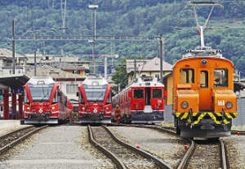
The Russian Minister of Transport was present, with Iran very much a major part of the International North South Transportation Corridor (INSTC), although there remain bottleneck issues on the main railway line between Rasht and Astara, these should be completed by 2029. This would complete a direct rail route from Russia through Azerbaijan and Iran to the Persian Gulf and India. The route is expected to cut cargo travel times between South Asia and Northern Europe from roughly 37 to 19 days.
Due to the United States attacks on southern Iran, transport connectivity is also being put in place to the north of the country. Road and rail networks run through Central Asia (via Kazakhstan and Turkmenistan) and the Caucasus (via Azerbaijan) to connect with Iran’s internal transport grid and southern ports like Bandar Abbas – or will do once the conflict with the United States is over.
In addition, Iran is developing its Caspian Sea maritime capabilities and is upgrading its ports at Amirabad and Enzeli. It is possible Russian assistance is being sought for these projects.
Military Cooperation
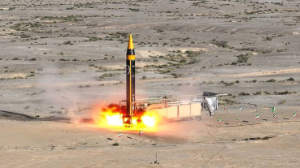
The Russian Director for Military Technical Cooperation took part in the discussions. Russia and Iran maintain a deep and expanding military partnership focused on transactional defense exchanges, intelligence sharing, and technical integration rather than a formal mutual-defense alliance. Iran has provided Russia with hundreds of Shahed-type kamikaze drones and hundreds of thousands of artillery shells for the war in Ukraine. Russia later localized drone manufacturing on its own soil and shared upgraded technology back with Tehran. Moscow also supplies Iran with satellite imagery and targeting intelligence—including orbital surveillance data used to map foreign military bases and critical infrastructure. Russia has also used Soyuz launch vehicles to place Iranian satellites (such as Pars-1 and Kowsar) into orbit.
The two nations signed a 20-year Comprehensive Strategic Partnership Treaty in 2025 to institutionalize long-term defense, security, and economic development. However, unlike treaties Moscow has signed with other nations, the strategic agreement with Iran does not contain explicit mutual-defense or military-alliance guarantees. Russia tends to avoid direct military intervention or providing blanket air-defense commitments on Iran’s behalf to prevent a full-scale open conflict with the United States and Israel, although there has been recent speculation in Western media that Russia is assisting Iran develop supersonic cruise missiles.
Economic Development
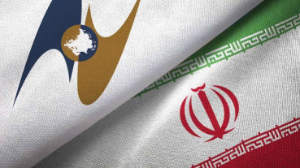
Russia’s Economic Development Minister also attended the discussions, as did Russia’s Deputy Finance Minister. The two countries have a lot in common in terms of dealing with sanctions and being disconnected from the SWIFT global financial network. Russia and Iran are expanding their economic cooperation to bypass Western sanctions, with bilateral trade reaching about US$5.76 billion in 2025, with trade growing by 20% last year as a result of the Iran – EAEU Free Trade Agreement, which came into effect in May that year and which Putin noted had proven effective. The two countries had a trade target to reach US$6 billion and it looks as if that will be met and probably surpassed during 2026.
Finance
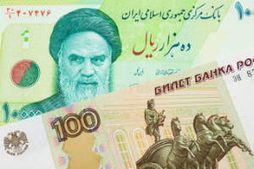
Other key issues concern trade finance and the development of alternative financial settlements as both countries deal with the impact of sanctions. Russia and Iran settled about 96% of their bilateral trade in national currencies (rubles and rials) by late 2025, completely bypassing the US dollar. Both countries signed bilateral currency swap agreements through their central banks to trade exclusively in rubles and rials, while Russia made its System for Transfer of Financial Messages (SPFS) available to Iran as an alternative to the global SWIFT financial messaging network, meaning Iran can transfer funds to other countries also connected to the SPFS system.
Russian banks began accepting letters of credit (LCs) issued by Iranian banks to lower transaction costs and expedite essential agricultural and industrial imports. Iran also launched a ruble trading board at the Iran Center for Exchange of Currency and Gold to stabilize exchange mechanisms for merchants.
Summary
The US-Iran war looms large over the Russia-Iran bilateral relationship, which despite President Trumps’ constant insistence, does not appear to be making significant head way on Washington’s behalf. It is possible that the reasons given for the conflict – Iran’s nuclear weapon issue – is a guise to disguise the actual motivation – to prevent Iran’s rise as a transit route for Russian energy. Given that the United States has also been attacking Bandar Abbas Port – which has been heavily invested in by India – tends to lend credence to this theory as these targets are unrelated to Iran’s nuclear programme. It is also worth noting that with the United States supportive of Ukraine against Russia, and now involved in Iran, Washington has effectively opened up two fronts in conflict with Moscow. The question to ask is whether this is deliberate or just co-incidence?
Meanwhile, Iran’s trade and relations with Russia, China and India remain strong. Further developments as concerns Iran’s trade and development issues are certain to emerge in two weeks time when the BRICS group Heads of State meet in New Delhi. More progress can be expected at that event. Meanwhile, Presidents Putin and Xi have floated the idea of meeting face to face with Trump, in China, in November. If that happens, Iran would be very much on the agenda.