Русский








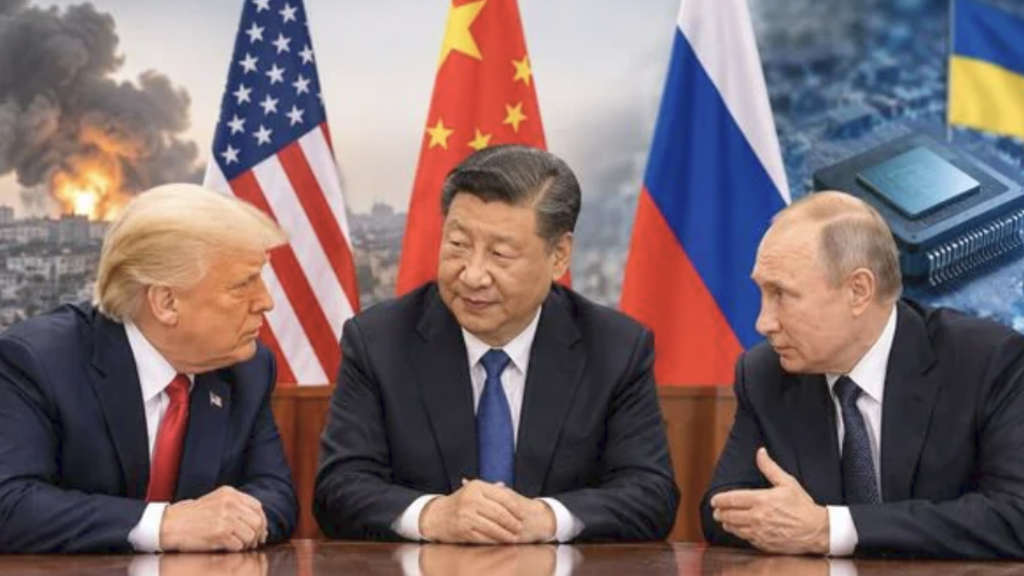

The trilateral meeting scheduled to take place between Presidents Trump, Xi and Putin this coming Thursday, during the APEC summit in Shenzhen, China, has generated a lot of media noise but little with any substance. US officials have said that the summit will be about “World Peace” rather than specifically Ukraine, which appear geared towards lessening expectations as well as a nod to the issues that the United States is embroiled in several apparently difficult conflicts, not least with Iran – another China and Russia ally.
In fact, it is a curious event as the host party, China, has little involvement in the Ukraine or Iranian issues that may be up for discussion – almost immediately lending the talks as being about pragmatic post-Ukraine war business, rather than any peace settlement angle. That too would fit the comments about the talks not being about Ukraine peace.
However, it does appear that more recently, Ukraine itself and particularly ‘President’ Zelensky is being sidelined – as to some extent, are the Europeans. We examine what deliverables to expect from this event.
The Trilateral Views on Ukraine
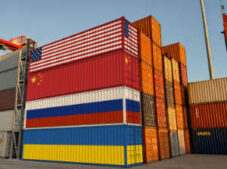
Putin’s position viz-a-viz Ukraine has not changed and can be regarded as consistent. However, Ukraine’s relationship with US President Donald Trump and with President Zelensky has deteriorated, to the point where Trump recently stated that Zelenksky ‘has to go’. The Vice-President, J.D. Vance has also stated that Ukraine is ‘the most corrupt country in Europe.’
Xi too, will not be a fan of Zelensky, who has been highly critical and somewhat rude about China’s trade ties with Russia. In September 2023, Zelensky called China’s position ‘evil’.
Neither Trump nor Xi will be enamored of the extent of their respective economic ties with Ukraine. The United States has funded Kiev to the tune of US$196 billion in the war against Russia, with Trump now saying that he wants this money back. While Xi has not sent money to Ukraine for military purposes, Chinese commercial investments there had reached US$250 million, including agricultural land leases and railway development. Those now lie in ruins. China’s exports to Ukraine meanwhile have halved from US$10 billion in 2021 to US$5 billion in 2025, while Ukraine currently has about US$7 billion in outstanding loans with China. Beijing rejected Kiev’s request for a deferment on a debt repayment of over ¥30 billion (US$4.5 billion) earlier this year. Interestingly, although this has been called out as ‘fake news‘ and that the real amount owed is much less by European monitors, the original statement was released by China’s State-Owned media.
Ukraine’s economic credibility and reliability have been badly affected in Kiev’s relations with all three of the Trilateral participants, with Zelensky’s personal credibility now so poor that mediators rather than Presidents have been delegated to the task of talking to him.
Post-War Monitoring
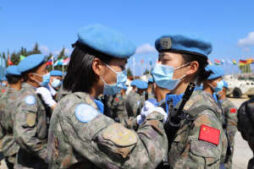
There is an interesting potential for a peace plan, with Russia insisting that a border area between Ukraine and Russia is created, which at some points would be 40km wide. During the recent Putin-US talks in Moscow, Russia firmly rejected the idea that NATO troops would be involved in monitoring activities along this line, suggesting that the alternative would be the United Nations. A compromise could well be reached in that any UN peace-keeping force could be made up of Chinese soldiers, rather than any from NATO countries. Beijing is the 10th largest troop and police contributor (2,274 personnel) of any UN member and is its second largest peacekeeping financial supporter, spending three times as much as the largest European contributor. Chinese involvement in keeping the peace between Russia and Ukraine along any buffer line can be expected to at least be discussed. The Europeans will not be happy – but China is a fellow UN member and spends rather more on the peacekeeping function than they do.
Investments

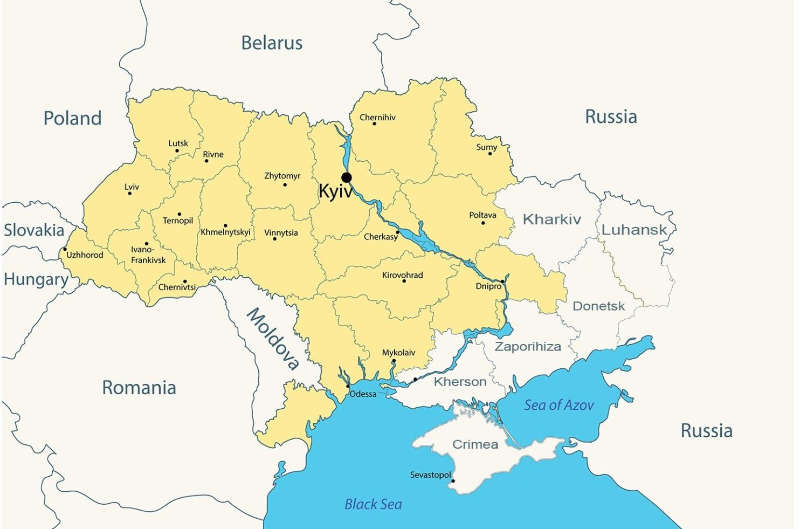
Ukraine however does have significant natural resources, although where these are and how much they are worth depends on whether these are totaled to include assets now under Russian control. With Trump already suggesting that the ‘shape of Ukraine’ may be altered, that implies that Russia will be keeping hold of Crimea and the Donbass regions. Much then depends upon what Ukraine actually is – as the current reality is somewhat different from Kiev’s statements. The math impacts population, the actual as opposed to claimed reserves, and the real GDP. These are currently hard to assess given that Ukraine insists on including areas that have not been under Ukraine’s authority since 2014, but is likely to be as follows:
| Ukraine | 2014 | 2026 |
| Landmass | 603,628 km 2 | 483,000 km 2 |
| Population | 43.5 million | 28.5 million |
| GDP | $369.6 billion | $102.9 billion |
| GDP to Debt | 70.30% | 107.12% |
| Total Debt | $70.6 million | $213 billion |
In overall terms, this means that the Ukrainian economy has shrunk by 72.36%, its population has declined by 35%, its landmass has been reduced by 20%, and its debt has increased by 53%.
It is also worth looking at Ukraine’s total sovereign debt figure of US$213 billion. On a per capita basis that works out at Ukraine’s current estimated debt as being $7,463 per citizen. To compare, on a per capita basis Russia’s debt per citizen is $2,160 while China’s is about $10,000 per citizen. In other words, Ukrainians have a debt 2/3 the size of China’s but with a GDP 211 times smaller.
These are certainly not anywhere close to investment grade statistics. Ukraine’s current sovereign credit rating is ranked as CCC+ with stable outlook – below investment grade status. Grandiose ideas that Ukraine will be able to cash in on its post war reserves appear far-fetched before lenders will want to go anywhere near it.
However, this doesn’t mean that countries and businesses will not invest. But it does mean that collaboration will need to be backed by real assets. This presents three challenges.
Ukraine’s Assets
In a bankrupt economy, the only things left to sell are your natural resources. Ukraine has three types of these: natural resources that can be mined, natural resources that can be grown, and its human capital. We can examine these as follows:
Natural Minerals
Ukraine’s reserves are worth an estimated $15 trillion, which is why Trump has stated that Ukraine has ‘tremendous potential’. However, there are issues with this. Just $4.5 trillion of this remains in parts of the country still controlled by Kiev. Additionally, these require significant investment to extract and new infrastructure builds. Given the poor credit ratings, risk, and lack of investment capital in Ukraine itself, investment deals are likely to be highly leveraged in terms of benefits for any foreign investor involved. In other words – Ukraine’s natural reserves will be available at rock-bottom prices.
Agriculture
Agricultural products are Ukraine’s most important exports. In 2021 they totaled $27.8 billion, accounting for 41% of the country’s $68 billion worth of total exports. In 2025, this had declined to $22.5 billion. That is recoverable, however there are issues – much infrastructure has been destroyed, and Ukraine is likely to face a labor shortage to bring in larger harvests.
Human Capital
Of Ukraine’s current estimated population of some 28.5 million, an estimated 1.3 million declared taxes in 8M 2026. If that relates to the actual workforce, this means that just 0.4% of Ukrainians are effective, tax paying workers. While Ukraine has some of the lowest GDP per capita in Europe – estimated at $7,000 – the numbers of Ukrainians actually productive appears to be significantly problematic in terms of available labor. To put that into context, this is half of China’s average GDP per capita and less than double that of India’s.
To reconstruct Ukraine, less expensive labor will need to be brought in en mass. With salary levels already low, this implies that even Indian casual labor would not be cost-effective – meaning Ukraine will have to look for labor imports from the even less developed sub-Saharan African markets. Organizing this and training them will add to the risk and operational costs associated with investment.
These problems suggest that any foreign investor would bring in their own contracted labour to work on projects instead of relying on local labour. Who performs this type of operation on a regular basis? China. In 2025, an estimated 600,000 Chinese workers were engaged in overseas projects, ranging from building tunnels in the Caucasus, to railways in Africa and Ports in Peru. Xi will spot opportunities here.
Summary
The trilateral meeting has been compared to Yalta 2.0, an observation we first raised back in January this year. Yet how the Trilateral meeting will pan out is uncertain: Trump is unpredictable, Putin not for turning over Ukraine and Xi will have his eyes on the economic benefits. However, given the hard statistical data we have provided, it appears that as and when discussions do turn towards Ukraine, the conflict will not be settled either diplomatically (although numerous Western politicians seem to want to insist they are the ones to do so), or militarily. The Ukraine conflict will be resolved as an economic deal, with Ukraine’s sovereign assets divided up among participants, including the Europeans, in a bargain-big basement sale.