 Русский




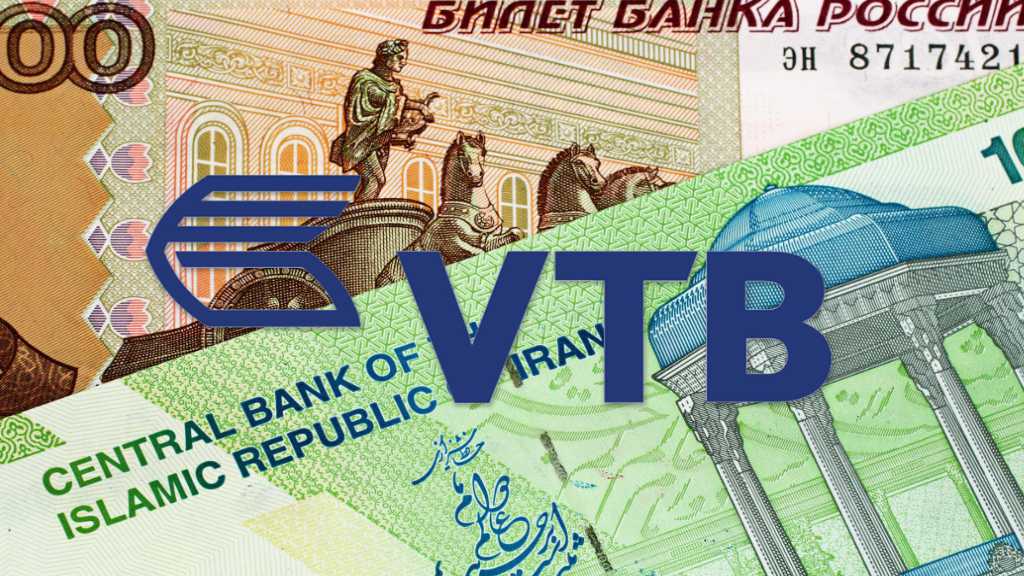

VTB CEO Andrei Kostin has said that the bank might come back to the issue of expanding its presence in Iran, following the bank’s annual shareholders meeting.
He said, “We will think again about opening our bank in Iran. The situation regarding military action will end shortly, and I think we will come back to this issue.” VTB said in March that it would put the plans to expand its presence and open a new branch in Iran on hold.
According to the Central Bank of Russia’s website, VTB has 21 branches in Russia. The group also includes subsidiary and associated banks in Vietnam, Armenia, Belarus, Kazakhstan, and Azerbaijan, as well as a branch in India, a branch and office in China, and an office in Iran.
By the end of 2025, VTB had planned to transform its Iran office into a branch assisting Russian and Iranian companies in their foreign economic activity, offering banking products and payment mechanisms that are in demand on the Iranian market.
VTB would find themselves busy in Iran. Bilateral trade reached over US$5 billion by the end of 2025, maintaining a steady upward trajectory driven by economic sanctions and deep strategic alignment. Data from Russia’s Federal Customs Service shows that bilateral trade increased by over 20% in 2025 compared to the previous year. Moving into the first four months of 2026, trade volume maintained a moderate growth of 2% despite regional geopolitical shifts and supply chain disruptions.
Russia maintains a significant trade surplus. Its dominant exports are agricultural products—specifically wheat, corn, and barley—which have increasingly shifted from Black Sea routes to the Caspian Sea. Russia also exports timber, vegetable oils, chemicals, machinery, and military technology.
Iran predominantly exports agricultural goods (fruits, nuts, vegetables, and seafood), alongside energy products, industrial components, spare parts, ceramics, and cement. Beyond commercial goods, the trade is heavily fortified by defense cooperation, including the transfer of drone parts and military-technical components. To bypass Western financial surveillance and SWIFT, more than 80% of Russia–Iran trade is settled directly in Russian rubles and Iranian rials.
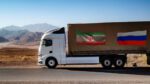
The logistical backbone of this trade is the International North-South Transport Corridor (INSTC). During early 2026, Russian freight exports along this route surged by 56%, with Caspian Sea ports like Astrakhan seeing record-high grain and industrial turnover as Iran redirected its trade away from the blockaded Persian Gulf.