
 Русский






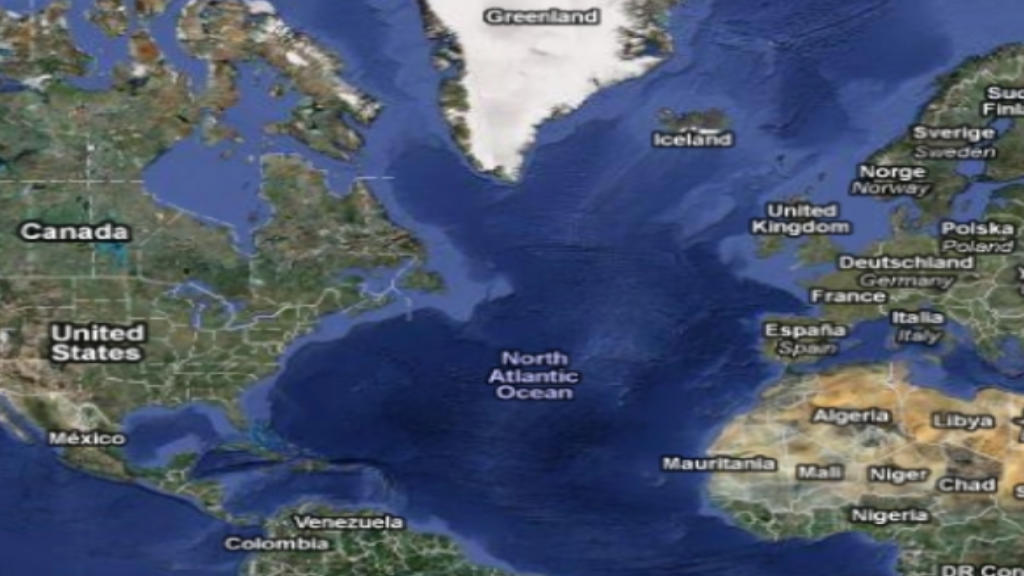

With Washington openly declaring it will seize Greenland “easy or hard,” invoking Russian and Chinese threats to justify what is plainly a territorial grab, Copenhagen responds with cold clarity: Danish forces are ordered to fire first if U.S. troops attempt invasion, signaling that NATO is no shield for American overreach.
Greenland’s leaders, backed by Brussels, insist their land belongs to its people, rejecting Washington’s transactional ambitions. Europe has thus moved from protests to hard leverage, threatening to freeze U.S.-EU trade deals and even discussing rapid deployment to protect Greenland.
The crisis therefore exposes the end of the post-Cold War alliances and introduces a potential US-Europe rift. For Europe, the lesson is stark: without the ability to defend even a distant Arctic territory, “strategic autonomy” is nothing but empty rhetoric. NATO instead risks collapse.
Donald Trump’s revived rhetoric around Greenland framed as a “strategic necessity” for the United States has been widely treated in Western commentary as a provocation, a bargaining tactic, or a personality-driven spectacle. Yet such interpretations miss the deeper meaning of the episode. Greenland is not about ice, minerals, or Arctic shipping lanes alone. It is about the exhaustion of the Atlantic-centric governance model and the visible inability of traditional Western institutions to manage territorial integrity, alliance discipline, and long-term economic coordination.
For much of the post-World War II era, global governance has been dominated by a North Atlantic-centric framework led by the United States and its European allies. Institutions such as NATO, the IMF, the World Bank, and the EU reflected Western political norms, economic priorities, and security interests. However, the relative decline of this Atlantic-centric order has coincided with the rise of multipolarity and the strategic reorientation of major powers, most notably Russia. Russia’s “Pivot to Asia” represents both a response to Western pressure and an attempt to reposition itself within a rapidly evolving global order.
The Greenland episode marks not an anomaly, but a symptom. It exposes a transatlantic rift that is no longer ideological but structural rooted in declining economic gravity, fractured political legitimacy, and the erosion of institutional effectiveness across the G7, NATO-aligned platforms, and the European Union itself.
At the same time, a contrasting process has been unfolding across Eurasia and the Global South. Russia’s strategic pivot to Asia, once dismissed as reactive or forced, has matured into a diversified, institutionally anchored economic strategy. Through BRICS, the Shanghai Cooperation Organization (SCO), the Eurasian Economic Union (EAEU), the Commonwealth of Independent States (CIS), and expanding South-South frameworks, Moscow has embedded itself in platforms that increasingly generate tangible economic outcomes rather than rhetorical alignment. The divergence between these two trajectories – Atlantic fragmentation versus Eurasian consolidation- defines the current phase of global transition.
The Atlantic-centric system faces growing challenges stemming from both internal and external dynamics. Internally, Western cohesion has weakened due to political polarization, economic inequality, and diverging national interests within the EU and across the transatlantic alliance. Events such as Brexit, disputes over defense burden-sharing, and differing approaches to China and energy security have exposed structural fragilities. Moreover, repeated financial crises and uneven globalization outcomes have reduced the normative appeal of Western-led governance. Externally, the rise of non-Western powers particularly China, India, and regional coalitions such as BRICS and Russia’s ‘Pivot To Asia’ strategy has diluted Western dominance. These actors increasingly challenge Western institutional authority by creating alternative mechanisms for trade, finance, and diplomacy. As a result, global governance is becoming more fragmented, with parallel systems operating alongside traditional Atlantic institutions.
The Greenland Signal: Territorial Anxiety in a Declining Core

The renewed U.S. interest in Greenland must be understood within the broader context of declining American and European capacity to control strategic geography through multilateral consensus. In the post-Cold War era, territorial stability in the Euro-Atlantic space was underwritten by economic dominance and institutional cohesion. Today, neither condition holds. The European Union, nominally responsible for defending the territorial integrity of its member states and associated partners, has demonstrated limited strategic autonomy. Denmark’s inability to even frame a coherent response to U.S. annexation rhetoric reveals a deeper problem: sovereignty within the EU has become conditional, negotiable, and increasingly subordinated to external pressure.
This erosion is occurring alongside severe internal polarization. The EU’s political economy is now characterized by: divergent fiscal capacities between core and periphery, deindustrialization pressures driven by energy shocks, capital flight toward U.S. financial markets and rising public debt with limited growth multipliers. According to Eurostat and the European Central Bank, EU industrial output remains structurally below pre-2020 trends, while U.S. Inflation Reduction Act subsidies continue to attract European capital and manufacturing investment away from the continent. The EU’s value of sold production at constant prices declined for a second consecutive year in 2024, falling by 2.0% compared with 2023. This followed a 1.4% decrease in 2023 relative to 2022, confirming a sustained downward trend in industrial output. Greenland, in this context, becomes a symbol of Europe’s diminishing control over its own strategic environment.
The Atlantic alliance, once predicated on mutual economic benefit, is increasingly asymmetrical and extractive rather than integrational. Trump’s push to reduce the EU trade deficit is hampering the growth of transatlantic trade momentum. EU goods exports to the U.S. plunged 26% in August 2025 to €32.9 billion (US$38.3 billion) following the new tariff agreement, marking the lowest monthly figure since August 2021.
Year-over-year, exports fell 22%, signaling a sharp contraction in transatlantic trade. The slump underscores growing economic friction between the EU and the U.S., raising questions about the long-term impact of trade policy shifts. In October, U.S. imports fell 3.2% to US$331.4 billion, with goods imports tumbling 4.5% to US$255.0 billion, the lowest since June 2023, reflecting both President Trump’s tariffs and softening domestic demand.
Imports of industrial supplies dropped by US$2.7 billion, led by non-monetary gold, while consumer goods slid US$14.0 billion, driven by pharmaceuticals. In contrast, capital goods imports rose US$6.8 billion, fueled by computer accessories, telecommunications equipment, and computers, likely tied to artificial intelligence investment. The data signal a sharp reshaping of U.S. import patterns, with selective growth amid broader contraction.
The G7 and the Illusion of Economic Coordination
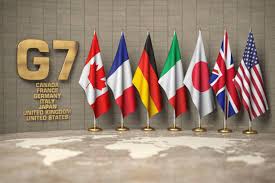
The G7 continues to present itself as the core steering committee of the global economy. Yet in material terms, its capacity to shape outcomes has sharply declined. Measured by purchasing power parity (PPP), G7 countries accounted for over 50% of global GDP in the early 1980s. Today, that figure has fallen below 30%, according to IMF data.
More importantly, the group lacks internal economic coherence. Monetary tightening in the United States has destabilized European bond markets; industrial policy divergence has triggered subsidy races; and trade policy has become increasingly unilateral. The repeated failure of G7 summits to produce enforceable trade or investment frameworks highlights the group’s transformation into a declarative forum rather than a coordinating mechanism. Sanctions regimes, once portrayed as instruments of collective economic power, have instead accelerated currency diversification, alternative payment systems, and South-South trade corridors.
The G20, originally envisioned as a bridge between advanced and emerging economies, now reflects the same fragility. Its agendas are crowded, its consensus diluted, and its relevance undermined by the rise of parallel institutions that prioritize development over conditionality. In 2026, the G20 stands at the brink of irrelevance as ideological gatekeeping replaces genuine global coordination.
By sidelining South Africa, Washington signals that loyalty now matters more than representation, fracturing the post-Cold War consensus. The Miami meeting in 2026 marks the definitive end of global consensus, replacing narrow agenda and cooperation with ideological division. A “New G20” of like-minded states may appear unified, but it cannot speak for the Global South or solve truly global problems. Climate change, pandemics, and debt crises demand inclusion, not exclusion dressed up as leadership. By turning the G20 into a club of friends, the United States has accelerated the creation of alternative orders beyond Western control.
Russia’s Pivot to Asia: From Adaptation to Architecture

Contrary to Western narratives that frame Russia’s Eurasian reorientation as a response to isolation, the data paints a rather different picture. Since 2014, and rapidly accelerating after 2022, Russia has systematically restructured its trade, investment, and financial flows toward Asia, the Middle East, and the Global South. Russia’s Pivot to Asia is not merely a tactical adjustment, but a long-term strategic recalibration.
While Moscow had discussed deeper Asian engagement since the early 2000s, Western sanctions, diplomatic isolation, and security tensions – especially after 2014 and intensifying after 2022, powered this shift. Asia offers Russia several strategic advantages.
Physically, it is just ‘next door’. Economically, it provides access to fast-growing markets, alternative investment sources, and long-term energy consumers. Geopolitically, closer ties with Asian powers reduce Russia’s dependence on Europe and weaken Western leverage. Strategically, engagement with Asia supports Russia’s vision of a multipolar world that limits Western unilateralism.
Underlining this is hard data – trade turnover between Russia and China reached nearly US$240 billion in 2024, nearly double pre-2020 levels, with settlements increasingly conducted in national currencies. Although trade between Russia and India is expected to reach US$220 billion, this represents a slight decline from 2024 levels, yet both countries are expected to increase trade volume again in 2026. Meanwhile, Russia’s trade with China, targeted at US$200 billion by 2024, achieved this goal in 2023 and has maintained it ever since. If current growth momentum continues and the existing asymmetry in trade is reduced, Russia–China trade could reach US$250 billion. Furthermore, the recent establishment of a mutual visa-free regime will further enhance the scale and fluidity of bilateral commerce.
Russia-India trade, driven by energy, fertilizers, and machinery, has expanded more than fivefold over the same period. Russia and India now trade nearly US$70 billion, with a target of US$100 billion by 2030. This shift is not merely bilateral. It is institutional. The Eurasian Economic Union has evolved from a customs bloc into a platform for regulatory convergence, digital trade facilitation, and industrial cooperation. The EAEU’s free trade agreements with Vietnam, Iran, Indonesia and Serbia and ongoing negotiations with ASEAN members – and India – illustrate a strategy focused on production chains rather than speculative capital flows.
Within BRICS, Russia has actively supported the expansion of membership and the strengthening of the New Development Bank (NDB) as an alternative source of infrastructure finance. Unlike Western development institutions, BRICS mechanisms emphasize project viability, national development priorities, and currency flexibility. Russia–Africa trade reached US$24.5 billion in 2024, a figure that remains vastly underutilized compared to China’s trade with Africa, which stands at approximately US$295-296 billion.
Yet Africa arguably needs Russia more than China, Europe, or the U.S. If Russia accelerates engagement with Africa as part of its Pivot to the Global South strategy, trade growth could easily reach US$100 billion within a few years. Russia is well positioned to fill critical gaps in Africa’s nuclear energy, technology transfer for mining, and energy security, providing solutions where other partners fall short.
The decline of Atlantic-centric global governance and Russia’s Pivot to Asia are interconnected phenomena rather than isolated trends. As Western dominance erodes, space opens for alternative power centers and strategies. Russia’s pivot illustrates how mid-to-great powers adapt to systemic change by diversifying partnerships and challenging existing norms. However, unlike China’s expansive global strategy, Russia’s pivot is largely reactive, shaped by exclusion from Western systems rather than proactive global leadership.
Key Dimensions of the Pivot to Asia
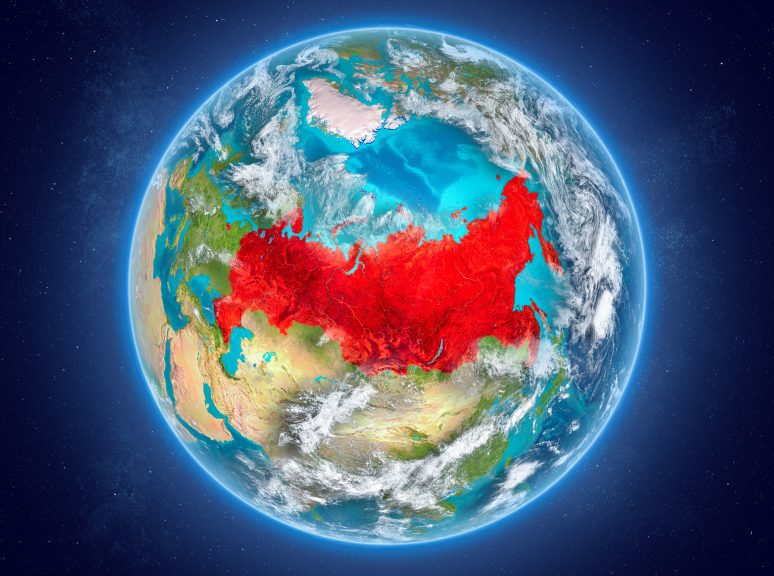
Economic and Energy Integration
Russia has redirected significant portions of its energy exports toward Asian markets, particularly China and India. Long-term gas agreements, oil exports, and infrastructure projects such as pipelines and Arctic shipping routes reinforce this shift. Trade diversification also includes arms sales, nuclear energy cooperation, and agricultural exports.
Strategic Partnership with China
The Russia-China relationship is central to the pivot. While not a formal alliance, it is characterized by deepening military coordination, diplomatic alignment in international forums, and shared opposition to Western dominance. Nevertheless, the relationship is asymmetrical, with China holding greater economic and technological leverage, an enduring vulnerability for Russia.
Regional and Multilateral Engagement
Russia has strengthened its role in Asian-led institutions such as the Shanghai Cooperation Organization (SCO) and expanded engagement with ASEAN states. These platforms allow Russia to project influence without relying on Western-dominated institutions, reinforcing alternative governance structures.
Challenges

Despite its ambitions, Russia’s Pivot to Asia faces notable constraints. Infrastructure limitations, demographic decline in Russia’s Far East, and technological dependence on external partners limit long-term effectiveness. Furthermore, over-reliance on China risks replacing one form of dependency with another. Many Asian states also pursue pragmatic, interest-based relations with Russia rather than deep strategic alignment. Russia must navigate these challenges prudently and carefully. Trump’s threat of 500% tariffs on India, China, and Brazil over energy trade with Russia may ultimately falter, but it creates real strategic pressure. These countries must balance energy security with the risk of damaging trade ties with the U.S. Russia, meanwhile, must carefully manage these partnerships to avoid pushing key buyers into retreat.
SCO, CIS, and the Security-Economy Nexus
The Shanghai Cooperation Organization represents a model fundamentally different from NATO-style alliances. It integrates security cooperation with economic connectivity, infrastructure planning, and energy coordination. For Russia, the SCO provides strategic depth across Central Asia while reinforcing trade corridors linking China, South Asia, and the Middle East. CIS frameworks, often underestimated in Western analysis, continue to facilitate labor mobility, energy integration, and logistical harmonization across post-Soviet space. Remittance flows, transport interoperability, and shared technical standards sustain economic resilience even under external pressure. This contrasts sharply with the EU’s experience, where labor mobility has contributed to demographic hollowing of Eastern member states and political backlash rather than balanced development.
Energy, Infrastructure, and the Rewriting of Trade Geography

Energy remains the backbone of Russia’s economic diplomacy. The redirection of oil and gas exports toward Asia has been accompanied by long-term infrastructure investment, including pipelines, LNG terminals, and Arctic shipping routes. The Northern Sea Route, often framed in Western discourse as speculative, is becoming an economically viable corridor due to Russian state investment and Asian demand. Chinese, Indian, and Middle Eastern capital participation in Arctic LNG projects reflects confidence in long-term returns, not political alignment alone. By contrast, Europe’s energy transition has exposed vulnerabilities rather than resilience. High input costs have undermined industrial competitiveness, while green investment has struggled to offset manufacturing losses. According to OECD and IEA data, European energy-intensive industries face structural contraction throughout the rest of this decade, and possibly into the 2030’s
Polarization as an Economic Variable in the EU

Political polarization within the EU is no longer a social phenomenon; it is an economic risk factor. Fragmented parliaments, rising protest movements, and divergent national priorities complicate fiscal coordination and long-term investment planning. Capital markets price this instability accordingly. Sovereign bond spreads within the eurozone reflect not only debt levels but political uncertainty. Industrial policy, once coordinated through Brussels, is increasingly nationalized, undermining the single market’s integrity. The inability of EU institutions to decisively protect territorial integrity whether in relation to Greenland, Eastern Europe, or external pressure further weakens investor confidence. Sovereignty ambiguity translates into risk premiums.
The End of Atlantic Centrality
The decline of Atlantic-centric governance does not imply global chaos. Rather, it signals a transition toward plural economic centers and overlapping institutional architectures. Russia’s experience demonstrates that strategic autonomy is not achieved through isolation but through diversification of markets, currencies, institutions, and partners. While Western platforms struggle to maintain relevance amid internal contradictions, Eurasian and Global South frameworks increasingly focus on trade facilitation, infrastructure delivery, and development finance. This is not a zero-sum contest. But it is a rebalancing in which outcomes, not declarations, determine influence.
Greenland as a Mirror

Greenland, in the end, is a mirror held up to the Atlantic world. It reflects a system that once projected confidence and now negotiates from insecurity; that once defended sovereignty and now redefines it under pressure; that once coordinated global growth and now competes internally for dwindling capital. Against this backdrop, Russia’s pivot to Asia appears less as a deviation and more as an alignment with the emerging structure of the global economy, one where geography, production, and institutional pragmatism matter more than inherited dominance. History, as always, is decided not by intentions, but by architecture.
The erosion of Atlantic-centric global governance marks a transition toward a more pluralistic but fragmented international system. Russia’s Pivot to Asia reflects both opportunity and necessity offering economic and geopolitical alternatives while exposing new dependencies and constraints. Ultimately, the success of Russia’s strategy will depend on its ability to balance relations within Asia, modernize its economy, and operate effectively within an emerging multipolar order rather than merely positioning itself in opposition to the West.
This article was written by Ms. Khatun, a geostrategic analyst writing exclusively about Russia for Russia’s Pivot To Asia. She may be contacted at info@russiaspivottoasia.com
Further Reading
The Emergence Of The Bipolar World