 Русский




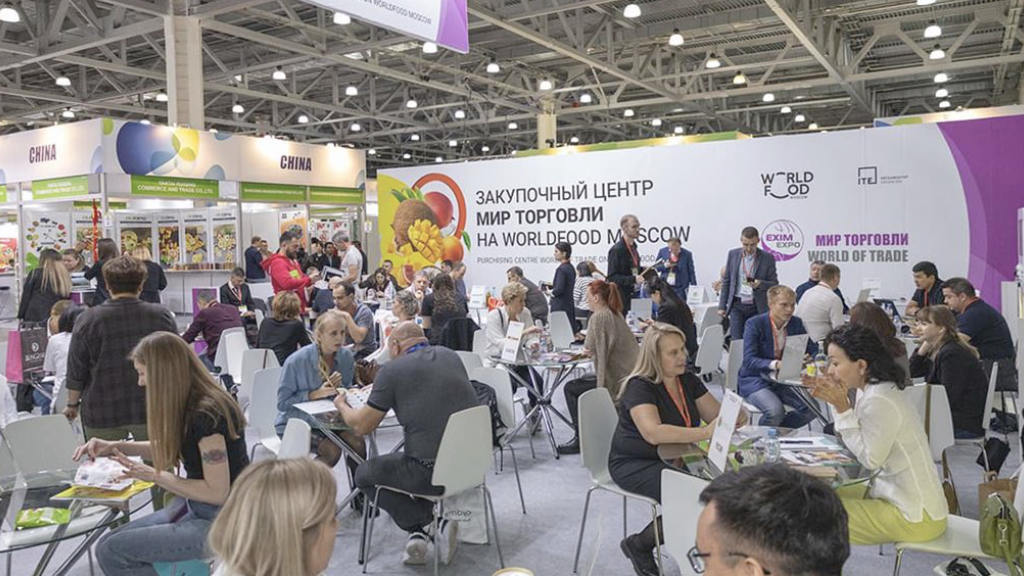

The simultaneous staging of WorldFood Moscow 2026 and the IX Global Fishery Forum & Seafood Expo Russia created an unusually concentrated picture of Russia’s changing food-trade geography. WorldFood Moscow ran from 15 to 18 September at Crocus Expo in Moscow, while the Global Fishery Forum and Seafood Expo Russia took place from 16 to 18 September at Expoforum in St. Petersburg. Together, the two platforms brought more than 46,000 professional visitors into Russia’s food, retail, fisheries, processing, logistics, and aquaculture economy, with participation extending across Asia, the Middle East, Africa, Latin America, the CIS, and other Global South markets.
The commercial significance isn’t just the number of exhibitors. The two exhibitions operated at different points of the same supply-chain architecture. Moscow concentrated on food imports, retail distribution, ingredients, HoReCa, and consumer products, while St. Petersburg covered the production end of the seafood economy from wild catch and aquaculture to processing, vessel construction, packaging, cold-chain logistics, and export routes. The result was a four-day Moscow marketplace running alongside a three-day St. Petersburg fisheries marketplace, with international participants using both events to identify Russian distributors, buyers, technology partners, processing opportunities, and new routes into the Eurasian market.
WorldFood Moscow: 26,000-Plus Professional Buyers And A 14-Pavilion International Platform
WorldFood Moscow brought together approximately 873 manufacturers and suppliers from 30 countries in the detailed exhibitor count, while broader exhibition figures put total participation at more than 1,100 exhibitors when collective and wider-format participation is included. More than 350-400 companies were new participants. The exhibition covered 16 product and industry sections, ranging from fresh produce, meat and poultry and dairy to confectionery, beverages, frozen products, organic and healthy food, halal products, ingredients and related services. More than 26,300 professional visitors were associated with the event, coming from 81 countries and 83 Russian regions.
The buyer structure is particularly important for understanding the commercial value of the exhibition. Wholesale companies represented about 31% of visitors, retail chains 18%, food manufacturers 16%, and HoReCa and foodservice around 7%. Major Russian networks represented included X5 Group, Magnit, Lenta, Auchan, Azbuka Vkusa, Metro, Ozon, and Yandex Lavka, alongside CIS buyers.
This transformed the exhibition from a conventional product showcase into a direct procurement platform linking foreign suppliers with Russian retail and distribution channels. The international structure was equally significant. Fourteen national pavilions represented Brazil, Vietnam, Egypt, India, Indonesia, China, Kyrgyzstan, the UAE, Oman, Thailand, Tunisia, Turkey, Uzbekistan, and South Korea. Beyond those pavilions, companies and delegations from Malaysia, Kazakhstan, Tajikistan, Turkmenistan, Sri Lanka, Jordan, Saudi Arabia, Kuwait, Ethiopia, Algeria, Botswana, and Ecuador expanded the Global South footprint.
Asia Supplies The Largest Commercial Layer Of The Moscow Platform
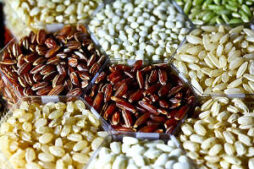
China, India, Vietnam, and the Central Asian economies occupied particularly important positions. India was the partner country of the 2026 exhibition, giving its food and agricultural producers a dedicated platform at a time when Russia-India trade is expanding across a much wider commodity base.
Vietnam brought around 30 enterprises and a 400-square-meter national pavilion. The Vietnamese delegation promoted rice, coffee, pepper, cashews, confectionery, and processed foods, while Vietnamese businesses sought Russian importers, distributors, and retail partners. Vietnam’s position is strengthened by the Vietnam-Eurasian Economic Union Free Trade Agreement. Bilateral Russia-Vietnam trade reached US$4.77 billion in 2025 and US$3.24 billion during January-July 2026, up 12% year on year. The September exhibition therefore formed part of a broader commercial push following the 7-9 September 2026 state visit of Vietnamese President To Lam to Russia, during which Moscow and Hanoi set a target of raising bilateral trade to US$15 billion.
Central Asian participation was more directly connected with Eurasian distribution. Kyrgyzstan brought roughly 14 companies to its national pavilion, while Uzbekistan was represented by approximately eight companies. Tajikistan, Turkmenistan, and Kazakhstan also participated. Their principal commercial logic is different from that of tropical-food exporters: proximity, lower transport costs, established Eurasian logistics, and compatibility with Russian retail and wholesale networks provide an immediate advantage.
China’s participation focused on ingredients, seasonings, baking products, and processed food categories. Chinese companies reported letters of intent and initial purchase orders, illustrating how the exhibition is increasingly being used to establish direct commercial channels rather than merely promote national brands. The combination of Chinese manufacturing capacity and Russian retail demand is particularly relevant for ingredients and intermediate food products, where procurement contracts can generate repeat industrial orders rather than one-off consumer sales.
Vietnam, Egypt, Oman And The UAE Demonstrate The Breadth Of Russia’s New Food-Supply Map

Egypt brought approximately 20 companies, with frozen strawberries, vegetables, herbs, and processed foods among the principal products. Egypt already has an established position as a supplier of frozen agricultural products to Russia, making the exhibition a platform for extending distribution rather than entering an entirely new market.
Oman brought 16 companies under the Oman Exports structure. The UAE’s Ajman Chamber coordinated several Ajman-based manufacturers, including Perfect Foodstuff Factory, Al Rawda Foodstuff Factory, Bon Crpe Chocolate Factory, The Love of Dates Factory, Al Madina Foodstuff Factory, Hot and Fresh Foodstuff Factory, and Big Mart Hypermarket. The delegation conducted meetings with participating companies and foreign delegations concerning market entry, commercial partnerships, and product promotion, and subsequently briefed UAE Ambassador Mohammed Ahmed Al Jaber in Moscow.
Brazil added another layer to the Global South component, with 19 companies participating in a first national pavilion supported by ApexBrasil. Tunisia, Ethiopia, Algeria, and Botswana broadened African representation, while Ecuador contributed to the Latin American presence.
The geographical pattern is therefore no longer limited to traditional European food suppliers: Russia’s procurement map is increasingly connected to Asian manufacturing centers, Gulf food-processing hubs, Central Asian agricultural suppliers, North African producers, and Latin American exporters.
Purchasing Center Turns Exhibition Traffic Into Commercial Negotiations

The Retail Chains Purchasing Center was one of the most commercially important elements of WorldFood Moscow. The 2025 benchmark illustrates the scale of the mechanism: 3,528 negotiations generated 2,834 preliminary supply agreements with an aggregate potential value of approximately ₽91.5 billion (US$1 billion). That represented a conversion rate above 80% between negotiations and preliminary agreements. In 2026 the format was expanded through several channels. The traditional purchasing sessions were held on 15-16 September; a foreign-economic-activity session on 17 September connected foreign suppliers with Russian importers responsible for external procurement; and Contract Expo enabled direct negotiations between exhibitors and buyers, including CIS retail chains.
The significance of this structure is that foreign companies can move from exhibition presentation to procurement discussions without having to build a Russian market-entry network independently. The 2026 exhibition also included more than 50 business-program events across four venues and approximately 150-200 speakers. Discussions covered food-business leadership, category trends, HoReCa digitalization, ready-to-eat products for 2027, and other retail and foodservice issues. Product of the Year and Novelty of the Year competitions, culinary programs, and masterclasses added a consumer-facing layer, while digital networking extended business contacts beyond the exhibition floor.
St. Petersburg Moves From Seafood Trade To The Entire Fisheries Industrial Chain
The IX Global Fishery Forum and Seafood Expo Russia operated on a different scale but with a deeper industrial concentration. The exhibition occupied approximately 26,000 square meters, including about 9,700 square meters of exposition space. Around 347 exhibitors from 37 Russian regions and 11 countries were associated with the exhibition, while approximately 20,080 specialists from 84 Russian regions and 81 countries participated. The program contained 32 business events. The sectoral range extended from fishing and aquaculture to fish processing, packaging, logistics, shipbuilding, retail, and HoReCa. A plenary session addressed the transition toward a bioeconomy, while a dedicated BRICS+ and Global South block examined multipolar trade cooperation.
Other sessions focused on new export and logistics routes, aquaculture technology, processing, and shipbuilding. The International Trout Forum added a specialist platform for one of the fastest-growing high-value aquaculture segments. International participation was particularly significant. Kyrgyzstan, India, Iran, and China established national or group pavilions. Iran’s Head of its Fishing Union recently stated that it hoped to increase fish exports to Russia, including trout, by 400% in the coming years.
Iran’s participation was notable because 2026 marked its first national pavilion at the event. India expanded its MPEDA presence, while China produced its largest historical footprint through multiple group stands, including companies associated with the China Aquatic Products Processing and Marketing Alliance. Liaoyu Group, Famsun, and Dalian Rich were among the Chinese companies involved.
Venezuela, Vietnam, Turkey, South Korea, South Africa, and Belarus were also represented. Official delegations from Cuba, Sri Lanka, Chile, Mozambique, Qatar, and Brazil formed part of the broader international program. An earlier official projection indicated more than 20,000 specialists from 81 countries and approximately 350 enterprises, including more than 70 foreign companies, with delegations from 19 states and seven African countries, including Sierra Leone, Guinea, Guinea-Bissau, Morocco, Mauritania, Mozambique, and Côte d’Ivoire.
Kyrgyzstan Turns Fisheries Diplomacy Into A Project Pipeline
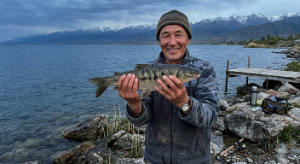
One of the clearest government-to-business outcomes came through Russia-Kyrgyzstan discussions. Kyrgyz Deputy Prime Minister and Minister of Water Resources, Agriculture, and Processing Industry Erlist Akunbekov met Russian Deputy Prime Minister Dmitry Patrushev on the margins of the St. Petersburg forum. The sides agreed to prepare joint road maps for fisheries projects and potential joint ventures, while the Russian side confirmed readiness for practical implementation. The proposed cooperation goes beyond the simple supply of fish. Discussions covered fish farming, processing, logistics infrastructure, modern packaging, and increased supplies of Kyrgyz products to Russia. Kyrgyzstan is simultaneously developing its aquaculture cluster, particularly valuable trout production, with Russia representing an important nearby market through the Eurasian Economic Union. This creates a different model from conventional commodity trade: production capacity in Kyrgyzstan can be combined with Russian processing, distribution, equipment, and investment, while Russian companies gain access to additional aquaculture production.
Iran Brings A US$700-Million Fish-Export Sector To The Russian Market
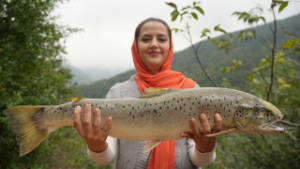
Iran’s pavilion provided another concrete example of the Global South’s attempt to deepen fishery trade with Russia. Russian Deputy Prime Minister Dmitry Patrushev and St. Petersburg Governor Alexander Beglov visited the Iranian pavilion, where Vahid Salehi, Deputy Minister and head of Iran’s Veterinary Organization, presented Iranian production, processing, and export capabilities. Iranian representatives emphasized the need for closer technical interaction, faster document exchange, and stronger coordination between veterinary authorities. The underlying commercial base is substantial. Iran’s fisheries sector employs approximately 285,000-300,000 people directly and about one million indirectly. Fishery exports exceeded $700 million in 2025, with China, Iraq, and the UAE among key destinations. Tehran is targeting total fisheries production of 1.8 million tonnes by 2030 and annual exports of $1 billion. Shrimp production alone reached 50,000 tonnes in 2025. Iran’s delegation also illustrates the wider scale of participation.
More than 300 Iranian business figures from 18 provinces travelled to Russia for the two September exhibitions. Delegates represented provinces including Bushehr, Yazd, Khuzestan, East Azerbaijan, Hormozgan, Sistan and Baluchestan, Chaharmahal and Bakhtiari, Zanjan, Kerman, Fars, Gilan, Golestan, Isfahan, Razavi Khorasan, Tehran, Alborz, Markazi, and Lorestan. The delegation included fisheries, veterinary, agricultural, and greenhouse-production representatives. Bushehr alone accounts for around 8% of Iran’s GDP despite representing only about 1.5% of the national area and population, according to remarks by Governor Arsalan Zare.
Russia’s Seafood Export Base Gives The St. Petersburg Forum Strategic Weight

The commercial backdrop is unusually large. Russia harvested approximately 4.64-4.7 million tonnes of aquatic biological resources in 2025, with 2026 production projected around 4.8 million tonnes. Aquaculture contributed approximately 390,000-393,000 tonnes in 2025, growing by around 3-3.5% year on year. Industry revenue estimates suggest a monetary value above ₽1.2 trillion (US$14.2 billion) and profit above ₽200 billion (US$2.4 billion). Russia exported approximately 2.0–2.1 million tonnes of fish and seafood worth US$6.0–6.1 billion in 2025. During the first half of 2026, export revenue increased 27% year on year; frozen-fish exports increased approximately 1.5 times, while crustacean exports grew 22%.
Russia shipped more than 2 million tonnes worth more than US$6 billion in 2025, and more than 1.5 million tonnes had already been exported by mid-September 2026. China remains the central destination.
Russian fish and seafood exports to China reached approximately 1.2 million tonnes worth US$3.4 billion in 2025, accounting for roughly 57% of total export value. Japan received around 118,000 tonnes worth US$952 million, while South Korea remained another major Asian destination. Russia’s exports to BRICS countries have increased sharply over five years: physical volumes tripled and value increased 2.7 times to more than $3 billion in 2025. The composition is also changing. Pollock remains a core product, but Russia is seeking greater value through fillets, surimi, crab, fishmeal, processed products, and other higher-margin categories. Live-crab exports alone were valued at approximately US$1.14 billion in one 2025 breakdown.
China Is Moving From Buyer To Technology And Investment Partner
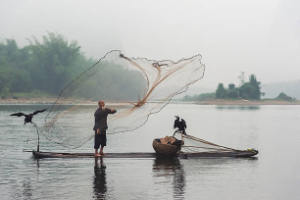
The Chinese presence at Seafood Expo Russia therefore has implications beyond export sales. Liaoyu Group and other Chinese companies participated in discussions on fish-product trade, promotion, and knowledge exchange. Chinese participation included Famsun and Dalian Rich, while the CAPPMA-linked group expanded the institutional dimension. The strategic opportunity is two-sided. Russia possesses large wild-catch resources, particularly pollock, cod, salmon, and crab, while Chinese companies possess extensive experience in processing, equipment, feed, logistics, and consumer-market distribution. Cooperation in surimi, aquaculture feed, cage systems, vessel equipment, processing lines, and cold-chain logistics can therefore produce more value than raw seafood shipments alone. This corresponds with the broader structure of Russian fisheries companies such as Norebo Group, Russian Fishery Company, Dobroflot, Oceanrybflot, FOR-Group, Kamchatsky Meridian, Sirius, Pacific Fish Resources, Vikta, Koryakmoreprodukt, and Tymlatsky Fish Combine. These companies operate across catch, processing, and export supply chains, particularly in the Far East and northern fisheries.
BRICS And Global South Become An Explicit Seafood Trade Corridor

The BRICS+ program at Seafood Expo Russia is important because it connected commercial fisheries policy directly with alternative trade geography. Russian industry participants see potential for an additional approximately US$2 billion in annual seafood exports within BRICS if logistics, certification, and processing barriers are reduced. China currently accounts for the overwhelming majority of Russia’s BRICS seafood shipments, but the growth rates of other markets are notable.
Russian exports to Brazil have increased approximately sixfold compared with 2021, while exports to India have risen around 1.7 times. The UAE is developing as a crab and logistics hub, while Egypt and Nigeria are among the African markets being explored for Russian pollock and whitefish. The underlying challenge is logistics. Long-distance seafood trade requires reliable refrigerated transport, predictable customs procedures, veterinary certification, and sufficient processing capacity. This explains why the St. Petersburg program combined export-market discussions with shipbuilding, logistics, packaging, aquaculture, and processing.
Expanding Russian Exports Of Meat, Dairy, Confectionery And Processed Foods Into High-Growth Asian, Middle Eastern And Global South Markets

China’s vast food market, supported by more than 1.4 billion consumers and annual food and beverage sales measured in the hundreds of billions of dollars, remains the single largest destination for Russian agri-food exports. Russian agricultural and food exports to China reached approximately US$7.7 billion in 2025, covering grains, vegetable oils, meat, dairy ingredients, and processed products.
Within the meat segment, Russian poultry shipments alone reached approximately 154,800 tonnes, while dairy ingredients continued to expand. The scale of China’s consumer market provides substantial opportunities for Russian suppliers of poultry, beef and other meat products, dairy products and ingredients, frozen foods, confectionery, oils, and higher-value processed foods.
India’s enormous domestic market of more than 1.4 billion people is generating rising demand for frozen foods, confectionery, dairy ingredients, halal-certified food products, and meat products. Russian deliveries of meat and dairy products have shown steady growth alongside broader agricultural trade. The market offers opportunities for Russian suppliers across poultry, beef and other permitted meat categories, dairy ingredients, frozen foods, confectionery, and processed food products, particularly as Russian companies expand veterinary, halal, packaging, and distribution capabilities.
Vietnam, with a population exceeding 100 million and rising per-capita food consumption, remains an active buyer of Russian food products. Russian food exports to Vietnam include frozen and processed foods, while the country’s expanding consumer market and modern retail sector create additional opportunities for Russian suppliers of poultry, meat products, dairy, confectionery, frozen foods, and other processed food categories.
Egypt’s food and beverage market, valued at approximately US$104.6 billion in 2025 and representing the largest food market in the Arab region, together with the UAE market of approximately US$41.9 billion and Saudi Arabia’s market of approximately US$90.2 billion, forms a high-value and import-dependent regional food market. Russian agricultural and food exports to the wider Middle East already totaled approximately US$4.3 billion in 2025, covering poultry, dairy, confectionery, oils, frozen products, and other agricultural and processed foods. These markets offer significant opportunities for Russian producers to increase supplies of meat, dairy products and ingredients, confectionery, frozen foods, and other higher-value food products.
Brazil’s large consumer base continues to absorb increasing volumes of Russian specialty and processed foods, while South Korea and Turkey maintain significant import demand for frozen foods, dairy products, confectionery, meat, and other processed food categories. Across these markets, total international food imports run into tens of billions of dollars annually, with the Arab region alone importing food and non-alcoholic beverages on a scale exceeding US$100 billion in recent years.
Russia can deepen its presence by accelerating the shift from bulk commodities toward higher-value processed and branded products, including frozen ready meals, dairy ingredients such as milk protein concentrates and whey powders, confectionery, halal-certified meat products, organic food lines, vegetable oils, specialty fats, and other processed food ingredients. Additional opportunities exist through the expansion of cold-chain and multimodal logistics corridors via the North-South route and Far Eastern ports, obtaining additional veterinary and halal certifications, adapting packaging and labeling to destination markets, and establishing long-term supply contracts with major retail chains, food-service companies, distributors, and importers.
Leading Russian companies already positioned for this expansion include Cherkizovo Group and Miratorg, which operate across poultry, meat, and processed meat products; EkoNiva and Molvest, which specialize in dairy products and high-value dairy ingredients exported to China, the Middle East, and Central Asia; Rusagro and Efko, which operate in oils, fats, and specialty ingredients; and United Confectioners, which produces chocolate and flour confectionery. A broad range of regional processors, food manufacturers, ingredient suppliers, and exporters that participated in WorldFood Moscow can further contribute to this expansion.
These companies possess the production scale, export experience, processing capacity, and established commercial relationships required to increase shipments of poultry, beef and other meat products, dairy products and ingredients, frozen foods, confectionery, vegetable oils, specialty fats, organic products, halal-certified foods, and other processed ingredients into the listed Asian, Middle Eastern, and Global South markets.
WorldFood Moscow 2026 played a direct catalytic role by gathering senior buyers from X5 Group, Magnit, Lenta, Auchan, Metro, Ozon, and CIS retail networks. The event operated the Retail Chains Purchasing Center and Contract Expo formats, which historically convert more than 80 percent of negotiations into preliminary supply agreements. It also hosted 14 national pavilions from precisely the target markets, including China, India, Vietnam, Egypt, Brazil, the UAE, Oman, and Türkiye, amongst others. The simultaneous presence of processing-equipment manufacturers and logistics providers enabled Russian exporters to discuss not only product placement but also cold-chain solutions, packaging, processing technology, warehousing, transportation, and distribution partnerships. This is particularly relevant for higher-value products such as frozen ready meals, meat products, dairy ingredients, confectionery, organic foods, and halal-certified products, where reliable logistics, certification, and market-specific packaging are essential.
Combined with the Global Fishery Forum’s focus on value-added seafood and logistics, the two platforms provided Russian companies with concentrated access to retail decision-makers, importers, distributors, food manufacturers, logistics providers, and government trade-promotion agencies. The events generated opportunities for letters of intent, initial orders, preliminary supply agreements, distribution partnerships, and longer-term cooperation frameworks, supporting the development of sustained commercial relationships. Together, these platforms and Russia’s expanding production, processing, certification, and logistics capabilities create opportunities to increase exports across the meat, dairy, confectionery, frozen food, organic, halal, ready-meal, vegetable-oil, specialty-fat, and food-ingredient segments. The strategy therefore centers on moving beyond bulk commodities toward higher-value, processed, branded, certified, and market-specific food products for China, India, Vietnam, Egypt, the Middle East, Brazil, Japan, South Korea, Turkiye, and other high-growth markets across Asia, the Middle East, and the Global South.
High-Consumption Markets in Asia And the Global South: Seafood Market Scale, Import Demand, And Russian Export Expansion Pathways
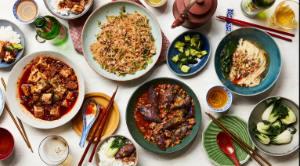
China stands as the world’s largest seafood consumer, with total apparent consumption exceeding 60,500 thousand tonnes and per capita intake of approximately 41.65 kg. This supports a national fish and seafood import market that has expanded dramatically to roughly US$23.7 billion in recent years. Russia supplied approximately 1.2 million tonnes, valued at about US$3.42 billion, to China in 2025, accounting for a 14.4% share of Chinese seafood imports and placing Russia in the top position ahead of Ecuador.
That trend is continuing. Russian supplies increased further to nearly US$1.1 billion in the first quarter of 2026, representing a 16.2% share of Chinese imports. Live crab alone accounted for approximately US$1.14 billion, while headed-and-gutted frozen pollock, surimi, and cod constituted the bulk of Russian export volumes.
South Korea records one of the world’s highest levels of per capita seafood consumption, at approximately 52.82 kg, with total consumption of around 2,734 thousand tonnes. In 2025, South Korea imported approximately 271 thousand tonnes of Russian fish and seafood, valued at US$944 million. Japan, another high-consumption market, imported approximately 118 thousand tonnes of Russian fish and seafood worth US$952 million in the same year.
Vietnam maintains per capita seafood consumption of approximately 40 kg, with total intake estimated at around 4,020 thousand tonnes. Bilateral seafood trade between Russia and Vietnam has already reached approximately US$193 million, with economic and commercial ties continuing to expand.
India, itself a major global seafood exporter, recorded seafood exports valued at US$7.45 billion in fiscal year 2024-25. Russian seafood deliveries to India have increased 1.7-fold since 2021, while Russian shipments to Brazil increased sixfold over the same period. The The United Arab Emirates, Egypt, and other BRICS partners collectively absorbed more than US$3 billion worth of Russian fish and seafood in 2025.
Overall, Russia’s BRICS-oriented seafood shipments have tripled in volume and increased 2.7-fold in value over five years. Iran’s domestic fishery sector generated seafood exports exceeding US$700 million in 2025, with the country targeting US$1 billion in annual exports by 2030. This growth is supported by shrimp production of approximately 50,000 tonnes, alongside strong trout and carp output. Egypt remains a leading supplier of frozen seafood products to Russia while also developing into a growing destination for Russian whitefish. Across these markets, total international imports of aquatic products amount to tens of billions of dollars annually, while global seafood trade volumes are close to 69 million tonnes, with a total value exceeding US$180 billion. Average worldwide per-capita seafood consumption is approximately 21 kg.
Russia can expand its presence in these markets by shifting further toward higher-value processed products, including fillets, surimi, ready-to-eat products, and live crab. Additional opportunities exist through strengthening cold-chain and reefer logistics for longer-haul destinations in Latin America, Africa, and the Gulf, accelerating the certification of additional processing plants to meet Chinese and Eurasian Economic Union standards, and leveraging investment-quota vessels and shore-based processing plants that have already been delivered or are currently under construction.
Leading vertically integrated operators, including Norebo Group with its Far-Eastern and northern fleets, Norebo Hong Kong, Norebo Asia, and Norebo Africa trading arms as well as the Russian Fishery Company (RRPK), Dobroflot, Oceanrybflot, FOR-Group, Kamchatsky Meridian, Magadantralflot, Murmansk Trawl Fleet, and numerous enterprises based in Sakhalin, Kamchatka, and Primorye, already maintain approved-supplier status in China and established commercial channels into South Korea, Vietnam, the UAE, and emerging BRICS markets. These companies possess the scale, at-sea processing capabilities, and established commercial relationships needed to increase exports of pollock, cod, crab, herring, and value-added seafood products, while also exploring joint ventures in aquaculture feeds, genetics, and shore-based processing. The export potential remains substantial. Russian seafood shipments to China alone could approach US$4.88 billion by 2030, while BRICS markets could provide an additional annual upside of approximately US$2 billion. At the same time, growing demand for whitefish and premium crustaceans in India, Brazil, Egypt, Nigeria, and the Gulf creates opportunities for both volume recovery and margin expansion through product upgrading and greater value addition.
WorldFood Moscow 2026 and the IX Global Fishery Forum & Seafood Expo Russia provided immediate platforms for advancing these opportunities by bringing together buyers from the same Asian, Middle Eastern, African, and Latin American markets. The events facilitated direct negotiations, letters of intent, and preliminary contracts; showcased Russian value-added seafood offerings alongside national pavilions from China, India, Vietnam, Iran, Brazil, Egypt, the UAE, and Oman; and generated intergovernmental road maps, including Russia-Kyrgyzstan joint ventures as well as company-level cooperation agreements. These initiatives can help reduce market-entry barriers and align commercial flows with emerging multipolar logistics corridors. The high conversion rates observed in structured purchasing formats, together with the explicit BRICS+ and Global South programming at both events, provide a mechanism for translating attendance and national-pavilion participation into tangible commercial pipelines. For the Russian seafood companies, this creates opportunities to convert visibility, buyer engagement, and preliminary agreements into sustained export growth across the listed high-consumption and high-import markets.
Fleet Renewal and Processing Investment Link Fisheries Trade With Industrial Policy
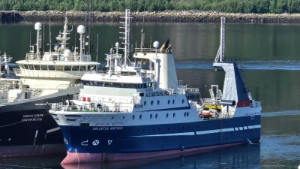
The fisheries exhibitions also exposed the domestic industrial side of the sector. Russia’s investment-quota system, often described as “quotas under the keel,” links access to catch resources with investment in new vessels and shore-based processing. More than 50 vessels have been delivered under cumulative programs, with additional vessels under construction, alongside approximately 30 processing plants.
In 2026, quotas for medium- and small-tonnage vessels in the Far East were increased, supporting fleet renewal and regional fisheries development. The policy framework also includes the federal program for development of the fisheries complex, preferential financing, tax measures, and support for aquaculture, processing, scientific research, and export certification. Industry discussions in St. Petersburg also highlighted unresolved commercial issues: reluctance among some fishermen to purchase domestic equipment because of price and trust considerations, competition from low-quality “one-day” companies, and the pressure of taxation on manufacturing economics. ISS CEO Pavel Zubkov argued for industrial-policy support, preferential leasing, and stronger action against grey-market schemes. These issues matter because export diversification ultimately depends not only on market access but also on the cost and reliability of the equipment, vessels, and processing plants supplying those markets.
Moscow And St Petersburg Reveal Two Halves Of One Trade System

The most important economic connection between the two September exhibitions is their complementary structure. WorldFood Moscow is primarily a market-access platform: foreign producers seek Russian importers, distributors, retailers, and HoReCa buyers. Seafood Expo Russia is an industrial platform: producers, processors, technology companies, shipyards, logistics operators, and governments negotiate the infrastructure required to increase production and exports. The geographic overlap is equally revealing. China, India, Vietnam, Kyrgyzstan, Iran, Turkey, South Korea, and Gulf countries appeared across the two events, while Africa and Latin America entered through Egypt, Tunisia, South Africa, Mozambique, Brazil, Venezuela, Chile, and other delegations. The scale of the two platforms, roughly 26,300 professional visitors at WorldFood Moscow and 20,080 at the fisheries event, means that the September exhibitions functioned as a large commercial interface between Russia and a wide group of Asian, African, Middle Eastern, and Latin American markets.
From Contracts To Supply Chains
The immediate commercial results should be separated from longer-term projects. At WorldFood Moscow, the most visible outcomes were negotiations, preliminary supply agreements, letters of intent, and initial purchase orders. At Seafood Expo Russia, the outcomes included fisheries road maps, joint-venture discussions, technical cooperation, export-market development, and processing and logistics partnerships. The 2025 WorldFood Purchasing Center benchmark of 2,834 preliminary agreements worth 91.5 billion rubles provides a useful scale for the commercial mechanism, but a complete 2026 aggregate should not be treated as established until the post-show consolidation is complete. Similarly, the fisheries exhibition generated multiple international agreements and negotiations, but a complete public tally of every private B2B contract was not yet available immediately after the 16-18 September event.
Summary
The overall impact of these two events is measurable. Russia’s food market is receiving new suppliers from Asia, Africa, the Gulf, and Latin America; Russian seafood exporters are expanding sales in China and other Asian markets while opening channels in India, Brazil, Egypt, Nigeria, and the UAE; and fisheries cooperation is increasingly extending into aquaculture, processing, logistics, vessel construction, and technology. The two September exhibitions therefore form a single economic picture: Moscow is widening the pool of products entering Russian shelves, while St. Petersburg is expanding the industrial capacity behind Russia’s seafood exports.
The combination of retail procurement, foreign supplier access, fisheries investment, aquaculture cooperation, processing technology, and alternative logistics routes shows that Russia’s food-trade adjustment is increasingly being built through commercial infrastructure rather than individual commodity deals. The next measurable stage will be the conversion of September’s negotiations into actual supply contracts, joint ventures, investment commitments, new export routes, and higher-value processed shipments. For Russia, the critical economic variable is no longer simply the volume of food and seafood traded. It is whether the emerging Asia-Global South network can increase processing depth, reduce logistics costs, broaden the number of destination markets, and raise the value captured by Russian producers and their foreign partners.
This article was written by I.K. Hasan, a South Asia based independent researcher, columnist, and freelance journalist. He can be reached at info@russiaspivottoasia.com