
 Русский






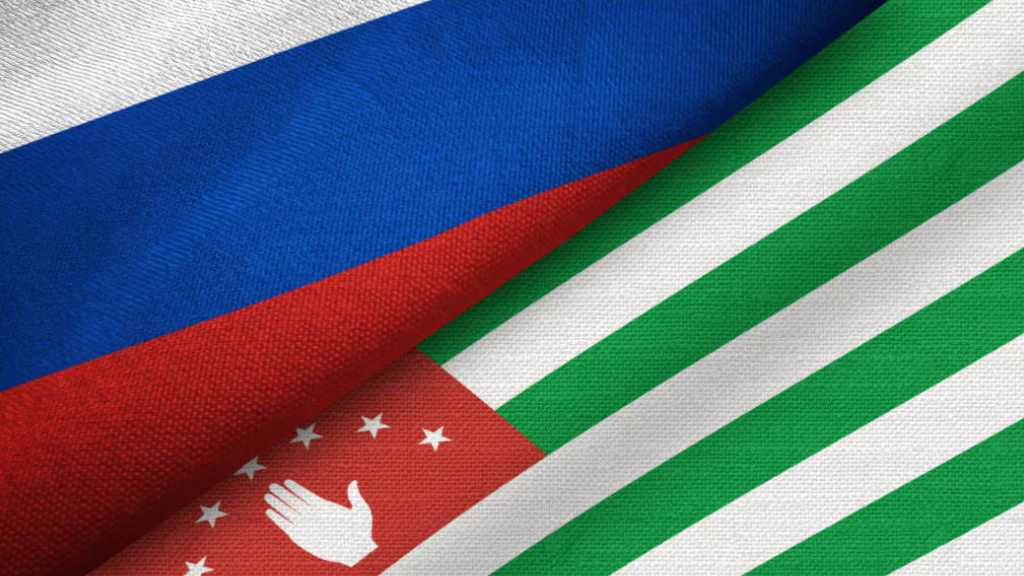

Trade, economic, investment, political, and business ties between Russia and Abkhazia have recently been strengthened through a series of initiatives and high-level events, ranging from the April 3-4, 2026, “Abkhazia – Investing in the Future” economic forum to Vladimir Putin’s Kremlin meeting with Abkhazia’s President Badra Gunba on May 9, 2026.
The forum “Abkhazia – Investing in the Future” was not merely a regional investment gathering. It was effectively a strategic business synchronization platform between Abkhazia’s underdeveloped but resource-rich economy and Russia’s increasingly region-centric capital expansion strategy. The numbers alone explain why the event mattered. More than 500 participants from Abkhazia, 15 regions of Russia, and South Ossetia attended the forum, with officials projecting potential investments (signed MoU’s) in excess of ₽100 billion (US$1.3 billion).
More than 30 agreements were signed, including strategic arrangements with the Russian Ministry of Energy, the expansion of air connections, and the entry of local producers into Russian marketplaces.
Special attention was paid to the Year of the Village initiative, within which important agreements were concluded in the agricultural sector with the Rosselkhoztsentr and the Rosagrokhim Service. Abkhazia’s Minister of Agriculture Beslan Dzhopua announced the launch of four agreements signed with organizations subordinate to the Russian Ministry of Agriculture. He noted that the forum’s outcomes open up opportunities to address key challenges in the development of Abkhazia’s agricultural sector. President Gunba instructed that strict oversight of the implementation of commitments be ensured, highlighting two priority areas. The first includes full execution of all agreements signed on the sidelines of the forum. The second involves comprehensive support for investment projects, including the designation of responsible agencies, clear timelines, and structured reporting procedures.
Underlining these commitments, Putin said, “I would like to emphasize that Russia firmly supports the sovereign development of Abkhazia and actively contributes to its economic stability and security. Strengthening this is an unconditional priority of ours. Today, we can enjoy positive results of our joint work in such spheres as transport and tourist infrastructure upgrading, energy, agriculture, and trade.”
Russia’s Deputy Prime Minister Alexander Novak said at the forum that Russia and Abkhazia had moved from isolated projects to what he described as a systematic long-term partnership based on clear agreements, financial mechanisms, and political coordination. Novak announced that Russia will extend the concessional lending programme for investment projects in Abkhazia until 2030, with total financing set at ₽20 billion (US$272 million).
Since 2023, Russian banks have financed ten projects worth ₽6.6 billion (US$89.7 million) in sectors including tourism, agriculture, logistics, and construction. Projects already launched include the Riviera Hotel, a winery; and a container terminal at the port, while a dairy plant is expected to open soon. According to Novak, the projects have created almost a thousand jobs, increased annual budget revenues by ₽700 million (US$9.5 million), and contributed around 7% to Abkhazia’s GDP growth.
Novak also stated that the programme was renewed through to 2030, while an additional ₽162 million was allocated for 2026 to improve access to financing. Abkhazia has also prepared new investment projects worth ₽6.5 billion (US$88.3 million) in tourism, construction, and agriculture. A new subsidized lending mechanism for small and medium-sized businesses through Abkhaz banks is scheduled to begin in 2026, with tourism identified as a strategic sector.
Novak also highlighted transport and infrastructure cooperation as another key area of bilateral integration. Direct flights between Moscow and Sukhumi resumed on May 1, 2025, with more than 123,000 passengers transported on 312 flights from cities including Moscow, St. Petersburg, Nizhny Novgorod, and Khanty-Mansiysk. Passenger traffic is projected to exceed one million annually by 2030. Russia is also renovating the Adler border checkpoint with investments of ₽3.8 billion (US$51.6 million) to increase throughput capacity and ease cross-border movement for tourists and businesses.
The forum additionally focused on cooperation in creative industries, including fashion, architecture, event tourism, and winemaking, alongside plans to expand the presence of Abkhaz products in Russian markets. On the sidelines of the forum, Russia, Abkhazia, and South Ossetia signed decisions regulating the implementation of concessional lending programmes within joint socioeconomic development frameworks.
Based on 2024-2025 estimates, Abkhazia’s nominal GDP is approximately ₽88.8 billion (US$1.1544 billion), driven primarily by agriculture, tourism, and significant financial support from Russia. The economy is heavily integrated with Russia, which provides subsidies and investment to support public sector wages and infrastructure, particularly in energy. For a territory whose total GDP is estimated at only US$1 billion annually, this investment pipeline represents one of the largest capital concentration moments in modern Abkhaz economic history.
Abkhazia plans to increase the GDP of the republics by 60% by 2030. This investment envelope represents 120-150% of annual output. In macroeconomic terms, even partial realization—say 65-70%—would constitute a transformational capital shock. Unlike previous cycles of financial assistance dominated by budgetary transfers, pensions, and emergency infrastructure repairs, the 2026 forum reflects a shift toward structured, sector-driven capital deployment. It signals a transition from subsidy-based stabilization to investment-led growth anchored in Russian corporate ecosystems. But the real significance lies deeper than headline figures. The forum revealed something more important: Russian companies increasingly see Abkhazia not as a peripheral aid-dependent territory, but as a profitable frontier economy positioned within Russia’s expanding Black Sea logistical, tourism, agricultural, and infrastructure ecosystem.
At the same time, Abkhazia itself increasingly views Russian companies not only as investors but as gateways into larger Eurasian production chains, consumer markets, logistics networks, digital systems, and financial infrastructure. There is significant experience of investing substantial amounts of money into Abkhazia’s economy. For instance, major Russian companies like MegaFon, MTS, Rosneft, and many others have been operational in the country for many years. The relationship is therefore no longer simply political patronage. It is becoming a structured economic integration model.
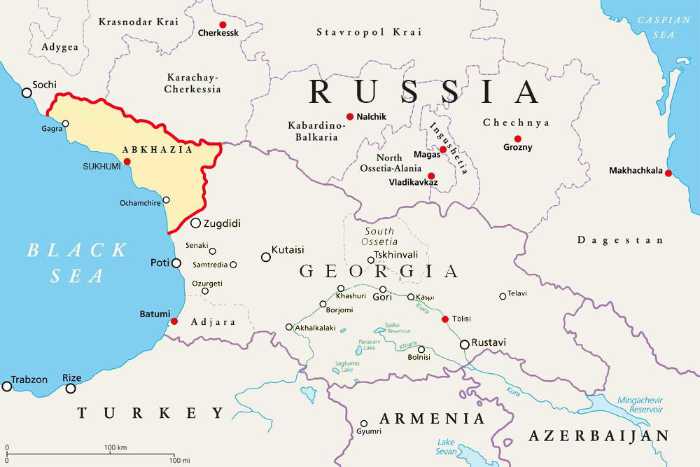
Abkhazia: Geography, Political Context, and Economic Structure

Abkhazia is a small Black Sea territory with a population of about 250,000, with about 25% of these living in Sukhumi, the capital. Its geopolitical status remains contested internationally, limiting access to global financial institutions, multilateral development banks, and Western capital markets. This structural constraint has shaped its economic trajectory over the past two decades.
Geographically, Abkhazia sits along a strategically significant stretch of the northeastern Black Sea coast, bordering Russia’s Krasnodar region. Its proximity to major Russian tourism hubs such as Sochi, combined with a subtropical climate, mountainous terrain, and coastal access, gives it inherent economic potential, particularly in tourism and agriculture.
Abkhazia declared independence from Georgia after the collapse of the Soviet Union and the 1992-93 war. Authorities in Abkhazia and Russia describe it as an independent state whose people defended their right to self-determination against Georgian control. However, Georgia and most Western countries continue to regard Abkhazia as Georgian territory under Russian occupation.
Economically, however, the baseline remains narrow. The labor force is approximately 125,000, with informal employment estimated at 35-45%. In recent years, the socio-economic indicators of Abkhazia have shown steady growth. Since 2020, the country’s GDP has increased 2.8 times, while per capita GDP has risen to ₽364,000 (US$4,730).
Major investment projects are being implemented in industry, transport, and tourism, alongside budget-funded infrastructure development aimed at creating a more favorable environment for business growth. Domestic tax revenues cover only 35-40% of state expenditures, with the remainder financed through Russian transfers. Between 2020 and 2025, cumulative Russian financial support exceeded ₽30 billion (US$406 million), accounting for up to 50-60% of the state budget.
According to the budget of Abkhazia for 2026, the total amount of Russian assistance will be about ₽5.5 billion (US$74.5 million). This includes expenditure of ₽4.25 billion for socio-economic development, ₽1 billion for infrastructure investments, and ₽250 million for state support of economic sectors within the framework of the development program for 2026-2028.
Trade patterns reinforce this dependency. Trade turnover reached about US$392 million in 2024, with duty-free regimes for specific goods, primarily supported by a 2012 agreement and updated protocols, in place and significant Russian investment in tourism and agriculture, extending into 2025-2030. Russia’s trade with Abkhazia in H1 2025 reached US$269 million, an increase of 13.3% compared to the same period last year. Russian provides at least 90% of the supply to Abkhazia of the entire product range of basic necessities and mass demand, including petroleum products, everyday goods, equipment for the resort and tourism industry, medicines, grain, and dairy products. At least 85% of the annual demand for electricity is provided by supplies from Russia (mainly from the Krasnodar Territory). Russia and Abkhazia have completed the development of the socio-economic development program for 2026-2030, according to a report from the Ministry of Economic Development of the Russian Federation.
Russia also accounts for more than 80% of Abkhazia’s imports and exports. Imports include fuel, construction materials, and food products, significantly exceeding exports, creating a structural deficit offset by Russian inflows. The tax regimes, intended to strengthen economic ties, generally exempt certain goods from export duties, such as fish, petroleum, and construction materials, and aimed to support Abkhazia’s small-scale trade. This context explains why the 2026 forum is so consequential. It does not introduce dependency; it restructures it into a more productive, investment-driven model.
Putin’s May 9 Meeting With President Gunba
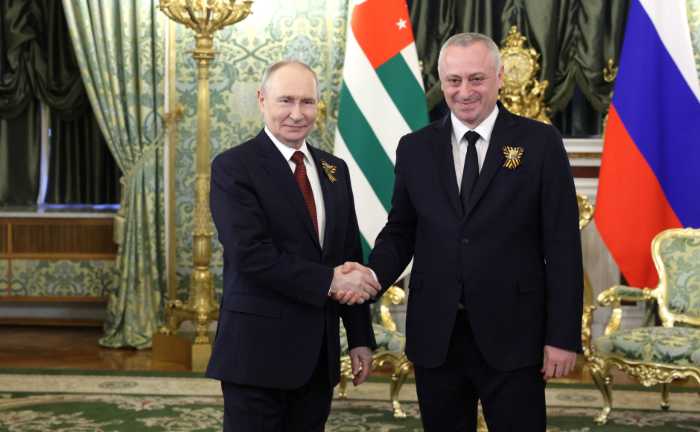
President Putin held talks in the Kremlin with Abkhazia’s President Gunba on May 9, who arrived in Moscow to take part in celebrations marking the 81st anniversary of Victory in the Great Patriotic War. Putin stated that Russia-Abkhazia relations are “successfully moving ahead,” highlighting a 16% increase in bilateral trade turnover over the past year.
Gunba thanked Russia for continued support, including the reopening of Sukhumi airport, expansion of direct flights with Russian cities, medical assistance programs, and simplified border-crossing rules for children under 14. He said these measures would strengthen tourism, economic growth, and humanitarian ties between the two countries. The sides also discussed further cooperation in transport, healthcare, and economic development, reaffirming what both leaders described as close allied relations between Russia and Abkhazia.
From Transfers to Capital: The Structural Shift
The defining feature of their bilateral relations is the reallocation of financial flows. Historically, Russian support focused on consumption stabilization—pensions, wages, and social spending. These flows maintained economic continuity but did not generate long-term productivity growth. The new model emphasizes capital formation. Of the ₽100 billion (US$1.35 billion) investment pipeline, approximately 35-45% is directed toward tourism infrastructure, 15-20% toward energy systems, 15-20% toward transport and logistics, 10-15% toward agriculture and agro-processing, and the remainder toward urban infrastructure, digital systems, and services.
Using standard fiscal multipliers for small open economies, the total economic impact could reach ₽150 billion over the next five to seven years. In practical terms, this could double the size of the Abkhazian economy if implementation efficiency remains above 60%. A defining feature is the visible and implicit participation of major Russian companies across sectors. These are not isolated investors but system-level actors capable of reshaping entire industries.
In infrastructure and transport, Russian Railways plays a central role in rail modernization and freight connectivity. Integration of Abkhazia’s rail network into southern Russia’s logistics system is critical for both passenger movement and cargo flows. Energy investment is expected to involve companies such as Inter RAO and RusHydro. These firms bring technical expertise in grid modernization, hydroelectric upgrades, and power distribution, areas where Abkhazia faces acute shortages and inefficiencies. In finance, institutions like Sberbank and VTB Bank are positioned to provide project financing, construction loans, and digital banking infrastructure. Their presence is essential given Abkhazia’s limited access to international financial systems. Retail and digital integration are being driven by platforms such as Wildberries and Ozon, which allow Abkhaz producers to access millions of Russian consumers. Agricultural development is supported institutionally by Rosselkhoztsentr and input supply networks linked to Rosagrokhim Service. The presence of these actors transforms Abkhazia from a peripheral market into an integrated node within Russian corporate value chains.
Why Russian Companies Increasingly Prefer Adjacent Economies
The Abkhazia forum also reveals a broader strategic trend inside Russia itself. Russian companies increasingly prefer investments in politically aligned neighboring economies where ruble integration exists, sanctions risks are manageable, language barriers are minimal, transportation costs are lower, and regulatory coordination is possible. Abkhazia fits this model precisely. For Russian investors facing uncertainty in global markets, Abkhazia offers proximity and familiarity. Importantly, investment costs remain relatively low compared to major Russian resort zones like Sochi. Land values, labor costs, and development costs in Abkhazia remain substantially below premium Russian Black Sea markets. This creates potentially higher long-term returns. As we noted here, Russia’s oligarchs are taking note.
Tourism: The Largest Russian Corporate Opportunity in Abkhazia
Tourism remains the single largest opportunity for Russian businesses in Abkhazia. The numbers explain why. About ₽150 million (US$2 million) are planned for allocation in 2026 to support business projects in the glamping (camping tourism) sector. In 2025, more than 1.6 million tourists from Russia visited Abkhazia, 20% more than in 2024. Tourism already contributes roughly 30-35% of Abkhazia’s GDP. Yet despite this volume, the market remains massively underdeveloped relative to demand.
According to Russian tourism sector estimates discussed during the forum, Abkhazia currently lacks approximately 20,000 modern hotel rooms required to support year-round tourism expansion. Existing Soviet-era sanatorium infrastructure remains outdated, while premium hospitality capacity is limited. This gap creates direct opportunities for major Russian tourism and construction companies. Russian developers from Krasnodar Krai, Sochi, and southern Russian regions are increasingly exploring resort construction opportunities in Gudauta, Gagra, Pitsunda, and eastern Abkhazia. Forum discussions emphasized that nearly 80% of Russian tourists currently remain concentrated in western Abkhazia, especially Gagra and Pitsunda. Eastern districts such as Tkvarcheli and Ochamchira remain significantly underdeveloped despite possessing coastal and mountain tourism potential.
This geographical imbalance creates enormous expansion space. If Abkhazia reaches its projected target of 3 million annual tourists by 2030, hotel capacity alone may require investments exceeding ₽50 billion (US$678 million).
Assuming average annual occupancy rates of 55-60% and average tourist spending increasing from current estimates of US$250-US$400 towards US$500-US$700, tourism revenues could exceed US$1.2 – US$1.5 billion annually by the end of the decade. That would effectively create a tourism economy larger than Abkhazia’s current entire GDP. Russian companies clearly understand this arithmetic.
Moreover, sanctions and geopolitical fragmentation are reshaping Russian tourism flows. Before 2022, millions of Russian tourists traveled annually to European destinations. Restrictions, payment difficulties, visa barriers, and geopolitical tensions have redirected millions of Russian tourists instead towards domestic and friendly destinations. Abkhazia benefits directly from this redirection. Unlike foreign destinations requiring expensive logistics and visas, Abkhazia provides Russian tourists with visa-free accessibility, ruble-based transactions, Russian-language compatibility, proximity to Sochi transportation infrastructure, a Black Sea coastal climate, and lower relative prices. This makes Abkhazia strategically aligned with Russia’s domestic tourism substitution strategy. It is worth noting that Russian tourists overseas now tend to spend more while on their vacations than their European counterparts.
Russian Construction Companies and the Infrastructure Boom
Perhaps the most immediate opportunities lie in construction and infrastructure. Forum discussions highlighted large-scale projects involving roads, coastal redevelopment, airports, railways, ports, electricity grids, water systems, and logistics facilities. The scale of underdevelopment is enormous.
More than 50% of Abkhazia’s internal roads require modernization. Water losses in municipal systems remain extremely high. Soviet-era infrastructure deterioration continues across multiple sectors. Energy transmission losses are estimated at roughly 20-25%. This effectively creates a “blank slate infrastructure market” for Russian engineering and construction firms. Russian companies specializing in transport infrastructure, road construction, energy systems, and coastal redevelopment increasingly view Abkhazia as an adjacent expansion zone linked naturally to southern Russia’s economic geography. The reopening and modernization of Sukhumi Airport represents a particularly important development. Air connectivity could radically transform tourism economics. If annual passenger throughput reaches 1.5 million passengers by 2030, Abkhazia’s tourism seasonality could decline significantly. Russian logistics firms also see opportunity in maritime infrastructure. The modernization of Sukhumi Port and Ochamchira Port will increase freight capacity from roughly 2 million tons annually to 4-5 million tons by 2030. This would integrate Abkhazia more deeply into Russian Black Sea trade corridors. For Russian transport companies facing sanctions-related logistical restructuring, such alternative nodes are of strategic importance.
Agriculture: Russia’s Food Security Logic Meets Abkhazia’s Land Potential
Agriculture represents another major area where Russian corporate interests align with Abkhazia’s development goals. Abkhazia imports roughly 80-87% of many consumer goods and food products despite possessing fertile subtropical agricultural land. This imbalance is precisely why Russian agricultural institutions and agribusiness firms are increasing involvement. The forum produced agreements involving the Russian Ministry of Agriculture, Rosselkhoztsentr, and Rosagrokhim Service.
The logic is straightforward. Abkhazia possesses a subtropical climate, abundant water resources, relatively low land costs, access to the Russian market, and underutilized agricultural land. Meanwhile, Russia seeks expanded domestic and near-abroad food production capacity amid global supply instability. Russian companies increasingly view Abkhazia as suitable for citrus cultivation, hazelnut exports, tea production, aquaculture, wine production, greenhouse agriculture, fruit processing, and seafood farming.
The “Golden Coast” aquaculture project discussed during the forum is especially significant. Russian-supported mussel, oyster, and freshwater shrimp cultivation projects in Gudauta demonstrate how Russian technology, feed supply systems, and logistics networks are becoming integrated into Abkhazia’s agricultural modernization.
The economics are attractive. Russia remains one of the world’s largest seafood import markets. Domestic seafood production expansion has become strategically important after sanctions disruptions. Abkhazia’s Black Sea coastline creates opportunities for aquaculture production integrated directly into Russian supply chains. Similarly, Abkhaz wine producers increasingly seek Russian retail market access. Russian marketplaces, retail distributors, and food logistics companies can transform small-scale Abkhaz agricultural production into commercially scalable exports. These matters because Abkhazia’s problem has never primarily been production potential. The real bottleneck has been processing, logistics, and market integration. Russian companies solve precisely those bottlenecks.
Russian Banks, Finance, and Digital Systems
Financial integration is becoming another critical pillar. Abkhazia already functions within the Russian ruble zone. Russian payment systems, banking mechanisms, and financial infrastructure increasingly dominate the territory’s economy. This creates strong incentives for Russian banks and fintech companies. Large investment projects require the following: project financing, construction loans, insurance systems, payment processing, digital banking infrastructure, and retail financial integration. Russian financial institutions, therefore, see Abkhazia not merely as a small market but as a manageable extension of southern Russia’s financial ecosystem.
The benefits for Abkhazia are substantial. Limited international recognition restricts Abkhazia’s access to global financial institutions. Russian banking systems therefore become essential for capital formation. At the same time, Russian companies benefit from a rubleized adjacent market with limited Western competition. Russian digital marketplaces are especially important. Forum discussions highlighted efforts to integrate local producers into Russian online marketplaces. This is economically significant because digital commerce eliminates many traditional logistical disadvantages for small producers. A small Abkhaz wine producer can now potentially access millions of Russian consumers through integrated digital platforms.
Energy: The Most Strategic Sector
Energy may ultimately become the most strategically important sector for Russian companies. Abkhazia’s energy crisis in recent years exposed severe vulnerabilities. Electricity shortages, outdated infrastructure, transmission losses, and cryptocurrency-related overconsumption created chronic instability. The economic implications are enormous. No investor will commit billions into hotels, logistics terminals, or factories without guaranteed electricity stability. Russian officials themselves acknowledged this openly during the forum. Russian energy companies therefore see both commercial and strategic opportunities.
Potential investment areas include hydropower modernization, transmission grid upgrades, smart metering systems, transformer replacement, renewable energy pilots, gas infrastructure, and electricity management systems. The Inguri hydroelectric system remains central, but infrastructure modernization is urgently needed. Energy investment is not simply about profits. It is about enabling all other sectors. Without energy stabilization, tourism expansion, agro-processing, logistics hubs, and industrial facilities cannot function effectively.
Abkhazia’s Opportunities Inside Russian Companies and Markets
The relationship is not one-directional. Abkhazia itself increasingly sees Russian corporate integration as a pathway toward economic modernization. The Russian market of over 145 million consumers offers enormous scale advantages for Abkhaz businesses. For Abkhaz agricultural producers, integration into Russian retail systems could multiply export revenues several times over. For example: hazelnut exports, citrus products, wines, bottled water, tea, and seafood products. All possess strong market potential inside Russia. Even relatively modest export growth can have a significant impact on Abkhazia’s economy due to its small size. If agricultural exports increase from current estimates of roughly US$50 – US$70 million annually toward US$200 – US$300 million by 2030, the implications for Abkhazian employment and rural incomes would be transformative.
The Contradictions and Risks
Yet the investment story also contains deep contradictions. Public concerns inside Abkhazia about land ownership, demographic balance, and excessive dependence on Russian capital remain strong. Reddit discussions and local debates repeatedly reveal anxieties regarding large-scale Russian acquisitions and fears of losing economic sovereignty. These concerns are not economically irrational. Abkhazia’s population is only around 250,000 people. Large-scale external capital inflows can rapidly reshape property markets and economic structures. The challenge therefore becomes balancing modernization with social stability.
Russian investors also face real risks: regulatory unpredictability, infrastructure weaknesses, energy instability, small domestic market size, and political sensitivity around property issues. This is why implementation capacity matters more than forum rhetoric. Historically, many post-Soviet investment forums generated ambitious announcements that later underperformed during execution phases.
The Numbers Behind the Transformation
Still, if even 65-70% of announced investments materialize, Abkhazia could experience one of the fastest relative economic expansions in the wider Black Sea region.
Basic projections illustrate the scale: GDP could rise from roughly US$1 billion toward US$1.7 billion by 2030. Tourist arrivals could increase from 1.5 million toward 3 million annually. Tourism revenues could exceed US$1.5 billion. Port cargo capacity could double or triple. Agricultural exports could increase 3-4 times. Formal employment could expand by 25-35%. Infrastructure modernization could reduce energy losses by 15-20%. For Russia, the benefits would also be substantial. Russian construction firms gain contracts. Russian tourism operators gain market expansion. Russian logistics firms gain Black Sea connectivity. Russian agricultural companies gain production partnerships. Russian banks gain financial integration opportunities. Russian retailers gain new suppliers and markets. This is why the forum mattered economically.
Critics, particularly in Western policy circles, interpret these developments as evidence of economic dependency bordering on annexation by stealth. Such interpretations overlook the structural context in which Abkhazia operates. With limited international recognition and restricted access to global financial institutions, Abkhazia faces systemic barriers that preclude conventional development pathways. Russian investment, therefore, is not merely a political choice but an economic necessity. The alternative, economic isolation, would likely result in stagnation or decline.
Summary
The April 2026 Abkhazia investment forum ultimately revealed something larger than regional development. It demonstrated how Russia is increasingly building a parallel regional economic architecture centered around infrastructure, logistics, tourism, agriculture, finance, and technological integration across friendly or aligned territories. Abkhazia is becoming part of that architecture. The process is not merely geopolitical. It is deeply commercial. Russian companies increasingly see Abkhazia as a tourism frontier, a Black Sea logistics node, an agricultural production zone, an infrastructure development market, and a strategic investment ecosystem adjacent to southern Russia. Meanwhile, Abkhazia increasingly sees Russian corporate integration as the only realistic pathway toward modernization under conditions of international isolation.
This mutual logic explains why the relationship continues deepening despite periodic political tensions. Ultimately, the forum’s most important outcome was not the signing ceremonies themselves. It was the emergence of a more mature investment logic. The previous model centered on Russian subsidies. The emerging model centers on Russian capital expansion. That is a fundamental economic shift. And if implementation succeeds, the consequences will reshape not only Abkhazia’s economy but also the wider economic geography of the northeastern Black Sea over the coming decade.
This article was written exclusively for Russia’s Pivot To Asia by M. Jahan, an independent researcher, security and strategic affairs commentator and geopolitical analyst. He may be contacted at info@russiaspivottoasia.com